Dried apple rings
Leathery, chewy, lunchbox-sized apple: the drying recipe to start with, because it forgives almost everything except skipping the dip.
Makes
About 500 g of dried rings from 5 kg of fresh apples (they lose about nine-tenths of their weight)
Active time
40 minutes
Total
6–12 hours in a dehydrator, plus 4–10 days of conditioning
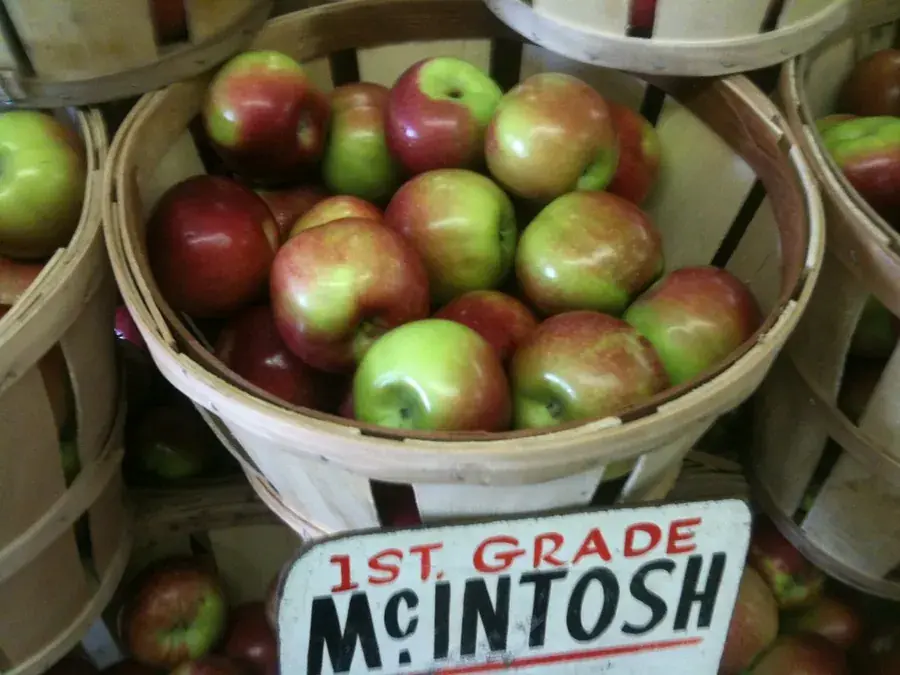
Photo JeepersMedia on Flickr · CC BY 2.0
Before you start
What matters for this one
- The ascorbic-acid or lemon dip is what stops the apples browning and losing flavour and vitamin C; Colorado State also counts it as an antimicrobial step that helps destroy bacteria during drying, so do not skip it.
- Dry at 60 °C (140 °F) — hotter case-hardens the outside and traps moisture inside, which is where mould starts weeks later.
- Condition for 4–10 days before you put the jar away. Any sign of condensation means back into the dehydrator; any mould during storage means the whole jar is compost.
- Store cool, dry and dark in airtight containers. Warm storage halves the shelf life.
This follows Colorado State University Extension, PreserveSmart: Drying apples. Quantities, acid and times are theirs; do not scale the vegetables without scaling everything, and do not change the vinegar, lemon juice or processing time.
Ingredients
- Firm, ripe apples — any amount; crisp tart kinds (Cortland, Honeycrisp, Empire, Liberty) dry best
- Anti-browning dip, choose one: 1 teaspoon (5 ml, 3 g) ascorbic acid powder stirred into 500 ml (2 cups) cold water; or equal parts bottled lemon juice and cold water; or 1 teaspoon (5 g) citric acid in 1 L (1 quart) cold water
Method
- 1
Wash the apples. Peel if you like (the skins go leathery but are fine to eat), core, and slice into rings 3–6 mm (⅛–¼ inch) thick — a mandoline or an apple peeler-corer keeps them even. Cut out any bruises.
- 2
Drop the slices into the dip as you go and let them soak 3–5 minutes. A child can be in charge of the dipping bowl, pushing the rings under with a spoon.
- 3
Drain the rings in a colander and blot on a towel. Lay them in a single layer on the dehydrator trays without overlapping.
- 4
Dry at 60 °C (140 °F). Plan on 6–12 hours, turning the trays around halfway if your dehydrator dries unevenly. In an oven, use the lowest setting with the door cracked and expect up to twice as long.
- 5
Test a cooled ring, not a warm one: it should be leathery and pliable, bending without snapping and with no wet spot when torn in half. Err on the dry side.
- 6
Cool completely, then condition: pack loosely into a glass jar, seal, and leave 4–10 days on the counter, shaking daily. If moisture beads on the glass, dry them longer. This evens out the moisture between pieces and is what stops mould.
- 7
Pack into airtight jars or freezer bags in amounts you will use within a week or two of opening, label, and store cool and dark.
Keeps: 6–12 months in a cool, dark cupboard — closer to a year at 16 °C (60 °F), six months at 27 °C (80 °F). Once opened, use within a few weeks and watch for softening.
Variations: A pinch of cinnamon shaken over the trays before drying. Pears dry the same way at the same temperature. For a crisp apple chip, slice paper-thin and dry until brittle, and condition them like the rings.
Tested source: Colorado State University Extension, PreserveSmart: Drying apples. Checked October 2026. If a jar did not seal, refrigerate it and use it within a few days. Never taste anything from a jar that is bulging, leaking, spurting or smells wrong — when in doubt, throw it out without tasting.
The crop
Apples: when to pick, how to store, what else to make →
Apples are high-acid, so everything you make from them water-baths without added acid: applesauce (sugar optional, hot pack, 15 minutes for 500 ml jars and 20 for litres at 0–300 m), apple butter (the tested recipe cooks apples down with cider, vinegar and sugar until a spoonful mounds without weeping, then 5 minutes for 500 ml jars), and sliced apples in very light syrup, juice or water (hot pack, 20 minutes). Slices freeze well for pies if you hold them in water with ascorbic acid first or steam-blanch them 2 minutes, then tray-freeze; the texture is for cooking, not eating. Dried rings are the children’s favourite: dip 5 mm slices in ascorbic-acid water, dry at 60 °C (140 °F) for about six hours until leathery with no damp centre, and condition them in a loose jar for a week before sealing. Fresh-pressed cider is unpasteurized: bring it to a boil before giving it to children, older people or anyone with a weakened immune system — freezing keeps the flavour but does not make it safe. What does not work: canning pie filling thickened with flour or cornstarch (only Clear Jel, in a tested recipe, is safe — thickeners stop the heat reaching the centre of the jar), raw-packing apple slices (they float and brown), and putting windfalls in jars or juice — extension food-safety services say drops have been in contact with soil and animals, are often bruised enough for moulds to start inside, and are less acidic than picked fruit, and the mould toxin patulin survives cooking. Windfalls that are sound go in a pie this week; the rest go to the compost.
More for apples
- Water-bath canning
Applesauce, water-bath canned
Sound apples — seconds are fine once the bruises are cut away — into the easiest jar of the year; no added acid needed, and sugar optional.
About 7 × 1 L (quart) jars from 9.5 kg (21 lb) of apples; 6.1 kg (13½ lb) fills 9 × 500 ml (pint) jars · 1¼ hours active
The recipe → - Water-bath canning
Apple butter, water-bath canned
A long, slow pot of apples, cider and spice cooked down to something that mounds on a spoon — the whole house smells of it.
About 9–10 × 500 ml (pint) jars, or twice as many 250 ml · 1½ hours active
The recipe → - Drying
Fruit leather, apple or berry
Purée poured thin and dried into a roll-up: the snack children ask for by name, made from the fruit that was too soft for anything else.
500 ml (2 cups) of purée makes one 33 × 38 cm (13 × 15 inch) sheet, about 8 roll-ups · 20 minutes active
The recipe →