Dried hot peppers and chili flakes
A year of chili flakes from a single plant: slice, dry, and crumble. Gloves on, windows open, children at a distance.
Makes
1 kg of fresh hot peppers gives about 100–150 g dried — a full 500 ml jar of flakes
Active time
30 minutes
Total
8–12 hours in a dehydrator, plus 4–10 days of conditioning
Before you start
What matters for this one
- Gloves, always, and do not touch your face. Capsaicin does not wash off with water alone; use soap and oil, then soap again.
- Grind and dry with ventilation. Hot-pepper dust in a closed kitchen will send everyone out coughing, and small children are the most affected.
- Dry until tough to brittle and condition before storing; a leathery pepper that still has moisture inside moulds in the jar.
- A ristra — whole peppers strung and hung to air-dry — only works with thin-walled red peppers in a dry climate. In a humid Quebec or Ontario September the inside rots before the outside dries, so hang them indoors near a dehumidifier or use the dehydrator.
This follows Colorado State University Extension, PreserveSmart: Drying hot peppers. Quantities, acid and times are theirs; do not scale the vegetables without scaling everything, and do not change the vinegar, lemon juice or processing time.
Ingredients
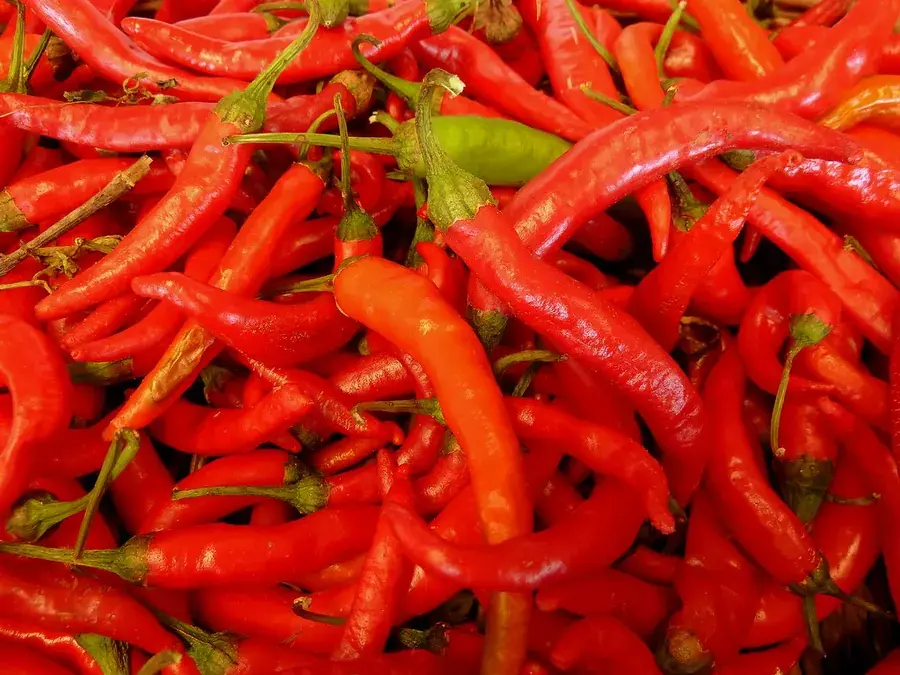
- Ripe hot peppers, any kind — cayenne, jalapeño, Thai, habanero, Hungarian wax — firm and unblemished
- Disposable or rubber gloves; a pair of glasses does not hurt
Method
- 1
Put on gloves before you touch the peppers and keep them on until the trays are loaded. Wash the peppers and drain well. This is one recipe to do while the children are elsewhere; they can help with the labelling at the end.
- 2
Cut off the stems. For thick-walled peppers, slice into 0.5–1 cm (¼–⅜ inch) rings or strips; split thin cayenne and Thai types lengthwise. Remove the seeds and membranes for milder flakes, or leave them for heat.
- 3
Lay in a single layer on the dehydrator trays, cut side up, not touching.
- 4
Dry at 60 °C (140 °F) for 8–12 hours, until the pieces are tough to brittle and snap rather than bend. An oven on its lowest setting with the door cracked takes up to twice as long; run the range hood and open a window, because the air will carry capsaicin.
- 5
Cool completely on the trays. Condition in a loosely filled, sealed jar for 4–10 days, shaking daily; if any moisture shows on the glass, dry them longer.
- 6
Store whole in airtight jars in a cool dark cupboard, or grind to flakes or powder in a spice grinder in small batches — outdoors or under the hood, and let the dust settle before opening the lid.
Keeps: 6–12 months in a cool dark cupboard for best colour and heat; the freezer keeps them longer. Whole dried peppers hold their flavour better than flakes, and flakes better than powder.
Variations: For a ristra, New Mexico State Extension’s method is to string whole mature red pods through the stems with a needle and heavy thread, hang them stem-up where air moves freely, and wait for shrunken, dark-red, still-flexible pods. Smoke jalapeños on the grill before drying for homemade chipotle. Sweet peppers dry the same way for soup flakes.
Tested source: Colorado State University Extension, PreserveSmart: Drying hot peppers. Checked October 2026. If a jar did not seal, refrigerate it and use it within a few days. Never taste anything from a jar that is bulging, leaking, spurting or smells wrong — when in doubt, throw it out without tasting.
The crop
Hot peppers: when to pick, how to store, what else to make →
Drying is what hot peppers were made for. Thin-walled kinds — cayenne, Thai, chile de árbol, small red annuums — can be slit, threaded on heavy string and hung somewhere airy for three to four weeks; a ristra is just that, done neatly with fully ripe red pods (green ones shrivel and go a dull orange). Thick-fleshed jalapeños and habaneros mould before they dry in a Canadian October, so give them a dehydrator: 60 °C (140 °F) for two hours, then 54 °C (130 °F) until they are leathery to brittle. Pickled jalapeño rings and pickled hot peppers are tested water-bath recipes — 5% vinegar at the stated ratio, 10 minutes for 500 ml jars near sea level — and so is a cayenne-style pepper sauce made with vinegar. Fermented hot sauce is the current favourite and it is safe done right: a measured salt brine, peppers kept under the brine, three or four weeks at 20–22 °C until the bubbling stops and a pH strip or meter reads 4.6 or lower, then refrigerated. What does not work is treating a ferment as shelf-stable, or canning plain hot peppers in a water bath: fermentation on its own does not make a pantry-safe food, and plain peppers are low-acid and must be pressure-canned. Freezing is the lazy option and it is fine — whole, stems off, no blanching.
More for hot peppers
- Pickling
Home-style pickled jalapeños
Taqueria-style jalapeño strips with carrot and onion in a plain vinegar brine — the tested, lime-free way to put up a hot-pepper glut.
About 6 × 500 ml (pint) jars · 1 hour active
The recipe → - Fermenting
Fermented hot sauce (refrigerator only)
Brined peppers, soured for a few weeks and blended: the sauce every pepper-grower ends up making. Ours stays in the fridge, because nobody has published a tested canning time for it.
About 500 ml of sauce from 500 g of peppers · 30 minutes active
The recipe → - Water-bath canning
Green tomato salsa verde
The frost-night answer for a counter full of green tomatoes: a sharp, cumin-scented salsa verde in small jars.
About 6 × 250 ml (half-pint) jars · 1 hour active
The recipe →