Fermented hot sauce (refrigerator only)
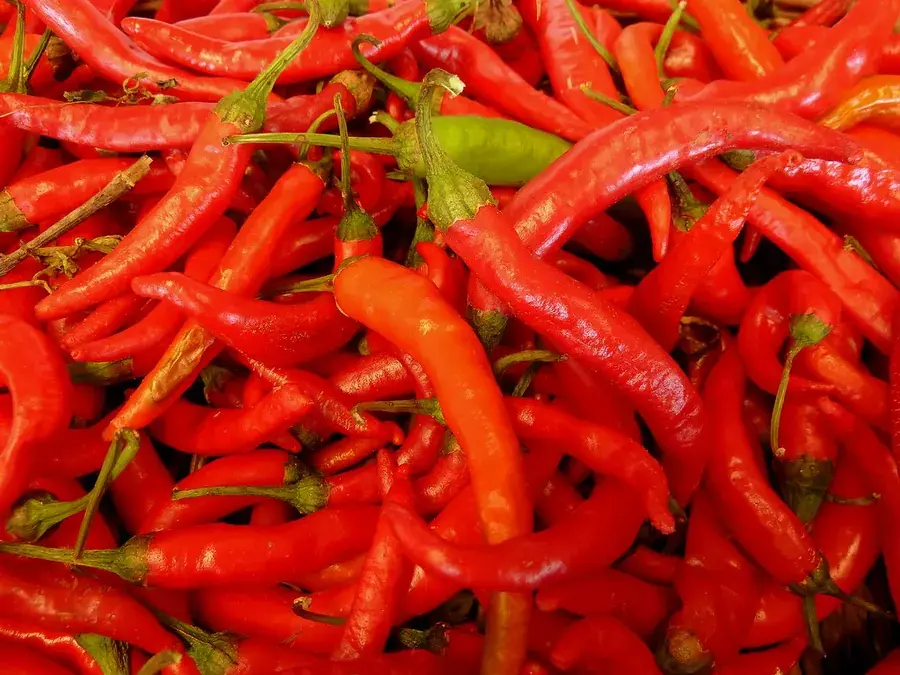
Brined peppers, soured for a few weeks and blended: the sauce every pepper-grower ends up making. Ours stays in the fridge, because nobody has published a tested canning time for it.
Makes
About 500 ml of sauce from 500 g of peppers
Active time
30 minutes
Total
2–4 weeks of fermenting
Before you start
What matters for this one
- This is a refrigerator recipe. No university or Bernardin lab has published a tested water-bath time for home fermented hot sauce, and a blended sauce is thick enough that heat penetration cannot be guessed. Do not can it.
- The brine is 5% by weight (50 g salt per litre of water). Weigh the salt; spoon measures vary between salt brands.
- Peppers must stay under the brine. Anything poking into the air grows mould.
- The vinegar at the end is for flavour and extra margin. Keep it in the fridge and use it within a few months; anything soft, slimy, pink or mouldy is finished.
- Wear gloves, do not touch your face, and run the blender outdoors or under the range hood — the fumes from a litre of blended habaneros will clear a kitchen.
This follows No tested home-canning recipe exists. Temperature, scum handling and spoilage signs follow NCHFP’s fermented dill pickles; the 5% brine is not from a tested source. Refrigerator only.. Quantities, acid and times are theirs; do not scale the vegetables without scaling everything, and do not change the vinegar, lemon juice or processing time.
Ingredients
- 500 g (1 lb) hot peppers of any kind — jalapeño, cayenne, Hungarian wax, habanero, or a mix with some sweet red pepper to tame it
- 2–4 cloves garlic, optional
- Brine: 50 g (about 3 tablespoons) canning or pickling salt dissolved in 1 L (4 cups) water — a 5% brine; use the full amount even if you do not need it all
- 60–125 ml (¼–½ cup) vinegar, 5% acidity, to finish
Method
- 1
Put on gloves — the capsaicin lingers on skin for hours — and keep children well back from the cutting board for this one; they can take over at the blending stage. Wash the peppers, pull off the stems, and halve or slice them. Leave the seeds in for more heat or scrape them out.
- 2
Pack the peppers and garlic into a clean 1 L glass jar, stopping 5 cm (2 inches) from the top.
- 3
Stir the salt into the water until it dissolves completely and pour the brine over the peppers to cover them. Save the rest of the brine in the fridge for topping up.
- 4
Hold the peppers under the brine with a small jar, a fermentation weight or a zip bag filled with the spare brine. Cover the jar loosely — a lid left a quarter-turn open, or a fermentation airlock — so gas can escape.
- 5
Leave it at 21–24 °C (70–75 °F), out of direct sun. It will fizz within a few days and smell sharp and pleasant. Check every day or two: top up with brine if the level drops and skim any white film at once. Fuzzy or coloured mould, slime or a rotten smell means discard it.
- 6
After 2 weeks (up to 4 for a deeper flavour) the bubbling slows and the brine tastes clearly sour. Pour off and keep the brine, tip the peppers and garlic into a blender, and blend smooth with the vinegar and as much brine as you need for a pourable sauce.
- 7
Strain through a sieve for a thin sauce or leave it thick. Bottle, label with the date, and keep it in the fridge. It will keep fermenting very slowly, so burp the bottle for the first week.
Keeps: In the fridge, 3 months or more — the colour dulls before the flavour goes. It is not shelf-stable. If it turns fizzy and foamy again or smells off, compost it.
Variations: Add a carrot or half an onion to the jar for body and sweetness; a few slices of fresh ginger or a strip of lime zest at the blending stage. For a Louisiana-style sauce use only red cayenne and blend with brine alone.
Tested source: No tested home-canning recipe exists. Temperature, scum handling and spoilage signs follow NCHFP’s fermented dill pickles; the 5% brine is not from a tested source. Refrigerator only.. Checked October 2026. If a jar did not seal, refrigerate it and use it within a few days. Never taste anything from a jar that is bulging, leaking, spurting or smells wrong — when in doubt, throw it out without tasting.
The crop
Hot peppers: when to pick, how to store, what else to make →
Drying is what hot peppers were made for. Thin-walled kinds — cayenne, Thai, chile de árbol, small red annuums — can be slit, threaded on heavy string and hung somewhere airy for three to four weeks; a ristra is just that, done neatly with fully ripe red pods (green ones shrivel and go a dull orange). Thick-fleshed jalapeños and habaneros mould before they dry in a Canadian October, so give them a dehydrator: 60 °C (140 °F) for two hours, then 54 °C (130 °F) until they are leathery to brittle. Pickled jalapeño rings and pickled hot peppers are tested water-bath recipes — 5% vinegar at the stated ratio, 10 minutes for 500 ml jars near sea level — and so is a cayenne-style pepper sauce made with vinegar. Fermented hot sauce is the current favourite and it is safe done right: a measured salt brine, peppers kept under the brine, three or four weeks at 20–22 °C until the bubbling stops and a pH strip or meter reads 4.6 or lower, then refrigerated. What does not work is treating a ferment as shelf-stable, or canning plain hot peppers in a water bath: fermentation on its own does not make a pantry-safe food, and plain peppers are low-acid and must be pressure-canned. Freezing is the lazy option and it is fine — whole, stems off, no blanching.
More for hot peppers
- Pickling
Home-style pickled jalapeños
Taqueria-style jalapeño strips with carrot and onion in a plain vinegar brine — the tested, lime-free way to put up a hot-pepper glut.
About 6 × 500 ml (pint) jars · 1 hour active
The recipe → - Drying
Dried hot peppers and chili flakes
A year of chili flakes from a single plant: slice, dry, and crumble. Gloves on, windows open, children at a distance.
1 kg of fresh hot peppers gives about 100–150 g dried — a full 500 ml jar of flakes · 30 minutes active
The recipe → - Water-bath canning
Green tomato salsa verde
The frost-night answer for a counter full of green tomatoes: a sharp, cumin-scented salsa verde in small jars.
About 6 × 250 ml (half-pint) jars · 1 hour active
The recipe →