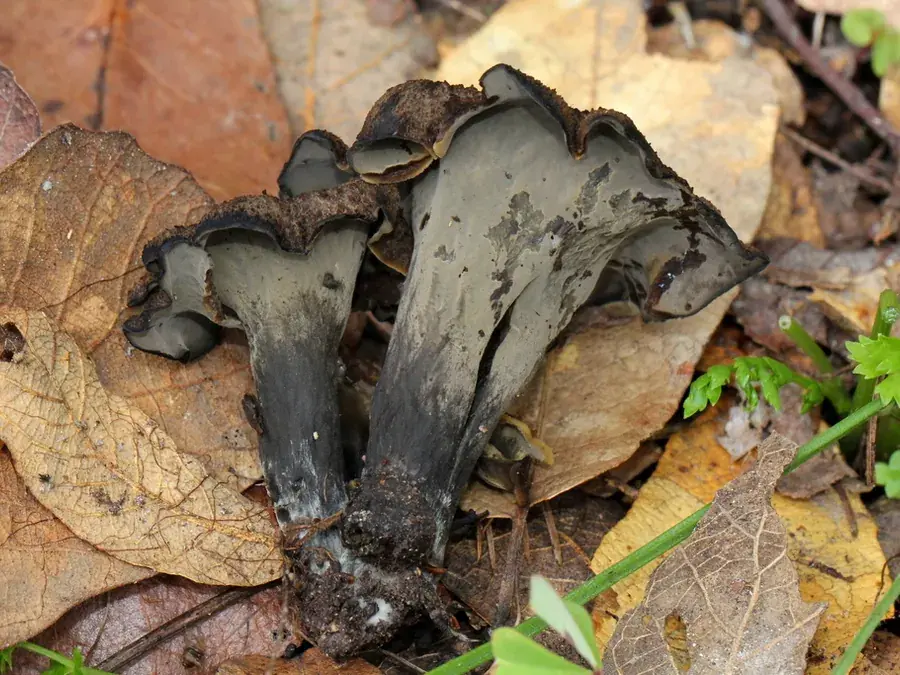
Photo by Alan Rockefeller on iNaturalist · CC BY 4.0
MushroomIn season now (October)
Black trumpet (horn of plenty)
Craterellus cornucopioides
- When
- Typically August – November — August, September, October, November. Earlier in warm, low country; later in the hills.
- Where it grows
- Beech and oak woods on heavy, chalky or clay soil, in moss and leaf litter in damp hollows, usually in troops.
- How to know it
- A thin, hollow, sooty grey-black trumpet up to 10 cm (4 in) tall, cap and stem all one piece; the outer surface is paler ash-grey and smooth or faintly wrinkled, with no gills.
- Look-alikes
- The rare ashen chanterelle is the closest double — also grey, but with shallow, gill-like ridges underneath, where the black trumpet’s outer surface is smooth or just wrinkled; it is edible. Check each one is a thin, hollow funnel with no gills.
- Harvest and use
- Split and clean out the trumpets; sauté in butter, or dry them — dried, they taste of black truffle and crumble into sauces.
Black trumpet (horn of plenty) at a glance
- Also called
- Horn of plenty, black chanterelle, trumpet of the dead; trompette de la mort (France), trombetta dei morti (Italy), Totentrompete (Germany)
- Family
- Cantharellaceae
- Where it grows
- Generally common in woods across Europe, from the Mediterranean to southern Scandinavia, though rare in some countries such as the Netherlands; mainly under beech, oak and other broadleaves on heavy, chalky soil. Also in East Asia, North America and Australia.
- When to pick
- June to November across Europe; in Britain mostly August to November.
- Parts used
- The whole fruit body, cooked or dried.
Questions people ask about black trumpet
Why is it called trumpet of the dead?
The old story is that the trumpets coming up through the leaf litter were being played by the dead underground. The French and Catalan names mean the same thing.
Are black trumpets hard to find?
Yes — they are almost black, on dark leaf litter, and hunters describe it as looking for black holes in the ground. Once you find one, look closely around it: they grow in groups.
What can be mistaken for a black trumpet?
The rare ashen chanterelle, which is grey too but has shallow ridges like gills underneath; it is edible. A black trumpet is a thin, hollow funnel, sooty inside, with a smooth or faintly wrinkled paler outer surface — check every one for that shape.
Found in these regions
Is it ready near you?
Get this week's foraging guide for your area
Enter a town, postal code or ZIP and we'll tell you what's in season right there this week — from your local climate, this week's weather and your ecological region.
Also ready in October
 NutOctober – November
Sweet chestnut
Castanea sativa
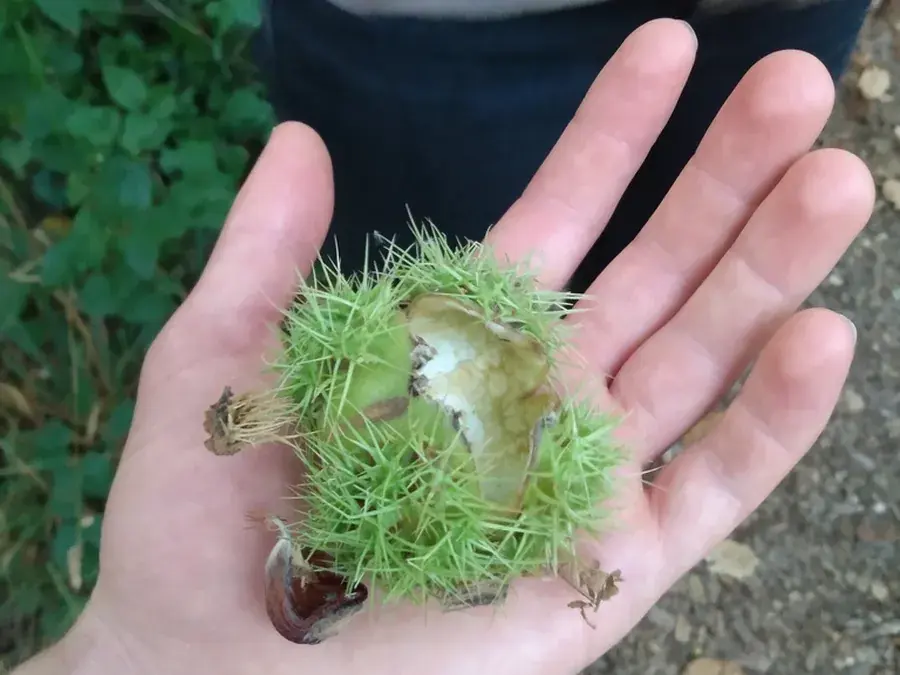
A big tree with long, glossy leaves edged with sharp, regular teeth, and bark that twists in spiralling ridges on old trunks. The nuts come in twos and threes inside a husk covered in dense, needle-sharp spines; each is glossy brown, flat on one side, with a pointed tuft at the tip.
How to know it & its look-alikes →Photo: John Powers · CC BY 4.0
 BerryAugust – October
Rowan berries
Sorbus aucuparia
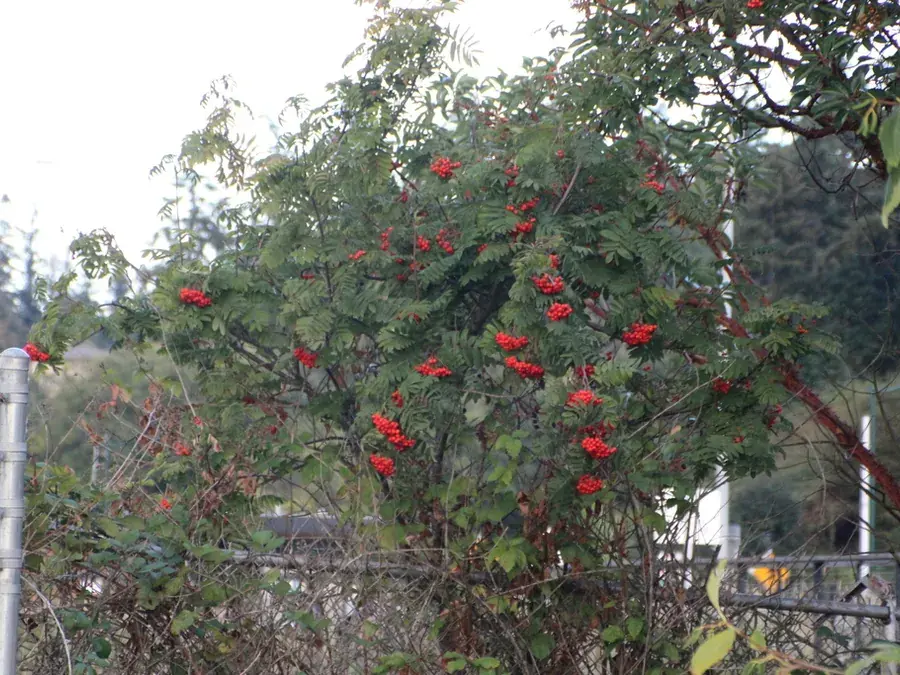
A slim tree with smooth silvery-grey bark and feathery leaves of many toothed leaflets in pairs; big flat clusters of scarlet-orange berries, each about 1 cm (⅜ in) across with a tiny black five-pointed star at the tip.
How to know it & its look-alikes →Photo: Therese Phillips · CC BY 4.0
 BerryAugust – October
Sea buckthorn
Hippophae rhamnoides
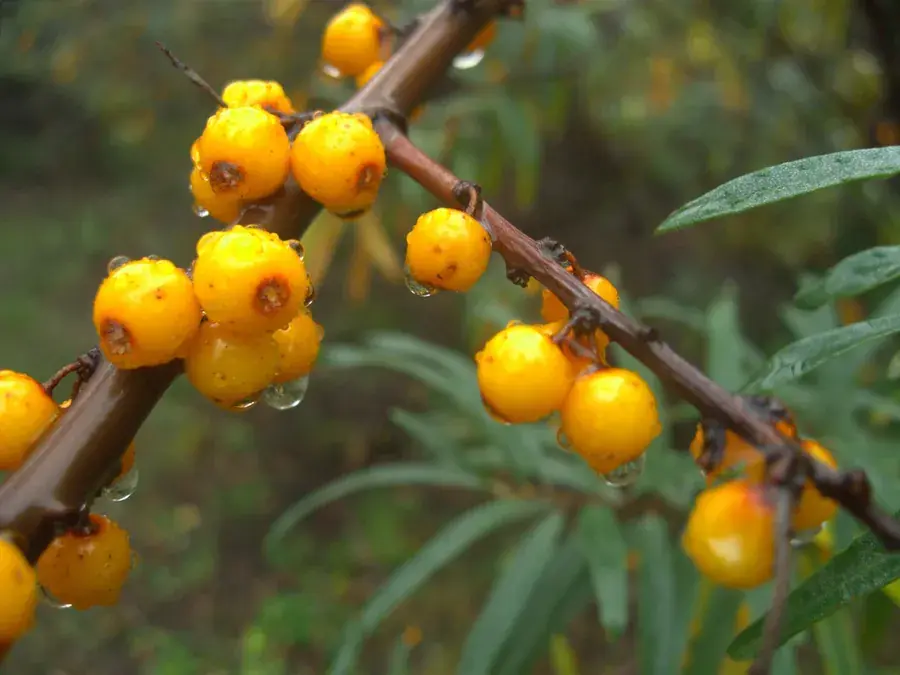
A thorny shrub with narrow, silvery-grey, willow-like leaves and branches packed with bright orange berries 6–8 mm (¼ in) across, from late summer into winter. Only female bushes fruit.
How to know it & its look-alikes →
Checked against these sources ·
Seasons are typical for the middle of the range and move by weeks north and south, and up and down hills.
Educational information only. Never eat a wild plant or mushroom identified from a single photograph or description — confirm with a regional field guide or an experienced forager, and know the poisonous species in your area first.