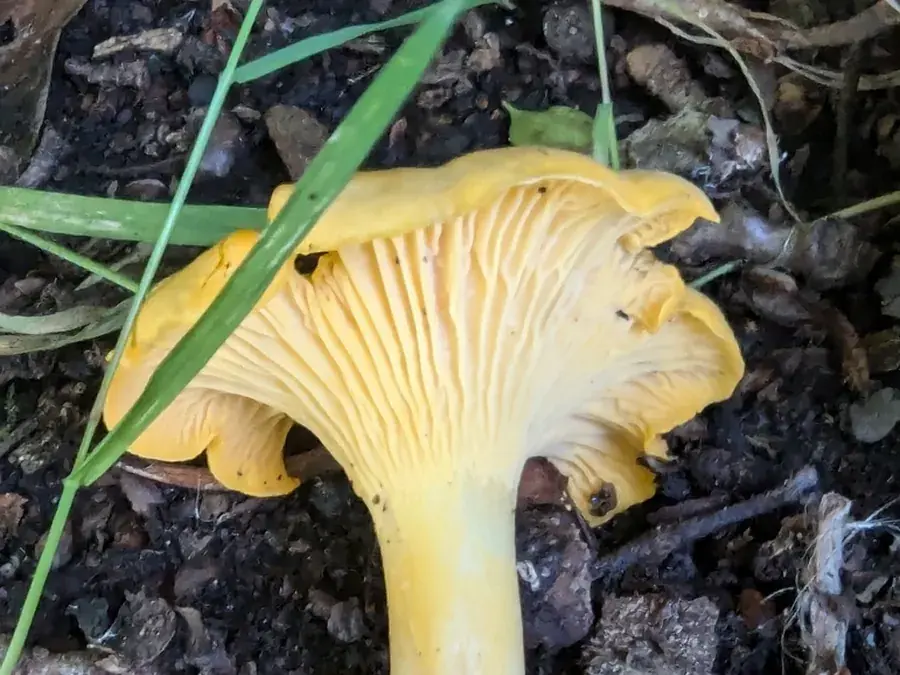
Photo by Public domain (iNaturalist) on iNaturalist · CC0 (public domain)
MushroomIn season now (October)
Chanterelle (girolle)
Cantharellus cibarius
This one has a dangerous look-alike
False chanterelle is more orange and softer, with thin, true gills that fork. The Mediterranean jack-o’-lantern grows in clusters on stumps and olive roots, with sharp true gills and orange flesh right through. Worst are the deadly webcaps — rusty-brown, with true gills and a rusty spore print — which have been picked as chanterelles in Scotland and Austria and destroyed people’s kidneys.
- When
- Typically July – October — July, August, September, October. Earlier in warm, low country; later in the hills.
- Where it grows
- Mossy birch, oak, beech and conifer woods on acid soil, often beside paths, coming back to the same spots for years.
- How to know it
- Egg-yolk yellow, firm and solid, with a wavy cap and blunt, forking ridges — not true gills — running down the stem like melted wax. Pale flesh inside, a fruity apricot smell, and it grows from the soil, never from wood.
- Harvest and use
- Brush clean; dry-fry to drive off the water, then butter, garlic and parsley. Freeze them cooked — oven-drying makes them bitter.
- Caution
- Check every mushroom, not just the first: ridges not gills, solid pale flesh, apricot smell, growing from the ground.
Chanterelle (girolle) at a glance
- Also called
- Golden chanterelle, chanterelle; girolle (France), Pfifferling (Germany), kantarell (Sweden), kurka (Poland), finferlo (Italy)
- Family
- Cantharellaceae
- Where it grows
- European. DNA studies have shown that Cantharellus cibarius in the strict sense is a European species, found from Scandinavia to the Mediterranean; North America’s golden chanterelles are a group of related species. Frequent but local in Britain and Ireland, under birch, oak, beech and conifers, with a preference for acid soil.
- When to pick
- June or July to October in Britain and northern Europe, after warm rain, and into November in mild autumns. In southern Europe it fruits from October right through to the following March.
- Parts used
- The whole mushroom, cooked.
- More look-alikes to know
- Fool’s webcap (Cortinarius orellanus), an orange-brown webcap of oak and beech woods, was eaten as chanterelles by four people in Austria in 1997, who suffered kidney poisoning. Deadly webcap poisoned three people near Inverness in 1979 the same way; two needed kidney transplants.
Questions people ask about chanterelle
How do you tell a chanterelle from a false chanterelle?
Look underneath and break it open. A chanterelle has blunt, shallow ridges that fork and run down the stem, firm solid flesh that is pale inside, and an apricot smell. The false chanterelle is a brighter orange, softer, with thin, true, forking gills.
Is a chanterelle the same as a girolle?
Yes. Girolle is the French market name for Cantharellus cibarius, the golden chanterelle.
What poisonous mushrooms look like chanterelles?
In southern Europe, the Mediterranean jack-o’-lantern, which grows in orange clusters on stumps and olive roots and has sharp true gills. Everywhere, the webcaps (Cortinarius) — rusty-brown, with true gills and a rusty spore print — which have been eaten as chanterelles and destroy the kidneys, with symptoms days or weeks later.
When is chanterelle season in Europe?
From early summer to autumn in the north — in Britain mostly July to October — and from October to March in the Mediterranean.
Found in these regions
Is it ready near you?
Get this week's foraging guide for your area
Enter a town, postal code or ZIP and we'll tell you what's in season right there this week — from your local climate, this week's weather and your ecological region.
Also ready in October
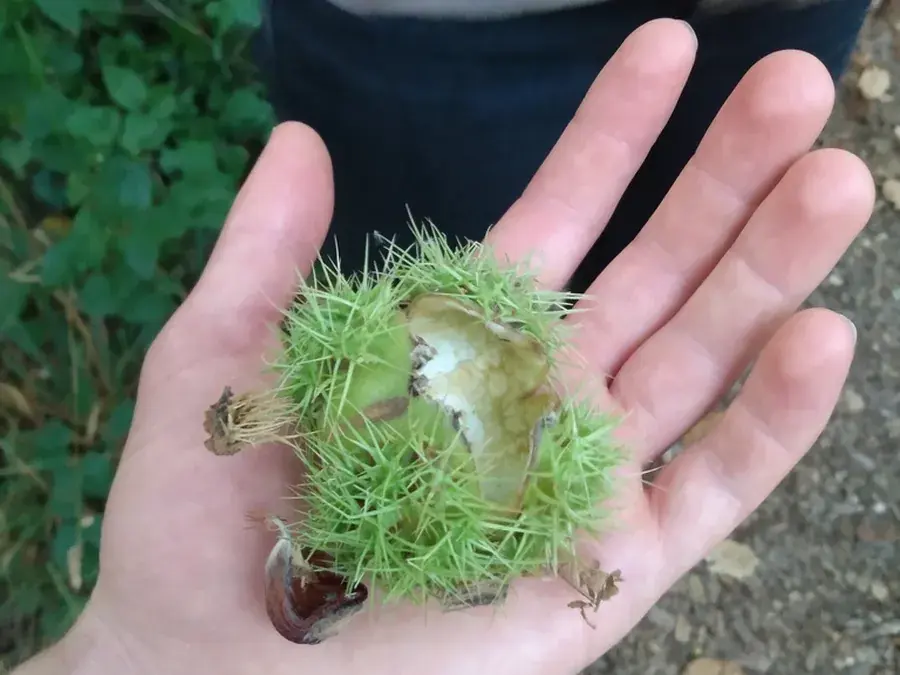 NutOctober – November
Sweet chestnut
Castanea sativa
A big tree with long, glossy leaves edged with sharp, regular teeth, and bark that twists in spiralling ridges on old trunks. The nuts come in twos and threes inside a husk covered in dense, needle-sharp spines; each is glossy brown, flat on one side, with a pointed tuft at the tip.
How to know it & its look-alikes →Photo: John Powers · CC BY 4.0
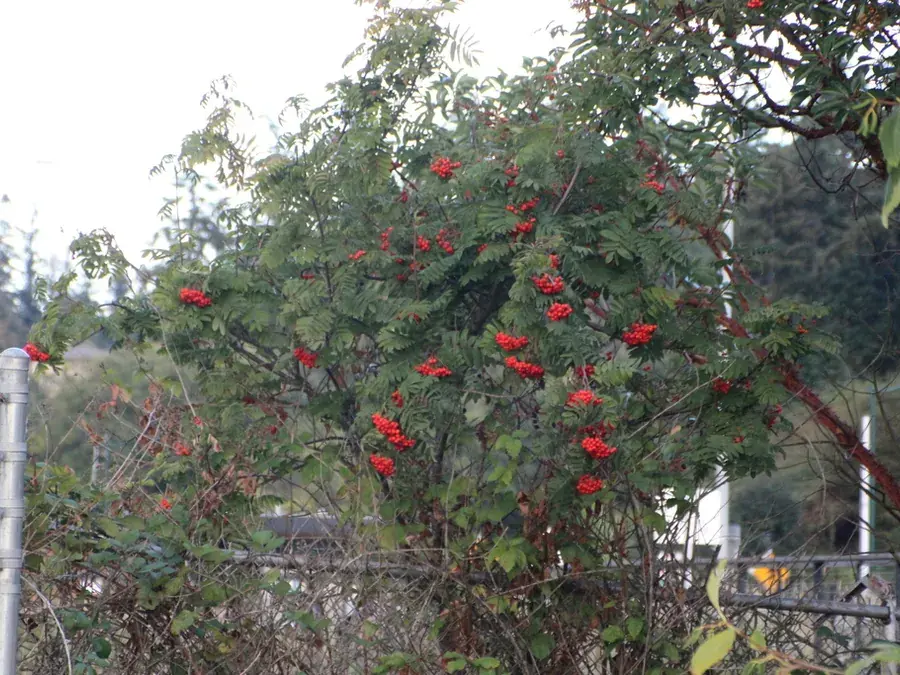 BerryAugust – October
Rowan berries
Sorbus aucuparia
A slim tree with smooth silvery-grey bark and feathery leaves of many toothed leaflets in pairs; big flat clusters of scarlet-orange berries, each about 1 cm (⅜ in) across with a tiny black five-pointed star at the tip.
How to know it & its look-alikes →Photo: Therese Phillips · CC BY 4.0
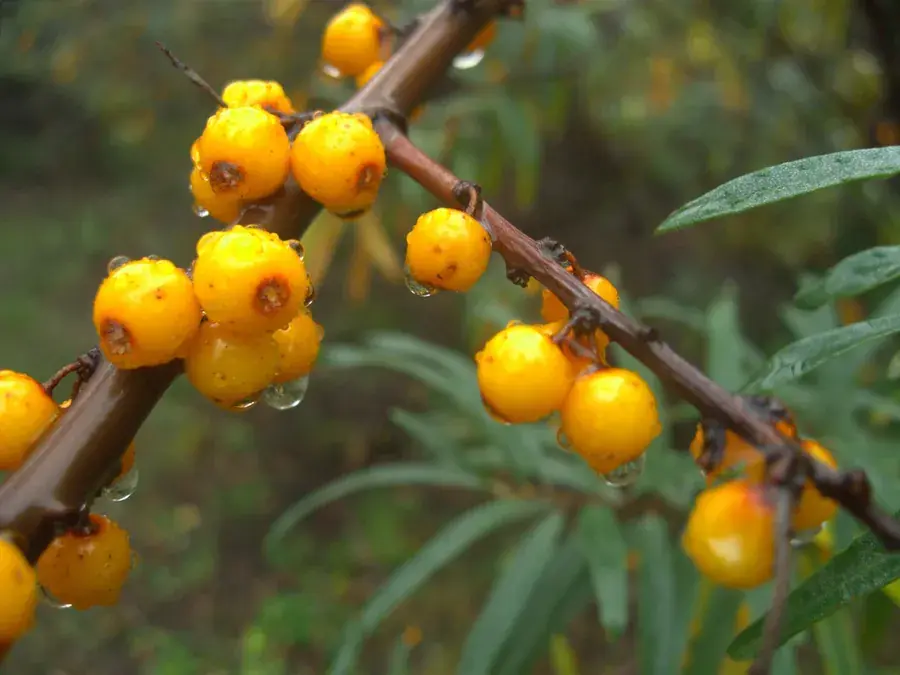 BerryAugust – October
Sea buckthorn
Hippophae rhamnoides
A thorny shrub with narrow, silvery-grey, willow-like leaves and branches packed with bright orange berries 6–8 mm (¼ in) across, from late summer into winter. Only female bushes fruit.
How to know it & its look-alikes →
Checked against these sources ·
- Wikipedia — Cantharellus cibarius
- Woodland Trust — Chanterelle
- First Nature — Cantharellus cibarius, Chanterelle
- Wikipedia — Cortinarius orellanus (fool’s webcap)
Seasons are typical for the middle of the range and move by weeks north and south, and up and down hills.
Educational information only. Never eat a wild plant or mushroom identified from a single photograph or description — confirm with a regional field guide or an experienced forager, and know the poisonous species in your area first.