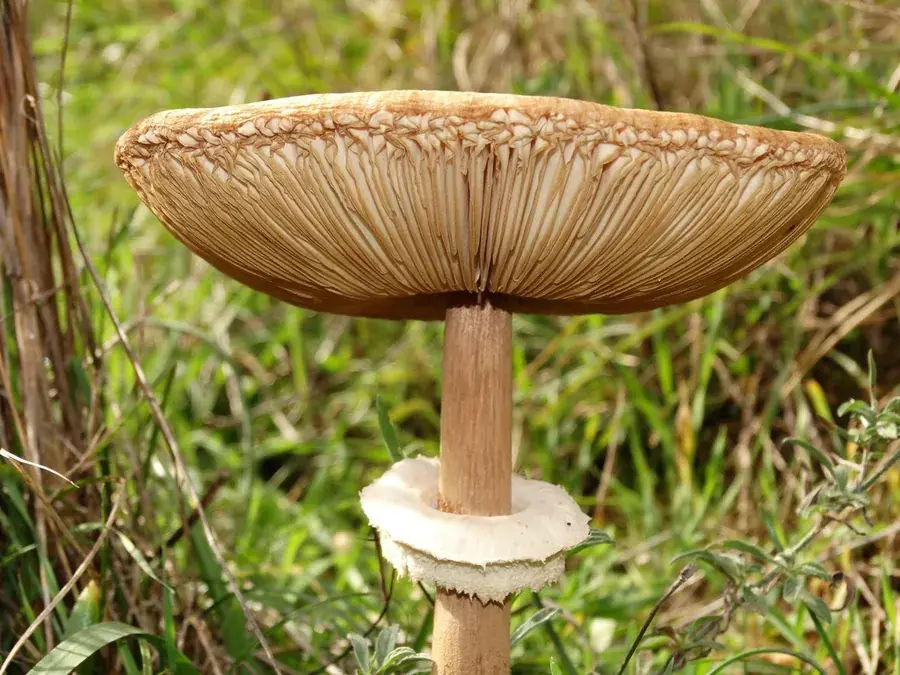
Photo by Kostas Zontanos on iNaturalist · CC BY 4.0
MushroomIn season now (October)
Parasol mushroom
Macrolepiota procera
This one has a dangerous look-alike
Small parasols (Lepiota), some deadly, look like miniature versions: never take one with a cap under 10 cm (4 in) or without the snakeskin stem. Shaggy parasols have no snakeskin and upset many people. Panther caps and other Amanitas have pale warts on a darker cap and a cup or rimmed bulb at the base, and young buttons of all of them look alike — pick only open caps.
- When
- Typically July – October — July, August, September, October. Earlier in warm, low country; later in the hills.
- Where it grows
- Pastures, road verges, grassy woodland clearings, dunes and seaside cliffs, alone or in rings.
- How to know it
- Big and tall: a cap 10–25 cm (4–10 in) across, pale with coarse brown scales and a dark central bump; a slender stem up to 40 cm (16 in) with brown snakeskin banding; a thick double-edged ring that slides up and down; free white gills and a white spore print.
- Harvest and use
- Caps only — the stems are woody. Egg-and-breadcrumb and fry like a schnitzel, as in central Europe, or stuff and bake the young drumstick caps.
- Caution
- No single feature is enough. The whole set every time: snakeskin stem, sliding double ring, free white gills, white print, cap over 10 cm.
Parasol mushroom at a glance
- Also called
- Parasol, snake’s hat; coulemelle or lépiote élevée (France), mazza di tamburo (Italy), Riesenschirmling (Germany), kania (Poland)
- Family
- Agaricaceae
- Where it grows
- Widespread in temperate Europe on well-drained soil: frequent in southern Britain and Ireland, less so in northern England and Scotland except on sheltered coasts, and common across mainland Europe to the Mediterranean. Whether North American parasols are the same species is not yet settled.
- When to pick
- July to November in Britain; summer and autumn across Europe, after rain.
- Parts used
- The cap. The stem is too fibrous to eat, though some people dry and powder it.
- More look-alikes to know
- The green-spored parasol (Chlorophyllum molybdites), the commonest cause of mushroom poisoning in North America, has greenish gills when mature, a green spore print and no snakeskin, and is reported to be spreading in Europe. Lepiota brunneoincarnata, a small parasol, has caused fatal poisonings in Spain.
Questions people ask about parasol mushroom
How do you identify a parasol mushroom?
By the full set: a big scaly cap 10–25 cm (4–10 in) across with a dark central bump, a tall stem with brown snakeskin banding, a thick double ring that slides up and down, free white gills and a white spore print. Young ones look like drumsticks.
What is the difference between a parasol and a shaggy parasol?
The stem. A parasol’s stem is snakeskin-patterned; a shaggy parasol’s is smooth, and its flesh reddens when cut. Shaggy parasols upset many people’s stomachs, so leave them.
Are small parasol mushrooms poisonous?
Some are deadly. Several small Lepiota species carry the same toxins as the death cap. Never pick a ‘parasol’ with a cap under 10 cm (4 in) across.
Can you eat parasol mushroom stems?
Not as they are — they are tough and fibrous. Use the caps, and dry the stems for powder if you like.
Found in these regions
Is it ready near you?
Get this week's foraging guide for your area
Enter a town, postal code or ZIP and we'll tell you what's in season right there this week — from your local climate, this week's weather and your ecological region.
Also ready in October
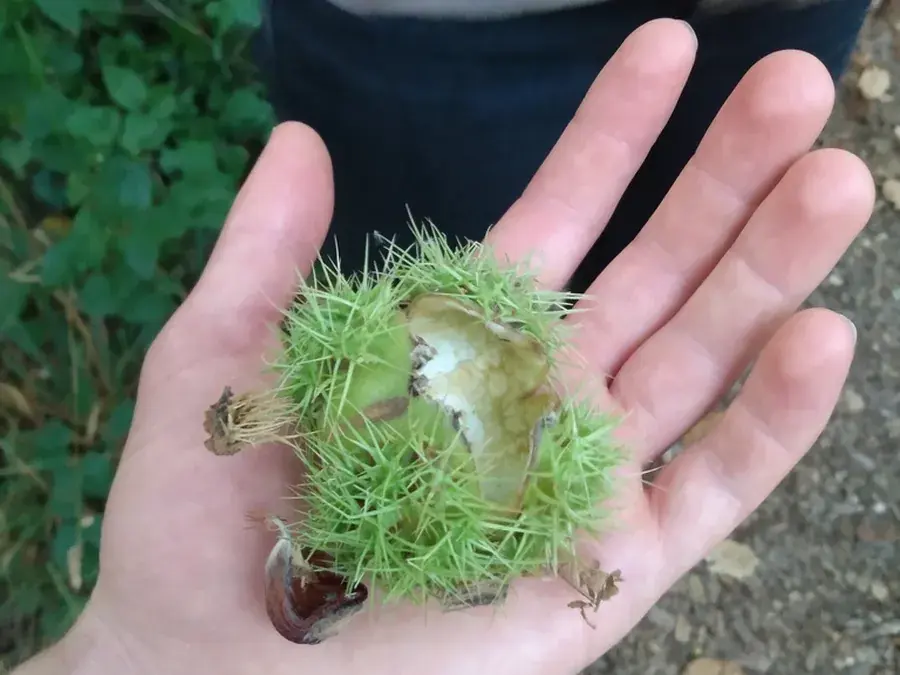 NutOctober – November
Sweet chestnut
Castanea sativa
A big tree with long, glossy leaves edged with sharp, regular teeth, and bark that twists in spiralling ridges on old trunks. The nuts come in twos and threes inside a husk covered in dense, needle-sharp spines; each is glossy brown, flat on one side, with a pointed tuft at the tip.
How to know it & its look-alikes →Photo: John Powers · CC BY 4.0
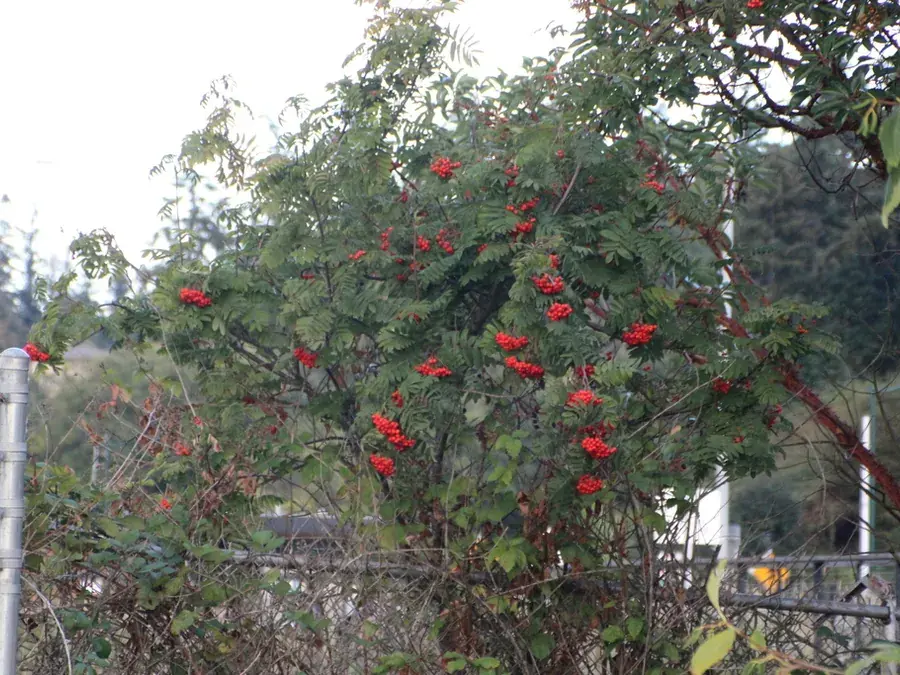 BerryAugust – October
Rowan berries
Sorbus aucuparia
A slim tree with smooth silvery-grey bark and feathery leaves of many toothed leaflets in pairs; big flat clusters of scarlet-orange berries, each about 1 cm (⅜ in) across with a tiny black five-pointed star at the tip.
How to know it & its look-alikes →Photo: Therese Phillips · CC BY 4.0
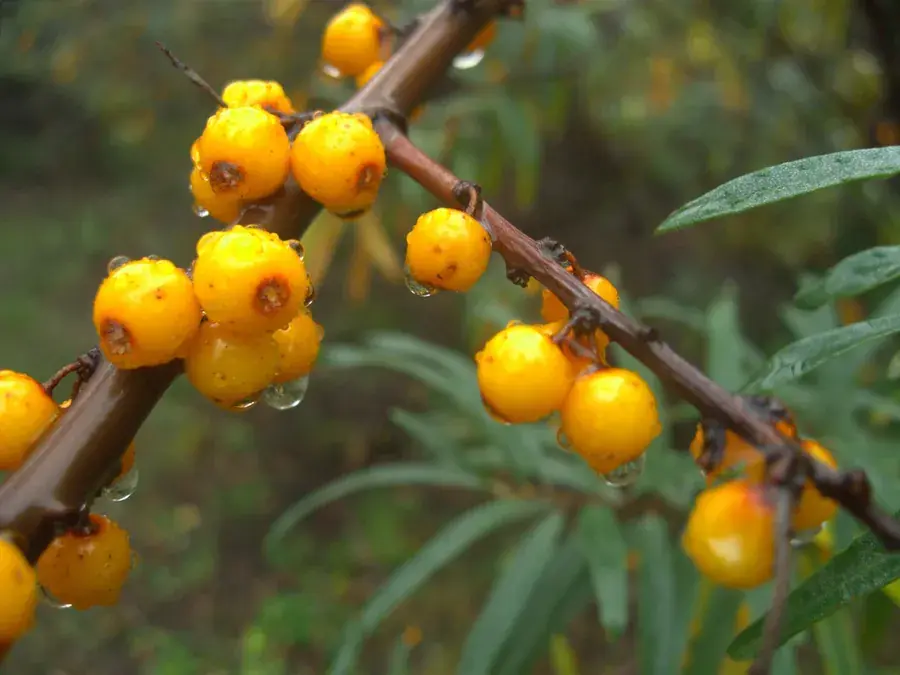 BerryAugust – October
Sea buckthorn
Hippophae rhamnoides
A thorny shrub with narrow, silvery-grey, willow-like leaves and branches packed with bright orange berries 6–8 mm (¼ in) across, from late summer into winter. Only female bushes fruit.
How to know it & its look-alikes →
Checked against these sources ·
Seasons are typical for the middle of the range and move by weeks north and south, and up and down hills.
Educational information only. Never eat a wild plant or mushroom identified from a single photograph or description — confirm with a regional field guide or an experienced forager, and know the poisonous species in your area first.