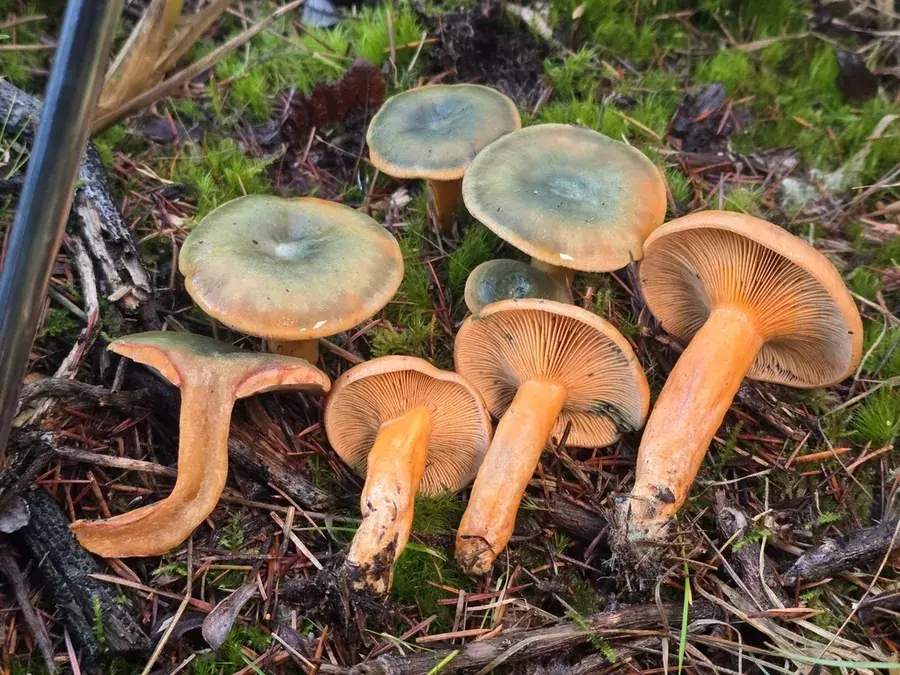
Photo by Alan Rockefeller on iNaturalist · CC BY 4.0
MushroomIn season now (October)
Saffron milk cap
Lactarius deliciosus
- When
- Typically August – November — August, September, October, November. Earlier in warm, low country; later in the hills.
- Where it grows
- Under pines on acid or sandy soil, often in big groups; the great hunting grounds are the pinewoods of Spain, Portugal, southern France, Italy and Cyprus.
- How to know it
- A carrot-orange cap with darker concentric rings, inrolled at first and later funnel-shaped, on a short, often hollow stem. Break it and it bleeds carrot-orange milk; bruised and handled parts slowly turn green.
- Look-alikes
- Woolly milkcap, under birch, is pinker, with a shaggy, woolly rim and white, peppery milk, and it causes stomach upsets. False saffron milk cap, under spruce, has orange milk that turns wine-red within half an hour and is edible. White milk means leave it.
- Harvest and use
- Fried cap-down in olive oil with garlic and parsley, as in Spain; grilled; or salted and pickled, as in Russia and Poland. Firm and nutty, sometimes a little bitter.
- Caution
- A big meal can turn your urine orange-red. It is harmless — but alarming if nobody warned you.
Saffron milk cap at a glance
- Also called
- Red pine mushroom, delicious milk cap; níscalo or robellón (Spain), rovelló (Catalonia), rydz (Poland), ryzhik (Russia)
- Family
- Russulaceae
- Where it grows
- A European species of pine forest: the Mediterranean pinewoods of Spain, Portugal, southern France, Italy, Greece and Cyprus, north through central Europe to the pine forests of Scandinavia and Russia; widespread but uncommon in Britain and Ireland. It has travelled with planted pines to Chile, Australia, New Zealand and South Africa.
- When to pick
- August to October in Britain and northern Europe. In Spain and around the Mediterranean the main flush follows the autumn rains, in October and November.
- Parts used
- The whole mushroom, cooked, salted or pickled.
Questions people ask about saffron milk cap
How do you identify a saffron milk cap?
A carrot-orange cap with darker rings, growing under pine; break it and it bleeds carrot-orange milk, and bruised parts slowly turn green. The gills run a little down the short stem.
Why did my urine turn red after eating saffron milk caps?
Eating a lot of them can turn urine orange to red. It is harmless and passes.
What is the difference between saffron milk cap and false saffron milk cap?
Where they grow and what the milk does. The saffron milk cap is a pine mushroom whose orange milk stays orange; the false saffron milk cap grows under spruce, and its milk turns wine-red within ten to thirty minutes. Both are edible; the false one is often bitter and maggoty.
Are there poisonous mushrooms that look like saffron milk caps?
The woolly milkcap, under birch, is pinker with a shaggy woolly rim and white, peppery milk, and it causes stomach upsets unless specially prepared. Any milk cap that bleeds white milk is not a saffron milk cap.
Found in these regions
Is it ready near you?
Get this week's foraging guide for your area
Enter a town, postal code or ZIP and we'll tell you what's in season right there this week — from your local climate, this week's weather and your ecological region.
Also ready in October
 NutOctober – November
Sweet chestnut
Castanea sativa
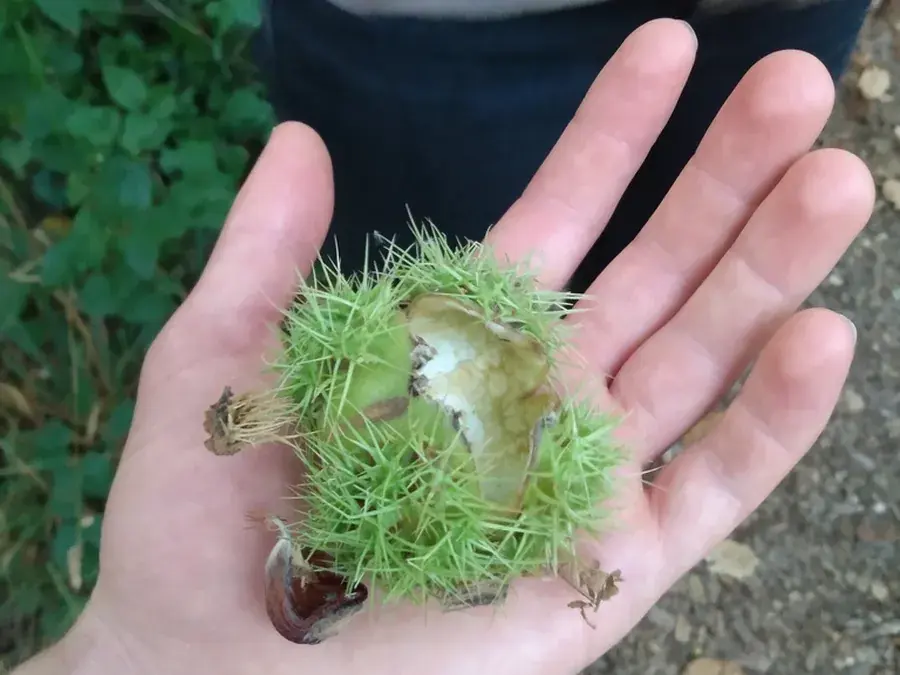
A big tree with long, glossy leaves edged with sharp, regular teeth, and bark that twists in spiralling ridges on old trunks. The nuts come in twos and threes inside a husk covered in dense, needle-sharp spines; each is glossy brown, flat on one side, with a pointed tuft at the tip.
How to know it & its look-alikes →Photo: John Powers · CC BY 4.0
 BerryAugust – October
Rowan berries
Sorbus aucuparia
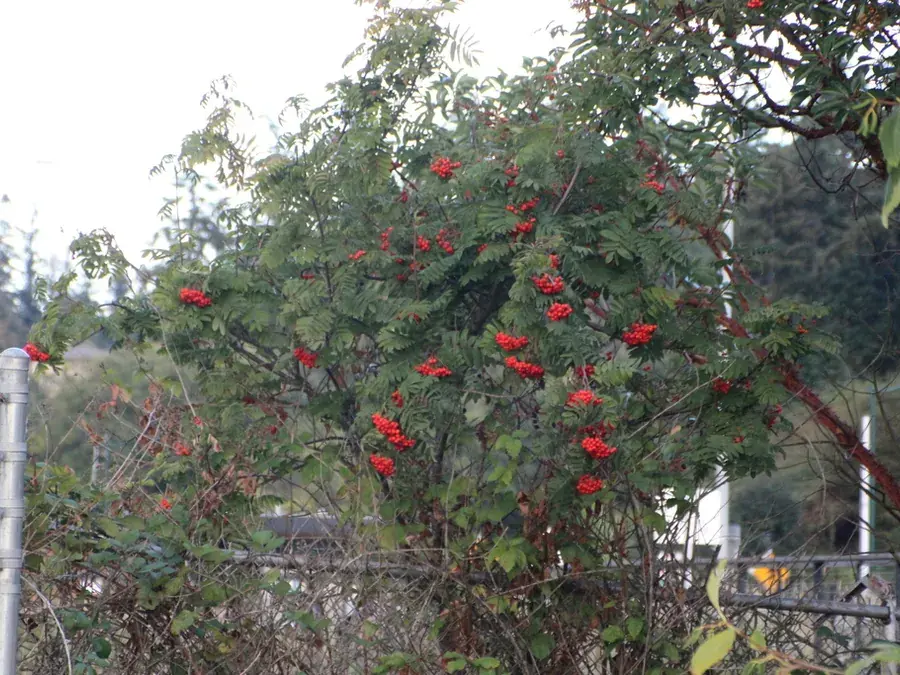
A slim tree with smooth silvery-grey bark and feathery leaves of many toothed leaflets in pairs; big flat clusters of scarlet-orange berries, each about 1 cm (⅜ in) across with a tiny black five-pointed star at the tip.
How to know it & its look-alikes →Photo: Therese Phillips · CC BY 4.0
 BerryAugust – October
Sea buckthorn
Hippophae rhamnoides
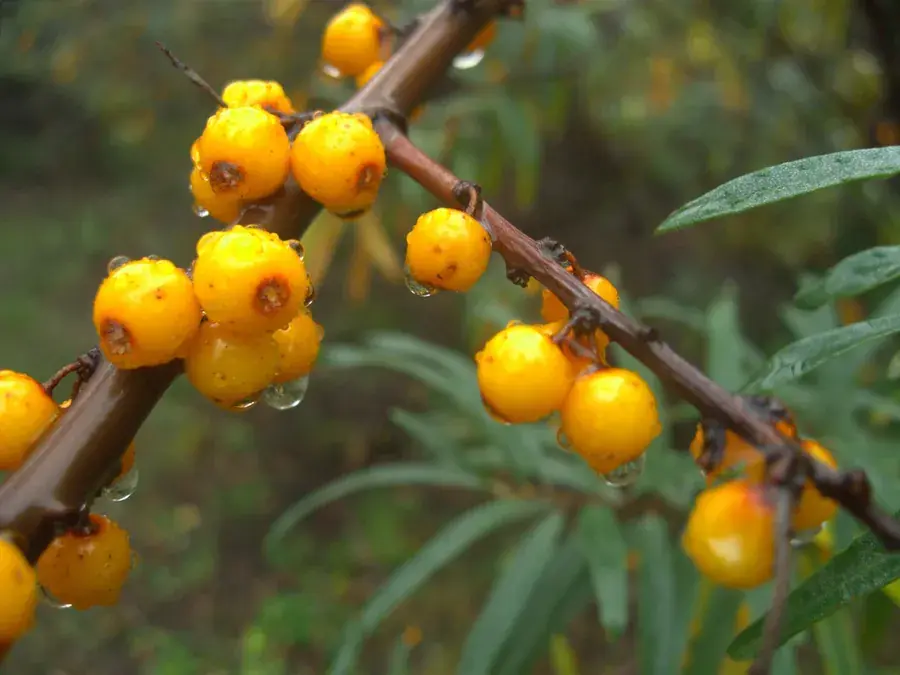
A thorny shrub with narrow, silvery-grey, willow-like leaves and branches packed with bright orange berries 6–8 mm (¼ in) across, from late summer into winter. Only female bushes fruit.
How to know it & its look-alikes →
Checked against these sources ·
- Wikipedia — Lactarius deliciosus
- First Nature — Lactarius deliciosus, Saffron Milkcap
- Wikipedia — Lactarius deterrimus (false saffron milkcap)
Seasons are typical for the middle of the range and move by weeks north and south, and up and down hills.
Educational information only. Never eat a wild plant or mushroom identified from a single photograph or description — confirm with a regional field guide or an experienced forager, and know the poisonous species in your area first.