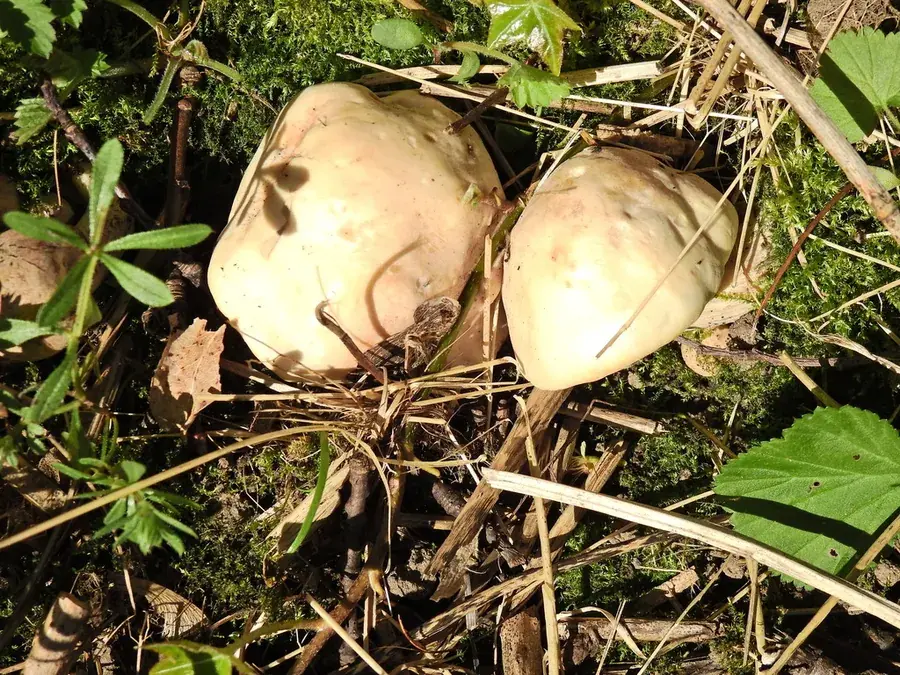
Photo by Susan Marley on iNaturalist · CC BY 4.0
MushroomSeason: April – May
St George’s mushroom
Calocybe gambosa
This one has a dangerous look-alike
The deadly fibrecap fruits in late spring and summer in the same places: its cap is conical and silky-streaked, bruises and ages brick-red, and it drops a brown spore print. It has killed. Livid entoloma (later in the year, with pinkish gills and a pink print) and the small white lawn funnels (summer and autumn, gills running down the stem) are poisonous too.
- When
- Typically April – May — April, May. Earlier in warm, low country; later in the hills.
- Where it grows
- Grassland — chalk and limestone downs, pastures, mown verges and woodland edges — often in rings or arcs that return to the same spot for decades.
- How to know it
- A stocky, white to cream mushroom with a thick, smooth cap 5–15 cm (2–6 in) across, crowded narrow white gills, a fat stem with no ring, a white spore print, and a strong smell of wet flour or cucumber. It is up in spring, when few large pale mushrooms are.
- Harvest and use
- Firm and mealy raw; cooking turns the floury smell into a rich flavour. Fried in butter, or in an omelette as in Bilbao.
- Caution
- Take a spore print of your first finds and of any that stain red. White print, mealy smell, no reddening — and still check every one.
St George’s mushroom at a glance
- Also called
- Maipilz (Germany), mousseron or tricholome de la Saint-Georges (France), marzolino or prugnolo (Italy), perretxiko (Basque Country), vårmousseron (Denmark)
- Family
- Lyophyllaceae
- Where it grows
- Grassland across Europe, especially on chalk and limestone. Infrequent but locally plentiful in Britain and Ireland — the South Downs have rings that seem to be centuries old — common on the Swedish Baltic islands of Öland and Gotland, and picked in quantity in Romania, Hungary and Turkey, which export it to the markets of northern Spain.
- When to pick
- Spring. In Britain it is usually up by St George’s Day, 23 April, and runs into June; in Italy it comes in March, and in Germany rarely before May. Pick in dry weather.
- Parts used
- The whole mushroom, cooked. Older specimens are often maggoty — take firm young ones.
Questions people ask about st george’s mushroom
When does St George’s mushroom appear?
In spring: from around 23 April in Britain until June, as early as March in Italy (where it is called marzolino) and from May in Germany (Maipilz). It is usually the first big edible mushroom of the year.
What does St George’s mushroom smell like?
Strongly of wet flour, or cucumber — a smell called ‘mealy’. Cooking turns most of it into a rich flavour.
What mushrooms can be mistaken for St George’s mushroom?
The deadly fibrecap (Inosperma erubescens), which fruits in the same places from late spring: a conical, silky-fibred cap that stains brick-red, and a brown spore print. It contains muscarine and has killed. Livid entoloma has a pink spore print; the small white lawn funnels have gills running down the stem. St George’s is stocky, white, mealy-smelling, with a white print.
Where do St George’s mushrooms grow?
In grass — pastures, chalk downland, mown verges near hedges and woodland edges — often in rings that come back year after year.
What should children know about mushrooms in the lawn?
Never to taste one. Small white funnel mushrooms in lawns and parks contain muscarine, and toddlers are the ones most likely to find them. If a child may have eaten a wild mushroom, keep a sample and call a poison centre straight away.
Found in these regions
Is it ready near you?
Get this week's foraging guide for your area
Enter a town, postal code or ZIP and we'll tell you what's in season right there this week — from your local climate, this week's weather and your ecological region.
Also ready in October
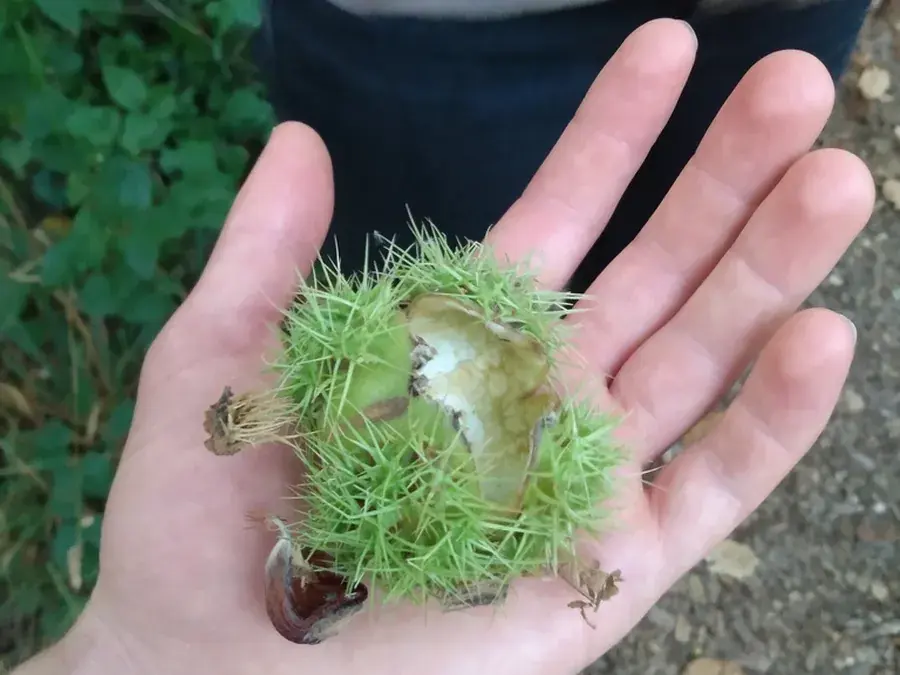 NutOctober – November
Sweet chestnut
Castanea sativa
A big tree with long, glossy leaves edged with sharp, regular teeth, and bark that twists in spiralling ridges on old trunks. The nuts come in twos and threes inside a husk covered in dense, needle-sharp spines; each is glossy brown, flat on one side, with a pointed tuft at the tip.
How to know it & its look-alikes →Photo: John Powers · CC BY 4.0
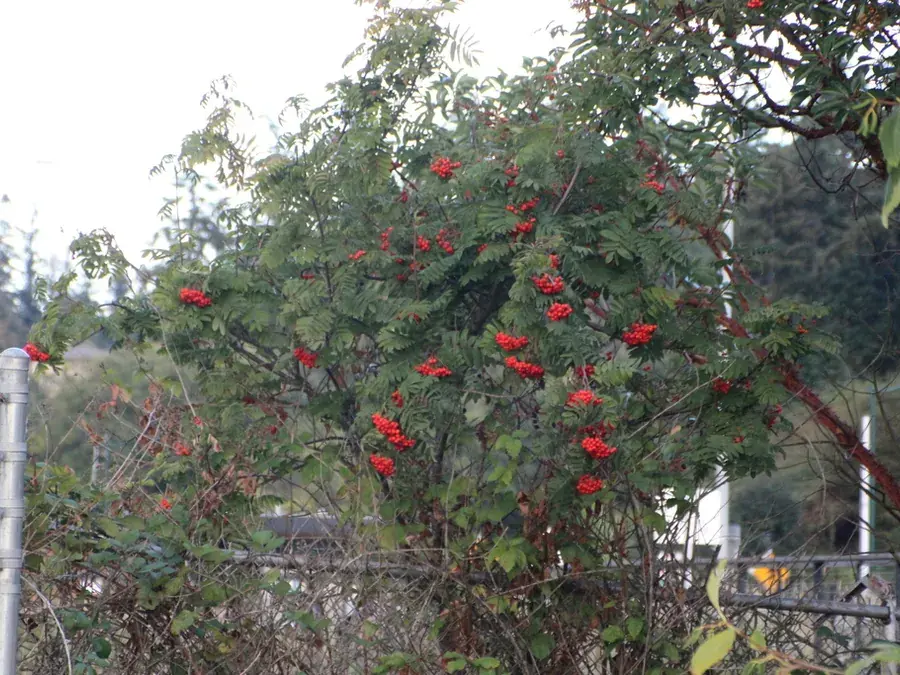 BerryAugust – October
Rowan berries
Sorbus aucuparia
A slim tree with smooth silvery-grey bark and feathery leaves of many toothed leaflets in pairs; big flat clusters of scarlet-orange berries, each about 1 cm (⅜ in) across with a tiny black five-pointed star at the tip.
How to know it & its look-alikes →Photo: Therese Phillips · CC BY 4.0
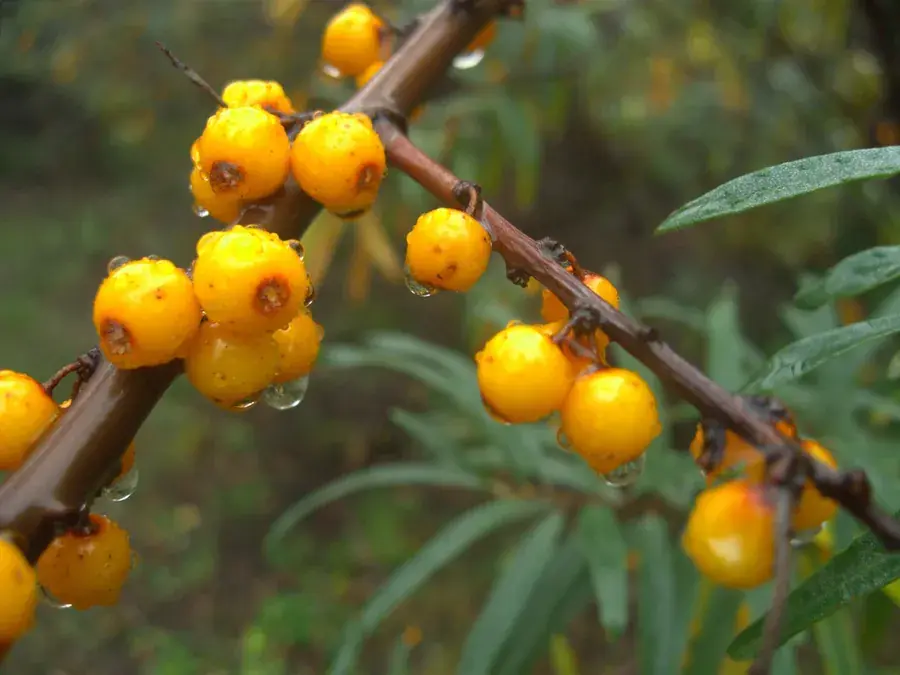 BerryAugust – October
Sea buckthorn
Hippophae rhamnoides
A thorny shrub with narrow, silvery-grey, willow-like leaves and branches packed with bright orange berries 6–8 mm (¼ in) across, from late summer into winter. Only female bushes fruit.
How to know it & its look-alikes →
Checked against these sources ·
- Wikipedia — Calocybe gambosa
- First Nature — Calocybe gambosa, St George’s Mushroom
- First Nature — Inocybe erubescens, Deadly Fibrecap
Seasons are typical for the middle of the range and move by weeks north and south, and up and down hills.
Educational information only. Never eat a wild plant or mushroom identified from a single photograph or description — confirm with a regional field guide or an experienced forager, and know the poisonous species in your area first.