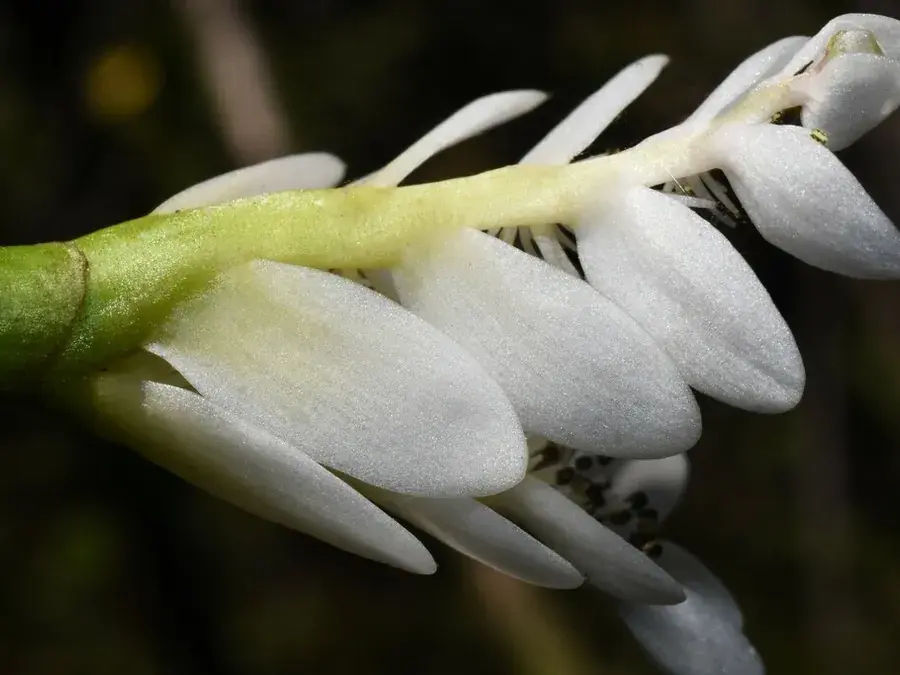
Photo by Gabriel Campbell-Martinez on iNaturalist · CC BY 4.0
GreenIn season now (October)
Waterblommetjie (Cape pondweed)
Aponogeton distachyos
- When
- Typically June – October — June, July, August, September, October. Earlier in warm, low country; later in the hills.
- Where it grows
- Seasonal ponds and vleis 1–2 m deep in the winter-rainfall Cape, which often dry out in summer; farmed in dams for the market.
- How to know it
- Long-stalked, narrow-oval leaves floating flat on the water, and above them forked white flower spikes shaped like a 'Y', each branch lined with white petal-like bracts and dark purple-brown stamens, sweetly scented. The plant dies back as the pools dry in summer and regrows with the autumn rain.
- Look-alikes
- Nothing else in a Cape vlei carries a forked, white, scented flower spike above floating leaves.
- Harvest and use
- Pick the flower heads and buds, wash them well and cook them — above all in waterblommetjiebredie, the Cape stew of mutton or lamb, onions and potatoes, often with a few leaves of wild sorrel.
- Caution
- Most waterblommetjies sold are farmed, and nobody knows what wild picking does to the plant. In the wild, pick only with the landowner's permission, never in a reserve, and only from clean water: the plant is sensitive to herbicides and pesticides, and vleis by farms and roads collect run-off.
Waterblommetjie (Cape pondweed) at a glance
- Also called
- Cape pondweed, water hawthorn, vleikos
- Family
- Aponogetonaceae (the cape-pondweeds)
- Where it grows
- Native to South Africa's winter-rainfall region, above all the Western Cape, where CapeNature knows it from at least 100 places, and into the winter-rainfall parts of the Northern and Eastern Cape. Naturalised in ponds in Chile, Argentina, Australia, New Zealand, the USA, the UK and parts of Europe.
- When to pick
- Winter and spring, with the rain: flowering runs from about June to mid-October. In summer the pools dry out and the plant rests underground as a tuber.
- Parts used
- Only the flowers and flower buds. Not the leaves or tubers.
Questions people ask about waterblommetjie
What is a waterblommetjie?
The edible flower spike of Aponogeton distachyos, a floating water plant native to the Cape's winter-rainfall vleis. The Afrikaans name means 'little water flower', and it is cooked as a vegetable, most famously in waterblommetjiebredie.
When are waterblommetjies in season?
From about June to mid-October, while the plants flower in the winter rain.
What part of the waterblommetjie do you eat?
Only the flowers and buds. They are cooked with onions, mutton or lamb and potatoes, often with a few leaves of the local sorrel, to make waterblommetjiebredie.
Can I pick waterblommetjies in the wild?
Only with the landowner's permission and outside reserves. The plant is widespread and not threatened, but CapeNature notes that the impact of wild harvesting is unknown, and most waterblommetjies sold come from farm dams.
Found in these regions
Is it ready near you?
Get this week's foraging guide for your area
Enter a town, postal code or ZIP and we'll tell you what's in season right there this week — from your local climate, this week's weather and your ecological region.
Also ready in October
 FruitOctober – February
Baobab (fruit and leaves)
Adansonia digitata
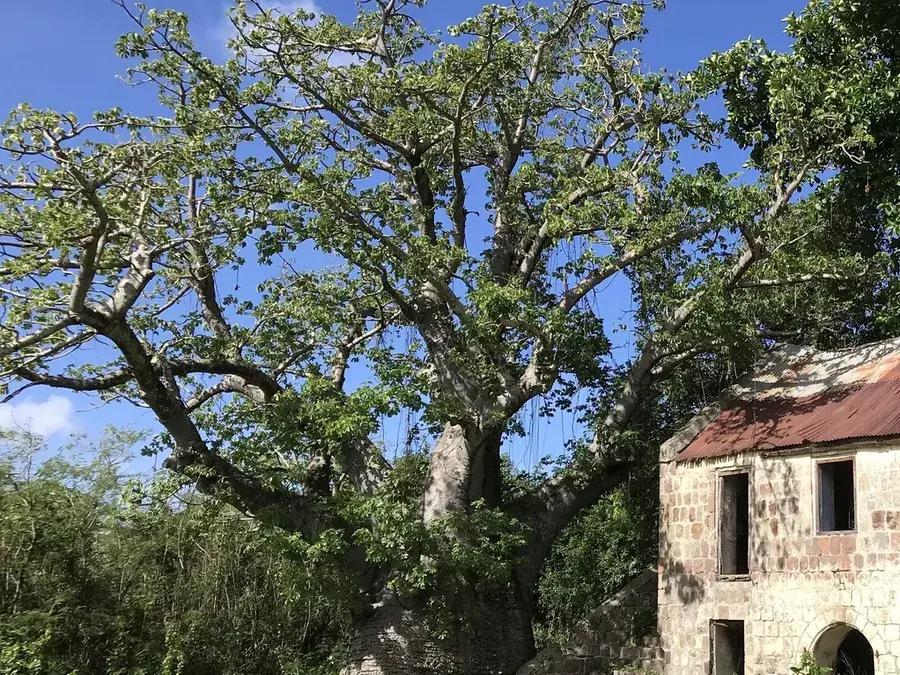
A vast, swollen grey trunk with smooth, folded bark and stubby branches that look like roots, bare of leaves for most of the dry season. The leaves are hand-shaped, with five to seven finger-like leaflets. The fruit is a velvety, egg- to sausage-shaped pod up to 25 cm (10 in) long on a long hanging stalk: a hard woody shell around chalky, off-white pulp and black kidney-shaped seeds.
How to know it & its look-alikes →Photo: Cliff Tyllick · CC BY 4.0
 Has a dangerous look-alikeGreenMay – October
Amaranth greens (morogo, mchicha)
Amaranthus spp.
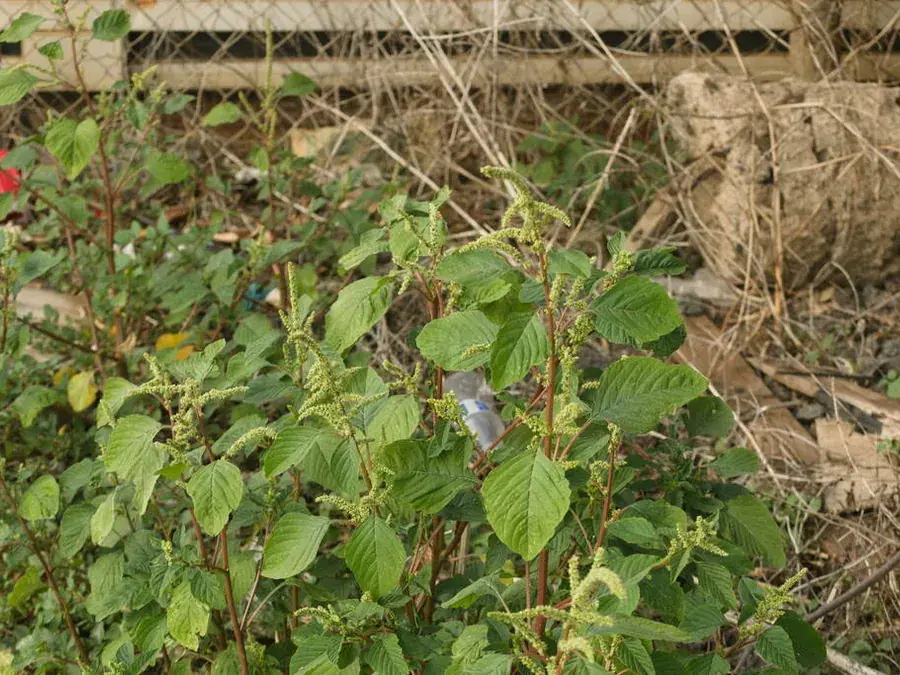
Upright or sprawling herbs, often with reddish stems, carrying alternate, oval to diamond-shaped, smooth-edged leaves on long stalks, and dense, bristly spikes of tiny green or reddish flowers at the top and in the leaf joints. No milky sap, no berries, no trumpet flowers. Spiny amaranth has a pair of sharp spines at each leaf base.
How to know it & its look-alikes →Photo: Kevin Faccenda · CC BY 4.0
 Has a dangerous look-alikeMushroomMay – October
Termite mushrooms (omajowa)
Termitomyces spp.
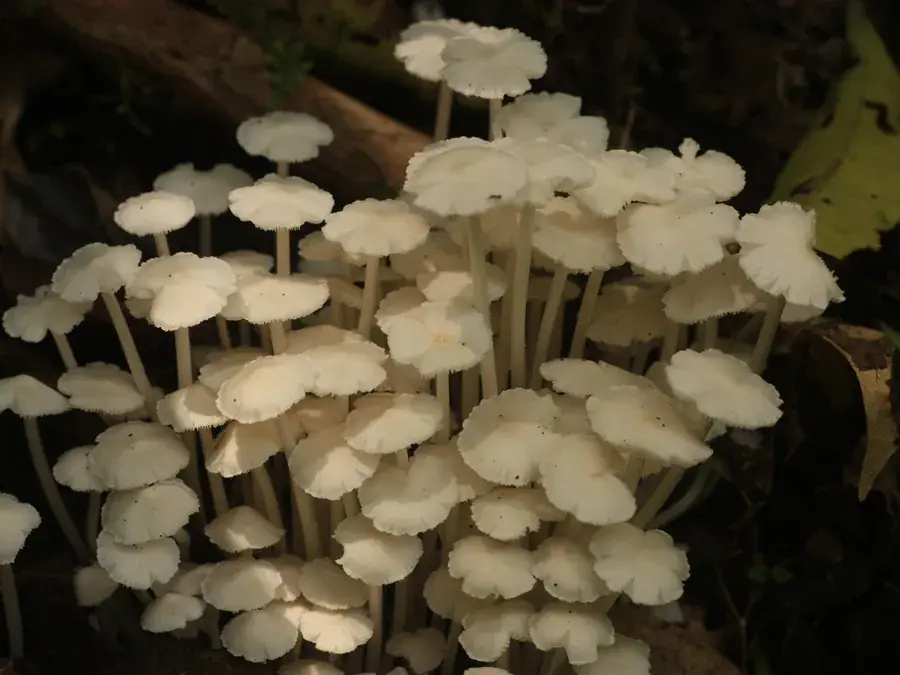
It grows out of a termite mound or the ground over a termite nest, never from wood. The cap usually has a pointed nipple at its centre, and the stem tapers into a long, tough root (pseudorhiza) that runs down — sometimes a metre or more — to the termites' fungus garden. Sizes run from a few centimetres (Termitomyces microcarpus, in crowds) to frying-pan caps of 15–40 cm (T. schimperi) and, in T. titanicus, up to a metre across.
How to know it & its look-alikes →Photo: madhavan a.p · CC BY 4.0
Checked against these sources ·
- CapeNature — Aponogeton distachyos, the waterblommetjie
- SANBI PlantZAfrica — Aponogeton distachyos
- Wikipedia — Aponogeton distachyos
Seasons are typical for the middle of the range and move by weeks north and south, and up and down hills.
Educational information only. Never eat a wild plant or mushroom identified from a single photograph or description — confirm with a regional field guide or an experienced forager, and know the poisonous species in your area first.