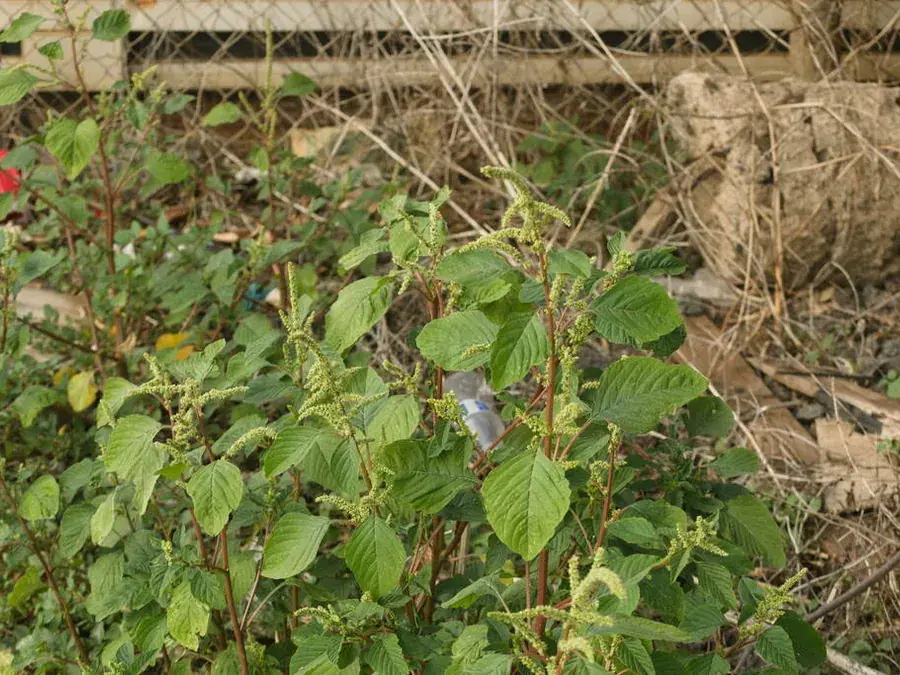
Photo by Kevin Faccenda on iNaturalist · CC BY 4.0
GreenIn season now (October)
Amaranth greens (morogo, mchicha)
Amaranthus spp.
This one has a dangerous look-alike
Thorn apple (Datura) seedlings come up in the same maize fields and gardens and can kill: their leaves are larger, with coarse, irregular teeth, and smell rank when crushed, and the plant soon carries big white or purple trumpet flowers and a spiny seed pod. Nightshades (Solanum) have star-shaped flowers and berries. Amaranth has neither — only bristly flower spikes.
- When
- Typically May – October — May, June, July, August, September, October. Earlier in warm, low country; later in the hills.
- Where it grows
- Fields, gardens, field edges and freshly disturbed, fertile ground; it comes up with the rains, and in many places farmers spare it while weeding.
- How to know it
- Upright or sprawling herbs, often with reddish stems, carrying alternate, oval to diamond-shaped, smooth-edged leaves on long stalks, and dense, bristly spikes of tiny green or reddish flowers at the top and in the leaf joints. No milky sap, no berries, no trumpet flowers. Spiny amaranth has a pair of sharp spines at each leaf base.
- Harvest and use
- Pick young leaves and tips before the plant flowers. Cook them like spinach in plenty of water, pour the water off, then add them to stews, peanut sauce or relish to eat with pap or ugali — the way morogo is eaten in South Africa and mchicha in East Africa. Cutting the tops makes the plant branch and give more.
- Caution
- Amaranth stores nitrate, mostly in the stems, and oxalate like other leafy greens; cooking in ample water and throwing the water away takes out much of both. Avoid plants from heavily manured or sprayed fields, roadsides and rubbish tips.
Amaranth greens (morogo, mchicha) at a glance
- Also called
- Morogo or moroho (South Africa — a name shared with other wild greens), pigweed, African spinach, hanekam (Afrikaans), mchicha (Swahili), brède (French)
- Family
- Amaranthaceae
- Where it grows
- Throughout Africa's tropical and subtropical farmland, wherever the ground is disturbed and fertile: wild, weedy and half-cultivated across West, Central, East and southern Africa and Madagascar, and probably in all of Africa's lowland areas. Several species are gathered — Amaranthus hybridus, A. dubius, A. spinosus, A. cruentus and others — and all are eaten the same way.
- When to pick
- With the rains. Leaves are best young, before the plant flowers; a first cutting can come three to four weeks after the plants appear, and cutting 10–15 cm (4–6 in) above the ground leaves buds to regrow for more pickings every two or three weeks.
- Parts used
- Young leaves and tender shoot tips, cooked. The seeds of grain amaranths are eaten too, but wild weedy plants are gathered for their leaves.
- Is any of it poisonous?
- Not poisonous, but the stems and leaves accumulate nitrate, especially on heavily fertilised ground, and contain oxalate at levels like other leafy greens. Cook in plenty of water and discard the water, as most African cooks do.
- More look-alikes to know
- Datura is the one to know: it is deadly and its seedlings come up among the amaranth in maize fields. See the thorn apple hazard entry.
Questions people ask about amaranth greens
What is morogo?
Morogo (or moroho) is the South African name for a group of dark leafy wild greens, amaranth (pigweed) chief among them, cooked like spinach and eaten with pap. It is a traditional dish and an important part of the diet in rural communities.
Is wild amaranth safe to eat?
Yes, cooked. Boil it in plenty of water and pour the water off, since the plant can hold nitrate and oxalate, and gather it from clean ground away from roads, rubbish tips and sprayed fields.
How do I tell amaranth from Datura seedlings?
Amaranth leaves are smooth-edged on long stalks, and the plant soon carries bristly spikes of tiny flowers. Datura leaves are larger, with coarse, irregular teeth and a rank smell when crushed, and the plant carries big trumpet flowers and spiny seed pods. Datura can kill; if in doubt, leave it out.
When do you pick amaranth greens?
Young, before the plant flowers. Cut the tops 10–15 cm above the ground and the plant regrows for another picking a few weeks later.
Found in these regions
Is it ready near you?
Get this week's foraging guide for your area
Enter a town, postal code or ZIP and we'll tell you what's in season right there this week — from your local climate, this week's weather and your ecological region.
Also ready in October
 FruitOctober – February
Baobab (fruit and leaves)
Adansonia digitata
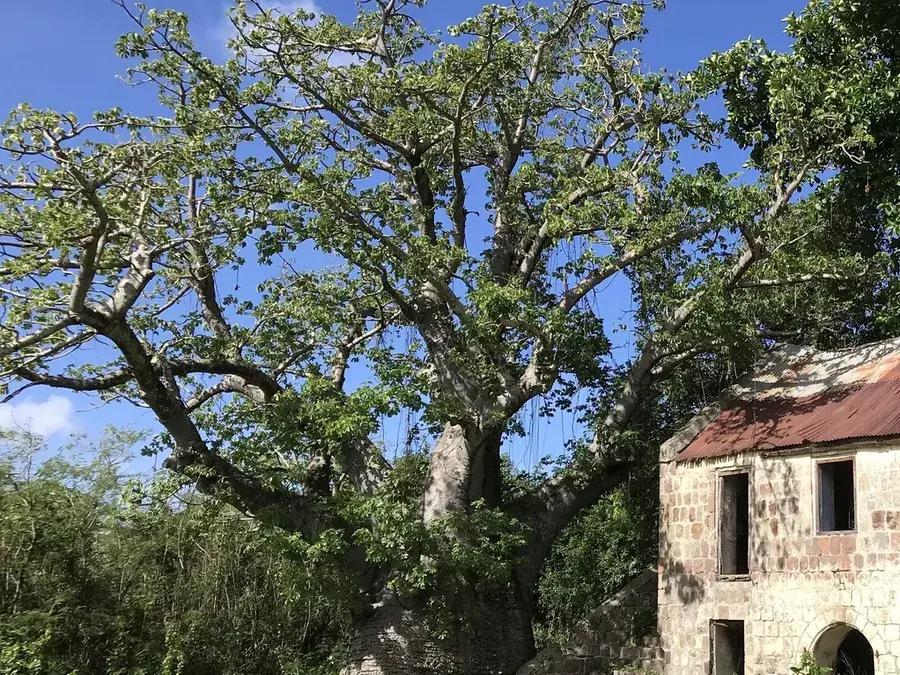
A vast, swollen grey trunk with smooth, folded bark and stubby branches that look like roots, bare of leaves for most of the dry season. The leaves are hand-shaped, with five to seven finger-like leaflets. The fruit is a velvety, egg- to sausage-shaped pod up to 25 cm (10 in) long on a long hanging stalk: a hard woody shell around chalky, off-white pulp and black kidney-shaped seeds.
How to know it & its look-alikes →Photo: Cliff Tyllick · CC BY 4.0
 GreenJune – October
Waterblommetjie (Cape pondweed)
Aponogeton distachyos
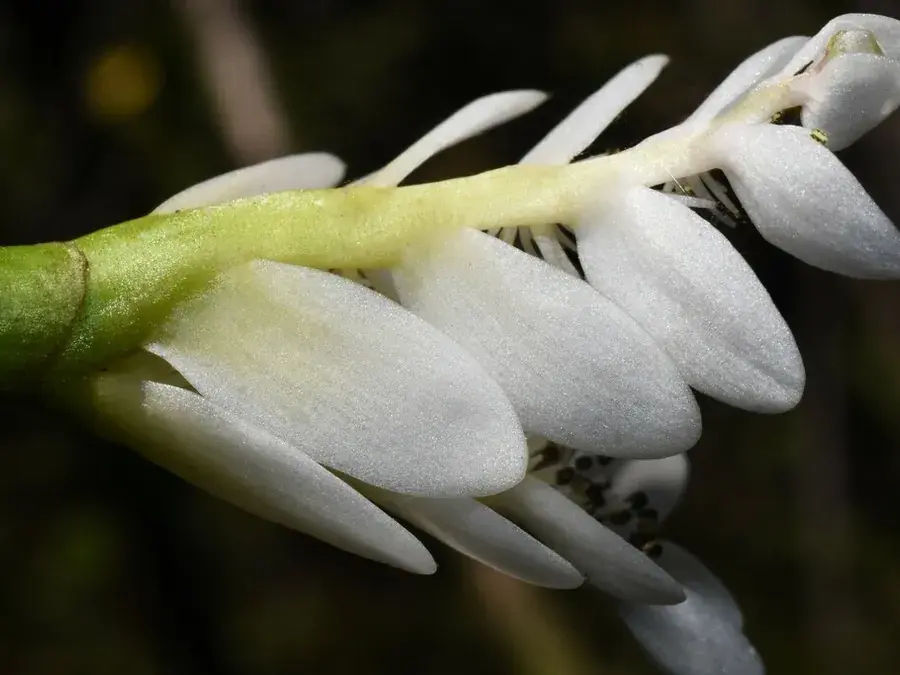
Long-stalked, narrow-oval leaves floating flat on the water, and above them forked white flower spikes shaped like a 'Y', each branch lined with white petal-like bracts and dark purple-brown stamens, sweetly scented. The plant dies back as the pools dry in summer and regrows with the autumn rain.
How to know it & its look-alikes →Photo: Gabriel Campbell-Martinez · CC BY 4.0
 Has a dangerous look-alikeMushroomMay – October
Termite mushrooms (omajowa)
Termitomyces spp.
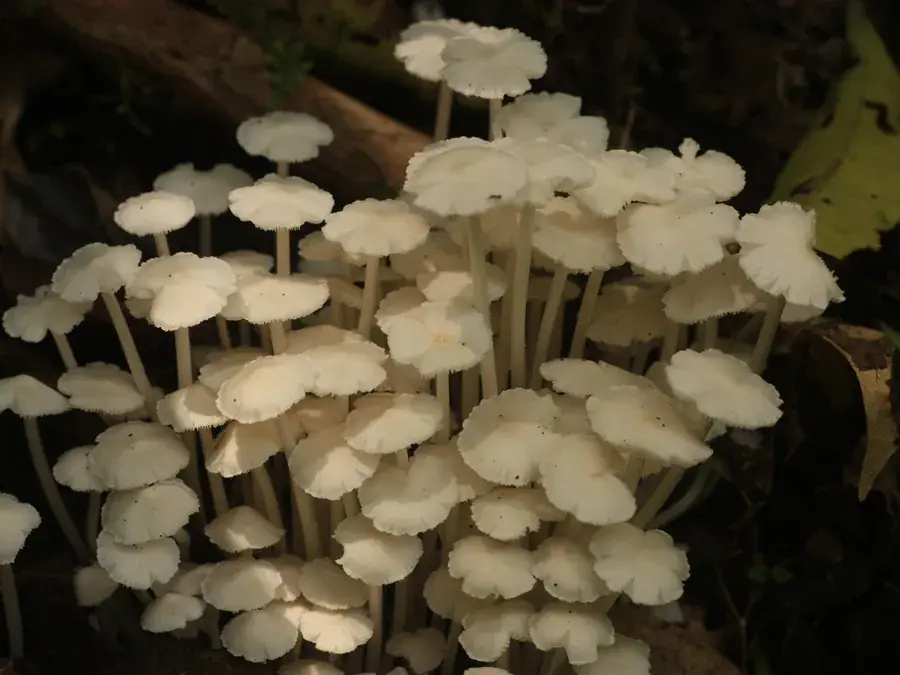
It grows out of a termite mound or the ground over a termite nest, never from wood. The cap usually has a pointed nipple at its centre, and the stem tapers into a long, tough root (pseudorhiza) that runs down — sometimes a metre or more — to the termites' fungus garden. Sizes run from a few centimetres (Termitomyces microcarpus, in crowds) to frying-pan caps of 15–40 cm (T. schimperi) and, in T. titanicus, up to a metre across.
How to know it & its look-alikes →Photo: madhavan a.p · CC BY 4.0
Checked against these sources ·
Seasons are typical for the middle of the range and move by weeks north and south, and up and down hills.
Educational information only. Never eat a wild plant or mushroom identified from a single photograph or description — confirm with a regional field guide or an experienced forager, and know the poisonous species in your area first.