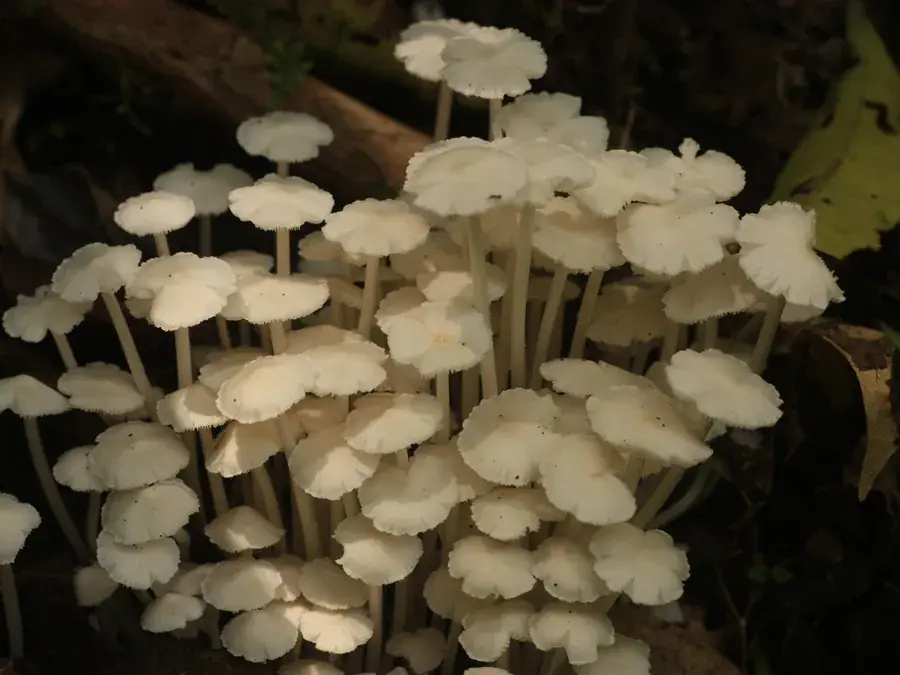
Photo by madhavan a.p on iNaturalist · CC BY 4.0
MushroomIn season now (October)
Termite mushrooms (omajowa)
Termitomyces spp.
This one has a dangerous look-alike
Deadly Amanitas come up in the same woodland after rain: they rise from a swollen bulb or a sac-like cup at the base, have white gills and often a ring, and have no long root into a termite nest. The green-spored parasol (Chlorophyllum molybdites) is big, pale and scaly, grows in grass, and has poisoned many people in Asia who took it for a termite mushroom; it has a ring and drops a green spore print. Death cap has reached South Africa and grows in cool, moist plantations.
- When
- Typically May – October — May, June, July, August, September, October. Earlier in warm, low country; later in the hills.
- Where it grows
- On and around the mounds of fungus-farming termites (Macrotermes and their relatives) in savanna, woodland and fields, right after soaking rains.
- How to know it
- It grows out of a termite mound or the ground over a termite nest, never from wood. The cap usually has a pointed nipple at its centre, and the stem tapers into a long, tough root (pseudorhiza) that runs down — sometimes a metre or more — to the termites' fungus garden. Sizes run from a few centimetres (Termitomyces microcarpus, in crowds) to frying-pan caps of 15–40 cm (T. schimperi) and, in T. titanicus, up to a metre across.
- Harvest and use
- Dig beside the stem until you can see the root going down into the nest — that root is the identification — then cut the mushroom and leave the rest; the same mound can fruit again for years. Cook them the same day — fried, stewed, or treated like steak.
- Caution
- If you can't see the root going down into a termite nest, it is not a termite mushroom. If you are new to them, buy from people who gather them every season.
Termite mushrooms (omajowa) at a glance
- Also called
- Omajowa (plural) and ejova (Otjiherero, Namibia), Termitenpilz (Namibian German), chi-ngulu-ngulu (T. titanicus, Zambia); about 50 species of Termitomyces
- Family
- Lyophyllaceae
- Where it grows
- Wherever fungus-farming termites build their nests, across the savannas and forests of West, Central, East and southern Africa. Termitomyces schimperi alone runs from Côte d'Ivoire to DR Congo, Malawi, Mozambique and northern Namibia, where it fruits on the tall mounds of central and northern Namibia in areas with more than 350 mm of rain a year. T. titanicus grows in West Africa, Zambia and Katanga.
- When to pick
- Only in the rains, right after soaking rain. In Namibia omajowa can appear after the first spring rains of 12 mm or more, but the main crop comes in January to March, the height of the rainy season; elsewhere the first heavy rains of each wet season bring the flush.
- Parts used
- Cap and above-ground stem, cooked. In Namibia's Zambezi Region the long root is dried and used separately in traditional remedies.
- Is any of it poisonous?
- Termite mushrooms themselves are edible and highly regarded. The danger is entirely in the identification.
- More look-alikes to know
- Death cap (Amanita phalloides) has arrived in South Africa, probably with imported plant material, and grows in cool, moist plantations rather than on termite mounds; South Africa has recorded deaths among people who picked and ate wild mushrooms. See the hazard entries for death cap and the green-spored parasol.
Questions people ask about termite mushrooms
How do you identify a termite mushroom?
By where and how it grows: it comes up out of a termite mound or nest, and its stem continues underground as a long, tough, tapering root leading down to the termites' fungus garden. Most have a pointed nipple at the centre of the cap. No root into a nest, no termite mushroom.
When do omajowa appear in Namibia?
After soaking rains: a few after spring rains of 12 mm or more, and the main crop from January to March. They come up in groups of five to ten around the base of the mound, and can reappear on the same mound for many years if the fungus is left in place.
What is the biggest edible mushroom in the world?
Termitomyces titanicus, a termite mushroom of West Africa, Zambia and Katanga, with a cap that can reach 1 m (3 ft) across on a stem up to 57 cm long. Common in Zambia, it was only described scientifically in 1980.
What poisonous mushrooms look like termite mushrooms?
Amanitas, which rise from a bulb or cup at the base and often have a ring, and parasols such as the green-spored parasol, which has a ring and a green spore print. Neither has a long root running down into a termite nest.
Found in these regions
Is it ready near you?
Get this week's foraging guide for your area
Enter a town, postal code or ZIP and we'll tell you what's in season right there this week — from your local climate, this week's weather and your ecological region.
Also ready in October
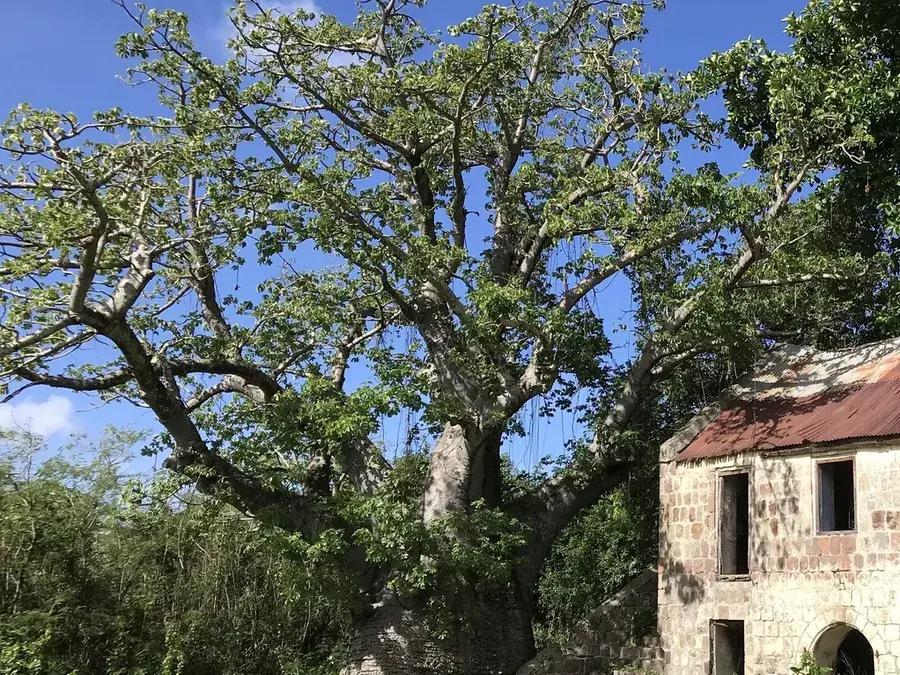 FruitOctober – February
Baobab (fruit and leaves)
Adansonia digitata
A vast, swollen grey trunk with smooth, folded bark and stubby branches that look like roots, bare of leaves for most of the dry season. The leaves are hand-shaped, with five to seven finger-like leaflets. The fruit is a velvety, egg- to sausage-shaped pod up to 25 cm (10 in) long on a long hanging stalk: a hard woody shell around chalky, off-white pulp and black kidney-shaped seeds.
How to know it & its look-alikes →Photo: Cliff Tyllick · CC BY 4.0
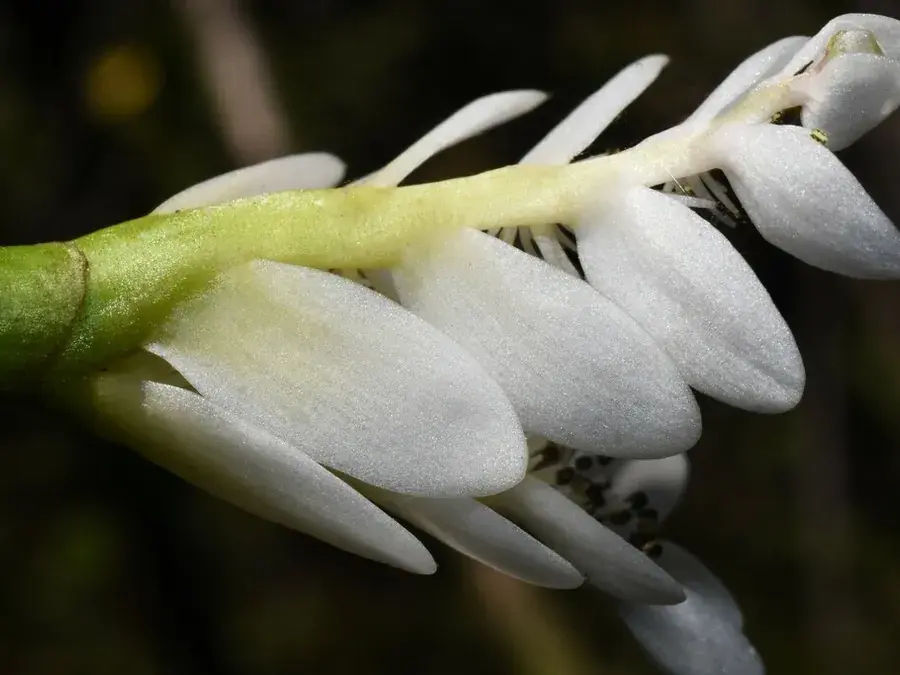 GreenJune – October
Waterblommetjie (Cape pondweed)
Aponogeton distachyos
Long-stalked, narrow-oval leaves floating flat on the water, and above them forked white flower spikes shaped like a 'Y', each branch lined with white petal-like bracts and dark purple-brown stamens, sweetly scented. The plant dies back as the pools dry in summer and regrows with the autumn rain.
How to know it & its look-alikes →Photo: Gabriel Campbell-Martinez · CC BY 4.0
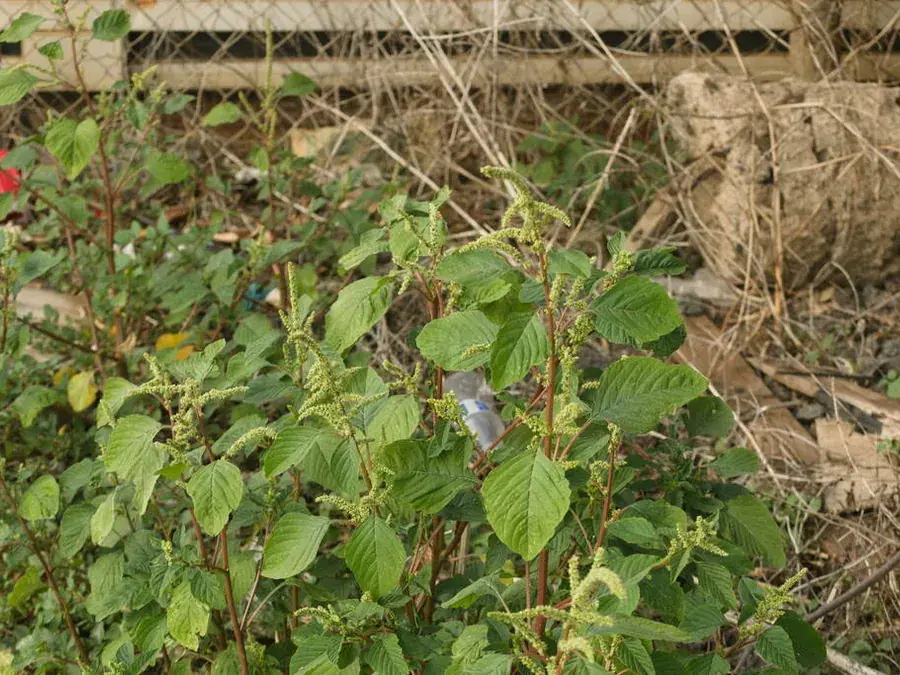 Has a dangerous look-alikeGreenMay – October
Amaranth greens (morogo, mchicha)
Amaranthus spp.
Upright or sprawling herbs, often with reddish stems, carrying alternate, oval to diamond-shaped, smooth-edged leaves on long stalks, and dense, bristly spikes of tiny green or reddish flowers at the top and in the leaf joints. No milky sap, no berries, no trumpet flowers. Spiny amaranth has a pair of sharp spines at each leaf base.
How to know it & its look-alikes →Photo: Kevin Faccenda · CC BY 4.0
Checked against these sources ·
- Wikipedia — Termitomyces
- Wikipedia — Termitomyces schimperi
- Travel News Namibia — Built of moon, mist and rain: mushrooms of the Zambezi
- University of Namibia, International Science and Technology Journal of Namibia — ethnomycology of Termitomyces in the Zambezi Region
Seasons are typical for the middle of the range and move by weeks north and south, and up and down hills.
Educational information only. Never eat a wild plant or mushroom identified from a single photograph or description — confirm with a regional field guide or an experienced forager, and know the poisonous species in your area first.