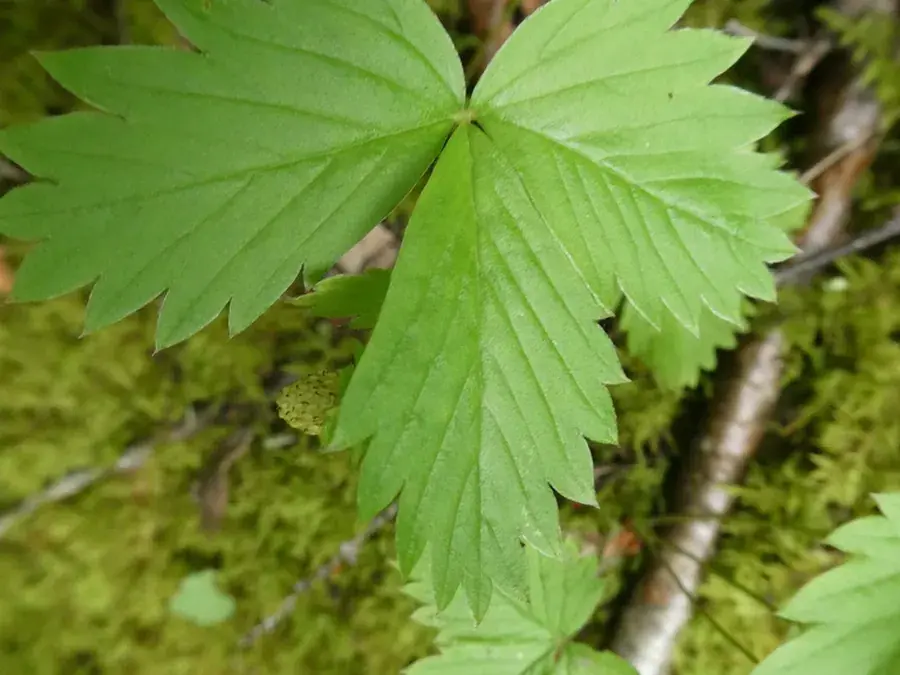
Photo by Public domain (iNaturalist) on iNaturalist · CC0 (public domain)
BerrySeason: June – August
Woodland strawberry
Fragaria vesca
- When
- Typically June – August — June, July, August. Earlier in warm, low country; later in the hills.
- Where it grows
- Woodland edges and clearings, banks, hedge bottoms, trail sides and limestone grassland — often in dappled light.
- How to know it
- Three shiny, toothed leaflets on hairy stalks; white five-petalled flowers whose rounded petals touch; and small red berries about 1 cm (⅜ in) long with the seeds on the surface. On the end leaflet, the tip tooth is as long as or longer than the teeth beside it.
- Look-alikes
- Barren strawberry flowers in early spring with gappy, notch-tipped petals, has duller leaves whose end tooth is shorter than its neighbours, and never makes a red berry. Yellow-flowered mock strawberry makes a bland one. Neither is harmful.
- Harvest and use
- Eat them where they grow — they bruise in minutes. A handful scents a whole bowl of cream.
Woodland strawberry at a glance
- Also called
- Wild strawberry, wood strawberry, alpine strawberry; fraise des bois (France), Walderdbeere (Germany)
- Family
- Rosaceae (rose family)
- Where it grows
- Throughout most of Europe, from the Mediterranean mountains to northern Scandinavia, and across much of the northern hemisphere, North America included. In Britain it grows almost everywhere except the far north of Scotland, though it is now classed as near threatened in England.
- When to pick
- Flowers from April to July; berries from June, mostly June and July in the lowlands and later in the mountains and the north. A ripe berry lasts barely a day before something eats it.
- Parts used
- The berries. The leaves have a long history in traditional remedies but are not food.
Questions people ask about woodland strawberry
What is the difference between wild strawberries and alpine strawberries?
They are the same species. Alpine strawberries are garden selections of Fragaria vesca that flower and fruit all summer, often without runners; the wild plant fruits once, in early summer.
How do you tell a wild strawberry from a barren strawberry?
By the flowers and the fruit. Barren strawberry flowers from early spring with petals that have gaps between them and a notch at each tip, and it never makes a red berry. Wild strawberry petals are rounded and touch, and its leaves are shinier.
When are wild strawberries ripe?
From June into August, depending on how far north and how high you are. They ripen a few at a time over weeks, so a patch is worth visiting more than once.
Can children pick wild strawberries?
Yes, once you have shown them the plant: three shiny toothed leaflets, white flowers, and a small red berry with its seeds on the outside. Teach them to leave any red berry from a plant they can’t name, and to skip patches beside paths where dogs are walked.
Found in these regions
- Atlantic Europe
- Continental Europe
- Nordic & Baltic Boreal
- Alps, Pyrenees & Carpathians
- Mediterranean Europe
- Pannonian Basin & Eastern Plains
Hardiness zones 3–9.
Is it ready near you?
Get this week's foraging guide for your area
Enter a town, postal code or ZIP and we'll tell you what's in season right there this week — from your local climate, this week's weather and your ecological region.
Also ready in October
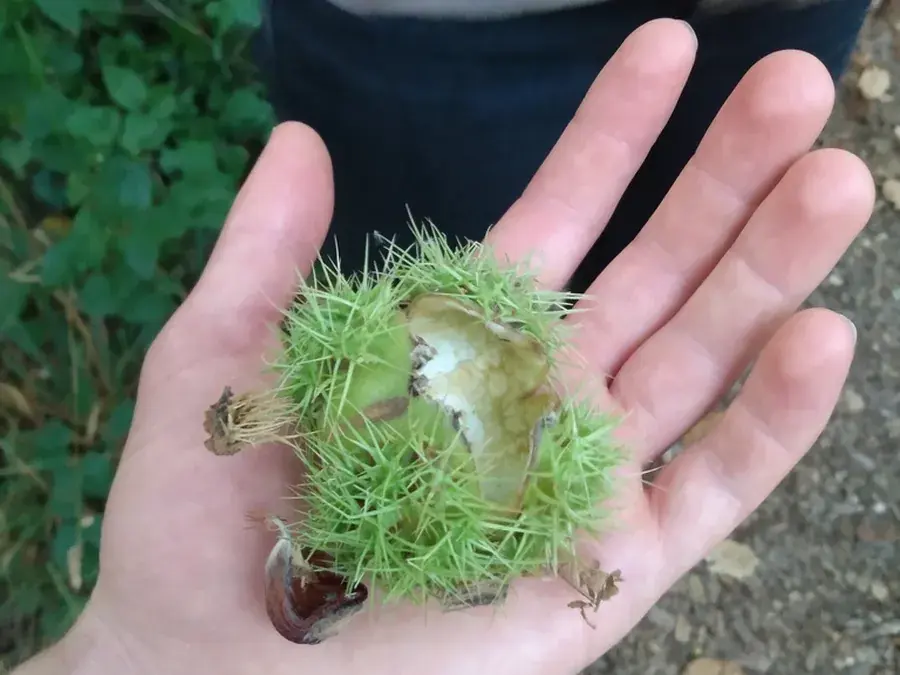 NutOctober – November
Sweet chestnut
Castanea sativa
A big tree with long, glossy leaves edged with sharp, regular teeth, and bark that twists in spiralling ridges on old trunks. The nuts come in twos and threes inside a husk covered in dense, needle-sharp spines; each is glossy brown, flat on one side, with a pointed tuft at the tip.
How to know it & its look-alikes →Photo: John Powers · CC BY 4.0
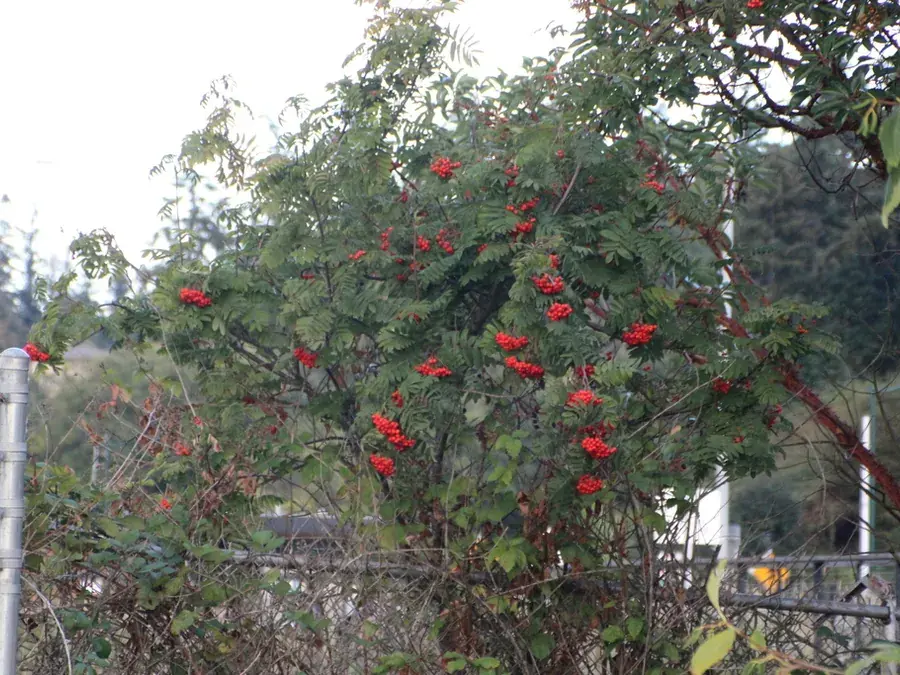 BerryAugust – October
Rowan berries
Sorbus aucuparia
A slim tree with smooth silvery-grey bark and feathery leaves of many toothed leaflets in pairs; big flat clusters of scarlet-orange berries, each about 1 cm (⅜ in) across with a tiny black five-pointed star at the tip.
How to know it & its look-alikes →Photo: Therese Phillips · CC BY 4.0
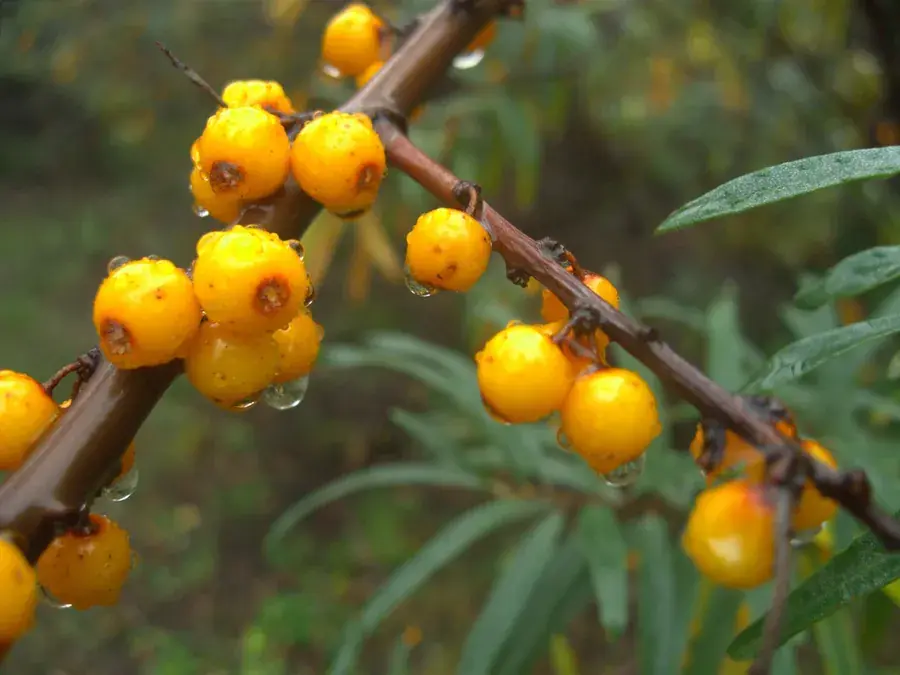 BerryAugust – October
Sea buckthorn
Hippophae rhamnoides
A thorny shrub with narrow, silvery-grey, willow-like leaves and branches packed with bright orange berries 6–8 mm (¼ in) across, from late summer into winter. Only female bushes fruit.
How to know it & its look-alikes →
Checked against these sources ·
Seasons are typical for the middle of the range and move by weeks north and south, and up and down hills.
Educational information only. Never eat a wild plant or mushroom identified from a single photograph or description — confirm with a regional field guide or an experienced forager, and know the poisonous species in your area first.