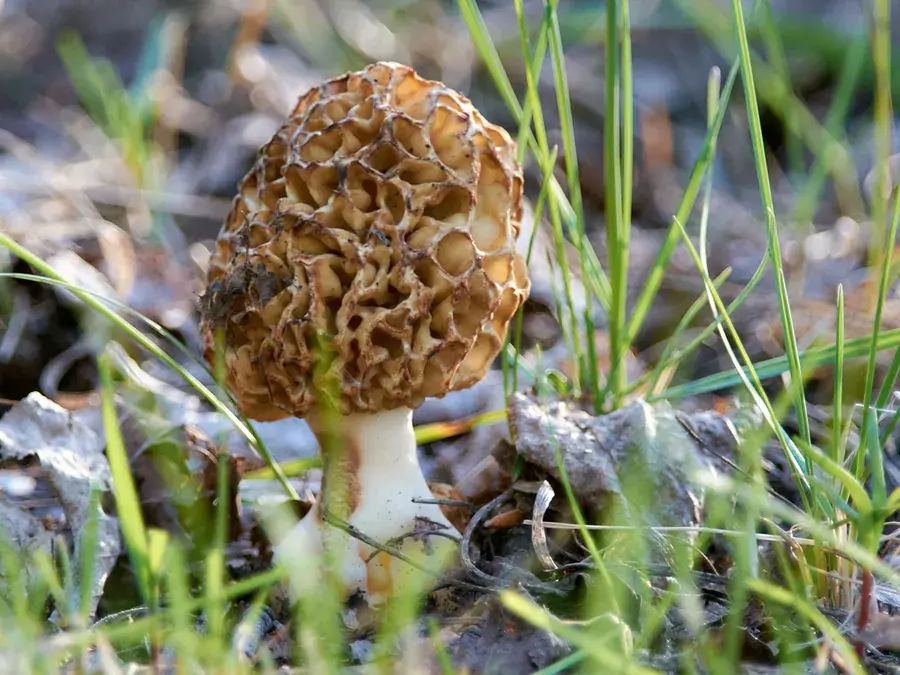
Photo by Сергей Неклюдов on iNaturalist · CC BY 4.0
MushroomSeason: March – May
Yellow morel
Morchella esculenta
This one has a dangerous look-alike
False morel has a lobed, brain-like cap, is chambered or cottony inside, grows on sandy soil under pine, and can kill. Thimble morel’s cap hangs free like a skirt. Stinkhorn eggs and stinkhorns smell foul and sit in a cup at the base.
- When
- Typically March – May — March, April, May. Earlier in warm, low country; later in the hills.
- Where it grows
- Old orchards, river woods under ash and elm, hedgerows, copses, parks and disturbed ground, often on chalky soil.
- How to know it
- A pale cream to yellow-brown, sponge-like cap of irregular pits with paler ridges, joined to the stem at its lower edge. Slice it top to bottom: one continuous hollow from cap tip to stem base.
- Harvest and use
- Always cooked through. Halve, rinse out the grit and insects, then sauté in butter; dried morels make the classic cream sauce.
- Caution
- Raw morels are poisonous. Slice every one lengthwise before it goes in the basket.
Yellow morel at a glance
- Also called
- Common morel, true morel, sponge morel; morille (France), Speisemorchel (Germany), spugnola (Italy)
- Family
- Morchellaceae
- Where it grows
- Since DNA work in 2014 the name Morchella esculenta belongs to one yellow morel that is common in Europe (and reported from China); North America’s yellow morels now have other names. In Britain it is native but uncommon; on the continent it is widespread, especially on lime-rich soil.
- When to pick
- Spring, in a short flush that depends on the weather: March to May in Britain, later northward and in the mountains.
- Parts used
- The whole mushroom, cap and stem, always thoroughly cooked.
- Is any of it poisonous?
- Raw morels are poisonous, and old, decaying ones may be too. False morel (Gyromitra esculenta) contains gyromitrin, which the body turns into a rocket-fuel compound, monomethylhydrazine.
- More look-alikes to know
- Black morels (the Morchella elata group) have darker, more pointed caps and are eaten the same way, always cooked; in Britain they often come up in bark mulch in flowerbeds.
Questions people ask about yellow morel
Where do morels grow in Europe?
In old orchards, river woods under ash and elm, copses, hedgerows, parks and disturbed ground, often on chalky or limestone soil. Black morels turn up in bark mulch and shrubberies.
Can you eat morels raw?
No. Raw morels are poisonous and must always be cooked through.
How do you tell a morel from a false morel?
Slice it lengthwise. A true morel is one continuous hollow from cap tip to stem base, with a honeycomb of pits. A false morel has a lobed, brain-like cap and is chambered or stuffed with cottony tissue inside; it grows on sandy soil under pine and can be fatal.
Found in these regions
Is it ready near you?
Get this week's foraging guide for your area
Enter a town, postal code or ZIP and we'll tell you what's in season right there this week — from your local climate, this week's weather and your ecological region.
Also ready in October
 NutOctober – November
Sweet chestnut
Castanea sativa
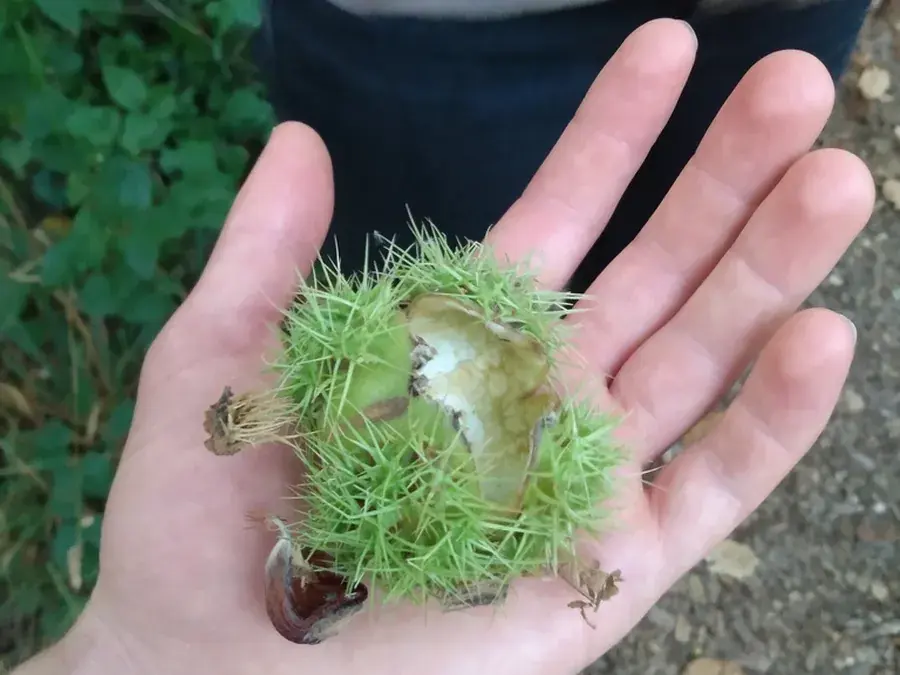
A big tree with long, glossy leaves edged with sharp, regular teeth, and bark that twists in spiralling ridges on old trunks. The nuts come in twos and threes inside a husk covered in dense, needle-sharp spines; each is glossy brown, flat on one side, with a pointed tuft at the tip.
How to know it & its look-alikes →Photo: John Powers · CC BY 4.0
 BerryAugust – October
Rowan berries
Sorbus aucuparia
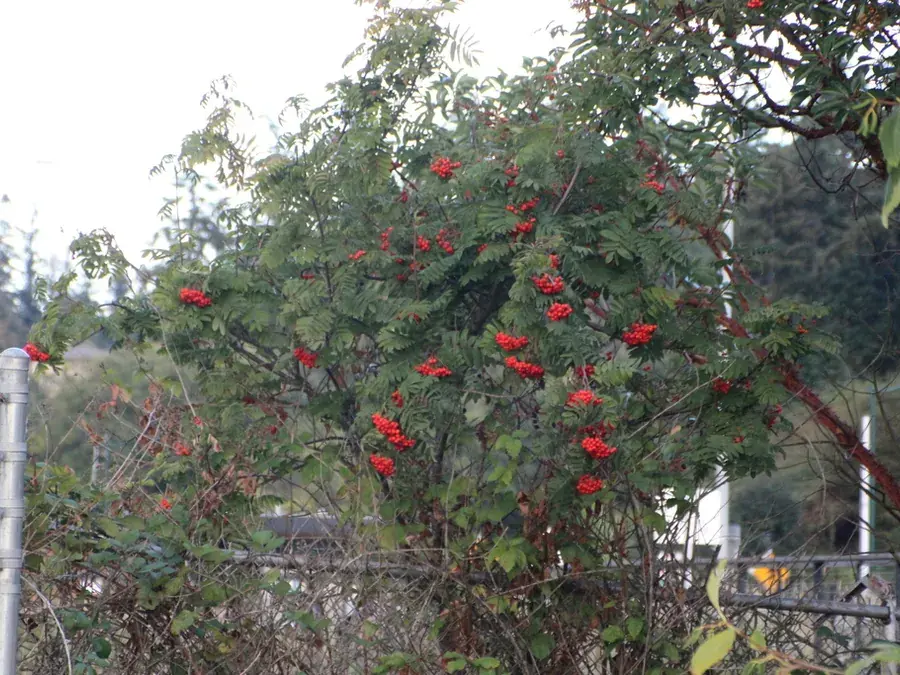
A slim tree with smooth silvery-grey bark and feathery leaves of many toothed leaflets in pairs; big flat clusters of scarlet-orange berries, each about 1 cm (⅜ in) across with a tiny black five-pointed star at the tip.
How to know it & its look-alikes →Photo: Therese Phillips · CC BY 4.0
 BerryAugust – October
Sea buckthorn
Hippophae rhamnoides
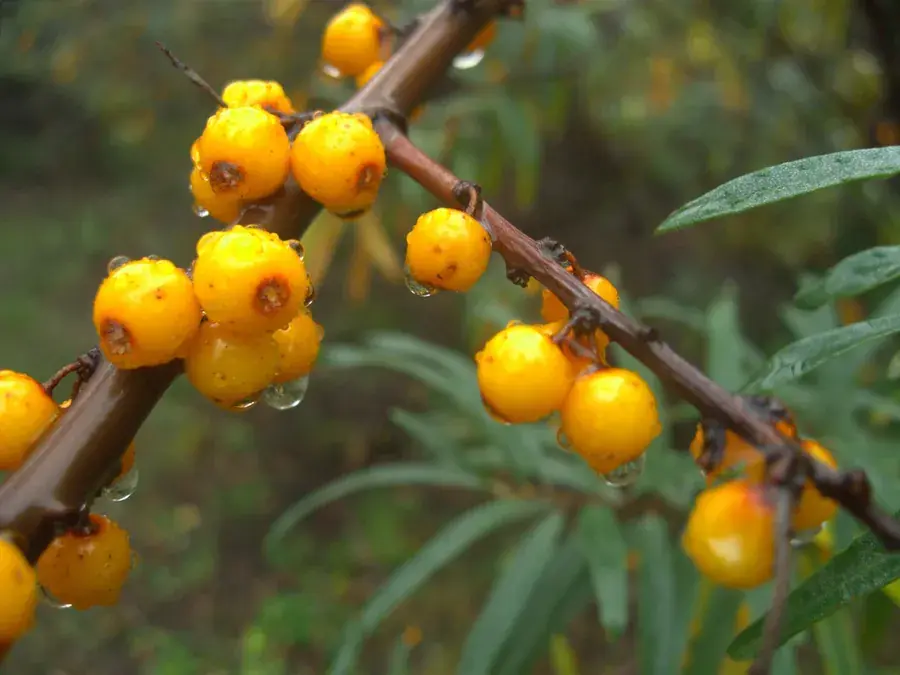
A thorny shrub with narrow, silvery-grey, willow-like leaves and branches packed with bright orange berries 6–8 mm (¼ in) across, from late summer into winter. Only female bushes fruit.
How to know it & its look-alikes →
Checked against these sources ·
Seasons are typical for the middle of the range and move by weeks north and south, and up and down hills.
Educational information only. Never eat a wild plant or mushroom identified from a single photograph or description — confirm with a regional field guide or an experienced forager, and know the poisonous species in your area first.