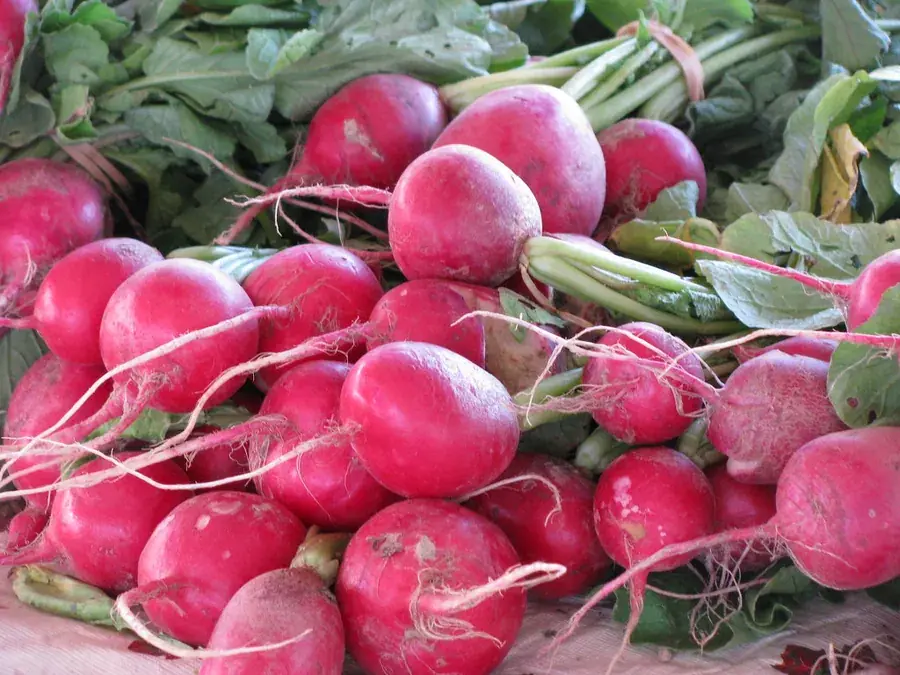
Photo nola.agent on Flickr · CC BY 2.0
Radishes
Raphanus sativus
Three weeks from seed to plate in spring — and a different vegetable altogether in autumn.
- Ready when
- Spring radishes three to five weeks after sowing, when the shoulder is 2–3 cm (¾–1¼ in) across and pushing up out of the soil — pull a test one. A week late and they are pithy, hot and cracked, so pull the row over a few days rather than waiting for all of them. Winter radishes need 50–70 days and come out in October–November: daikon at 3–5 cm (1–2 in) thick and 20 cm (8 in) or more long, black Spanish at 8–10 cm (3–4 in) across.
- How to pick
- Pull by the tops; dig daikon with a fork or it snaps. Twist off the leaves at once and rinse. Spring radishes are a same-week vegetable. For winter radishes going into store, cut the tops to 1 cm (½ in), don’t wash, and brush off the soil.
- On a frost night
- Spring radishes take frost in the ground down to about −4 °C in their stride, and the fall crop tastes better for one. Winter types — daikon, black Spanish, watermelon — are hardier still and sit in the ground through −5 °C, but dig them before the ground freezes; a frozen daikon is mush. Nothing needs covering unless a hard freeze is coming and the winter radishes are not dug yet.
Where it keeps
Storing radishes
| Where | Temperature | Humidity | Keeps | How |
|---|---|---|---|---|
| Fridge crisper | 0–4 °C32–39 °F | high | 1–2 weeks for spring types; 1–2 months for winter types | Tops off, in a perforated bag or a container with a damp towel; left with their leaves on they shrivel in days. |
| Cold room or root cellar (winter radishes only) | 0–2 °C32–36 °F | high | 2–3 months | Daikon and black radish in damp sand or perforated bags, tops off, exactly like carrots. |
| Jar of water in the fridge | 0–4 °C32–39 °F | high | About a week | Trimmed spring radishes standing in cold water stay crisp — the trick for the ones the kids pulled too many of. |
Putting it up
What to do with too many radishes
Radishes mostly don’t preserve, and it is better to know that than to fill a freezer with them: frozen radishes thaw limp, water-logged and off-smelling (the NCHFP lists them among the foods that do not freeze well), and there is no tested recipe for canning plain radishes. What works is a quick pickle — sliced radishes in 5% vinegar, salt and a little sugar, kept in the fridge and eaten within a month — the Bernardin Vietnamese carrot-and-daikon pickle for a tested canned version, and lacto-fermented daikon kept cold once it is sour. Winter radishes are the exception to ‘don’t store’: in a cold room they keep as well as a turnip. Sow fewer spring radishes, more often, rather than trying to put them up.
The oldest method: the right cold, the right damp, and darkness.
Vinegar does the preserving; the canner just seals the jar.
Salt and time; the bacteria make the acid for you.
Saving seed
Crosses with its neighbours — needs isolation
Spring radishes are annuals, which makes them one of the easiest seed crops there is: leave a few of the best roots unpulled, they bolt to 1 m (3 ft) of white-pink flowers within weeks, and the fat green pods that follow are a crop in themselves — crisp and peppery raw, and the rat-tail types are grown just for them. Let the rest of the pods dry tan on the plant, pull the whole plant and finish it under cover, then crush the pods and winnow. Radishes are insect-pollinated and self-incompatible, so grow at least five plants together, and they cross with other radish varieties and with wild radish within 250–800 m (800 ft to ½ mile) — flower one variety at a time. Winter radishes are biennials and need overwintering first.
Keeps: 5–6 years.
The seed-saving guide →Next year
Planning radishes for next season
Cabbage family for rotation — not after turnips, rutabagas or brassicas — because root maggot is the main pest, and a floating row cover from sowing is the answer. Any decent soil, steady water. Direct sow spring radishes 3–4 weeks before the last frost, 1 cm (½ in) deep and 2–3 cm apart, and keep sowing a short row every 10 days until late May; stop for the heat of July, when they bolt and turn hot, and start again in mid-August. Sow winter radishes in late July to early August, about 70 days before the first frost, thinned to 10–15 cm (4–6 in). In zones 3–4 spring radishes are often the first harvest of the year, three weeks ahead of anything else.
Radishes at a glance
- Botanical name
- Raphanus sativus
- Group
- Roots
- Picked
- May, June, July, September, October, November
- Frost
- Hardy: takes −4 to −6 °c and often sweetens.
- Best put up as
- cold storage, pickling, fermenting
- Seed
- Crosses with its neighbours — needs isolation
Questions people ask about radishes
When should I harvest radishes?
Spring radishes three to five weeks after sowing, as soon as the shoulder is 2–3 cm across — a few days late and they crack and go hot and pithy. Winter radishes (daikon, black Spanish) take 50–70 days and are dug in October and November before the ground freezes.
How do I store radishes?
Twist the tops off at once and keep them in a perforated bag or a container of water in the fridge; spring types last one to two weeks. Winter radishes keep one to two months in the crisper and two to three in a cold room packed in damp sand, like carrots.
Can you freeze radishes?
No. They thaw limp, water-logged and with an off smell — the NCHFP lists them among the foods that do not freeze well. Pickle them, ferment them, or eat them fresh. Winter radishes store in the cold instead.
Can you pickle radishes?
Yes, and it is the best thing to do with a surplus: sliced radishes or daikon sticks in 5% vinegar with salt and a little sugar, kept in the fridge and eaten within a month. For a shelf-stable jar, use a tested recipe such as Bernardin’s carrot-and-daikon pickle and process as written. Daikon also ferments well, kept cold once sour.
Are radishes frost hardy?
Spring radishes take −2 to −3 °C without trouble and the fall crop is milder after a frost. Winter types stand −5 °C in the ground. Dig the winter radishes before the soil freezes; nothing else needs doing on a frost night.
How do I save radish seeds?
Leave a few spring radishes to bolt; they flower within weeks and set pods, which you harvest when they dry tan in late summer. Grow at least five plants of one variety and keep other radishes (and wild radish) from flowering within 800 m. The green pods are edible too. Seed keeps five to six years.
What should kids know about radishes?
Radishes are the classic first crop for a child: big enough seed to handle, up in three days, ready in three weeks, and a short row is theirs from start to finish. Pull, rinse, eat — the only surprise is that some are hot, so taste a small bite first. The green seed pods on a bolted plant are safe and fun to eat straight off the stalk.
Your own frost dates
When does this come in where you are?
Enter a town, postal code or ZIP and the garden year, the frost watch and this week’s guide are built from your own weather.
Also in roots
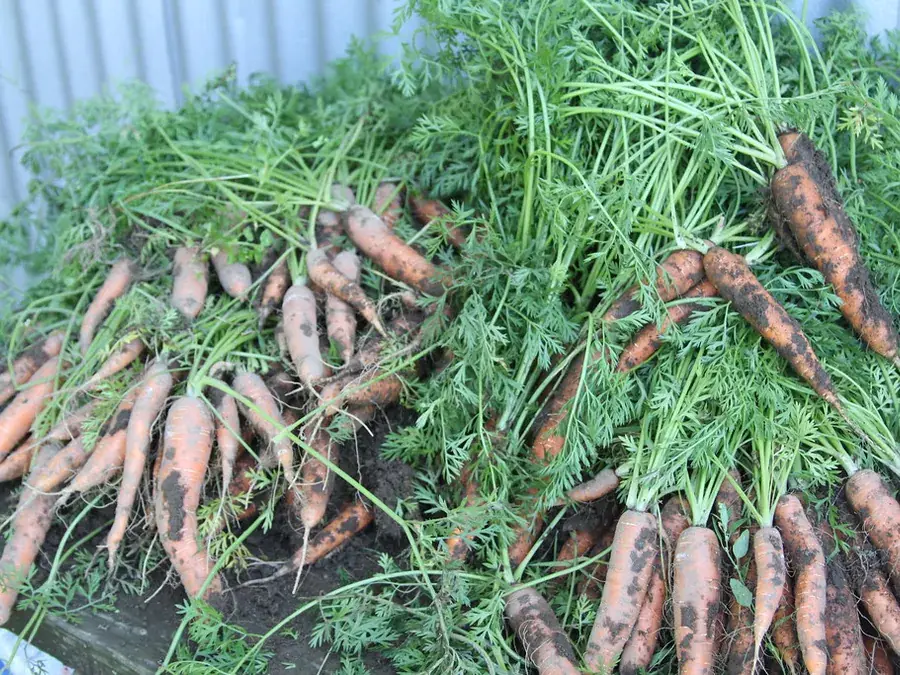 HardyRootsPicked Jul–Nov
Carrots
The root that gets sweeter the longer autumn goes on — and keeps until spring if you treat it right.
Cold storage · Pressure · FreezingPick, store, put up →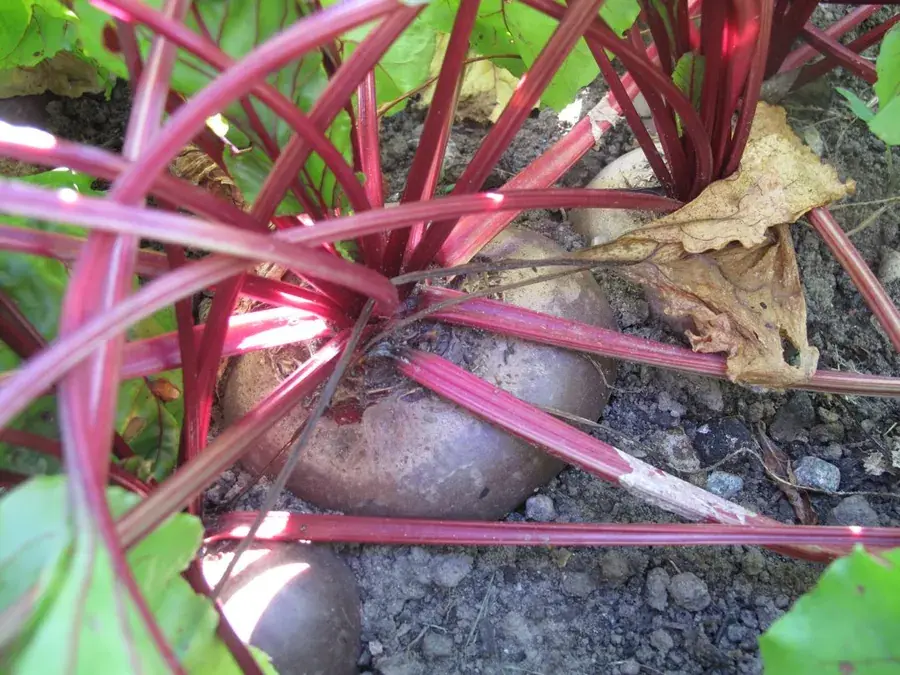 HardyRootsPicked Jul–Oct
Beets
Two crops in one bed — the roots for the cold room, the greens for tonight.
Pickling · Pressure · FreezingPick, store, put up →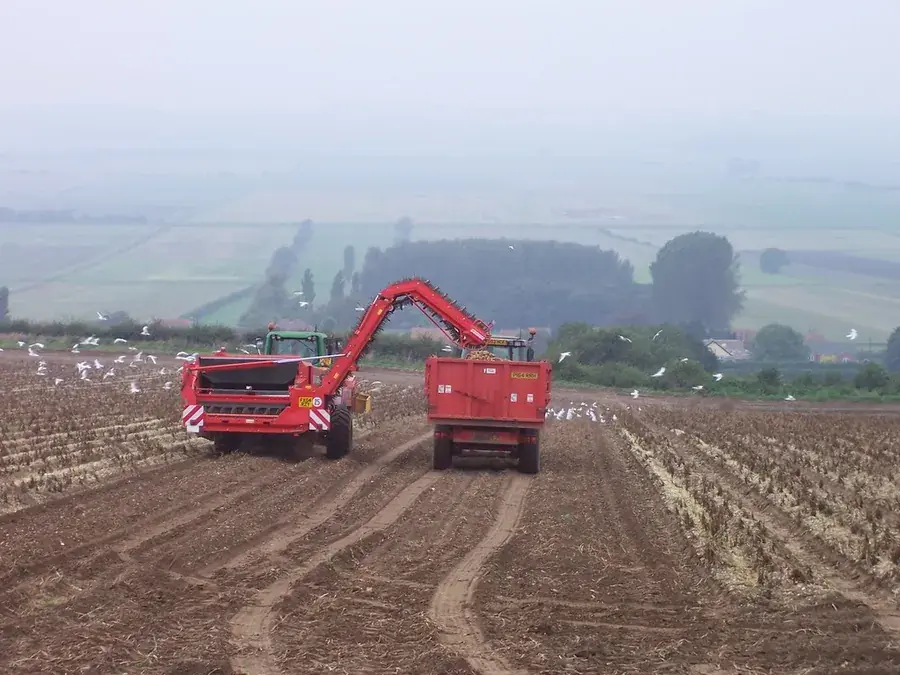 Half-hardyRootsPicked Jul–Oct
Potatoes
The crop children remember digging — and the one that needs two weeks in the dark before it goes anywhere.
Cold storage · Pressure · FreezingPick, store, put up →
Checked against these sources ·
- University of Minnesota Extension: Growing radishes in home gardens
- Seed Savers Exchange: Radish growing and seed saving guide
- Seed Savers Exchange: Everything you need to know about radishes
- NCHFP: Foods that do not freeze well
- Bernardin: Vietnamese carrot and daikon pickle
Harvest months are typical for zones 4–6 and move by weeks north and south. Storage figures are for the ideal; a house without a cold room will get the shorter end of each range.