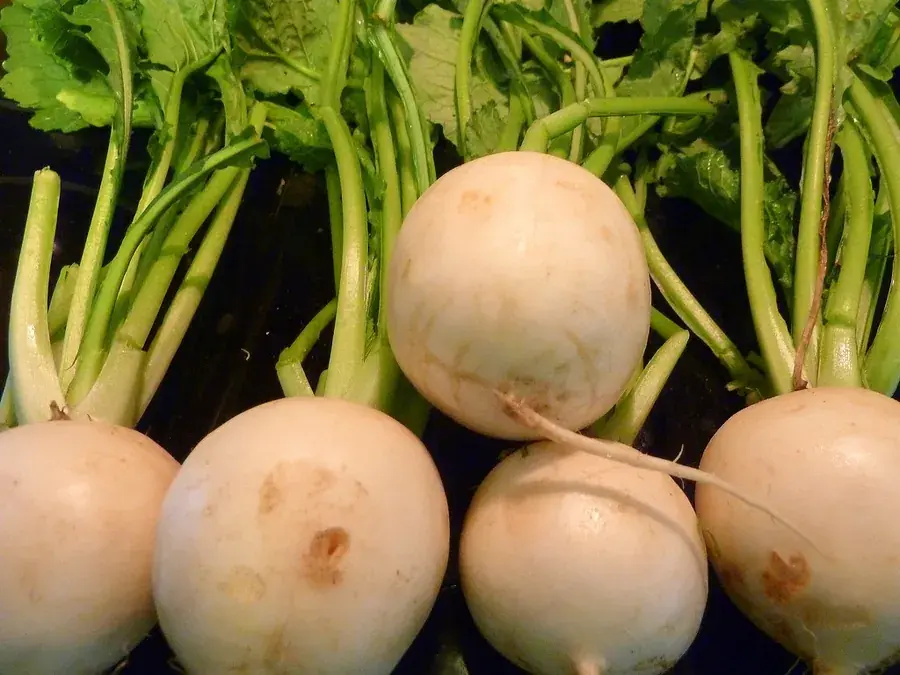
Turnips
Brassica rapa
The fastest root in the garden — six weeks from seed, with greens thrown in.
- Ready when
- Spring-sown roots are at their best at 5–8 cm (2–3 in) across, about five to six weeks from sowing — bigger than that in warm weather and they turn hot, pithy and woody. Fall turnips can go a little larger in the cool. Greens are good any time; take the outer leaves and leave the centre growing.
- How to pick
- Pull by the tops, loosening with a trowel if the soil is dry and hard. For storage, twist the tops off leaving 1 cm (½ in), don’t wash, and don’t trim the root. Cook the greens that day. Dig the fall crop before the ground freezes.
- On a frost night
- Leave them. Turnip roots take −4 to −6 °C and taste milder and sweeter after a frost or two; the greens scorch at about −3 °C but recover from a light nip. They are less hardy than rutabagas or carrots, though: once nights head toward −7 °C and lower, dig the roots or mulch them heavily. Salad turnips (‘Hakurei’ types) are the least hardy and come in first.
Where it keeps
Storing turnips
| Where | Temperature | Humidity | Keeps | How |
|---|---|---|---|---|
| Cold room or root cellar | 0–2 °C32–36 °F | high | 2–4 months | Tops off, in damp sand or perforated bags. Turnips give off a cabbage smell in store — keep them away from the apples and out of the living room. |
| Fridge crisper | 0–4 °C32–39 °F | high | 2–4 weeks for roots; 3–4 days for greens | Perforated bag; greens separately wrapped in a damp towel. |
| In the ground under mulch | -2–4 °C28–39 °F | high | A few extra weeks in late fall | 20–30 cm (8–12 in) of straw over the row and dig as needed. A late-autumn extension, not a whole-winter method for turnips in zones 3–5. |
Putting it up
What to do with too many turnips
Turnips are a fresh-eating root first; the cold room is the main preserve and a couple of months is plenty for most families. For the freezer, cube and blanch 2 minutes (NCHFP) — the texture softens, so they are for soups, stews and mash. There is no tested process for canning plain turnips, so leave the pressure canner alone. Where turnips shine is grated and salted into sauerrüben (made exactly like sauerkraut and kept in the fridge once sour) and in quick fridge pickles with 5% vinegar, which take the peppery edge and keep it. The greens freeze like any other green, blanched 2 minutes.
The oldest method: the right cold, the right damp, and darkness.
The fastest route and the one that keeps flavour best.
Vinegar does the preserving; the canner just seals the jar.
Salt and time; the bacteria make the acid for you.
Saving seed
Crosses with its neighbours — needs isolation
Turnips are biennials — overwinter the roots in sand at 0–4 °C, or in the ground where the soil stays above about −10 °C, and replant them in spring — but the harder problem is crossing. Brassica rapa includes Chinese cabbage, bok choy, mizuna, tatsoi, broccoli raab and some mustards, and any of them flowering within 250–800 m (800 ft to ½ mile) will cross with your turnips; a bolting bok choy in June is the usual culprit. Rutabagas are a different species and will not cross. Turnips are self-incompatible, so grow at least five plants and let them flower together. Collect the pods when they turn tan and shatter them in a bag.
Keeps: 4 years.
The seed-saving guide →Next year
Planning turnips for next season
Cabbage family: not where turnips, rutabagas, radishes, cabbage, broccoli, kale or mustard grew in the last three years, which is the only real defence against root maggot and clubroot. Light, fertile soil and steady water. Direct sow 2–4 weeks before the last frost, 1 cm (½ in) deep, thinned to 8–10 cm (3–4 in), and again 6–8 weeks before the first fall frost for the storage crop — the fall crop is the better one, sweeter and with fewer pests. A floating row cover from sowing stops both flea beetle and root maggot. In zones 3–4 both sowings work; turnips are one of the few roots that make a crop from a late-July sowing.
Turnips at a glance
- Botanical name
- Brassica rapa
- Group
- Roots
- Picked
- June, July, August, September, October, November
- Frost
- Hardy: takes −4 to −6 °c and often sweetens.
- Best put up as
- cold storage, freezing, pickling, fermenting
- Seed
- Crosses with its neighbours — needs isolation
Questions people ask about turnips
When should I harvest turnips?
At 5–8 cm (2–3 in) across, about five to six weeks after sowing — pull one to check. Left bigger in warm weather they turn hot and woody. Spring sowings come out in June and July; the fall crop from an August sowing is dug in October and November, and it is sweeter after a frost.
How do I store turnips?
Twist off the tops, don’t wash, and keep them in damp sand or perforated bags at 0–2 °C with high humidity, where they last two to four months. In the fridge crisper they keep two to four weeks. They smell of cabbage in store, so give them their own corner.
Can you freeze turnips?
Yes, cubed and blanched 2 minutes, then cooled and bagged. They go soft when thawed, so use them in soups, stews and mash rather than roasted. Turnip greens freeze like spinach, blanched 2 minutes and squeezed dry.
Are turnips frost hardy?
Yes, to about −6 °C, and a frost or two sweetens them. The leaves scorch below −3 °C but the root is fine. They are less hardy than rutabagas and carrots, so dig or mulch heavily once nights go below −7 °C, and dig the crop before the ground freezes.
Can I can turnips?
Not plain — there is no tested home-canning process for turnips, so no safe time exists. Preserve them in the cold room, the freezer, as a quick fridge pickle, or fermented like sauerkraut and kept cold.
How do I save turnip seeds?
Overwinter the best roots and replant them in spring; they flower and set pods in early summer of the second year. The problem is crossing: turnips are Brassica rapa, the same species as Chinese cabbage, bok choy and mizuna, so none of those can be flowering within 800 m. Grow at least five plants. Seed keeps four years.
What should kids know about turnips?
A small salad turnip pulled, rinsed and eaten raw is crisp and mild, and children who like radishes usually like it. They are one of the quickest things a child can sow and harvest — six weeks from seed in a short row they own. Both root and leaves are safe to eat; the hot taste of an old turnip is a reason to pull them small, not a danger.
Your own frost dates
When does this come in where you are?
Enter a town, postal code or ZIP and the garden year, the frost watch and this week’s guide are built from your own weather.
Also in roots
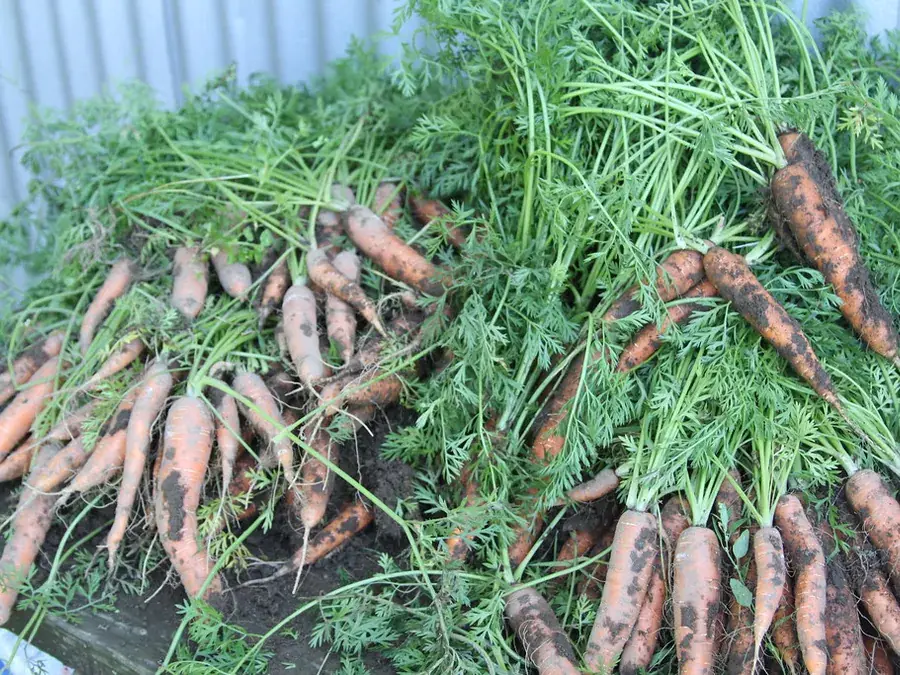 HardyRootsPicked Jul–Nov
Carrots
The root that gets sweeter the longer autumn goes on — and keeps until spring if you treat it right.
Cold storage · Pressure · FreezingPick, store, put up →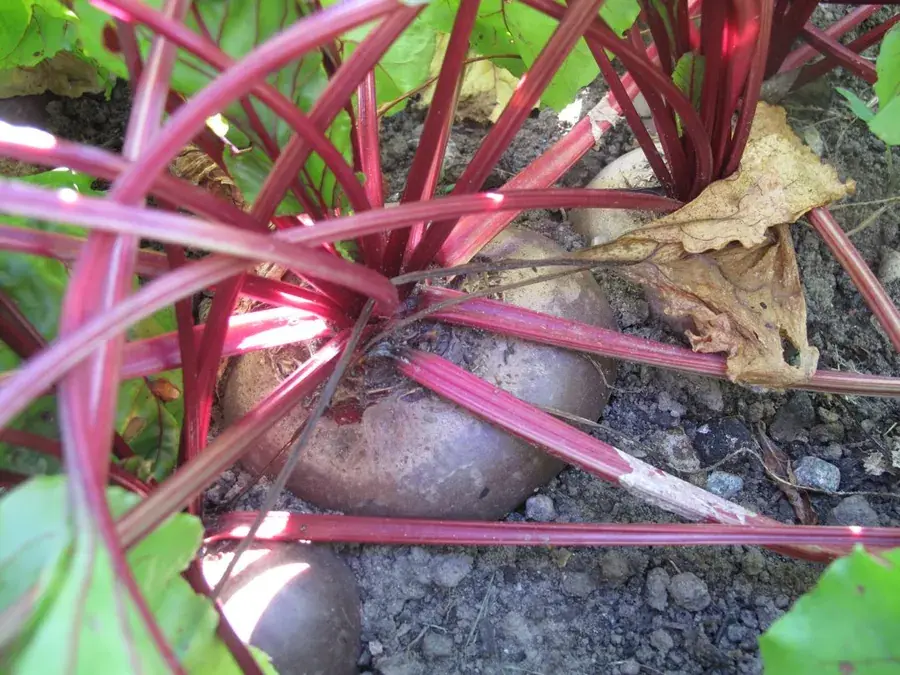 HardyRootsPicked Jul–Oct
Beets
Two crops in one bed — the roots for the cold room, the greens for tonight.
Pickling · Pressure · FreezingPick, store, put up →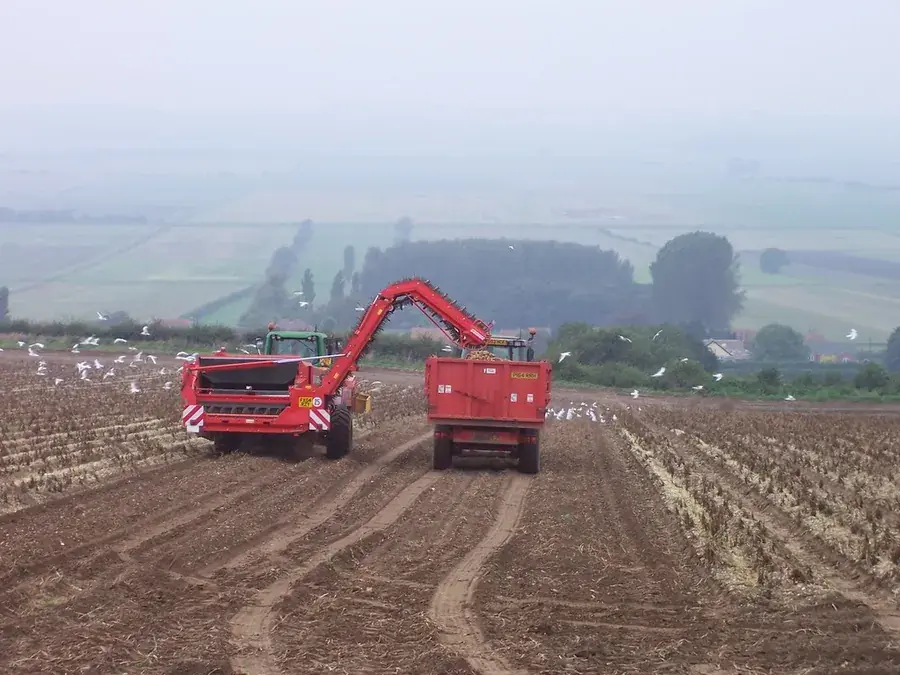 Half-hardyRootsPicked Jul–Oct
Potatoes
The crop children remember digging — and the one that needs two weeks in the dark before it goes anywhere.
Cold storage · Pressure · FreezingPick, store, put up →
Checked against these sources ·
- University of Minnesota Extension: Growing turnips and rutabagas
- Utah State University Extension: Rutabagas and turnips in the garden
- NCHFP: Freezing turnips or parsnips
- Seed Savers Exchange: Identifying brassica species
- Utah State University Extension: Root crops harvest and storage
Harvest months are typical for zones 4–6 and move by weeks north and south. Storage figures are for the ideal; a house without a cold room will get the shorter end of each range.