Quick fresh-pack dill pickles
Kosher-style dills without the weeks of fermenting: an overnight salt soak, a hot spiced brine, and a short bath.
Makes
7–9 × 500 ml (pint) jars
Active time
1 hour over two days
Total
12-hour soak plus 1½ hours, then 12–24 hours cooling
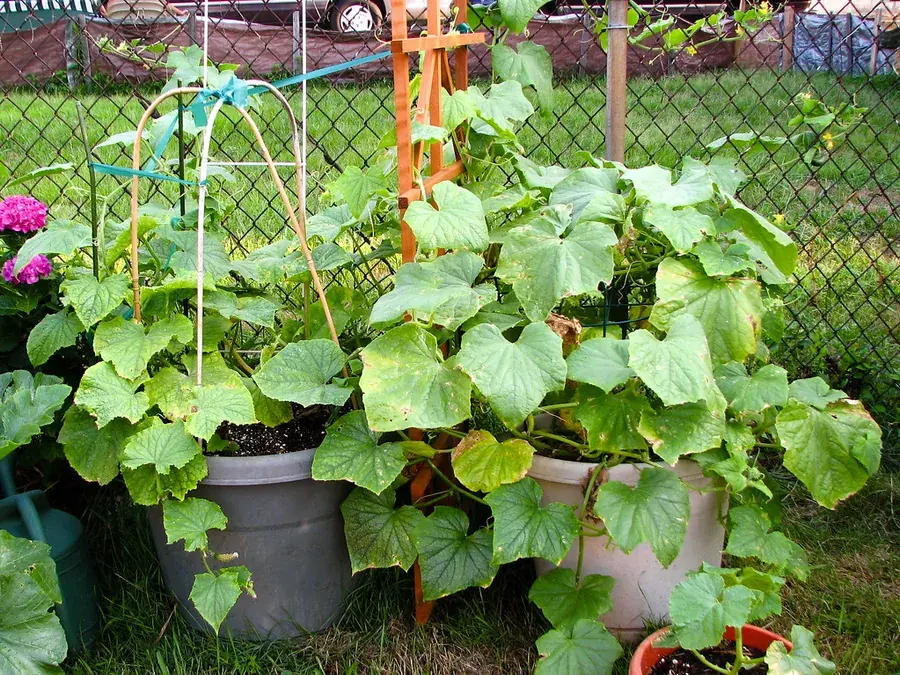
Photo versageek on Flickr · CC BY-SA 2.0
Before you start
What keeps this jar safe
- Vinegar must be 5% acidity and the vinegar-to-water ratio of the brine stays as written; do not dilute it to soften the sourness.
- Use canning or pickling salt — table salt clouds the brine. If you want less salt, follow one of the NCHFP’s tested reduced-sodium pickle recipes rather than trimming this one.
- Trim the blossom end; it carries enzymes that turn pickles soft.
- Garlic, hot pepper and extra spice are not in this tested recipe. If you want garlic dills, use a tested recipe that includes garlic rather than adding cloves to this one.
- Every cucumber stays below the brine; a jar with a cucumber poking out of the liquid is a jar to refrigerate and eat first.
This follows NCHFP: Quick Fresh-Pack Dill Pickles. Quantities, acid and times are theirs; do not scale the vegetables without scaling everything, and do not change the vinegar, lemon juice or processing time.
Ingredients
- 3.6 kg (8 lb) pickling cucumbers, 7.5–12.5 cm (3–5 inches) long
- For the overnight soak: 7.5 L (2 US gallons) water and 175 ml (¾ cup) canning or pickling salt
- For the brine: 1.5 L (6 cups) vinegar (5%), 2 L (8 cups) water, 125 ml (½ cup) canning or pickling salt, 60 ml (¼ cup) sugar
- 30 ml (2 tablespoons) whole mixed pickling spice, tied in a square of clean cloth
- Whole mustard seed: 1 teaspoon (5 ml) per jar — about 45 ml (3 tablespoons) in all
- Fresh dill: 1½ heads per jar, about 14 heads — or dill seed, 1½ teaspoons (7 ml) per jar
Processing
- Jars
- 500 ml (pint) · 1 L (quart) in brackets
- Headspace
- 1.25 cm (½ inch)
- Time at 0–300 m (0–1,000 ft)
- 10 min
- Higher up
- 1 L jars: 15 min. At 300–1,800 m (1,001–6,000 ft): 500 ml 15 min, 1 L 20 min. Above 1,800 m (6,000 ft): 500 ml 20 min, 1 L 25 min.
Method
- 1
The evening before: wash the cucumbers well (children are good at this) and cut a 2 mm (1/16 inch) slice off each blossom end — it holds an enzyme that softens pickles — leaving 6 mm (¼ inch) of stem. Dissolve 175 ml salt in 7.5 L water, pour it over the cucumbers in a food-grade bucket or crock, and leave 12 hours.
- 2
Next day, drain the cucumbers. Wash 9 × 500 ml jars and keep them hot; wash the lids and set aside. Fill the canner and heat the water to about 60 °C (140 °F) for a raw pack.
- 3
Make the brine: combine the vinegar, 125 ml salt, sugar and 1.9 L water in a large pot, drop in the bag of pickling spice and bring to a boil.
- 4
Pack the cucumbers upright into the hot jars, snug but not crushed — a child can stand them in. Add 1 teaspoon mustard seed and 1½ heads of dill (or 1½ teaspoons dill seed) to each jar.
- 5
Pour the boiling brine over the cucumbers, leaving 1.25 cm (½ inch) headspace and making sure every cucumber is under the brine. Free bubbles with a chopstick, wipe the rims, centre the lids and screw the bands on fingertip-tight.
- 6
Lower into the canner with at least 5 cm (2 inches) of water over the lids, bring to a full rolling boil and process 500 ml jars 10 minutes (1 L jars 15 minutes) at 0–300 m.
- 7
Turn off the heat, uncover, wait 5 minutes and lift the jars onto a towel. Leave 12–24 hours, check the seals, and give them 4–6 weeks in the cupboard to turn into proper dills.
Keeps: 12 months in a cool dark cupboard; crispest in the first six. Refrigerate after opening and eat within a month or two.
Variations: The source also allows a low-temperature pasteurization instead of the boiling bath — holding the jars in 82–85 °C (180–185 °F) water for 30 minutes, checked with a thermometer the whole time — which gives a crisper pickle but is easy to get wrong; stick with the boiling bath for a first batch.
Tested source: NCHFP: Quick Fresh-Pack Dill Pickles. Checked October 2026. If a jar did not seal, refrigerate it and use it within a few days. Never taste anything from a jar that is bulging, leaking, spurting or smells wrong — when in doubt, throw it out without tasting.
The crop
Cucumbers: when to pick, how to store, what else to make →
Pickling is the only real way to keep a cucumber, and it comes in two flavours. Fresh-pack (quick) pickles are cucumbers in a hot 5% vinegar brine, water-bath processed by a tested recipe — dills, bread-and-butters, relish. Fermented pickles are the old way: cucumbers in a salt brine in a crock for three to four weeks at 21–24 °C (cooler takes five or six), turning sour on their own, then refrigerated or canned. Both start the same way — small, fresh, unwaxed pickling cucumbers, with a 1.5 mm (1/16 in) slice taken off the blossom end, because the blossom carries an enzyme that softens the whole jar. Use 5% vinegar and never dilute it, pickling salt, and the recipe’s exact ratios. What does not work is freezing: a frozen cucumber thaws limp, water-logged and off-flavoured. The one exception is ‘freezer pickles’, where slices are salted and sugared in vinegar first and the texture is part of the deal. Canning plain cucumbers in water is not a thing.
More for cucumbers
- Pickling
Bread-and-butter pickles
Sweet, turmeric-yellow cucumber and onion slices — the pickle most children will actually eat, and the one that uses up the big cucumbers.
About 8 × 500 ml (pint) jars · 1¼ hours active
The recipe → - Fermenting
Brine-fermented dill pickles
Real deli pickles: cucumbers, dill, garlic and a salt brine, soured by the same bacteria that make kraut. No vinegar bite, just depth.
About 2 × 1 L jars of pickles per 4 L (1 gallon) crock · 30 minutes active
The recipe →