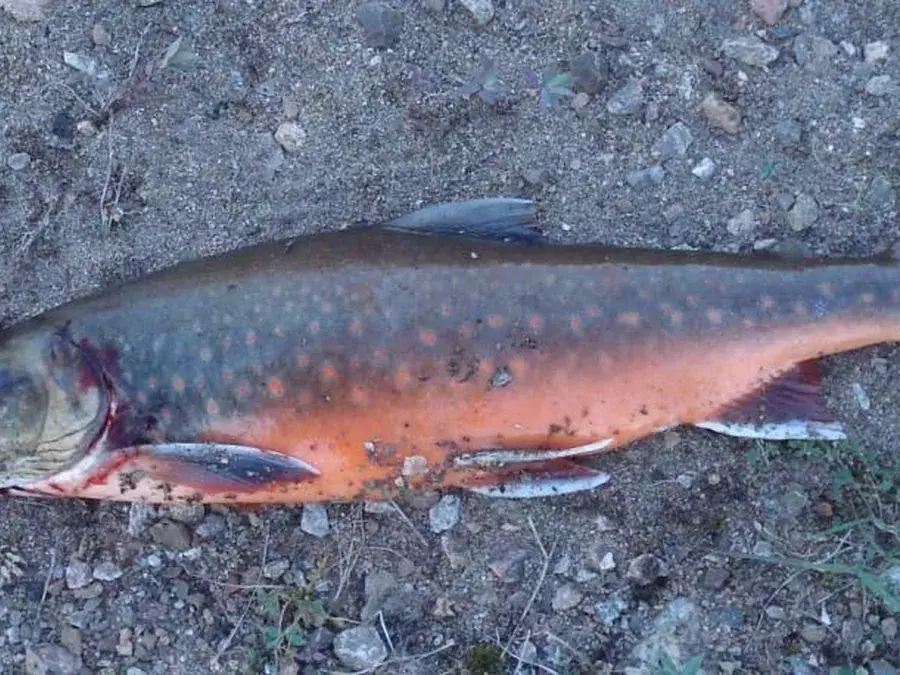
Photo by Alison Copeland on iNaturalist · CC BY 4.0
Arctic char
Salvelinus alpinus
- When
- Jan–Apr, Jun–Sep — January, February, March, April, June, July, August, September. Earlier where the water warms first.
- Where it holds
- Deep, cold, clear lakes in the Alps, Scandinavia, Iceland, Britain and Ireland; sea-run char in Arctic rivers from Norway to Nunavut.
- How to know it
- Pale pink-to-cream spots on a dark back, a belly that turns brilliant red-orange at spawning, and white-edged lower fins.
- What to know
- The most northerly freshwater fish on Earth. In southern lakes it is a deep-water relic of the Ice Age; in the Arctic, a sea-run fish of great size.
- The tactic
- Small spoons trolled or jigged deep in summer, small jigs through the ice in late winter, and spinners at Arctic river mouths.
- Caution
- Lake populations are small and sensitive to warming and pollution. Follow local limits, and check closed seasons around the autumn spawn.
Seasons, size limits and catch limits change every year and differ by water body. Check the current regulations for the country and the water before you fish.
Arctic char facts
- Also called
- Char or charr; omble chevalier in French, Seesaibling in German, röding in Swedish, røye in Norwegian, bleikja in Icelandic, torgoch ('red belly') in Welsh, and iqaluk in Inuktitut. Some taxonomists split the Alpine char (Salvelinus umbla) and several British and Irish lake chars into species of their own.
- Family
- Salmonidae — a char, like the brook trout and lake trout.
- Native range
- Circumpolar: Iceland, Scandinavia, northern Russia and Siberia, the Arctic islands, Alaska, northern Canada and Greenland, with landlocked Ice Age relic populations in cold lakes of the Alps, Britain and Ireland, Quebec, Maine and New Hampshire.
- Introduced to
- Stocked into many Alpine and Pyrenean lakes, where it often breeds, and farmed widely for food.
- Habitat
- Cold, clear, deep lakes and the deep runs and pools of northern rivers. Sea-run fish feed along Arctic coasts in summer and return to fresh water in autumn; landlocked fish spend their whole lives in lakes, often very deep.
- Water temperature
- Very cold water; FishBase gives about 4–16°C (39–61°F). It is extremely sensitive to pollution and to warming.
- Size
- Most adults 30–60 cm (12–24 in); the largest measured about 107 cm (42 in).
- Record
- IGFA all-tackle world record: 14.77 kg (32 lb 9 oz), Jeffery Ward, Tree River, Nunavut (then the Northwest Territories), 1981. A 14.83 kg (32 lb 11 oz) char from the same river was awaiting IGFA approval in 2026.
- Lifespan
- Up to about 40 years in the cold, slow-growing north.
- What it eats
- In lakes: zooplankton, amphipods, snails, insects and fish. Sea-run char feed hard at sea in summer, eat little in fresh water, and do not feed at all while migrating.
- Spawning
- In autumn and early winter, usually over pebbles and stones in lakes; males hold territories and pair with females as they become ready. Some Norwegian sea-run stocks spawn in fast riffles. Char can spawn several times in a lifetime.
- Young fish
- In many lakes char split into distinct forms that live side by side — Iceland's Thingvallavatn holds four, from small bottom-feeders to big fish-eaters.
- Teeth and mouth
- A large mouth with small teeth; spawning males grow a hooked lower jaw (a kype).
- Look-alikes
- Brook trout: worm-like markings on the back and dorsal fin. Lake trout: a deeply forked tail and pale spots all over a grey body. Brown trout: dark spots on a lighter body, the reverse of a char's light spots on dark. Dolly Varden, on the Pacific side, is almost identical.
- Eating
- Superb — pink, delicate and prized. Omble chevalier is a luxury of Alpine lake cooking, and farmed Arctic char is widely sold.
- Status
- IUCN Least Concern as a species, but many small lake populations in Britain, Ireland and the Alps are isolated and vulnerable.
Try it
How big does a arctic char get?
Slide it from an ordinary adult to the biggest one ever measured, next to things you know the size of.
Most adults you'll catch: 30–60 cm (12–24 in).
This arctic char: 45 cm. Longer than a loaf of bread, shorter than a four-year-old.
The record
IGFA all-tackle world record: 14.77 kg (32 lb 9 oz), Jeffery Ward, Tree River, Nunavut (then the Northwest Territories), 1981. A 14.83 kg (32 lb 11 oz) char from the same river was awaiting IGFA approval in 2026.
Questions people ask about arctic char
Where do Arctic char live?
All around the top of the world: Iceland, Scandinavia, Arctic Russia, Alaska, northern Canada and Greenland. Farther south they survive as landlocked Ice Age relics in deep, cold lakes — in the Alps, Britain and Ireland, Quebec and Maine.
What is the most northerly freshwater fish?
The Arctic char. No other freshwater fish lives as far north — it is the only fish in Lake Hazen on Ellesmere Island, Nunavut, near 82°N.
Is Arctic char a trout or a salmon?
Neither, exactly: it is a char (genus Salvelinus), in the same family as trout and salmon. Brook trout and lake trout are chars too, despite their names.
How big do Arctic char get?
Landlocked char in southern lakes are often only 20–40 cm (8–16 in); sea-run Arctic fish commonly reach 60 cm and several kilograms. The IGFA world record is 14.77 kg (32 lb 9 oz), from Nunavut's Tree River in 1981.
Found in these regions
Checked against these sources ·
Sizes, records and ranges are for the species as a whole; local fish, and local rules, vary. Records change — the record-keeper named above has the current one.
Is it active near you?
Get this week's guide for your area
Enter a town, postal code or ZIP and we'll tell you what's happening right there this week — from your local climate, this week's weather and your ecological region.
Also active in October
 FishJun–Mar
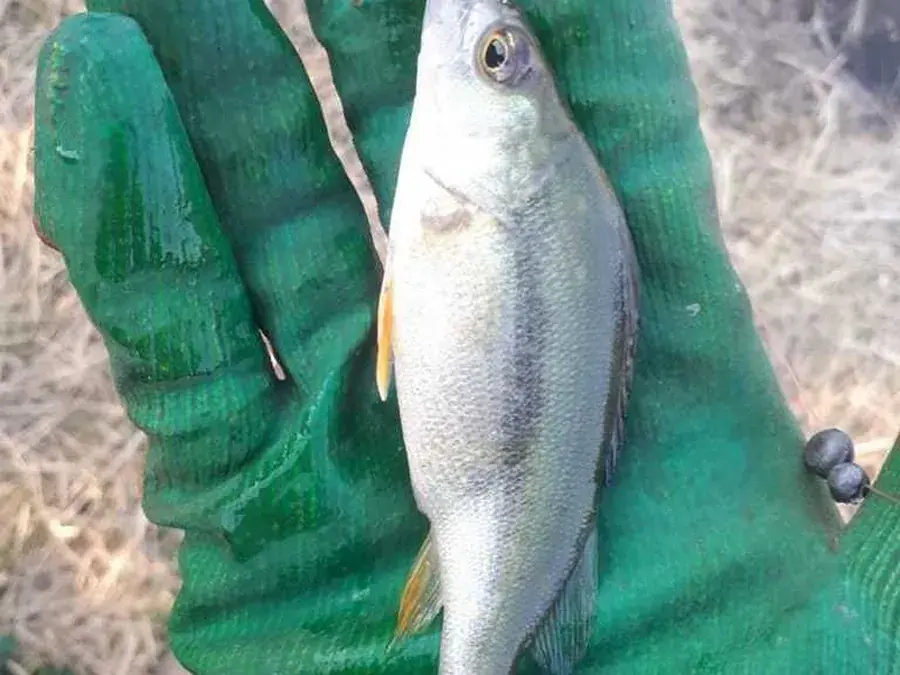
European perch
Perca fluviatilis
Five to eight dark bars on a greenish flank, bright red-orange lower fins, and a spiny first dorsal fin with a black blotch at the back.
Where and how to catch it →Photo: Дауд Арсанукаев · CC BY 4.0
 FishJun–Mar
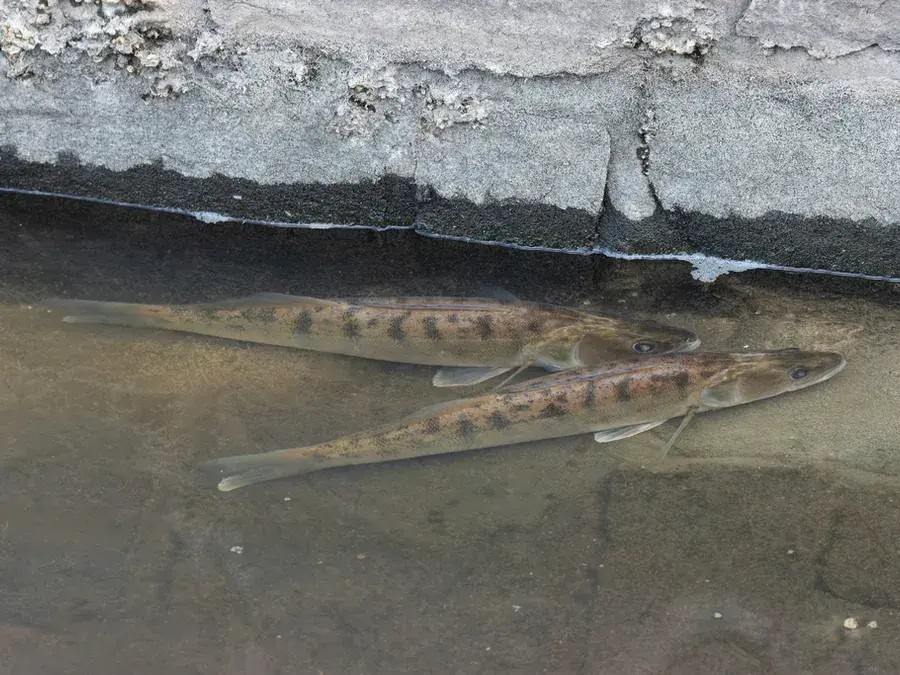
Zander
Sander lucioperca
Slim and glassy-eyed, with grey-brown saddles, rows of black spots on the spiny dorsal fin, and long fang-like canine teeth.
Where and how to catch it →Photo: Tomas Broucek · CC BY 4.0
 FishApr–Oct
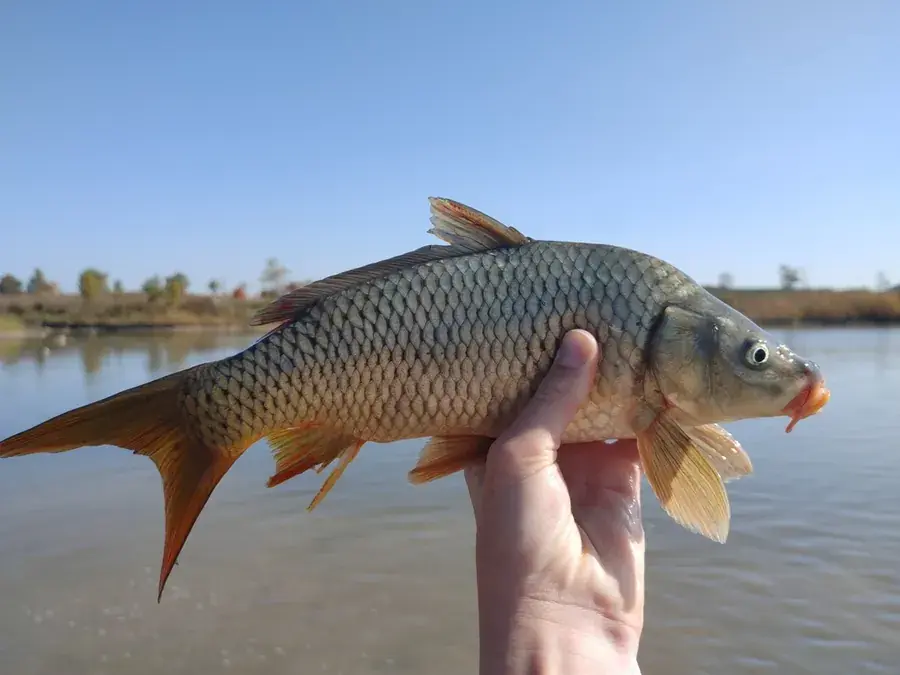
Common carp
Cyprinus carpio
Big bronze scales (or the scattered big scales of a mirror carp), a long dorsal fin, and two pairs of barbels at a rubbery, tube-like mouth.
Where and how to catch it →