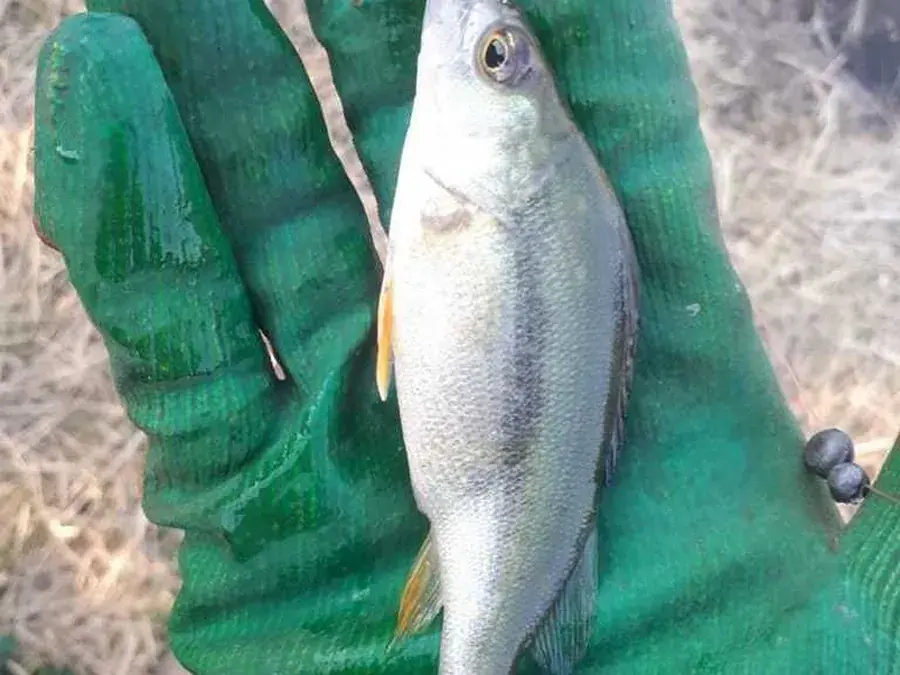
Photo by Дауд Арсанукаев on iNaturalist · CC BY 4.0
European perch
Perca fluviatilis
- When
- Jun–Mar — January, February, March, June, July, August, September, October, November, December. Earlier where the water warms first.
- Where it holds
- Weed edges, jetties, moorings and drop-offs in lakes, canals and slow rivers — and the brackish archipelagos of the Baltic.
- How to know it
- Five to eight dark bars on a greenish flank, bright red-orange lower fins, and a spiny first dorsal fin with a black blotch at the back.
- What to know
- Europe's everyday predator and the twin of the North American yellow perch. Small ones shoal in their hundreds; big perch hunt alone at dawn and dusk.
- The tactic
- A small spinner, drop-shot worm or jig along the weed edge; a lobworm under a float for the big ones.
- Caution
- Some countries and regions close predator fishing in spring — check local seasons. Never move live perch: introduced perch have harmed native fish, notably in Australia, where it is called redfin.
Seasons, size limits and catch limits change every year and differ by water body. Check the current regulations for the country and the water before you fish.
European perch facts
- Also called
- Perch, common perch, Eurasian perch; redfin or redfin perch in Australia. Perche in French, Barsch in German, baars in Dutch, abborre in Swedish, ahven in Finnish.
- Family
- Percidae, the perch family — with the zander and ruffe, and North America's yellow perch and walleye.
- Native range
- Most of Europe, north to the top of Scandinavia, and east across Siberia to the Kolyma River, plus the Aral Sea basin. Naturally absent from the Iberian Peninsula, central Italy and the Adriatic basin.
- Introduced to
- Spain, central and southern Italy, Cyprus, Morocco, South Africa, Australia and New Zealand. In Australia it has harmed native fish, including the endangered Macquarie perch, and New South Wales declares it a noxious species.
- Habitat
- Almost any still or slow water: lakes of every kind, ponds, canals, slow rivers and brackish lagoons, and the low-salt waters of the Baltic, where perch grow big on herring. It avoids cold, fast water. Small perch school in the shallows; big ones hold deeper, near drop-offs and cover.
- Water temperature
- Cool to warm water; FishBase gives about 10–22°C (50–72°F). It spawns in spring — anywhere from February to July, depending on how far north it lives.
- Size
- Most adults 15–35 cm (6–14 in); the largest measured about 60 cm (24 in).
- Record
- IGFA all-tackle world record: 2.9 kg (6 lb 6 oz), Kalle Vaaranen, Kökar, Åland Islands, Finland, 2010. The British record is 2.806 kg (6 lb 3 oz), shared by two fish caught in 2011.
- Lifespan
- Up to about 22 years, though most perch caught are much younger.
- What it eats
- Young perch eat zooplankton, then bottom insects and shrimps; from about 12 cm long they turn to fish, smaller perch included. They feed by day, hardest around sunrise and sunset, and take whatever is plentiful.
- Spawning
- In spring, in the shallows. Several males follow each ripe female, and she lays her eggs in a long white ribbon of jelly — up to a metre long — draped over sunken branches, reeds or weed.
- Young fish
- Larvae live in open water, then move inshore during their first summer. Males mature at 1–2 years and females at 2–4. In crowded lakes perch can stunt into great numbers of small fish.
- Teeth and mouth
- A large mouth with bands of tiny bristle-like teeth but no canines. The gill cover ends in a sharp spine, and the first dorsal fin's spines are sharp too.
- Look-alikes
- Yellow perch, its North American twin, is so close that it has sometimes been treated as a subspecies — where you are tells you which. Zander is slimmer, with grey fins and long canine teeth. Ruffe is small, spotted rather than barred, and its two dorsal fins are joined.
- Eating
- Excellent: firm, white and not too bony. Perch fillets are a classic of Lake Geneva and the other Alpine lakes. Check local consumption advice for big fish from industrial waters.
- Status
- Common and widespread; IUCN Least Concern.
Try it
How big does a european perch get?
Slide it from an ordinary adult to the biggest one ever measured, next to things you know the size of.
Most adults you'll catch: 15–35 cm (6–14 in).
This european perch: 25 cm. Longer than a hand, shorter than a loaf of bread.
The record
IGFA all-tackle world record: 2.9 kg (6 lb 6 oz), Kalle Vaaranen, Kökar, Åland Islands, Finland, 2010. The British record is 2.806 kg (6 lb 3 oz), shared by two fish caught in 2011.
Questions people ask about european perch
How big do European perch get?
Most are 15–35 cm (6–14 in) and well under 1 kg; a perch over 1.5 kg (3 lb) is a specimen almost anywhere. The IGFA world record is 2.9 kg (6 lb 6 oz), from the Åland Islands, Finland, in 2010. The biggest perch grow in the brackish Baltic, where they feed on herring.
Is a European perch the same as a yellow perch?
Nearly, but not quite. They are separate species — Perca fluviatilis in Europe and Asia, Perca flavescens in North America — yet they look, behave and taste almost the same and can interbreed, so some biologists have treated the yellow perch as a subspecies of the European one.
When do perch spawn?
In spring, as the shallows warm — from February in the south to June or July in the far north. The female lays her eggs in a long ribbon of jelly, up to a metre long, over sunken branches and weed.
Why is the perch called redfin?
For its red-orange pelvic and anal fins. In Australia, where it was introduced in the 1800s, redfin is its usual name — and there it is an invasive pest that has harmed native fish.
Is perch good to eat?
Yes — it is one of the best-eating freshwater fish in Europe, firm, white and not very bony. Fried perch fillets are a classic around Lake Geneva and the other Alpine lakes.
Found in these regions
Checked against these sources ·
- FishBase — Perca fluviatilis
- IGFA world records — Perch, European
- British Record (Rod Caught) Fish Committee — coarse fish records, January 2026
- Wikipedia — European perch
Sizes, records and ranges are for the species as a whole; local fish, and local rules, vary. Records change — the record-keeper named above has the current one.
Is it active near you?
Get this week's guide for your area
Enter a town, postal code or ZIP and we'll tell you what's happening right there this week — from your local climate, this week's weather and your ecological region.
Also active in October
 FishJun–Mar
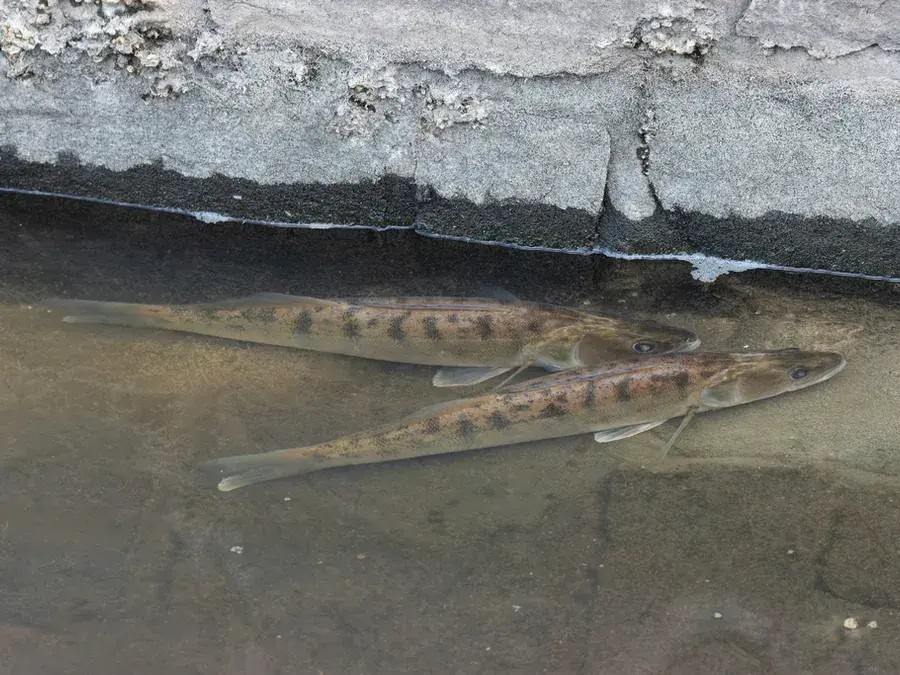
Zander
Sander lucioperca
Slim and glassy-eyed, with grey-brown saddles, rows of black spots on the spiny dorsal fin, and long fang-like canine teeth.
Where and how to catch it →Photo: Tomas Broucek · CC BY 4.0
 FishApr–Oct
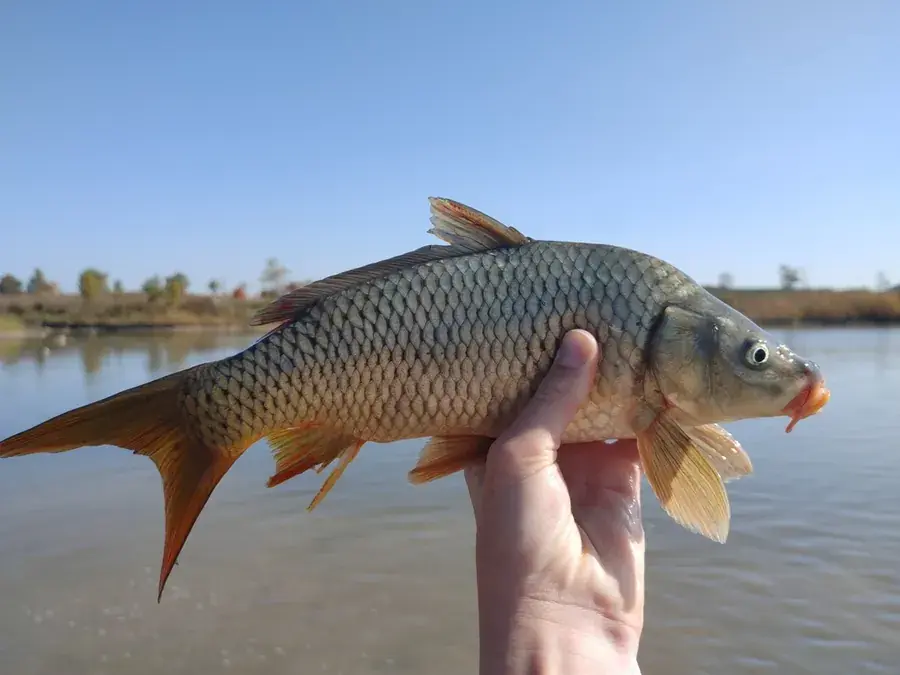
Common carp
Cyprinus carpio
Big bronze scales (or the scattered big scales of a mirror carp), a long dorsal fin, and two pairs of barbels at a rubbery, tube-like mouth.
Where and how to catch it →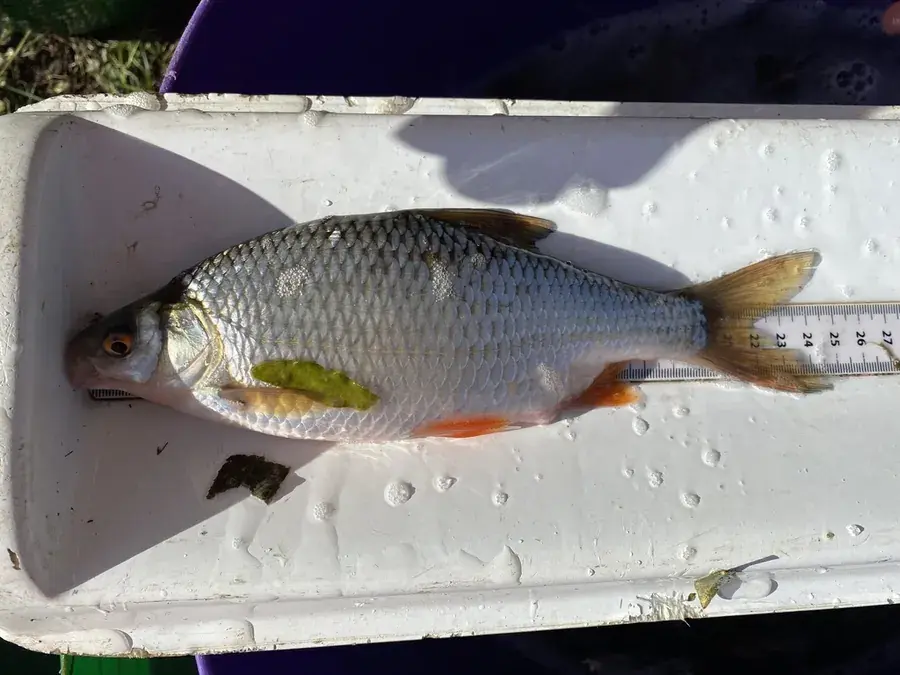 FishJun–Mar
Roach
Rutilus rutilus
Silver with a blue-green back, bright red eyes, reddish lower fins, and a dorsal fin set directly above the pelvic fins.
Where and how to catch it →