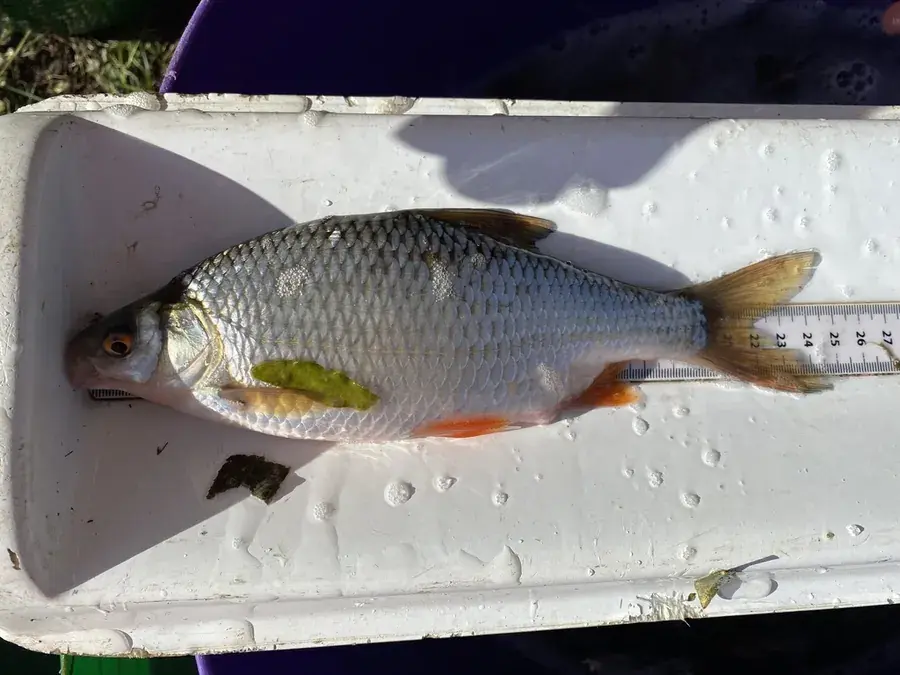
Photo by Public domain (iNaturalist) on iNaturalist · CC0 (public domain)
Roach
Rutilus rutilus
- When
- Jun–Mar — January, February, March, June, July, August, September, October, November, December. Earlier where the water warms first.
- Where it holds
- Nearly every lowland lake, canal and slow river; big shoals drop into deeper, slower water in winter.
- How to know it
- Silver with a blue-green back, bright red eyes, reddish lower fins, and a dorsal fin set directly above the pelvic fins.
- What to know
- The bread and butter of European coarse and match fishing. A roach of 1 kg (2 lb) is a fish of a lifetime.
- The tactic
- Maggots, casters or bread punch under a fine float, feeding a little and often.
Seasons, size limits and catch limits change every year and differ by water body. Check the current regulations for the country and the water before you fish.
Roach facts
- Also called
- Common roach; gardon in French, Rotauge or Plötze in German, blankvoorn in Dutch, mört in Swedish, särki in Finnish.
- Family
- Leuciscidae, the Eurasian minnows (formerly included in the carp family, Cyprinidae).
- Native range
- Europe north of the Pyrenees and Alps, east to the Urals and on across Siberia, north to about 69°N in Scandinavia. Naturally absent from Iberia, Italy, the Adriatic basin and Britain north of about 56°N.
- Introduced to
- Ireland, Spain, northeastern Italy (where it is invasive) and Morocco.
- Habitat
- Almost everywhere in the lowlands: nutrient-rich lakes, ponds, canals, slow rivers and backwaters, and brackish lagoons and Baltic coasts. In fast rivers it needs slack backwaters to see out the winter.
- Water temperature
- Very tolerant — roach survive from near freezing to around 31°C, and FishBase gives about 10–20°C (50–68°F) as their range. Spawning runs from about March to June as the water warms.
- Size
- Most adults 15–30 cm (6–12 in); the largest measured about 50 cm (20 in).
- Record
- IGFA all-tackle world record: 1.84 kg (4 lb 1 oz), R. Jones, Colwick, Nottingham, England, 1975. The British record is slightly heavier at 1.9 kg (4 lb 3 oz), shared by fish from Northern Ireland (2006) and Oxfordshire (2024).
- Lifespan
- Up to about 14 years.
- What it eats
- Bottom invertebrates, zooplankton, plant material and detritus, switching between them as food and danger allow.
- Spawning
- From March to June, in shoals, among dense weed in backwaters, lakes and flooded meadows, or over plants and gravel in shallow current. The pale yellow eggs stick to plants and roots, and roach tend to spawn in the same place every year.
- Young fish
- Fry live in weedy margins. In spring the males grow rough white spawning tubercles on the head and body.
- Teeth and mouth
- A small, toothless mouth set level at the front of the head.
- Look-alikes
- Rudd: upturned mouth, golden flanks, brighter red fins, and a dorsal fin set well behind the pelvic fins (on a roach it sits directly above them). Dace: slimmer, with a yellowish eye. Roach × bream hybrids are common — deeper than a roach, with a longer anal fin.
- Eating
- Edible but bony; there is little commercial fishing for it, and in western Europe anglers almost always return it.
- Status
- IUCN Least Concern; abundant.
Try it
How big does a roach get?
Slide it from an ordinary adult to the biggest one ever measured, next to things you know the size of.
Most adults you'll catch: 15–30 cm (6–12 in).
This roach: 23 cm. Longer than a hand, shorter than a loaf of bread.
The record
IGFA all-tackle world record: 1.84 kg (4 lb 1 oz), R. Jones, Colwick, Nottingham, England, 1975. The British record is slightly heavier at 1.9 kg (4 lb 3 oz), shared by fish from Northern Ireland (2006) and Oxfordshire (2024).
Questions people ask about roach
How do you tell a roach from a rudd?
Look at the mouth and the dorsal fin. A rudd's mouth points upward and its dorsal fin starts well behind the pelvic fins; a roach's mouth is level and its dorsal fin sits directly above them. Rudd are also more golden, with redder fins.
How big do roach get?
Most are 15–30 cm (6–12 in) and a few hundred grams; a roach of 1 kg (2 lb) is a fish of a lifetime. The IGFA world record is 1.84 kg (4 lb 1 oz), from England in 1975.
What do roach eat?
A bit of everything: insect larvae, small snails, zooplankton, algae and plant matter. That is why maggots, casters, bread and hemp all catch them.
Are roach invasive?
Outside their native range they can be. Roach have been introduced to Ireland, Spain and northeastern Italy — where they are counted invasive — and to Morocco, and they compete with native fish for food.
Found in these regions
Checked against these sources ·
- FishBase — Rutilus rutilus
- IGFA world records — Roach
- British Record (Rod Caught) Fish Committee — coarse fish records, January 2026
- Wikipedia — Common roach
Sizes, records and ranges are for the species as a whole; local fish, and local rules, vary. Records change — the record-keeper named above has the current one.
Is it active near you?
Get this week's guide for your area
Enter a town, postal code or ZIP and we'll tell you what's happening right there this week — from your local climate, this week's weather and your ecological region.
Also active in October
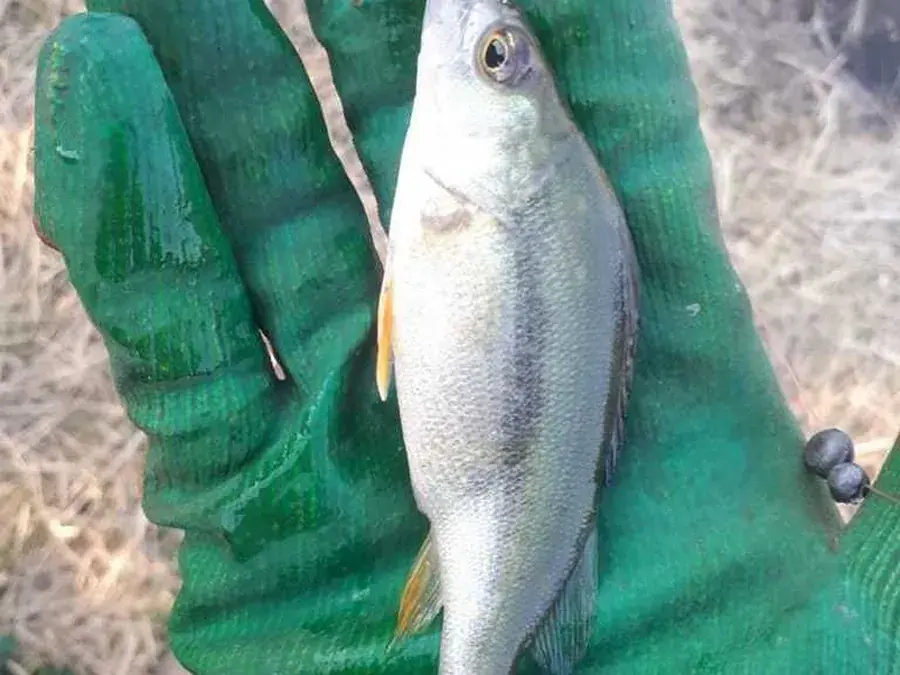 FishJun–Mar
European perch
Perca fluviatilis
Five to eight dark bars on a greenish flank, bright red-orange lower fins, and a spiny first dorsal fin with a black blotch at the back.
Where and how to catch it →Photo: Дауд Арсанукаев · CC BY 4.0
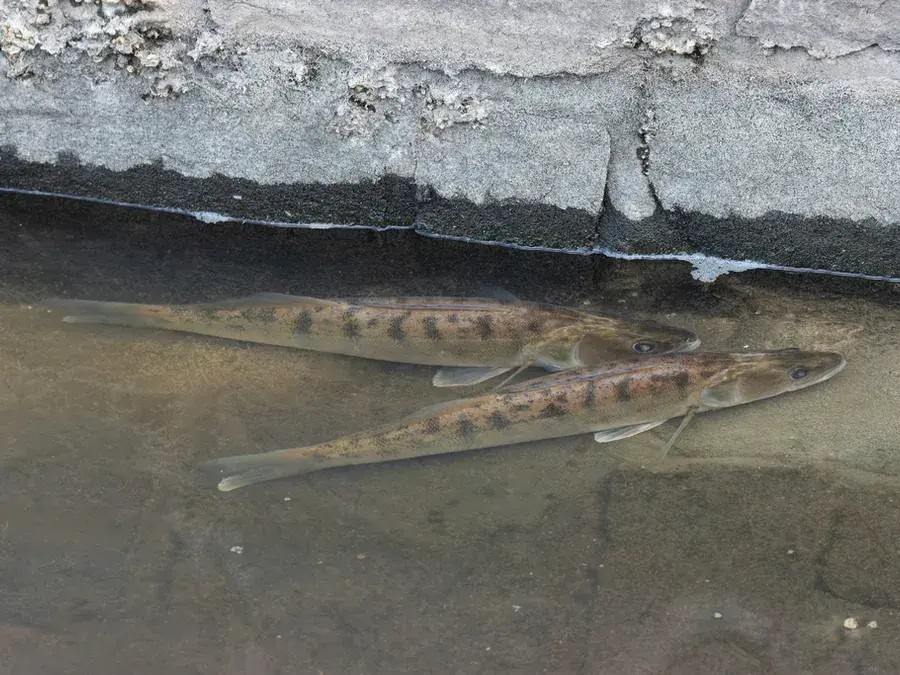 FishJun–Mar
Zander
Sander lucioperca
Slim and glassy-eyed, with grey-brown saddles, rows of black spots on the spiny dorsal fin, and long fang-like canine teeth.
Where and how to catch it →Photo: Tomas Broucek · CC BY 4.0
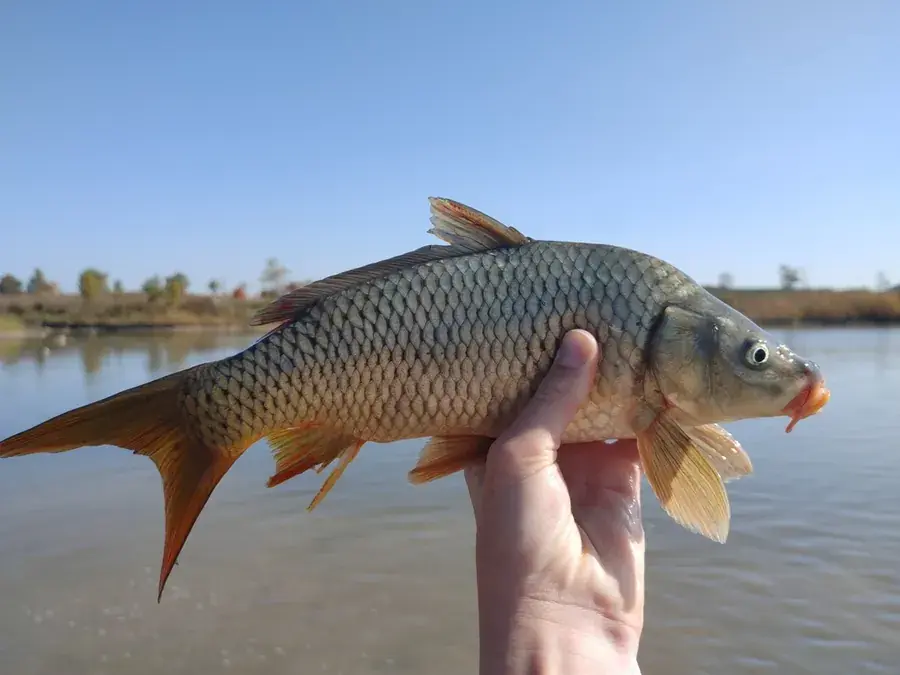 FishApr–Oct
Common carp
Cyprinus carpio
Big bronze scales (or the scattered big scales of a mirror carp), a long dorsal fin, and two pairs of barbels at a rubbery, tube-like mouth.
Where and how to catch it →