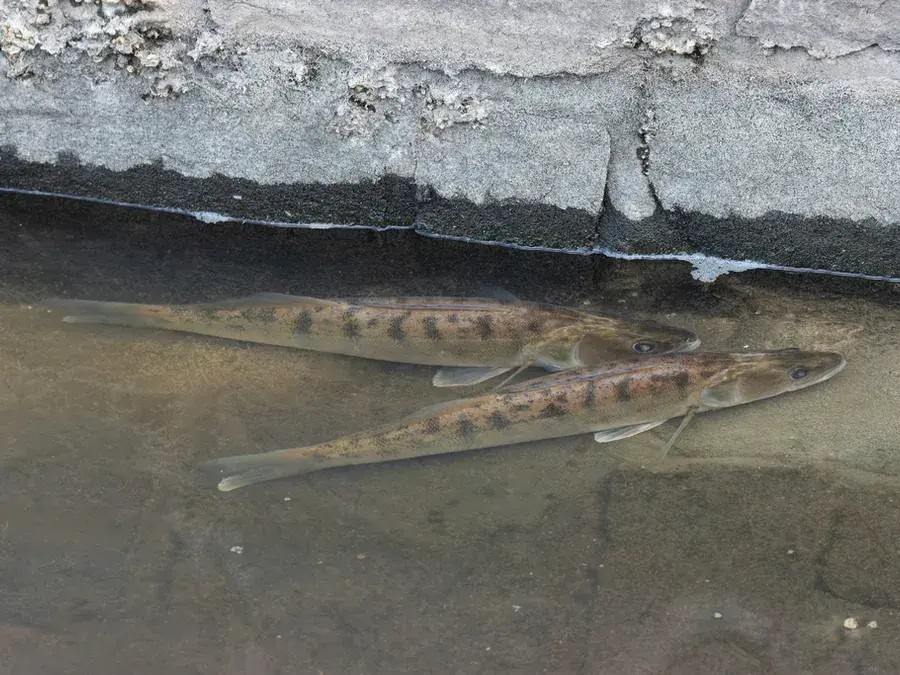
Photo by Tomas Broucek on iNaturalist · CC BY 4.0
Zander
Sander lucioperca
- When
- Jun–Mar — January, February, March, June, July, August, September, October, November, December. Earlier where the water warms first.
- Where it holds
- Deep, coloured water in big rivers, canals, reservoirs and lowland lakes — on drop-offs, snags and harbour walls, moving up to feed at dusk.
- How to know it
- Slim and glassy-eyed, with grey-brown saddles, rows of black spots on the spiny dorsal fin, and long fang-like canine teeth.
- What to know
- The walleye's European cousin and the largest of the perch family. Light-shy: dusk, night and murky water are the times.
- The tactic
- A soft-plastic shad hopped slowly along the bottom, or a small deadbait fished with almost no resistance.
- Caution
- Spring closed seasons protect spawning zander in many countries, and some waters set minimum sizes. It is non-native across western Europe — never move live fish.
Seasons, size limits and catch limits change every year and differ by water body. Check the current regulations for the country and the water before you fish.
Zander facts
- Also called
- Pikeperch; sandre in French, snoekbaars in Dutch, Zander in German, gös in Swedish, kuha in Finnish, süllő in Hungarian, sudak in Russian.
- Family
- Percidae — the largest member of the perch family, and a close cousin of North America's walleye and sauger.
- Native range
- The Caspian, Baltic, Black Sea and Aral basins, the Elbe in the North Sea basin and the Maritsa in the Aegean — from Germany and southern Scandinavia east into Russia and Central Asia, north to about 65°N in Finland.
- Introduced to
- Widely: Britain (first at Woburn Abbey in 1878, then the Great Ouse Relief Channel in the Fens), the Netherlands, France, Switzerland, Spain, Portugal and Italy, plus Morocco, Tunisia and Anatolia. Several countries report harm to native fish since.
- Habitat
- Big, turbid rivers, canals, reservoirs and nutrient-rich lowland lakes, and brackish coastal lagoons and estuaries. Its eyes work well in low light, so it thrives in coloured water and feeds at dawn, dusk and through the night.
- Water temperature
- Cool to warm water; FishBase gives about 6–22°C (43–72°F). It spawns in April and May in most places, when the water on the spawning grounds reaches about 10–14°C (50–57°F).
- Size
- Most adults 40–70 cm (16–28 in); the largest measured about 100 cm (39 in).
- Record
- IGFA all-tackle world record: 11.48 kg (25 lb 4 oz), Jurg Scherrer, Lago Maggiore, Switzerland, June 2016. The British record is 9.667 kg (21 lb 5 oz), from the River Severn at Tewkesbury in 2007.
- Lifespan
- Up to about 17 years.
- What it eats
- Fish, from an early age: adults hunt shoaling open-water fish, and young zander switch from plankton to fish fry quickly.
- Spawning
- In pairs, at dawn or at night, mostly in April–May (exceptionally from late February to July). The male clears a shallow nest about 50 cm across in sand or gravel or among exposed plant roots, usually in 1–3 m of murky water, then guards the eggs and fry.
- Young fish
- Juveniles are silvery and may show stripes, darkening as they grow. Most zander mature at about 4 years, though anywhere from 3 to 10 depending on growth.
- Teeth and mouth
- Powerful jaws with many sharp teeth and two long canines at the front of each jaw. Unhook with long-nosed pliers, and use a wire trace where pike share the water.
- Look-alikes
- Perch: deeper body, bold bars, red lower fins and no canines. The Volga pikeperch of the Danube and Volga is smaller, with broader bars and no long canines. North America's walleye is very close — where you are usually decides it.
- Eating
- Excellent — firm, white, mild fillets with few bones, and among the most prized freshwater fish in central Europe. Check local consumption advice for big fish.
- Status
- Common; IUCN Least Concern. Non-native across western Europe.
Try it
How big does a zander get?
Slide it from an ordinary adult to the biggest one ever measured, next to things you know the size of.
Most adults you'll catch: 40–70 cm (16–28 in).
This zander: 55 cm. Longer than a loaf of bread, shorter than a four-year-old.
The record
IGFA all-tackle world record: 11.48 kg (25 lb 4 oz), Jurg Scherrer, Lago Maggiore, Switzerland, June 2016. The British record is 9.667 kg (21 lb 5 oz), from the River Severn at Tewkesbury in 2007.
Questions people ask about zander
What is a zander?
A big European member of the perch family (Sander lucioperca) and the walleye's close cousin: slim, glassy-eyed, with long canine teeth. It is native to large, murky rivers and lakes from Germany and southern Scandinavia east to Central Asia, and has been introduced across western Europe and North Africa.
Is a zander a cross between a pike and a perch?
No — it is a species in its own right, in the perch family. The name pikeperch comes from its long, pike-like body and teeth on a perch's build, with two dorsal fins, the first one spiny.
Is zander the same as walleye?
No, but they are close relatives in the genus Sander, whose European and North American branches split about 20 million years ago. One real difference: a male zander builds a nest and guards the eggs and fry, while walleye scatter their eggs and leave.
How big do zander get?
Most are 40–70 cm (16–28 in). The largest reach about a metre and up to 20 kg in the published record. The IGFA world record is 11.48 kg (25 lb 4 oz), from Lago Maggiore in 2016.
Is zander good to eat?
Yes — white, firm and mild, with few bones. It is one of the most prized eating fish in central Europe and a restaurant staple from Germany to Hungary.
Found in these regions
Checked against these sources ·
- FishBase — Sander lucioperca
- IGFA world records — Zander
- British Record (Rod Caught) Fish Committee — coarse fish records, January 2026
- Wikipedia — Zander
Sizes, records and ranges are for the species as a whole; local fish, and local rules, vary. Records change — the record-keeper named above has the current one.
Is it active near you?
Get this week's guide for your area
Enter a town, postal code or ZIP and we'll tell you what's happening right there this week — from your local climate, this week's weather and your ecological region.
Also active in October
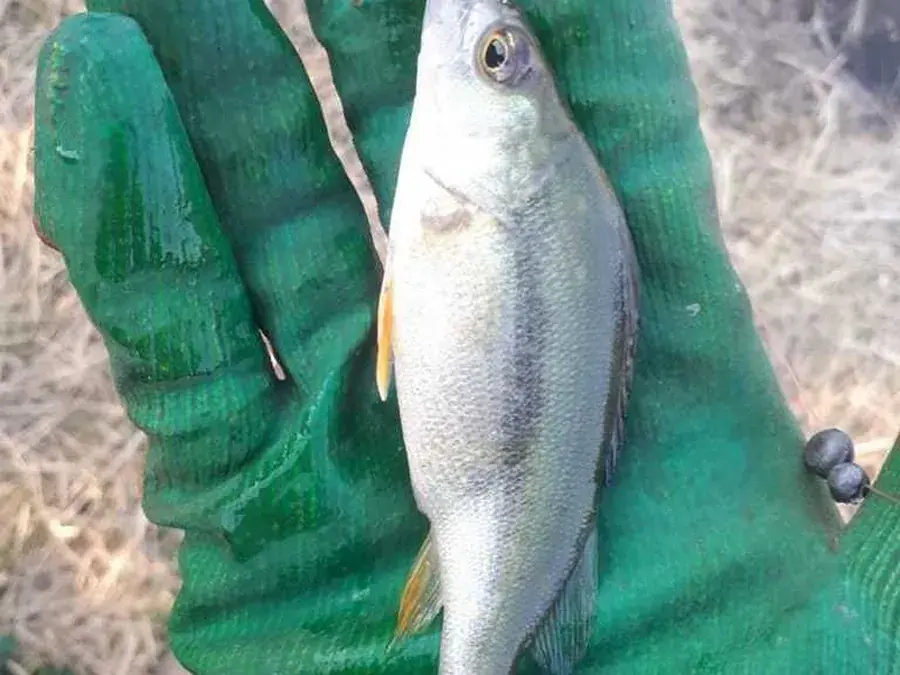 FishJun–Mar
European perch
Perca fluviatilis
Five to eight dark bars on a greenish flank, bright red-orange lower fins, and a spiny first dorsal fin with a black blotch at the back.
Where and how to catch it →Photo: Дауд Арсанукаев · CC BY 4.0
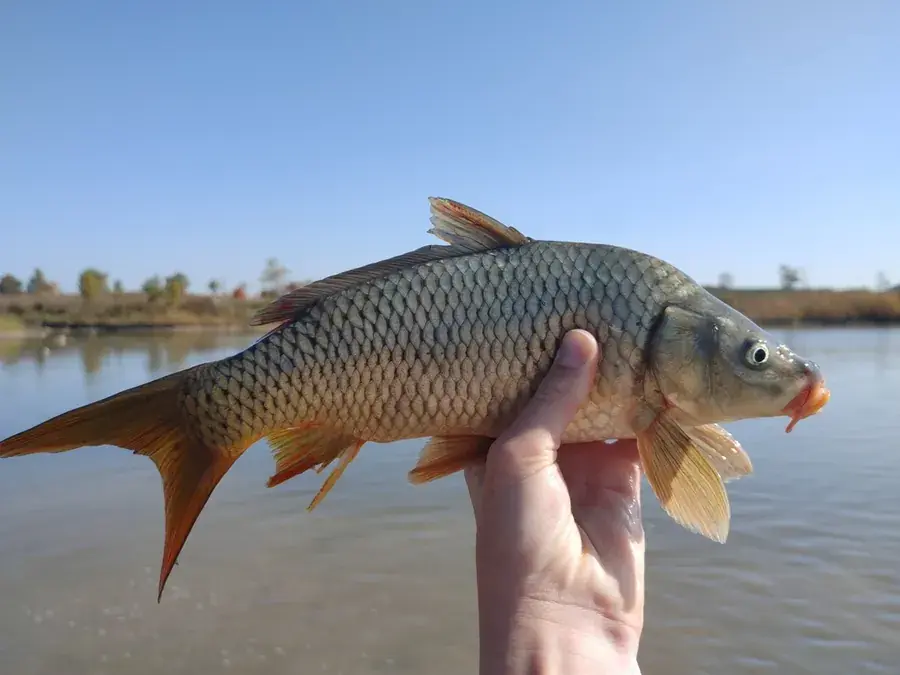 FishApr–Oct
Common carp
Cyprinus carpio
Big bronze scales (or the scattered big scales of a mirror carp), a long dorsal fin, and two pairs of barbels at a rubbery, tube-like mouth.
Where and how to catch it →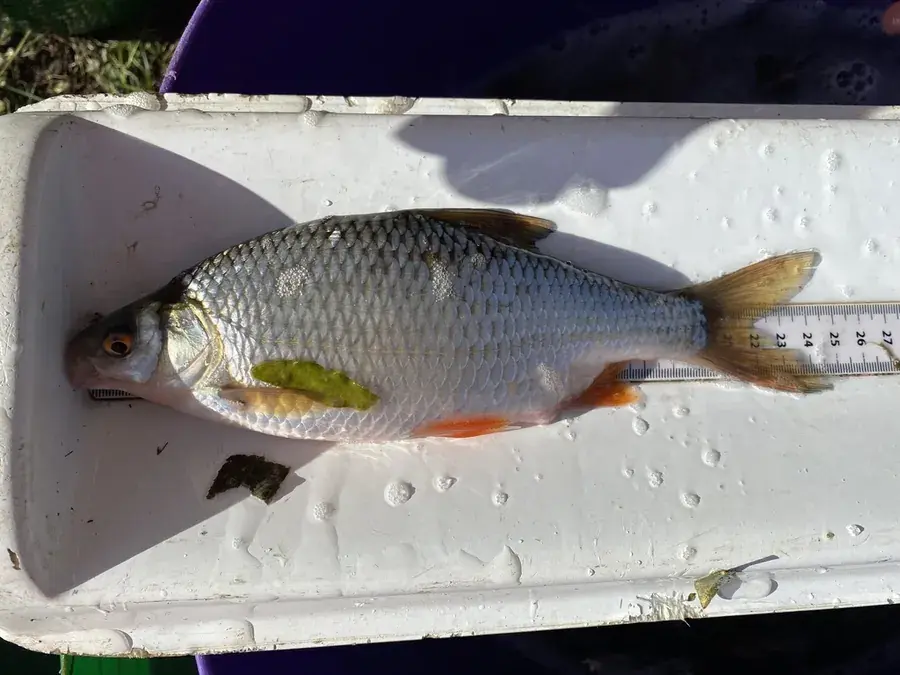 FishJun–Mar
Roach
Rutilus rutilus
Silver with a blue-green back, bright red eyes, reddish lower fins, and a dorsal fin set directly above the pelvic fins.
Where and how to catch it →