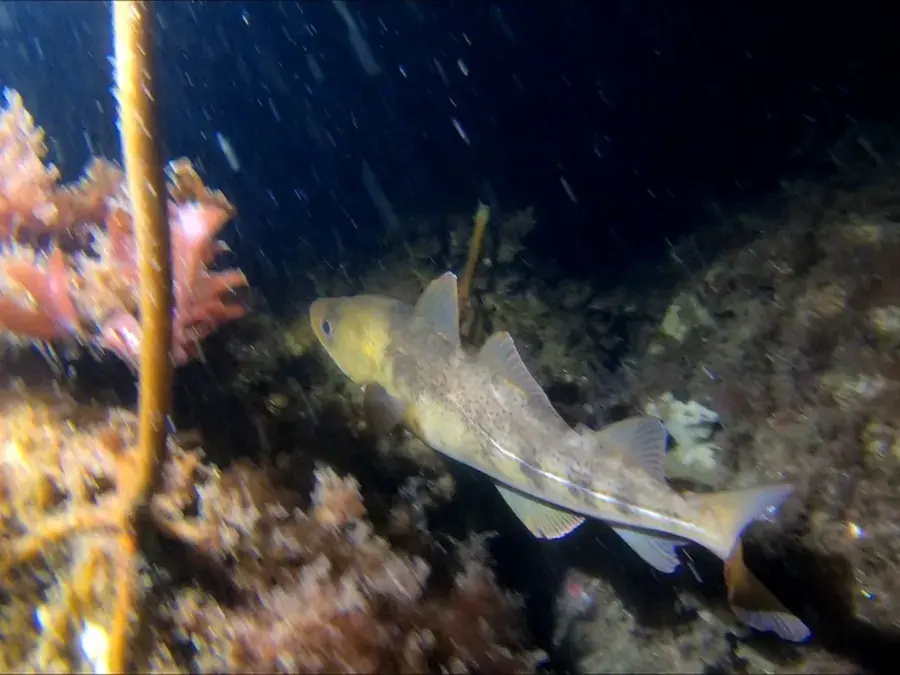
Photo by Dan Bender on iNaturalist · CC BY 4.0
Atlantic cod
Gadus morhua
- When
- Oct–Apr — January, February, March, April, October, November, December. Earlier where the water warms first.
- Where it holds
- Rough ground, reefs and wrecks — from the beach on winter nights, and from boats over deeper banks; Norway's coast in late winter when the skrei come in to spawn.
- How to know it
- A pale, curving lateral line, a single barbel on the chin, three dorsal fins, and a speckled olive-brown back.
- What to know
- The fish that built the North Atlantic's fishing towns. Northern Norway now holds the biggest cod and the most anglers chasing them.
- The tactic
- A pirk or big soft lure jigged near the bottom; lugworm and squid from the beach after dark.
- Caution
- Baltic cod have collapsed, and recreational cod fishing has been banned across much of the Baltic in recent years. Atlantic Canada's cod are still rebuilding — fish only in the open recreational seasons and limits.
Seasons, size limits and catch limits change every year and differ by water body. Check the current regulations for the country and the water before you fish.
Atlantic cod facts
- Also called
- Cod; codling for young fish; skrei for the Barents Sea cod that come to the Norwegian coast to spawn. Morue or cabillaud in French, bacalao in Spanish (above all for salt cod), torsk in the Scandinavian languages, Dorsch or Kabeljau in German, þorskur in Icelandic.
- Family
- Gadidae, the cod family.
- Native range
- The North Atlantic and the edge of the Arctic: from Ungava Bay and Labrador south to Cape Hatteras in the west; Greenland and Iceland; and from the Barents Sea along the European coast to the Bay of Biscay, including the North Sea and the Baltic.
- Habitat
- From the shoreline down to about 600 m, usually 150–200 m. Young cod need shallow, complex cover — seagrass, gravel, rocks and boulders; adults live deeper and colder, schooling above the bottom by day and spreading out to feed at night.
- Water temperature
- Cold water: FishBase gives about 0–15°C (32–59°F). Cod spawn at 0–12°C, preferring 0–6°C (32–43°F).
- Size
- Most adults 50–100 cm (20–39 in); the largest measured about 200 cm (79 in).
- Record
- IGFA all-tackle world record: 47.02 kg (103 lb 10 oz), Michael Eisele, Sørøya, Norway, April 2013. The British boat record is 26.478 kg (58 lb 6 oz), North Sea off Whitby, 1992.
- Lifespan
- Up to about 25 years, though few cod live that long in fished stocks.
- What it eats
- Omnivorous: invertebrates and fish, young cod included, eaten mostly at dawn and dusk.
- Spawning
- In winter and early spring, in big schools offshore at or near the bottom in 50–200 m of water. Norway's skrei migrate from the Barents Sea to spawn along the coast, especially around Lofoten.
- Young fish
- Juveniles hide in shallow, complex habitat — eelgrass, kelp, gravel and boulders — for their first years. Small cod are called codling.
- Teeth and mouth
- A big mouth, the upper jaw overhanging the lower, and a single barbel on the chin.
- Look-alikes
- Haddock: a black lateral line and a dark 'thumbprint' above the pectoral fin. Pollack and saithe: a jutting lower jaw and no real chin barbel. Ling: long and eel-like. Whiting: slim and silvery, with a dark spot at the base of the pectoral fin.
- Eating
- Excellent; follow the local rules on what you may keep.
- Status
- Listed as Vulnerable in an old (1996) IUCN assessment. Stocks vary enormously: Canada's northern cod collapsed and commercial fishing has been under a moratorium since 1992; Baltic cod have collapsed and recreational cod fishing there has been widely banned; the Barents Sea cod off northern Norway remain large.
Try it
How big does a atlantic cod get?
Slide it from an ordinary adult to the biggest one ever measured, next to things you know the size of.
Most adults you'll catch: 50–100 cm (20–39 in).
This atlantic cod: 75 cm. Longer than a loaf of bread, shorter than a four-year-old.
The record
IGFA all-tackle world record: 47.02 kg (103 lb 10 oz), Michael Eisele, Sørøya, Norway, April 2013. The British boat record is 26.478 kg (58 lb 6 oz), North Sea off Whitby, 1992.
Questions people ask about atlantic cod
How big do cod get?
Most rod-caught cod are 50–100 cm (20–39 in). The largest on record reached about 2 m and 96 kg. The IGFA world record is 47.02 kg (103 lb 10 oz), from Sørøya in northern Norway in 2013.
Can you fish for cod in the Baltic?
In most of it, not at present. Both Baltic cod stocks have collapsed, and the EU has banned recreational cod fishing across much of the Baltic — in the east since 2020, and in the west too in recent years. Check the current rules before planning a trip.
What is skrei?
Norwegian for the cod that migrate each winter from the Barents Sea to spawn along Norway's coast, especially around Lofoten. They are big, lean fish in prime condition, and the season — roughly January to April — is the peak of Norwegian cod fishing.
Can you fish for cod in Newfoundland?
Yes, in the recreational groundfish fishery, which has set seasons and daily limits each year from Fisheries and Oceans Canada. Northern cod are still rebuilding after the collapse that led to the 1992 moratorium.
Found in these regions
Checked against these sources ·
- FishBase — Gadus morhua
- IGFA world records — Cod, Atlantic
- British Record (Rod Caught) Fish Committee — sea fish records, June 2026
- Fisheries Secretariat — Commission proposes fishing opportunities for 2026 in the Baltic Sea
Sizes, records and ranges are for the species as a whole; local fish, and local rules, vary. Records change — the record-keeper named above has the current one.
Is it active near you?
Get this week's guide for your area
Enter a town, postal code or ZIP and we'll tell you what's happening right there this week — from your local climate, this week's weather and your ecological region.
Also active in October
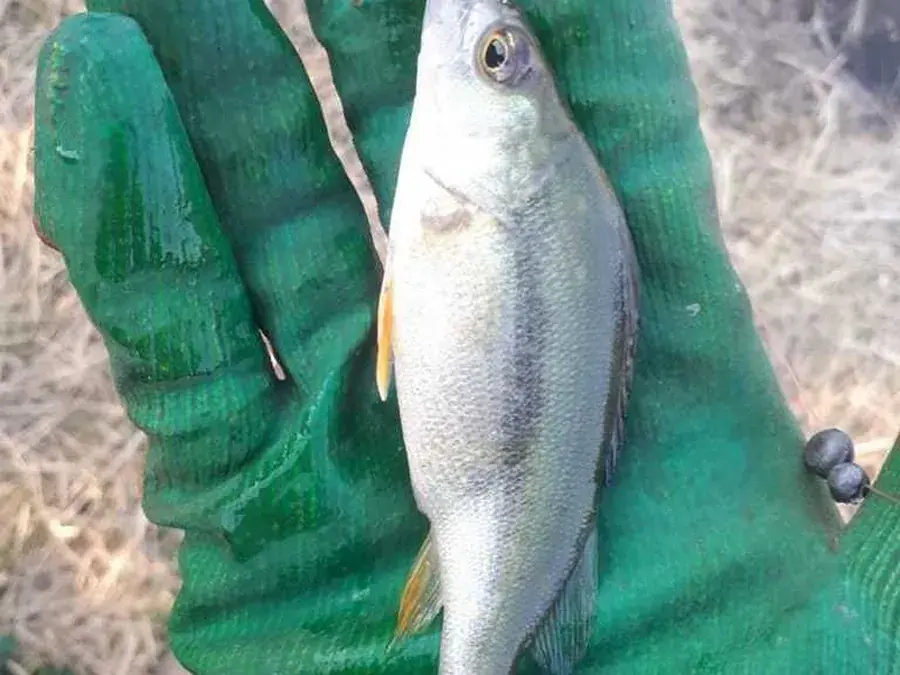 FishJun–Mar
European perch
Perca fluviatilis
Five to eight dark bars on a greenish flank, bright red-orange lower fins, and a spiny first dorsal fin with a black blotch at the back.
Where and how to catch it →Photo: Дауд Арсанукаев · CC BY 4.0
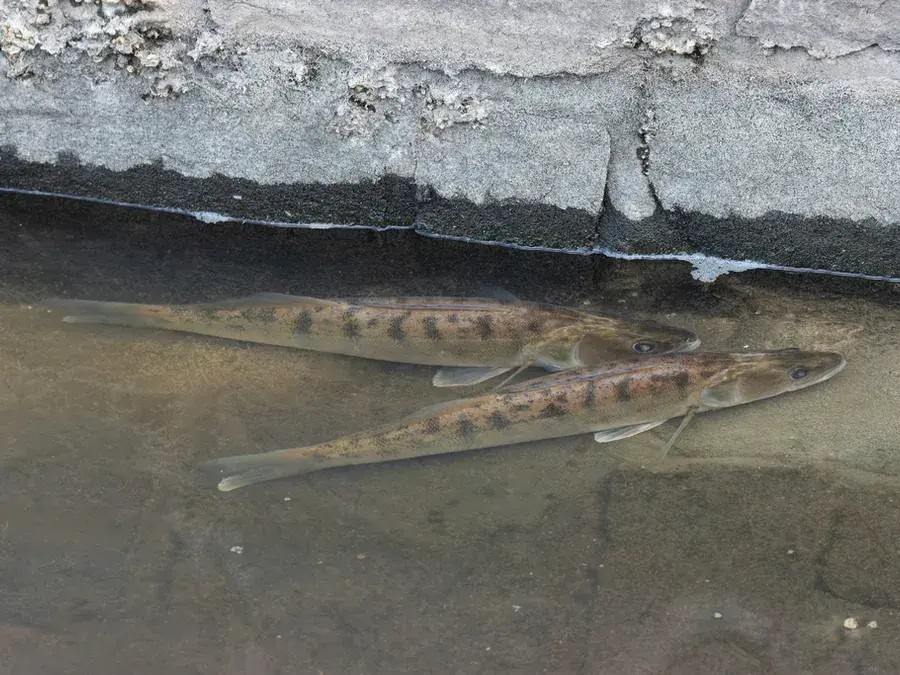 FishJun–Mar
Zander
Sander lucioperca
Slim and glassy-eyed, with grey-brown saddles, rows of black spots on the spiny dorsal fin, and long fang-like canine teeth.
Where and how to catch it →Photo: Tomas Broucek · CC BY 4.0
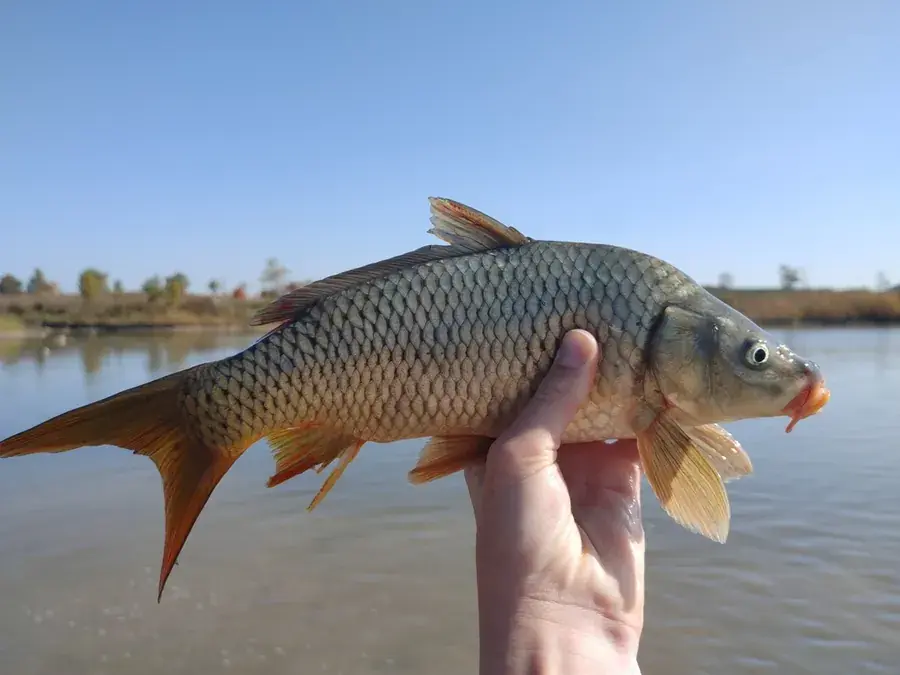 FishApr–Oct
Common carp
Cyprinus carpio
Big bronze scales (or the scattered big scales of a mirror carp), a long dorsal fin, and two pairs of barbels at a rubbery, tube-like mouth.
Where and how to catch it →