Photo coming soon
GreenIn season now (October)
Eru (okazi, fumbwa)
Gnetum africanum
- When
- All year, though what is worth picking changes with the rains and the seasons.
- Where it grows
- Humid rainforest, secondary forest and forest edges from Nigeria and Cameroon to Gabon, the Congos and Angola, from sea level to 1,200 m; a shade-loving climber on middle- and understorey trees.
- How to know it
- A slender climbing vine up to about 10 m long with thick, glossy, leathery, oval leaves about 8 cm (3 in) long, pointed at the tip. It is a gymnosperm, related to the conifers: no true flowers, but small cone-like spikes, and on female vines fleshy seeds 1–1.5 cm long that ripen red-orange.
- Look-alikes
- Many forest climbers have glossy, leathery leaves, and some are deadly — Strophanthus, a source of African arrow poison, is one. Pick eru only from a vine someone has shown you; otherwise buy it in the market, where it is sold all year.
- Harvest and use
- Take leaves or side shoots and leave the vine to regrow. Shred the tough leaves into very fine strips and cook them in soup or stew — eru soup in Cameroon, okazi and afang soup in Nigeria — often with waterleaf to soften them. Shredded leaves can be dried to keep.
- Caution
- Wild eru has been badly over-harvested: pulling whole stems from trees, and felling trees to reach them, destroys stands. Take side shoots only.
Eru (okazi, fumbwa) at a glance
- Also called
- Okok, fumbwa or m'fumbua (Cameroon, DR Congo), okazi or ukazi (Igbo), afang (Efik, Ibibio), koko (French); African jointfir, wild spinach. The very similar Gnetum buchholzianum is sold and eaten as eru too.
- Family
- Gnetaceae (a small family of gymnosperms, related to the conifers)
- Where it grows
- The humid forest of west-central Africa: Nigeria, Cameroon, Gabon, the Central African Republic, Republic of the Congo, DR Congo and Angola, in primary and secondary forest from sea level to 1,200 m. Most wild eru in trade comes from Cameroon, Gabon and the Central African Republic and is shipped to Nigeria.
- When to pick
- All year: the vine keeps growing through the dry season and puts out new shoots where stems have been cut. Much collecting happens in the dry season, when the forest is easier to get into.
- Parts used
- Leaves, finely shredded and cooked (occasionally eaten raw); the seeds, cooked, in Cameroon and DR Congo; the root tuber as a famine food.
Questions people ask about eru
What is eru?
The leaves of Gnetum africanum and its close relative Gnetum buchholzianum, forest vines of west-central Africa, eaten as a vegetable. Eru soup is a Cameroonian classic, and in Nigeria the same leaves make okazi and afang soup.
How do you prepare eru leaves?
Shred them into very thin strips and cook them with meat or fish, often in a groundnut stew, usually mixed with waterleaf to soften the tough leaves. Shredded leaves can be dried for later.
Is eru over-harvested?
Yes, in many places. The usual way of collecting for the export trade — pulling stems down from the trees, and sometimes felling trees to reach them — destroys wild stands. Taking only side shoots or parts of stems lets the vine regrow, and three to four harvests a year seem possible.
Can eru be grown?
Yes. It grows more easily from cuttings than from seed and needs shade and something to climb, such as rubber or oil-palm plantations. The Ibibio, Efik and Annang of Nigeria now grow it for food and sale, and nurseries in Cameroon are domesticating it.
Found in these regions
Is it ready near you?
Get this week's foraging guide for your area
Enter a town, postal code or ZIP and we'll tell you what's in season right there this week — from your local climate, this week's weather and your ecological region.
Also ready in October
 FruitOctober – February
Baobab (fruit and leaves)
Adansonia digitata
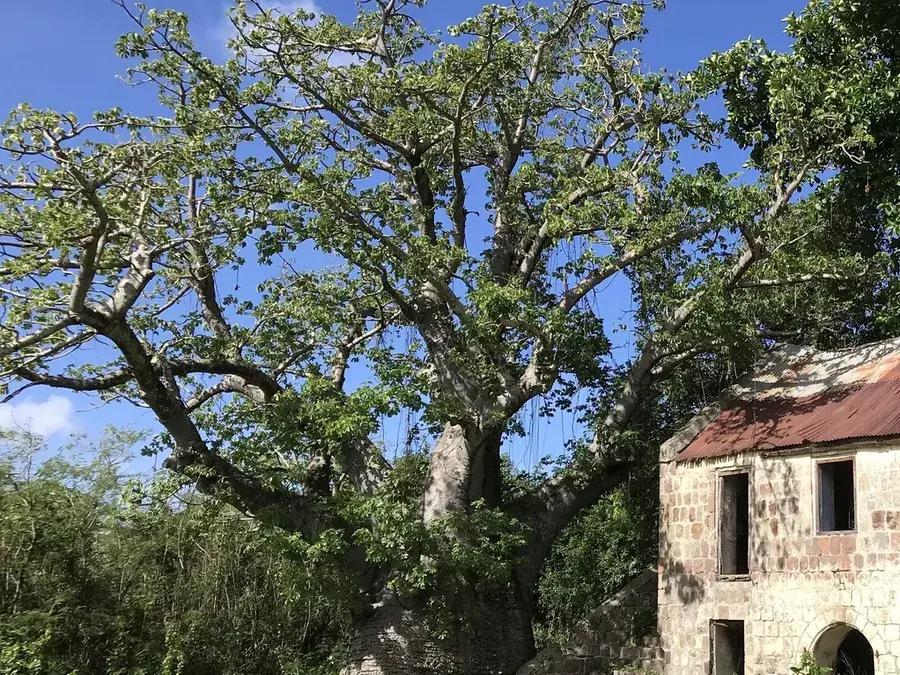
A vast, swollen grey trunk with smooth, folded bark and stubby branches that look like roots, bare of leaves for most of the dry season. The leaves are hand-shaped, with five to seven finger-like leaflets. The fruit is a velvety, egg- to sausage-shaped pod up to 25 cm (10 in) long on a long hanging stalk: a hard woody shell around chalky, off-white pulp and black kidney-shaped seeds.
How to know it & its look-alikes →Photo: Cliff Tyllick · CC BY 4.0
 GreenJune – October
Waterblommetjie (Cape pondweed)
Aponogeton distachyos
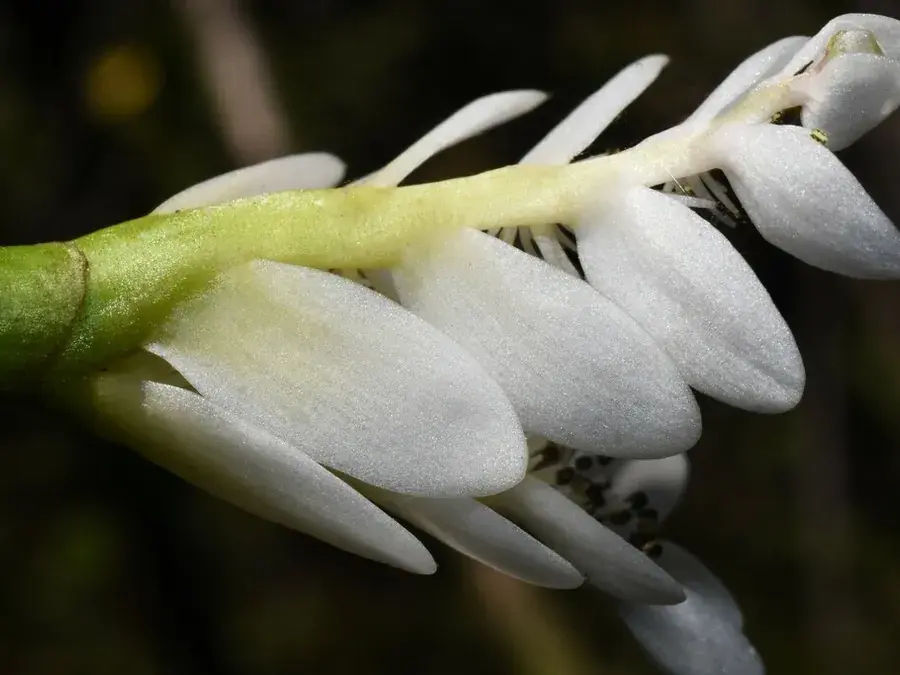
Long-stalked, narrow-oval leaves floating flat on the water, and above them forked white flower spikes shaped like a 'Y', each branch lined with white petal-like bracts and dark purple-brown stamens, sweetly scented. The plant dies back as the pools dry in summer and regrows with the autumn rain.
How to know it & its look-alikes →Photo: Gabriel Campbell-Martinez · CC BY 4.0
 Has a dangerous look-alikeGreenMay – October
Amaranth greens (morogo, mchicha)
Amaranthus spp.
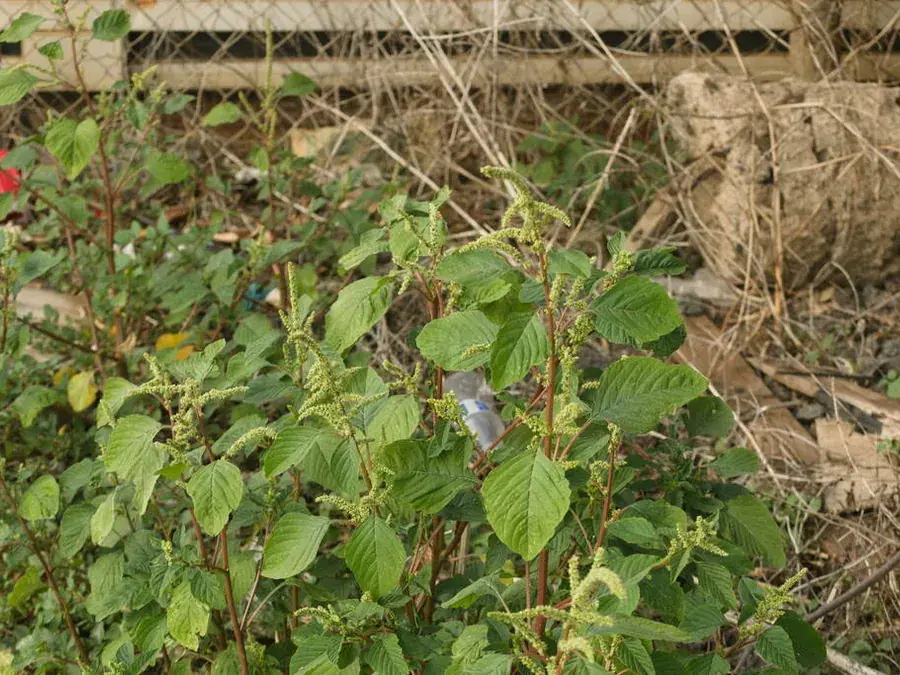
Upright or sprawling herbs, often with reddish stems, carrying alternate, oval to diamond-shaped, smooth-edged leaves on long stalks, and dense, bristly spikes of tiny green or reddish flowers at the top and in the leaf joints. No milky sap, no berries, no trumpet flowers. Spiny amaranth has a pair of sharp spines at each leaf base.
How to know it & its look-alikes →Photo: Kevin Faccenda · CC BY 4.0
Checked against these sources ·
Seasons are typical for the middle of the range and move by weeks north and south, and up and down hills.
Educational information only. Never eat a wild plant or mushroom identified from a single photograph or description — confirm with a regional field guide or an experienced forager, and know the poisonous species in your area first.