Photo coming soon
MushroomSeason: April – July
Kalahari truffle
Kalaharituber pfeilii
- When
- Typically April – July — April, May, June, July. Earlier in warm, low country; later in the hills.
- Where it grows
- Deep Kalahari sand in Botswana, eastern Namibia and the Northern Cape, among grasses, Grewia bushes, acacias and wild tsamma melons, after a good rainy season.
- How to know it
- A roundish, potato-like fungus growing just under the sand, up to 12 cm (4¾ in) across and usually under 200 g (7 oz). It gives itself away by lifting the sand into a little mound with cracks in the surface. Cut through, it is solid right through — no gills, no stem, no hollow.
- Look-alikes
- Earthballs (Scleroderma) also grow as round lumps in sand: they have a thick, hard rind and turn purple-black inside, and they cause violent sickness. A young Amanita 'egg' cut in half shows the outline of a cap and stem. A Kalahari truffle has no rind like that and no cap or stem inside — it is solid right through.
- Harvest and use
- Brush off the sand, peel and cook — sliced and fried or in a stew. Take a few from each patch and leave the rest.
- Caution
- A traditional food of the Khoisan peoples of the Kalahari, and now also sold. Populations are thought to be declining — harvest lightly.
Kalahari truffle at a glance
- Also called
- ǁhabas or nabbas; formerly Terfezia pfeilii, and long misidentified as the Middle Eastern desert truffles Terfezia boudieri and T. claveryi
- Family
- Pezizaceae (cup fungi and desert truffles)
- Where it grows
- The Kalahari — most of Botswana, the east of Namibia and the Northern Cape of South Africa — and other arid sandy country in southern Africa, including Angola, in soils of 94–97% sand.
- When to pick
- In years with good summer rain, from April through to July. The truffles swell after rain and crack the sand above them; dry years give few or none.
- Parts used
- The whole truffle, peeled and cooked.
Questions people ask about kalahari truffle
When is Kalahari truffle season?
From about April to July, after good summer rains. In a dry year there may be none.
How do you find Kalahari truffles?
By the cracks. The truffle grows close to the surface, and as it swells with water after rain it lifts the sand into a small mound with tell-tale cracks; dig gently beneath them.
Who eats Kalahari truffles?
The Khoisan peoples of the Kalahari have always gathered and valued them, and still do, now also for sale. Meerkats, hyenas, baboons and bat-eared foxes dig them up too.
Is the Kalahari truffle related to European truffles?
Distantly. It is a desert truffle in the cup-fungus family, long lumped with the Terfezia desert truffles of North Africa and the Middle East, and given its own genus, Kalaharituber, in 2005 after it proved genetically distinct.
Found in these regions
Is it ready near you?
Get this week's foraging guide for your area
Enter a town, postal code or ZIP and we'll tell you what's in season right there this week — from your local climate, this week's weather and your ecological region.
Also ready in October
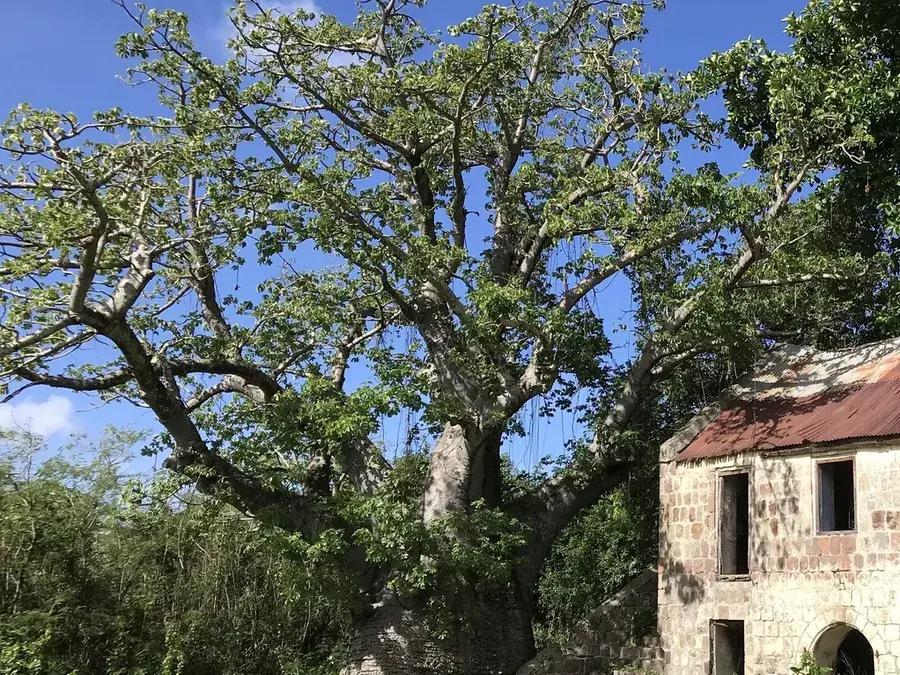 FruitOctober – February
Baobab (fruit and leaves)
Adansonia digitata
A vast, swollen grey trunk with smooth, folded bark and stubby branches that look like roots, bare of leaves for most of the dry season. The leaves are hand-shaped, with five to seven finger-like leaflets. The fruit is a velvety, egg- to sausage-shaped pod up to 25 cm (10 in) long on a long hanging stalk: a hard woody shell around chalky, off-white pulp and black kidney-shaped seeds.
How to know it & its look-alikes →Photo: Cliff Tyllick · CC BY 4.0
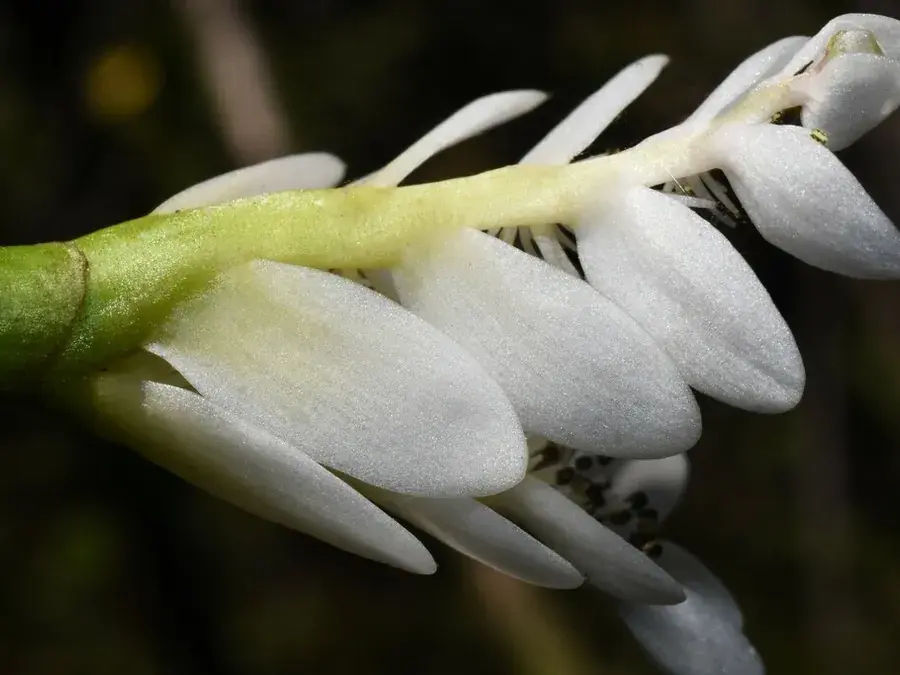 GreenJune – October
Waterblommetjie (Cape pondweed)
Aponogeton distachyos
Long-stalked, narrow-oval leaves floating flat on the water, and above them forked white flower spikes shaped like a 'Y', each branch lined with white petal-like bracts and dark purple-brown stamens, sweetly scented. The plant dies back as the pools dry in summer and regrows with the autumn rain.
How to know it & its look-alikes →Photo: Gabriel Campbell-Martinez · CC BY 4.0
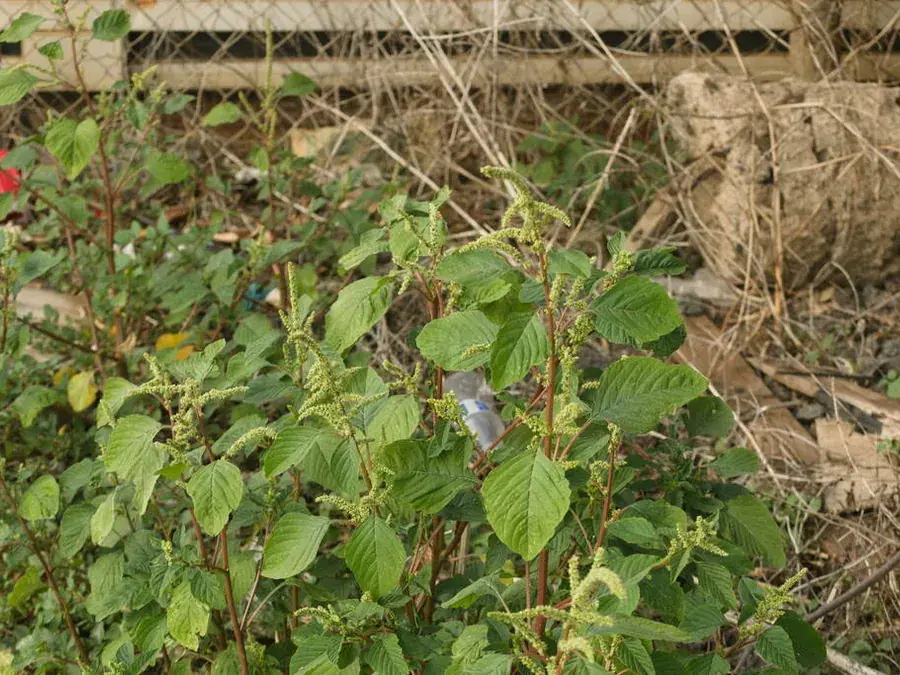 Has a dangerous look-alikeGreenMay – October
Amaranth greens (morogo, mchicha)
Amaranthus spp.
Upright or sprawling herbs, often with reddish stems, carrying alternate, oval to diamond-shaped, smooth-edged leaves on long stalks, and dense, bristly spikes of tiny green or reddish flowers at the top and in the leaf joints. No milky sap, no berries, no trumpet flowers. Spiny amaranth has a pair of sharp spines at each leaf base.
How to know it & its look-alikes →Photo: Kevin Faccenda · CC BY 4.0
Checked against these sources ·
- Australian National Botanic Gardens — Desert truffles (case study)
- Trappe et al. (2009), USDA Forest Service — desert truffles of the African Kalahari
- Wikipedia — Kalaharituber
Seasons are typical for the middle of the range and move by weeks north and south, and up and down hills.
Educational information only. Never eat a wild plant or mushroom identified from a single photograph or description — confirm with a regional field guide or an experienced forager, and know the poisonous species in your area first.