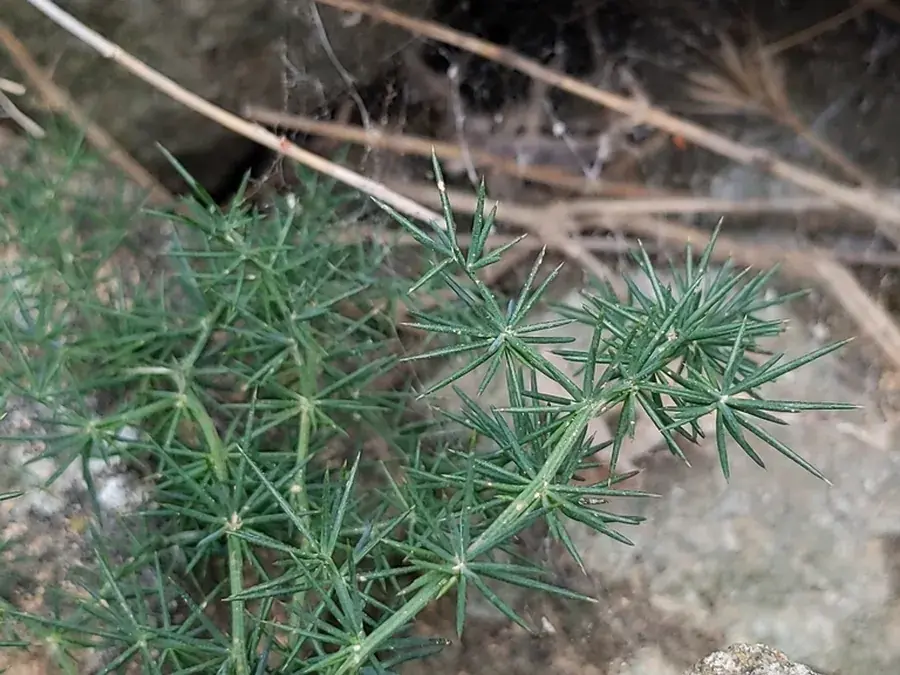
Photo by Public domain (iNaturalist) on iNaturalist · CC0 (public domain)
GreenSeason: February – April
Mediterranean wild asparagus
Asparagus acutifolius
- When
- Typically February – April — February, March, April. Earlier in warm, low country; later in the hills.
- Where it grows
- Dry, sunny scrub, olive groves, woodland edges and old walls, mainly on limestone, from the coast up to about 1,300 m (4,300 ft).
- How to know it
- An evergreen, scrambling clump of stiff, sharply pointed, needle-like ‘leaves’. After the winter rains, thin dark green to purplish spears — pencil-thin or thinner — push up through last year’s prickly tangle.
- Look-alikes
- Black bryony sends up thin shoots in the same scrub; it is a twining vine with glossy heart-shaped leaves, and its berries and roots are poisonous — leave any shoot that twines. Other wild asparagus species and butcher’s broom also grow there; pick only where you can see the old asparagus needles.
- Harvest and use
- Snap each spear where it breaks cleanly. Strong and slightly bitter: scrambled with eggs, the classic way in Spain, Italy and Croatia, or in risotto. Leave some spears on every plant.
- Caution
- The needles are sharp: gloves and long sleeves.
Mediterranean wild asparagus at a glance
- Also called
- Spiny wild asparagus; asparago selvatico or asparago pungente (Italy), espárrago triguero (Spain), divlja šparoga (Croatia)
- Family
- Asparagaceae
- Where it grows
- Throughout the Mediterranean Basin: Portugal, Spain and the Balearics, southern France, Italy and its islands, the Adriatic coast, Greece and Cyprus, and across the sea in Morocco, Algeria and Tunisia. A plant of dry, sunny scrub, mainly on limestone, from the coast up to about 1,300 m (4,300 ft).
- When to pick
- The spears come up after the winter rains, from about February into April, earliest on warm coasts and later inland and uphill. The plant flowers in late summer, sometimes after storms, and its small berries ripen in winter.
- Parts used
- Only the young spears. The old stems are woody and armed with sharp, needle-like cladodes, and the berries are not eaten.
- More look-alikes to know
- Black bryony (Dioscorea communis) is a climbing vine of the same hedges and scrub whose young shoots are eaten cooked in a few places while their saponin content is low — but its tubers and berries are poisonous, and it is not a plant to learn from a description. If a shoot twines, leave it.
Questions people ask about mediterranean wild asparagus
When is wild asparagus season in the Mediterranean?
Late winter and spring: roughly February to April, after the winter rains. Warm coasts come first; inland hills follow a few weeks later.
How do you find wild asparagus?
Learn the plant before the season: an evergreen tangle of stiff, prickly, needle-like ‘leaves’ in sunny scrub, olive groves and along old walls. In spring the thin new spears push up from the base of those clumps — once you have found one plant, look for its neighbours.
Is wild asparagus the same as garden asparagus?
No. Asparagus acutifolius is a separate, evergreen, prickly species with pencil-thin spears and a stronger, more bitter flavour. Garden asparagus (A. officinalis) is a different plant, though it also grows wild in parts of Europe.
How do you cook wild asparagus?
Briefly. Snap the spears where they break cleanly and scramble them with eggs — the classic way along the Croatian coast, in Spain and in Italy — or stir them into a risotto at the end.
Found in these regions
Hardiness zones 7–10.
Is it ready near you?
Get this week's foraging guide for your area
Enter a town, postal code or ZIP and we'll tell you what's in season right there this week — from your local climate, this week's weather and your ecological region.
Also ready in October
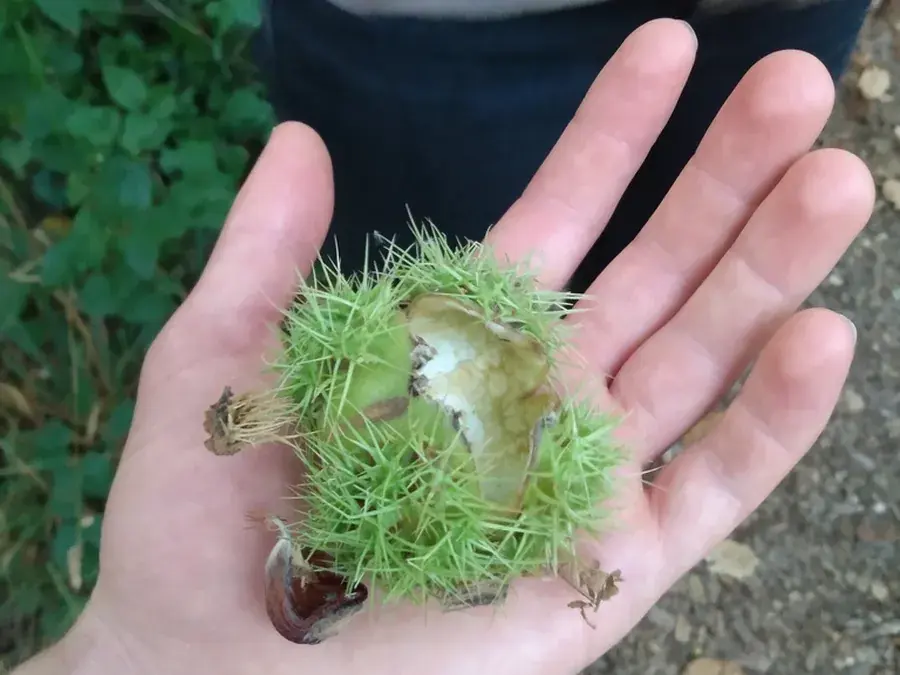 NutOctober – November
Sweet chestnut
Castanea sativa
A big tree with long, glossy leaves edged with sharp, regular teeth, and bark that twists in spiralling ridges on old trunks. The nuts come in twos and threes inside a husk covered in dense, needle-sharp spines; each is glossy brown, flat on one side, with a pointed tuft at the tip.
How to know it & its look-alikes →Photo: John Powers · CC BY 4.0
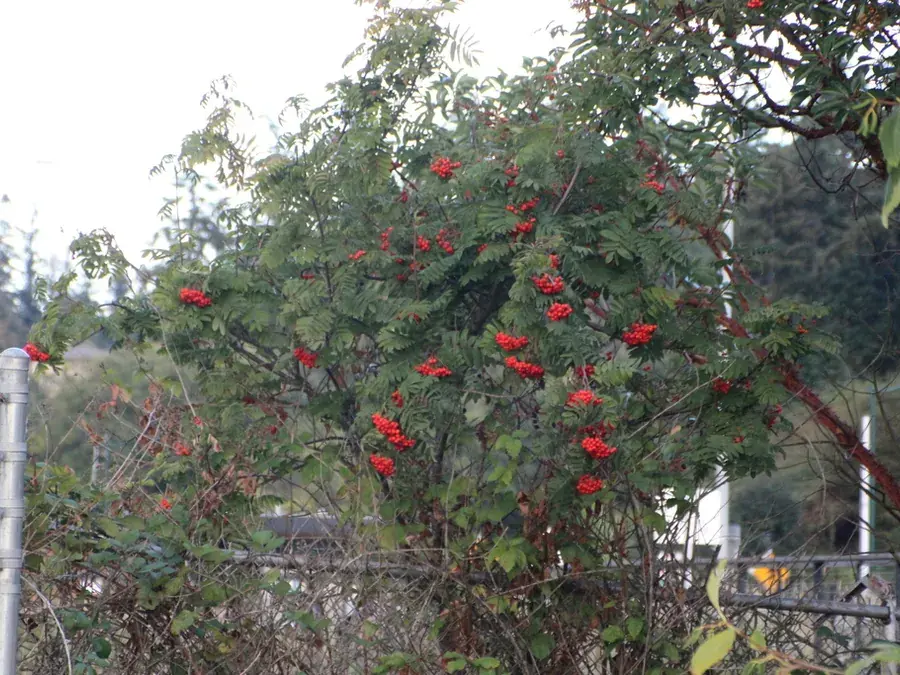 BerryAugust – October
Rowan berries
Sorbus aucuparia
A slim tree with smooth silvery-grey bark and feathery leaves of many toothed leaflets in pairs; big flat clusters of scarlet-orange berries, each about 1 cm (⅜ in) across with a tiny black five-pointed star at the tip.
How to know it & its look-alikes →Photo: Therese Phillips · CC BY 4.0
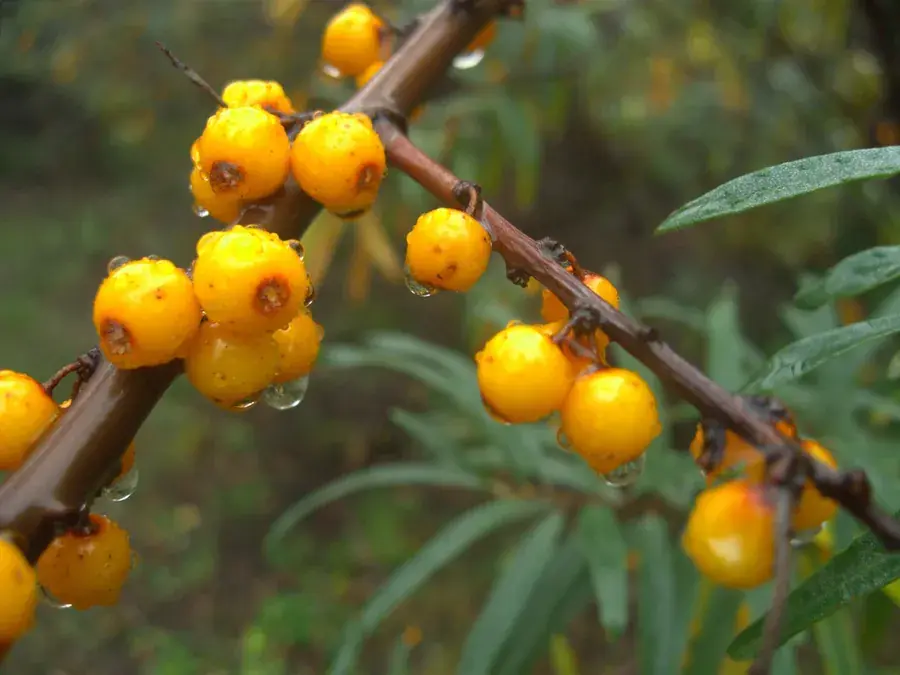 BerryAugust – October
Sea buckthorn
Hippophae rhamnoides
A thorny shrub with narrow, silvery-grey, willow-like leaves and branches packed with bright orange berries 6–8 mm (¼ in) across, from late summer into winter. Only female bushes fruit.
How to know it & its look-alikes →
Checked against these sources ·
- Wikipedia — Asparagus acutifolius
- Plants For A Future — Asparagus acutifolius
- Wikipedia — Dioscorea communis (black bryony)
Seasons are typical for the middle of the range and move by weeks north and south, and up and down hills.
Educational information only. Never eat a wild plant or mushroom identified from a single photograph or description — confirm with a regional field guide or an experienced forager, and know the poisonous species in your area first.