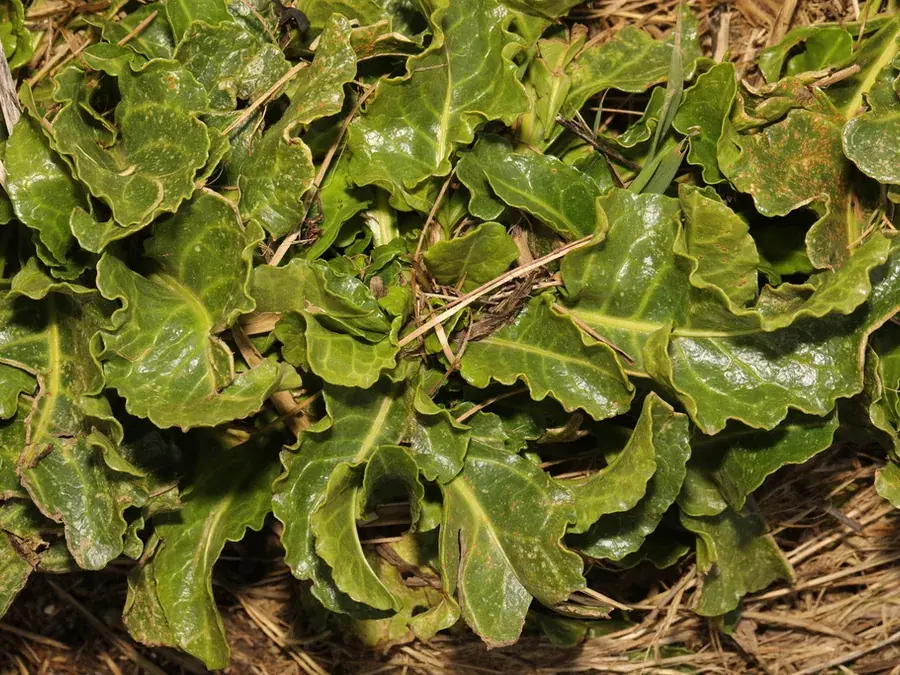
Photo by Public domain (iNaturalist) on iNaturalist · CC0 (public domain) · photographed specimen identified as Beta vulgaris maritima, a close relative
CoastalIn season now (October)
Sea beet (wild spinach)
Beta vulgaris subsp. maritima
- When
- Typically March – June, September – October — March, April, May, June, September, October. Earlier in warm, low country; later in the hills.
- Where it grows
- The top of sand and shingle beaches, sea walls, cliffs, salt-marsh drift lines and waste ground near the sea.
- How to know it
- A sprawling, leafy perennial with dark green, glossy, leathery leaves — the lower ones wavy-edged and roughly triangular — often on reddish stems, and in summer thick, grooved spikes of tiny green flowers. It looks and tastes like a wild chard.
- Look-alikes
- Oraches and sea purslane share the strandline and are eaten too, but their leaves are mealy or silvery-grey, where sea beet’s are dark, glossy and leathery. Away from the shore, learn it in flower first — the thick spikes of tiny green flowers settle it.
- Harvest and use
- Young leaves raw; bigger ones stripped of their stems and wilted like spinach. Take a few leaves from each plant and it keeps producing.
- Caution
- Like spinach and chard it holds oxalate — a vegetable, not a daily bucketful. Pick away from outfalls and dog-walking paths.
Sea beet (wild spinach) at a glance
- Also called
- Wild spinach, sea spinach; bette maritime (France)
- Family
- Amaranthaceae (formerly Chenopodiaceae)
- Where it grows
- The coasts of Europe, North Africa and south-west Asia: right round England, Wales and Ireland and into southern Scotland, down the Atlantic coasts of France, Spain and Portugal, and around the Mediterranean. Occasionally inland on waste ground.
- When to pick
- A perennial that stays green almost all year. The leaves are most tender in spring and again in autumn; the plant flowers from July to September.
- Parts used
- The leaves, raw or cooked, minus the tough stems. The root is thin and woody — sea beet is the wild ancestor of beetroot, sugar beet and chard, not a beetroot itself.
Questions people ask about sea beet
Can you eat sea beet raw?
Yes — young leaves are good raw in salad. Larger ones are better wilted or cooked like spinach, with the stems stripped out.
Is sea beet related to beetroot?
It is their wild ancestor: beetroot, sugar beet and Swiss chard were all bred from Beta vulgaris, and the wild sea beet is the same species.
Where does sea beet grow?
Along the coast, at the top of sand and shingle beaches, on sea walls, cliffs and salt-marsh drift lines. In Britain it is found round almost every coast except the very north of Scotland.
Found in these regions
Is it ready near you?
Get this week's foraging guide for your area
Enter a town, postal code or ZIP and we'll tell you what's in season right there this week — from your local climate, this week's weather and your ecological region.
Also ready in October
 NutOctober – November
Sweet chestnut
Castanea sativa
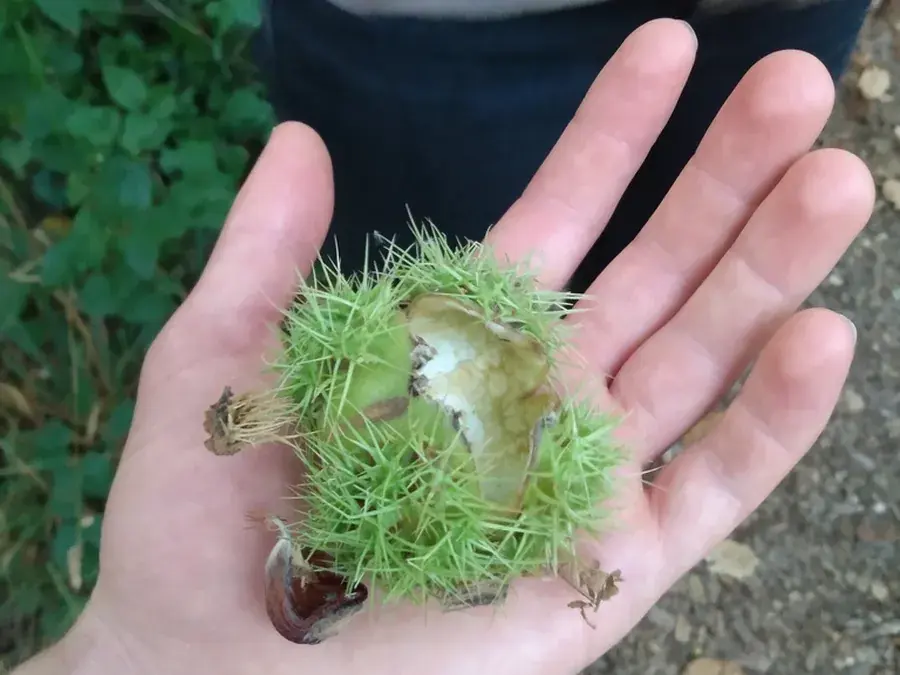
A big tree with long, glossy leaves edged with sharp, regular teeth, and bark that twists in spiralling ridges on old trunks. The nuts come in twos and threes inside a husk covered in dense, needle-sharp spines; each is glossy brown, flat on one side, with a pointed tuft at the tip.
How to know it & its look-alikes →Photo: John Powers · CC BY 4.0
 BerryAugust – October
Rowan berries
Sorbus aucuparia
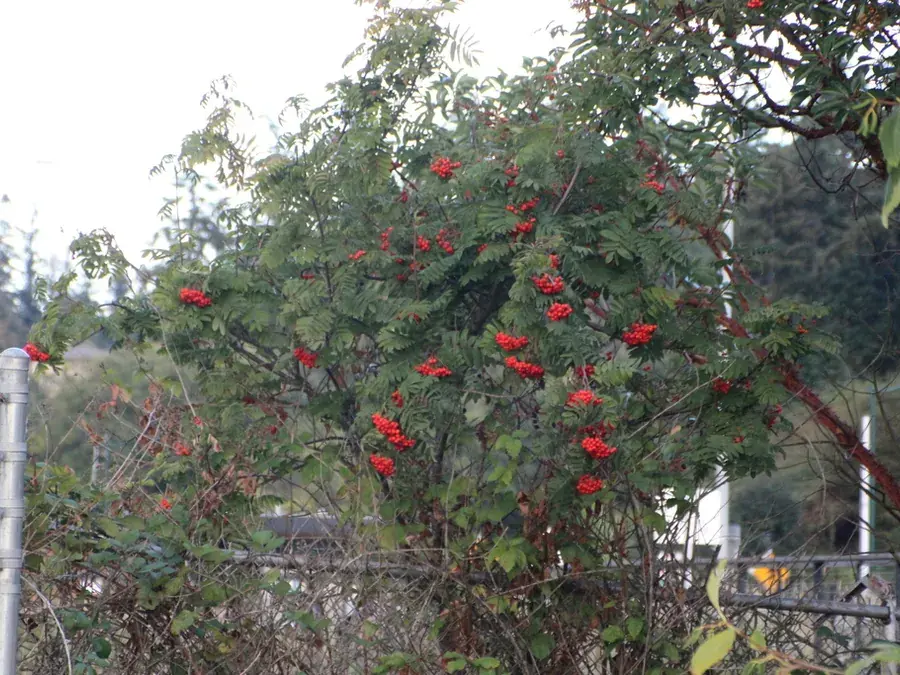
A slim tree with smooth silvery-grey bark and feathery leaves of many toothed leaflets in pairs; big flat clusters of scarlet-orange berries, each about 1 cm (⅜ in) across with a tiny black five-pointed star at the tip.
How to know it & its look-alikes →Photo: Therese Phillips · CC BY 4.0
 BerryAugust – October
Sea buckthorn
Hippophae rhamnoides
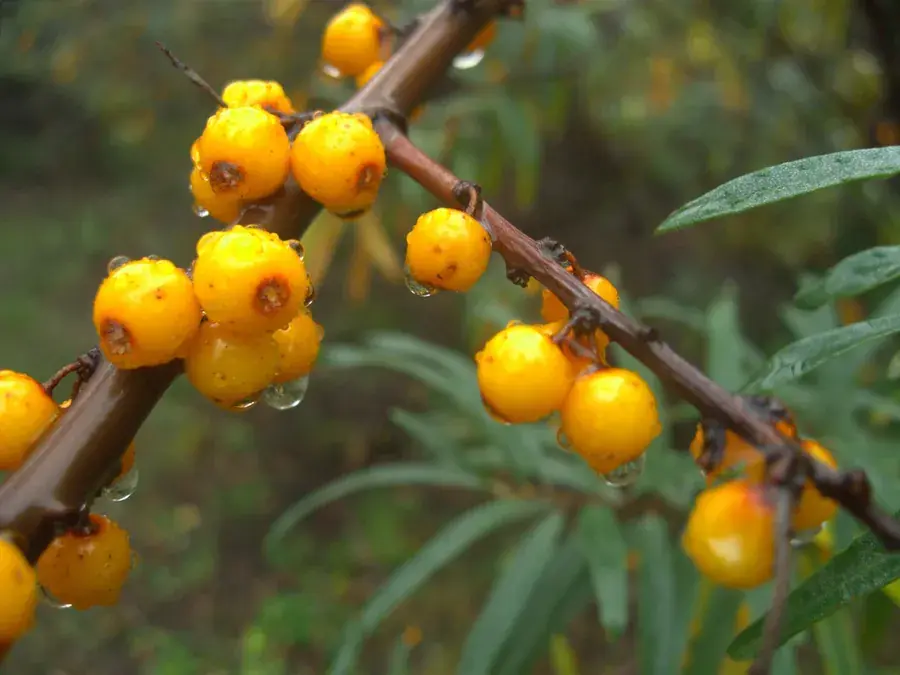
A thorny shrub with narrow, silvery-grey, willow-like leaves and branches packed with bright orange berries 6–8 mm (¼ in) across, from late summer into winter. Only female bushes fruit.
How to know it & its look-alikes →
Checked against these sources ·
Seasons are typical for the middle of the range and move by weeks north and south, and up and down hills.
Educational information only. Never eat a wild plant or mushroom identified from a single photograph or description — confirm with a regional field guide or an experienced forager, and know the poisonous species in your area first.