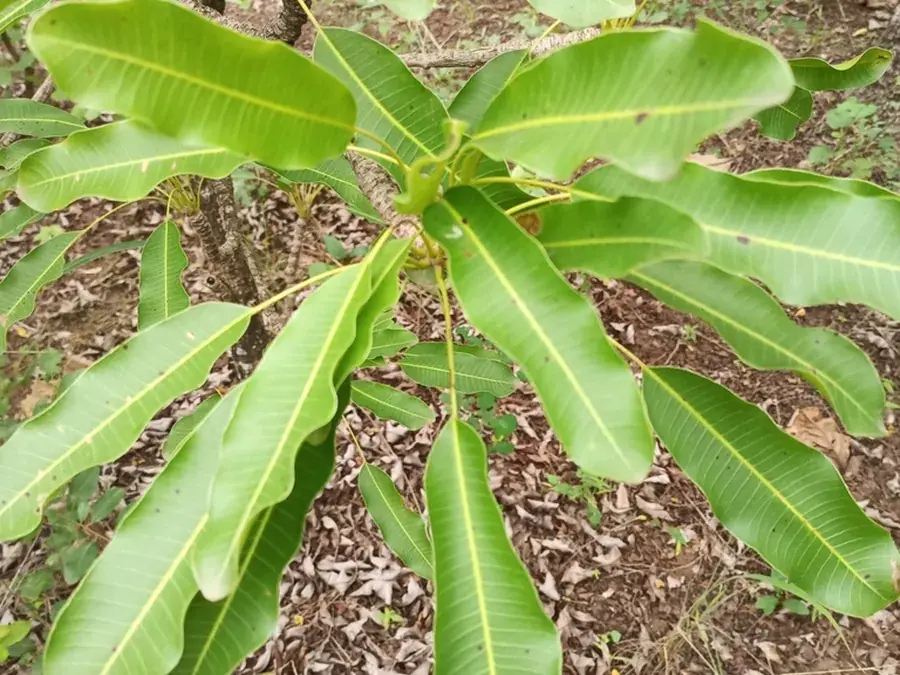
Photo by Fuseini Mugisu Suhuyini on iNaturalist · CC BY-SA 4.0
FruitSeason: May – August
Shea fruit
Vitellaria paradoxa
- When
- Typically May – August — May, June, July, August. Earlier in warm, low country; later in the hills.
- Where it grows
- The Guinea and Sudan savanna belt from Senegal to Sudan, western Ethiopia and northern Uganda; left standing in farmers' fields as 'shea parkland'.
- How to know it
- A medium-sized tree with thick, corky bark deeply cracked into squares, white latex where it is cut, and long, leathery, oblong leaves crowded in tufts at the branch tips. The fruit looks like a large plum, 4–8 cm (1½–3 in) long, with a thin layer of sweet green pulp around one big, glossy brown seed — the shea 'nut'.
- Look-alikes
- No dangerous double is known. Collect fallen fruit rather than picking: ripening and fully ripe fruit are hard to tell apart on the tree.
- Harvest and use
- Gather ripe fruit from the ground and eat the sweet pulp fresh — in moderation, as it is mildly laxative. The kernels make shea butter: roasted, pounded, boiled and skimmed, traditionally by women, and used for cooking across West Africa.
- Caution
- Rights to the fruit depend on who holds the land; in shea country it is traditionally gathered by women and children. Uganda has banned cutting shea trees.
Shea fruit at a glance
- Also called
- Shea butter tree, karité (French); formerly Butyrospermum parkii. The East African form is subsp. nilotica.
- Family
- Sapotaceae (the sapodilla and star apple family)
- Where it grows
- Indigenous to the Guinea and Sudan savanna zone from Senegal to Sudan, in a belt 500–700 km wide, and to western Ethiopia and Uganda. It grows inland, cut off from the Gulf of Guinea by forest; only in Ghana and Nigeria does it come within 50 km of the coast. In Uganda it grows in the north, in districts such as Lira and Otuke.
- When to pick
- The trees flower in the dry season (November to January, depending on latitude) and the fruit takes four to six months to ripen. It is gathered in the wet season, usually June to August, for about two and a half months. A tree gives a really good crop only about one year in three or four.
- Parts used
- Fruit pulp (fresh), flowers (sometimes as fritters), and kernels, for shea butter, a cooking fat. The caterpillars of the shea moth, which feed only on its leaves, are collected and eaten too.
- Is any of it poisonous?
- The pulp is mildly laxative. Butter from stale or mouldy kernels is dark and bitter and may carry aflatoxin, and the press-cake left over contains saponins and tannins.
Questions people ask about shea fruit
Can you eat shea fruit?
Yes. The thin, sweet pulp of ripe shea fruit is widely eaten in the savanna, all the more because it ripens during the hungry months of land preparation and planting. It is very rich in vitamin C, and mildly laxative.
When is shea fruit season?
In the rains, usually June to August depending on latitude. Fallen fruit is collected from the ground, because ripening and fully ripe fruit are hard to tell apart on the tree.
Who harvests shea nuts?
Mostly women and children, who collect the fallen fruit — a woman may gather 20–45 kg (45–100 lb) a day — and women make the butter. Rights to the fruit depend on who holds the land.
Is the shea tree protected?
By custom, and in places by law. Savanna farmers have protected shea trees for centuries by leaving them standing when they clear fields, and Uganda's National Environmental Management Authority has banned cutting them. Shorter fallows threaten natural regeneration.
Found in these regions
Is it ready near you?
Get this week's foraging guide for your area
Enter a town, postal code or ZIP and we'll tell you what's in season right there this week — from your local climate, this week's weather and your ecological region.
Also ready in October
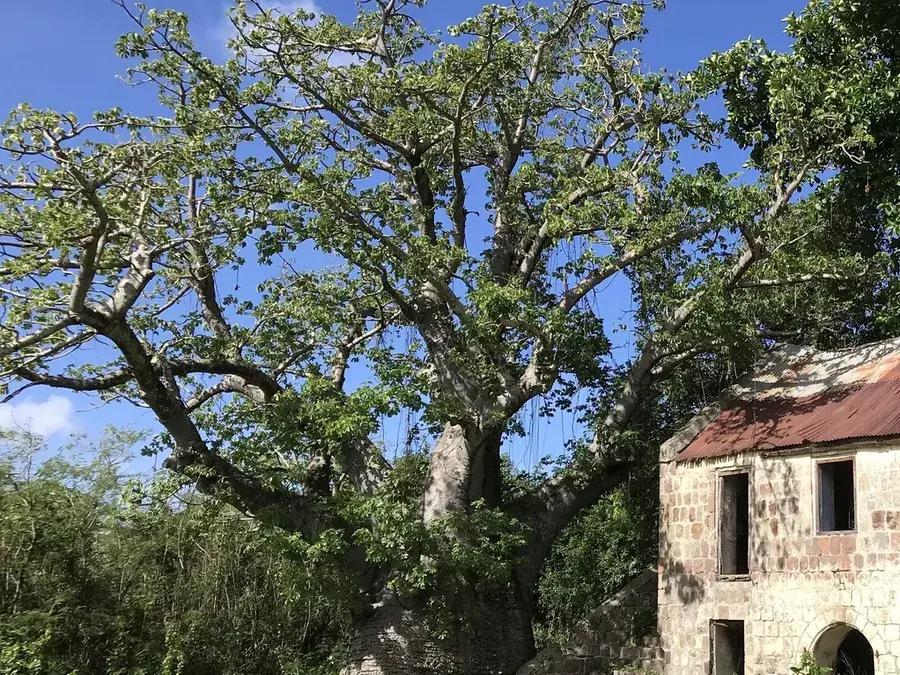 FruitOctober – February
Baobab (fruit and leaves)
Adansonia digitata
A vast, swollen grey trunk with smooth, folded bark and stubby branches that look like roots, bare of leaves for most of the dry season. The leaves are hand-shaped, with five to seven finger-like leaflets. The fruit is a velvety, egg- to sausage-shaped pod up to 25 cm (10 in) long on a long hanging stalk: a hard woody shell around chalky, off-white pulp and black kidney-shaped seeds.
How to know it & its look-alikes →Photo: Cliff Tyllick · CC BY 4.0
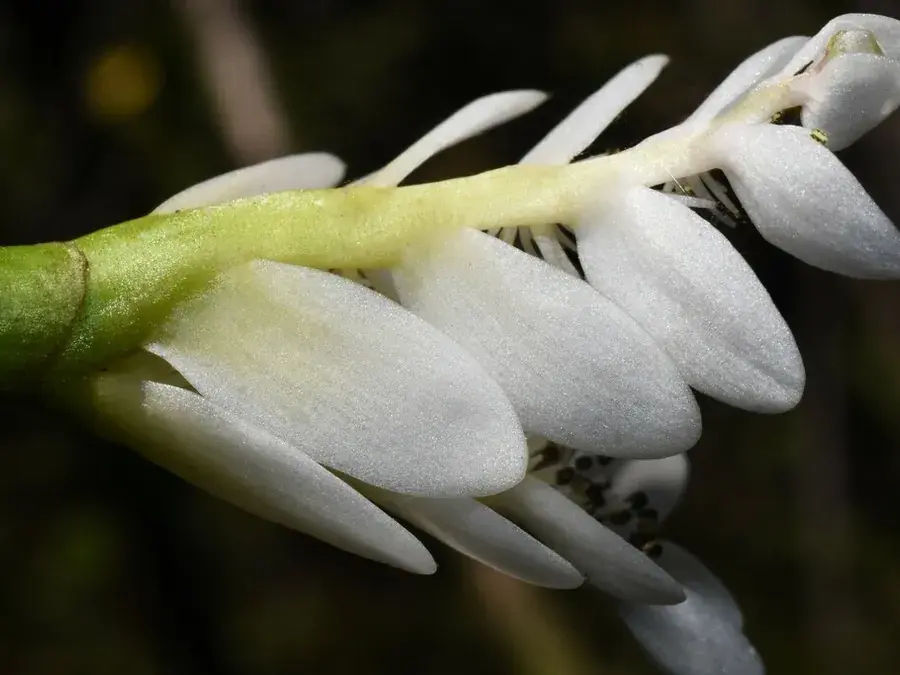 GreenJune – October
Waterblommetjie (Cape pondweed)
Aponogeton distachyos
Long-stalked, narrow-oval leaves floating flat on the water, and above them forked white flower spikes shaped like a 'Y', each branch lined with white petal-like bracts and dark purple-brown stamens, sweetly scented. The plant dies back as the pools dry in summer and regrows with the autumn rain.
How to know it & its look-alikes →Photo: Gabriel Campbell-Martinez · CC BY 4.0
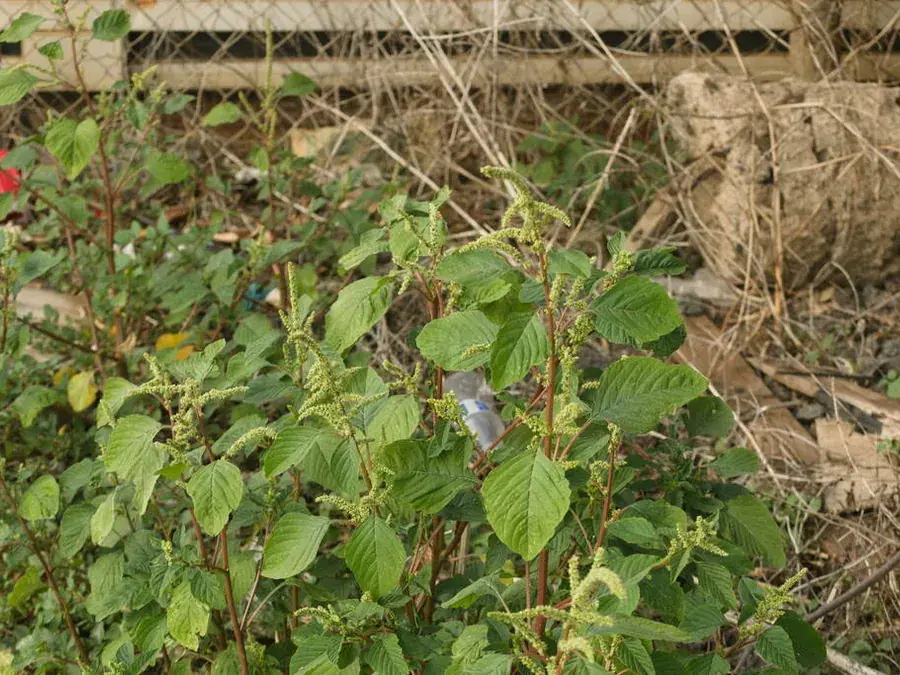 Has a dangerous look-alikeGreenMay – October
Amaranth greens (morogo, mchicha)
Amaranthus spp.
Upright or sprawling herbs, often with reddish stems, carrying alternate, oval to diamond-shaped, smooth-edged leaves on long stalks, and dense, bristly spikes of tiny green or reddish flowers at the top and in the leaf joints. No milky sap, no berries, no trumpet flowers. Spiny amaranth has a pair of sharp spines at each leaf base.
How to know it & its look-alikes →Photo: Kevin Faccenda · CC BY 4.0
Checked against these sources ·
Seasons are typical for the middle of the range and move by weeks north and south, and up and down hills.
Educational information only. Never eat a wild plant or mushroom identified from a single photograph or description — confirm with a regional field guide or an experienced forager, and know the poisonous species in your area first.