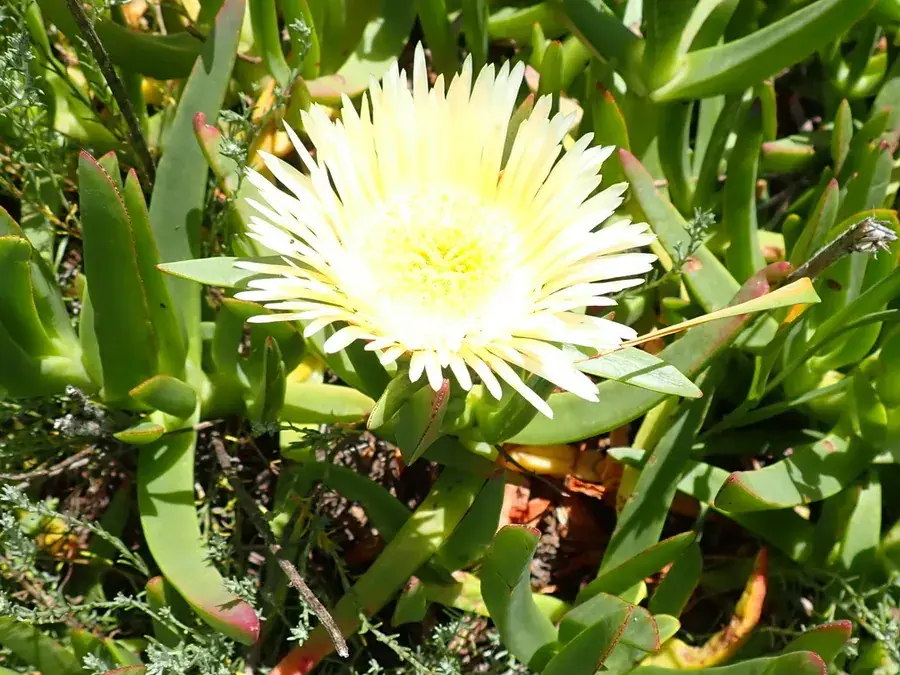
Photo by Nicola van Berkel on iNaturalist · CC BY-SA 4.0
FruitSeason: November – March
Sour fig (suurvy)
Carpobrotus edulis
- When
- Typically November – March — November, December, January, February, March. Earlier in warm, low country; later in the hills.
- Where it grows
- Coastal and inland slopes, dunes and bare, disturbed sandy ground from Namaqualand through the Western Cape to the Eastern Cape; a creeping pioneer that mats over open ground.
- How to know it
- Trailing mats of fat, three-angled, finger-like succulent leaves, often reddish at the tips. Big many-petalled flowers 6–15 cm (2½–6 in) across, yellow and fading to pale pink. The fruit is a fleshy, top-shaped capsule about 35 mm (1⅜ in) across that turns from green to yellow and smells sweet when ripe.
- Look-alikes
- Other Carpobrotus are edible too, and sweeter: ghaukum (C. deliciosus) and elandsvy (C. quadrifidus). Most other vygies have small, dry seed capsules; only Carpobrotus makes the big, fleshy, top-shaped fruit.
- Harvest and use
- Pick ripe yellow fruit, nip off the base and suck out the sticky, salty-sour pulp with its tiny seeds. Sour figs are best once they have dried and wrinkled, eaten as they are or cooked into the Cape's famously tart sour-fig jam.
- Caution
- Puff adders and Cape cobras lie up in the mats to ambush the rodents that come for the fruit — look before you reach in.
Sour fig (suurvy) at a glance
- Also called
- Suurvy (Afrikaans), ice plant, vygie; the old English name 'Hottentot fig' uses a term now regarded as offensive
- Family
- Aizoaceae (the vygie or fig-marigold family)
- Where it grows
- Native to South Africa's winter-rainfall west and south: coastal and inland slopes from Namaqualand in the Northern Cape through the Western Cape to the Eastern Cape. It has become a serious invader of coastal California, Australia and the Mediterranean, but in the Cape it belongs and is not threatened.
- When to pick
- Flowers mainly in late winter and spring (August to October); the fruit turns yellow and sweet-smelling as it matures in late spring and summer. The sour fig itself is best once it has dried and wrinkled; the sweeter species are eaten fresh in summer.
- Parts used
- The ripe fruit, fresh or dried, and jam made from it. The leaves are edible too, and their juice is a traditional remedy.
Questions people ask about sour fig
Can you eat sour figs?
Yes. The ripe yellow fruit is eaten fresh or dried, and makes a very tart jam. Its sticky pulp tastes sour, salty and astringent — less sweet than the related Carpobrotus acinaciformis and C. deliciosus.
When are sour figs ripe?
In late spring and summer, after the August–October flowering, when the fruit turns yellowish and smells sweet. They are at their best once dry and wrinkled.
What was sour fig used for traditionally?
The Khoikhoi and other southern African peoples used the astringent leaf juice for diarrhoea, dysentery and stomach cramps, crushed leaves for sore throats, and the juice as a first remedy for bluebottle stings, burns and skin complaints.
Is sour fig invasive?
Not in South Africa, where it is native. Outside its home — California, Australia, the Mediterranean and southern England — it smothers dunes and coastal cliffs and is a major invader.
Found in these regions
Is it ready near you?
Get this week's foraging guide for your area
Enter a town, postal code or ZIP and we'll tell you what's in season right there this week — from your local climate, this week's weather and your ecological region.
Also ready in October
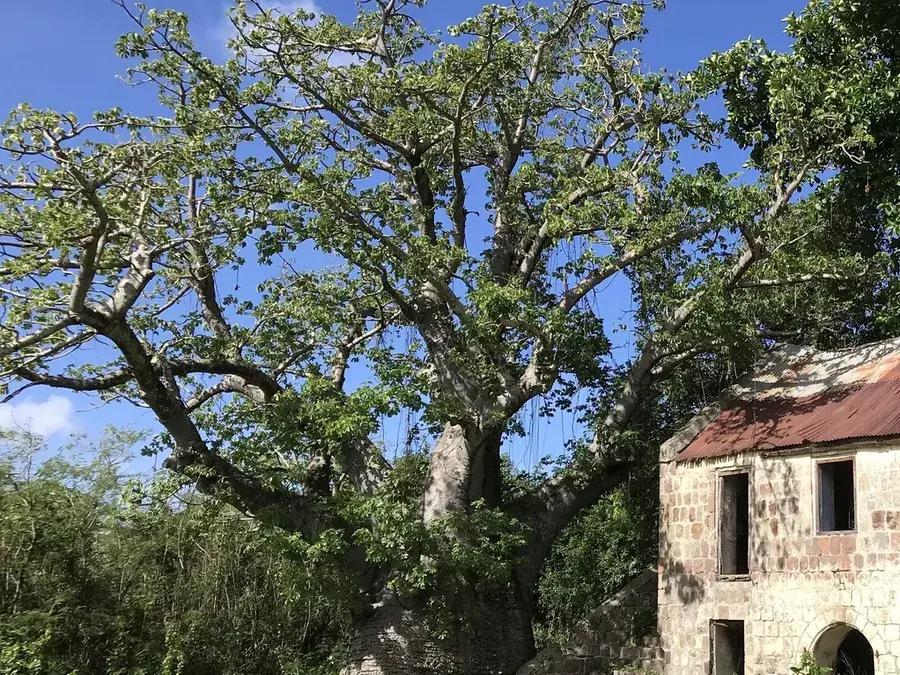 FruitOctober – February
Baobab (fruit and leaves)
Adansonia digitata
A vast, swollen grey trunk with smooth, folded bark and stubby branches that look like roots, bare of leaves for most of the dry season. The leaves are hand-shaped, with five to seven finger-like leaflets. The fruit is a velvety, egg- to sausage-shaped pod up to 25 cm (10 in) long on a long hanging stalk: a hard woody shell around chalky, off-white pulp and black kidney-shaped seeds.
How to know it & its look-alikes →Photo: Cliff Tyllick · CC BY 4.0
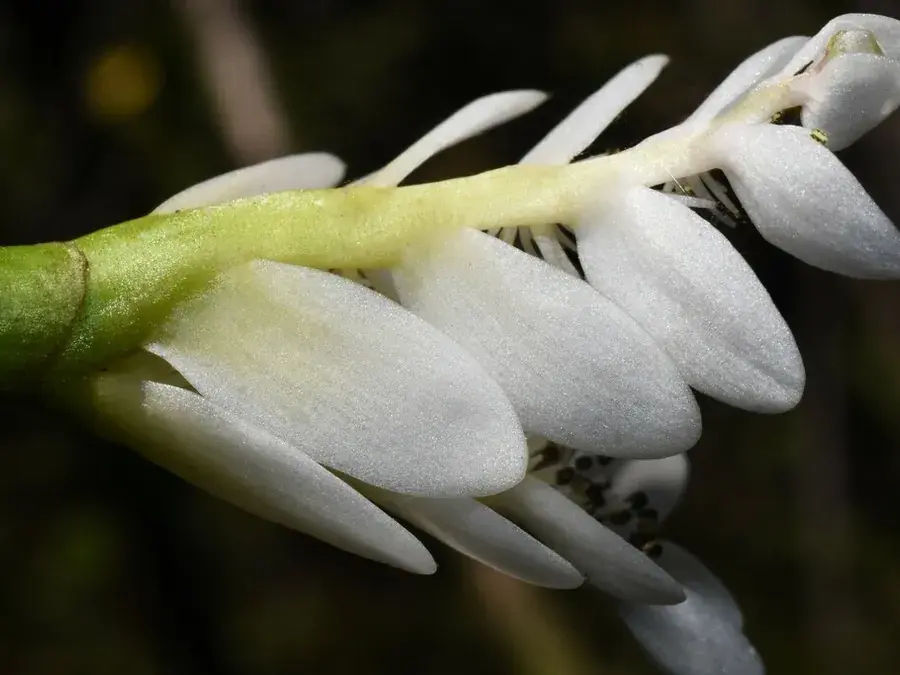 GreenJune – October
Waterblommetjie (Cape pondweed)
Aponogeton distachyos
Long-stalked, narrow-oval leaves floating flat on the water, and above them forked white flower spikes shaped like a 'Y', each branch lined with white petal-like bracts and dark purple-brown stamens, sweetly scented. The plant dies back as the pools dry in summer and regrows with the autumn rain.
How to know it & its look-alikes →Photo: Gabriel Campbell-Martinez · CC BY 4.0
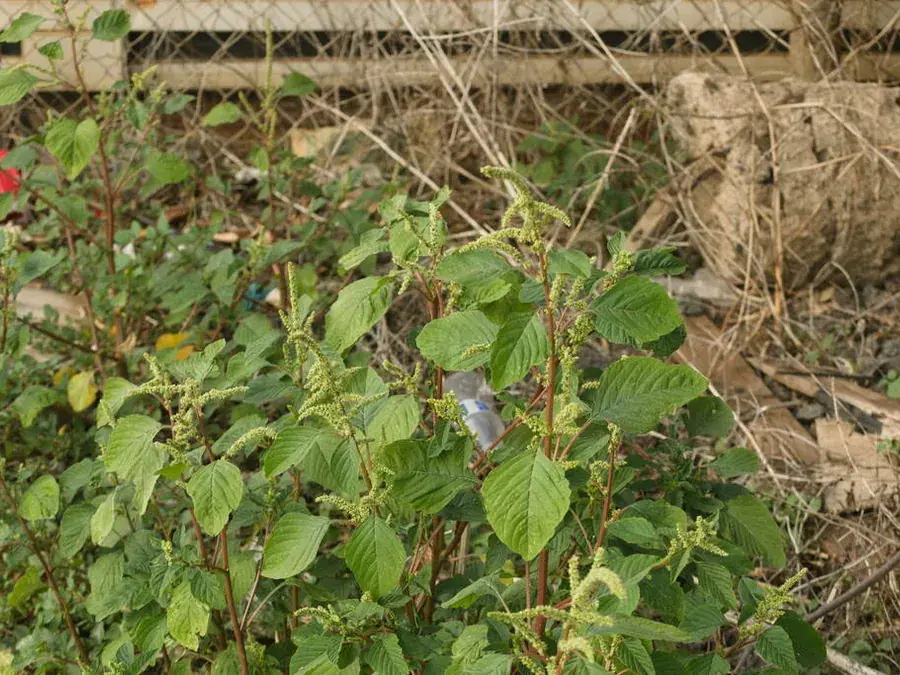 Has a dangerous look-alikeGreenMay – October
Amaranth greens (morogo, mchicha)
Amaranthus spp.
Upright or sprawling herbs, often with reddish stems, carrying alternate, oval to diamond-shaped, smooth-edged leaves on long stalks, and dense, bristly spikes of tiny green or reddish flowers at the top and in the leaf joints. No milky sap, no berries, no trumpet flowers. Spiny amaranth has a pair of sharp spines at each leaf base.
How to know it & its look-alikes →Photo: Kevin Faccenda · CC BY 4.0
Checked against these sources ·
- SANBI PlantZAfrica — Carpobrotus edulis
- Babylonstoren — The sweet and the sour
- Wikipedia — Carpobrotus edulis
Seasons are typical for the middle of the range and move by weeks north and south, and up and down hills.
Educational information only. Never eat a wild plant or mushroom identified from a single photograph or description — confirm with a regional field guide or an experienced forager, and know the poisonous species in your area first.