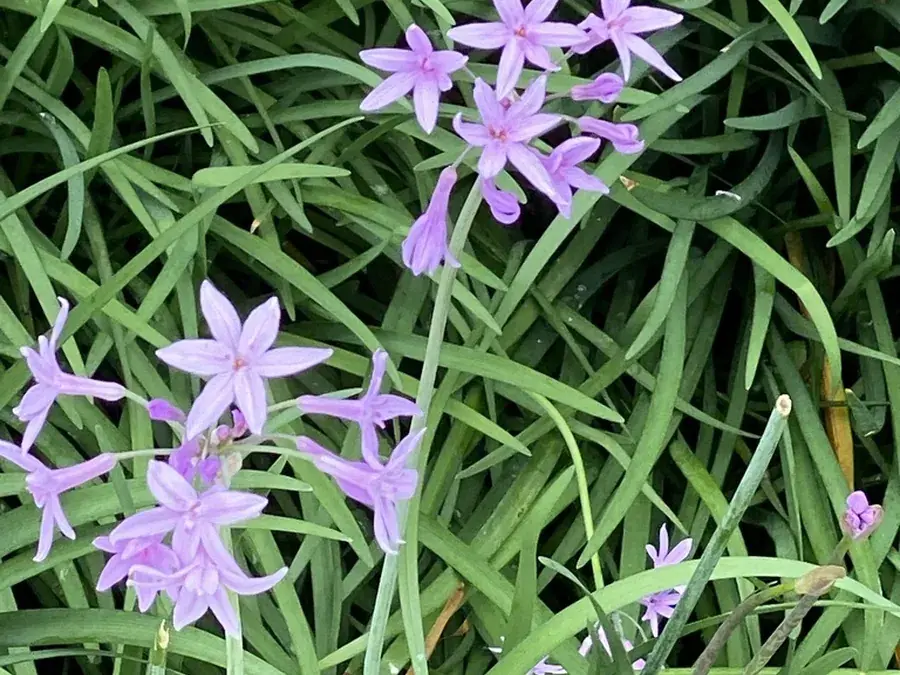
Photo by Gary Rogers on iNaturalist · CC BY 4.0
GreenIn season now (October)
Wild garlic (Tulbaghia)
Tulbaghia violacea
This one has a dangerous look-alike
Agapanthus is often planted beside it and has similar strap leaves, but broader, glossier and with no garlic smell; it is not eaten. In the veld, several bulbs with grassy or strap-shaped leaves are poisonous — chincherinchees (Ornithogalum) among them — and none smells of garlic. Crush a leaf every time: no garlic smell, no picking.
- When
- Typically September – April — September, October, November, December, January, February, March, April. Earlier in warm, low country; later in the hills.
- Where it grows
- Grassland and rocky places in the Eastern Cape, KwaZulu-Natal and Limpopo, north to Zimbabwe; also a very common garden and pavement plant in South Africa.
- How to know it
- Clumps of narrow, grey-green, strap-like leaves up to about 60 cm (2 ft), and on bare stalks above them loose heads of tubular lilac-mauve flowers from midsummer into autumn. Leaves and flowers smell strongly of garlic when bruised — and that smell is the test.
- Harvest and use
- Snip leaves and flowers and use them like chives or garlic: in salads, with potatoes and meat, or cooked as a green. Zulu cooks eat them as a spinach and as a hot, peppery seasoning. Leave the bulb in the ground.
- Caution
- Eat the leaves and flowers. The bulb is a traditional medicine, and deaths and severe gut poisoning have been linked to medicines made from the plant, probably in large doses.
Wild garlic (Tulbaghia) at a glance
- Also called
- Wild garlic, society garlic, pink agapanthus, sweet garlic; isihaqa and incinsini (isiZulu)
- Family
- Amaryllidaceae (the onion and garlic family)
- Where it grows
- Indigenous to the Eastern Cape, KwaZulu-Natal and Limpopo, north to Zimbabwe; planted in gardens and along pavements throughout South Africa and far beyond, and naturalised as far away as Tanzania and Mexico.
- When to pick
- Leaves can be picked through the growing season from spring to autumn; the flowers come from midsummer into autumn, January to April in South Africa.
- Parts used
- Leaves and flowers, raw or cooked. The bulb is used in traditional medicine — boiled for coughs and colds, and as a Zulu medicine — rather than as food.
- Is any of it poisonous?
- Leaves and flowers have tested non-toxic and are eaten. Deaths and severe gut symptoms have been linked to medicines made from the plant, probably through heavy use or large doses; its steroidal saponins and sulphur compounds are suspected.
Questions people ask about wild garlic
Is wild garlic (Tulbaghia) edible?
Yes, the leaves and flowers. They are used like chives and garlic, and Zulu people cook them as a leafy vegetable and a hot, peppery seasoning for meat and potatoes. Tests found the leaves and flowers non-toxic.
How do I tell Tulbaghia from agapanthus?
Crush a leaf: Tulbaghia smells strongly of garlic, agapanthus doesn't. Agapanthus leaves are also broader and glossier, and its flower heads are large balls of blue or white trumpets, where Tulbaghia carries a loose head of small lilac tubes.
When does Tulbaghia violacea flower?
From midsummer into autumn — January to April in South Africa. The flowers smell of garlic when picked.
Found in these regions
Is it ready near you?
Get this week's foraging guide for your area
Enter a town, postal code or ZIP and we'll tell you what's in season right there this week — from your local climate, this week's weather and your ecological region.
Also ready in October
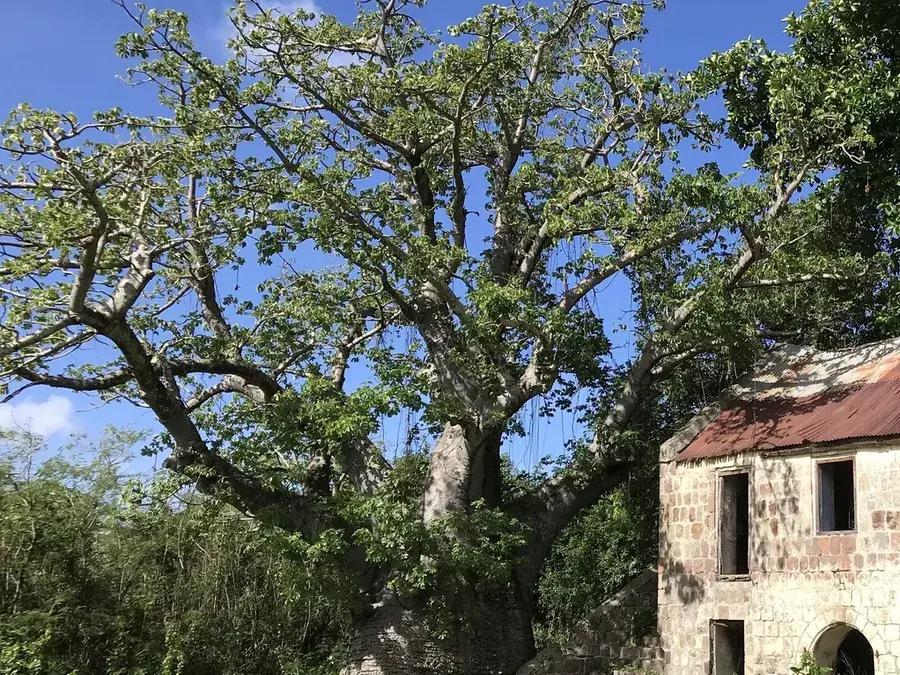 FruitOctober – February
Baobab (fruit and leaves)
Adansonia digitata
A vast, swollen grey trunk with smooth, folded bark and stubby branches that look like roots, bare of leaves for most of the dry season. The leaves are hand-shaped, with five to seven finger-like leaflets. The fruit is a velvety, egg- to sausage-shaped pod up to 25 cm (10 in) long on a long hanging stalk: a hard woody shell around chalky, off-white pulp and black kidney-shaped seeds.
How to know it & its look-alikes →Photo: Cliff Tyllick · CC BY 4.0
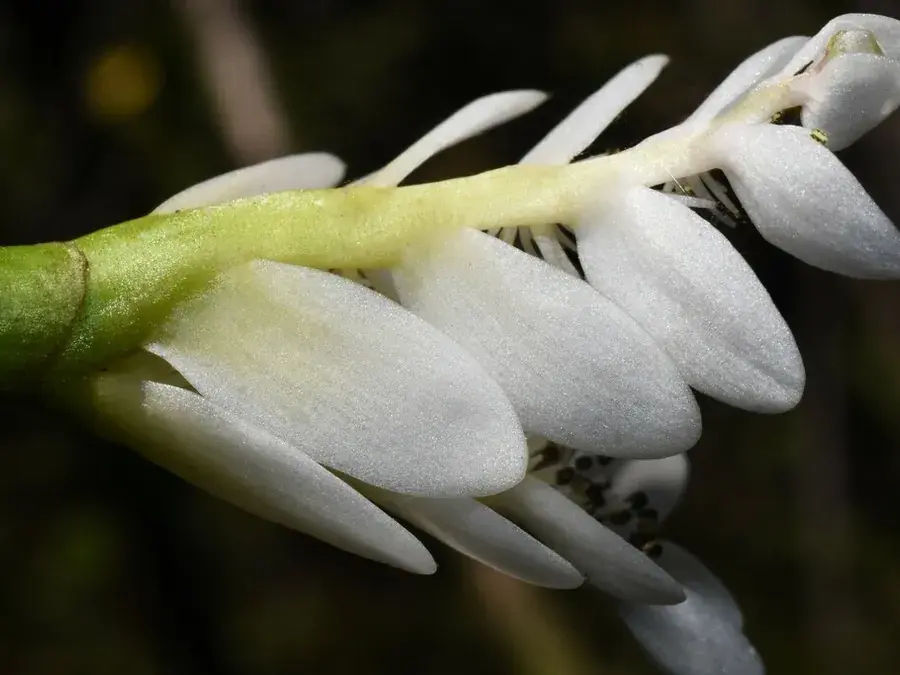 GreenJune – October
Waterblommetjie (Cape pondweed)
Aponogeton distachyos
Long-stalked, narrow-oval leaves floating flat on the water, and above them forked white flower spikes shaped like a 'Y', each branch lined with white petal-like bracts and dark purple-brown stamens, sweetly scented. The plant dies back as the pools dry in summer and regrows with the autumn rain.
How to know it & its look-alikes →Photo: Gabriel Campbell-Martinez · CC BY 4.0
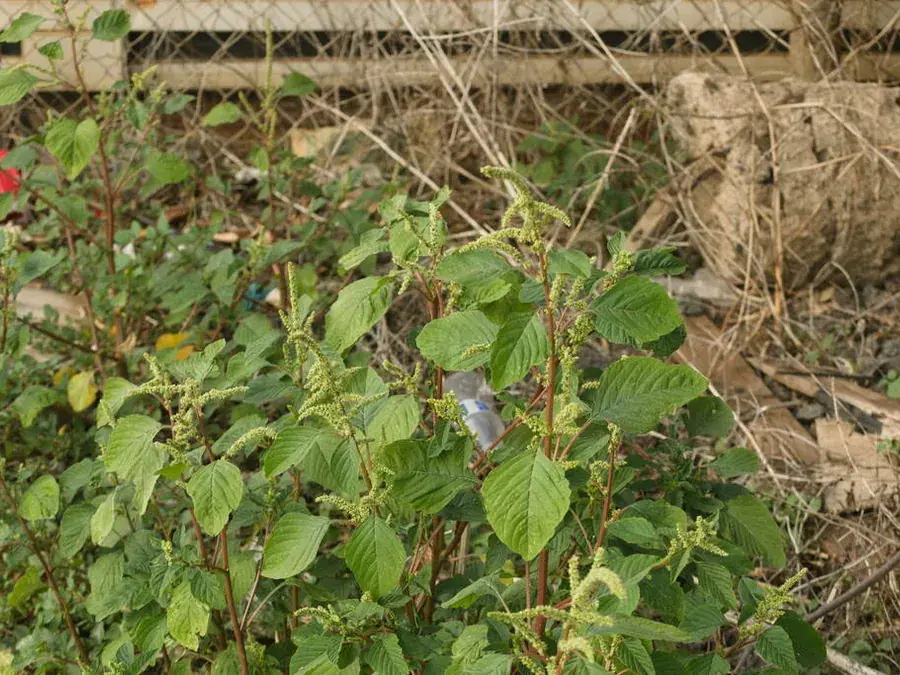 Has a dangerous look-alikeGreenMay – October
Amaranth greens (morogo, mchicha)
Amaranthus spp.
Upright or sprawling herbs, often with reddish stems, carrying alternate, oval to diamond-shaped, smooth-edged leaves on long stalks, and dense, bristly spikes of tiny green or reddish flowers at the top and in the leaf joints. No milky sap, no berries, no trumpet flowers. Spiny amaranth has a pair of sharp spines at each leaf base.
How to know it & its look-alikes →Photo: Kevin Faccenda · CC BY 4.0
Checked against these sources ·
Seasons are typical for the middle of the range and move by weeks north and south, and up and down hills.
Educational information only. Never eat a wild plant or mushroom identified from a single photograph or description — confirm with a regional field guide or an experienced forager, and know the poisonous species in your area first.