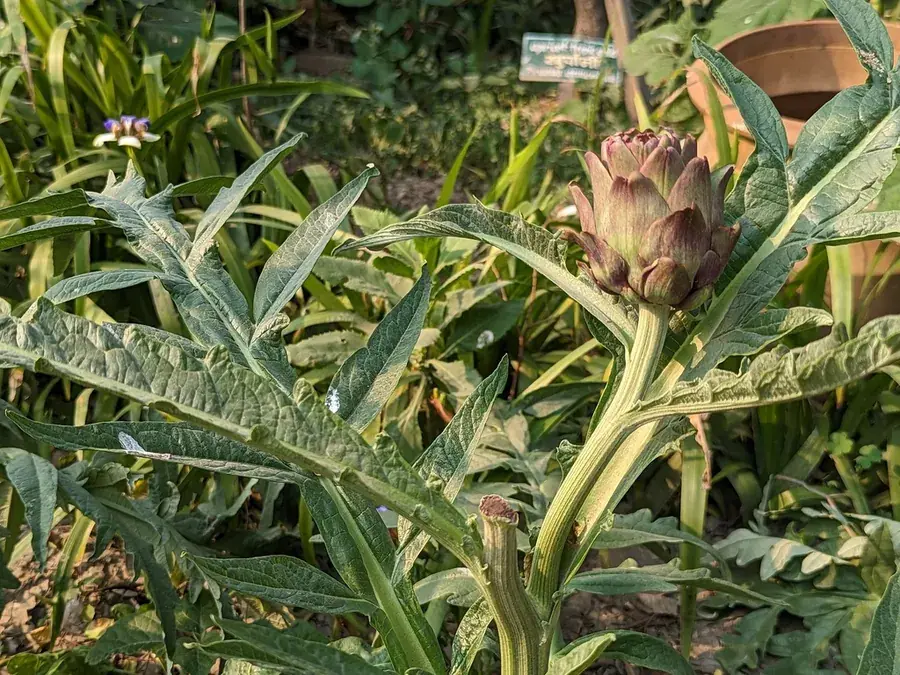
Photo Sagnik Dutta Roy via Openverse · CC BY 4.0
Globe artichokes
Cynara cardunculus var. scolymus
A silver thistle that crops for years in a Mediterranean garden — cut the buds while they are tight, and give the crowns a dry winter.
- Signs of ripeness
- Cut the buds when they have reached full size for the variety but the scales are still tightly closed; once they start to open and soften, the bud is past its best and will soon become a purple thistle flower. A mature plant gives up to 12 buds a season, the large main bud first and the smaller side buds after. Plants from seed or offsets crop from their second summer in Britain; grown as annuals from vernalised transplants, they crop 90–100 days after planting out.
- Harvesting
- Cut each bud with secateurs, taking 2.5–4 cm of stem below the base of the bud, or a longer stalk cut just above a leaf joint. Check every few days in warm weather, when buds open quickly. Take the main bud first and the side buds as they size up, and after the last harvest cut the old flower stems to the ground.
- Frost tolerance
- A frost at or near freezing blisters the outer scales of the buds, which turn whitish and then darken — they look spoiled but eat perfectly well. The plants should be protected below about −4 °C (25 °F), and below about −9 °C (15 °F) they are damaged even under mulch. Before winter, cut the old stems, lay the spent leaves over the crown and add a thick mulch of straw; cold, wet winter soil kills more artichokes than cold alone.
Storage
Storing globe artichokes
| Where | Temperature | Humidity | Keeps | How |
|---|---|---|---|---|
| Fridge crisper | 0–2 °C32–36 °F | high | 2–3 weeks | Cool the buds the day they are cut and keep them near 0 °C in a perforated bag. Below freezing the bracts brown. |
Preserving
Preserving globe artichokes
Freeze the hearts: strip away all the leaves and the fuzzy choke, trim the stem just below the heart and cut away any woody parts, wash, water-blanch 7 minutes, cool and pack with no headspace. Whole buds keep two to three weeks near 0 °C in the fridge, which covers most gluts. There is no tested home-canning process for globe artichokes in the USDA and NCHFP guides — the NCHFP artichoke pickle is for Jerusalem artichokes, an unrelated plant — and home-made artichokes in oil kept at room temperature are a botulism risk. Marinate cooked hearts in the fridge and eat them within a few days, or freeze them.
The fastest route and the one that keeps flavour best.
Seed saving
Grown from tubers, cloves, crowns or runners, not seed
Artichokes can be raised from seed, but seedlings vary, and the reliable way to keep a good plant is to divide it. Every four or five years, or when cropping falls off, lift the clump in spring and split off vigorous outer pieces with roots, or take the young offsets — rosettes around the edge of the clump — and replant them. Divisions and offsets are clones of the parent, which is how named varieties are kept. If you start from seed, Imperial Star and Green Globe are the varieties most likely to bud in their first year.
Keeps: Not applicable for named varieties, which are kept by division and offsets.
Seed saving →Next year
Planning globe artichokes for next season
Artichokes want warmth, full sun and fertile, free-draining soil — raise the bed on heavy clay, because winter wet kills them. Space plants 75–100 cm apart; they grow 1–1.5 m tall and a metre across. In Mediterranean climates plant offsets or divisions in autumn or early spring and cut buds from spring onwards. In Britain sow indoors from late winter or plant divisions in spring, remove any flower stalk in the first summer, and harvest from the second. In cold-winter places grow them as annuals: sow 6–12 weeks before the last frost, then give the young plants a cold spell so they will form buds — roughly 200–500 hours at 2–10 °C, either in a cool room or by planting out early in a cool spring — and transplant after frost. Give them 25–50 mm (1–2 in) of water a week.
Globe artichokes at a glance
- Botanical name
- Cynara cardunculus var. scolymus
- Group
- Perennials
- Picked
- April, May, June, July, August, September
- Frost
- Half-hardy: scorched by a light frost, killed at −3 °c.
- Best put up as
- freezing
- Seed
- Grown from tubers, cloves, crowns or runners, not seed
Questions people ask about globe artichokes
When do you harvest globe artichokes?
When the buds have reached full size but the scales are still tightly closed — from spring around the Mediterranean, from June in Britain, and from late July to frost when grown as annuals in Canada. Cut with 2.5–4 cm of stem; once the scales loosen, the bud is past its best.
Can I grow artichokes in Ontario?
Yes, as annuals. Ontario growers start transplants in February–April, give them a cold treatment — Imperial Star and Green Globe reach about 80% vernalisation after 200 hours at or below 10 °C — and plant out from April to June. Overwintering is possible only with heavy protection in the warmest parts of the province.
Are frost-blistered artichokes safe to eat?
Yes. Frost ruptures the outer skin of the bud scales, giving them a whitish, blistered look that darkens after a few days, but the eating quality is unaffected.
How do you freeze artichoke hearts?
Remove all the leaves and the fuzzy choke, trim the stem and woody parts, wash the hearts, water-blanch them 7 minutes, cool, and pack with no headspace. Freeze whole buds only if you have no time to trim them; the hearts take far less room.
How do you propagate globe artichokes?
By division or offsets in spring. Lift an established clump every four or five years, split off vigorous outer pieces with roots, or cut away the young rosettes growing at the edge, and replant them 75–100 cm apart. They are clones of the parent plant, unlike seedlings.
Why hasn’t my artichoke made any buds?
Either it is in its first year — plants usually crop from their second summer — or, in a cold climate, the young plants were never chilled enough. Grown as annuals, artichokes need a few hundred hours below about 10 °C as young plants to set buds the same year.
Local frost dates
Harvest timing for a place
Enter a town, postal code or ZIP to build the garden year, the frost forecast and this week’s guide from local weather.
Also in perennials
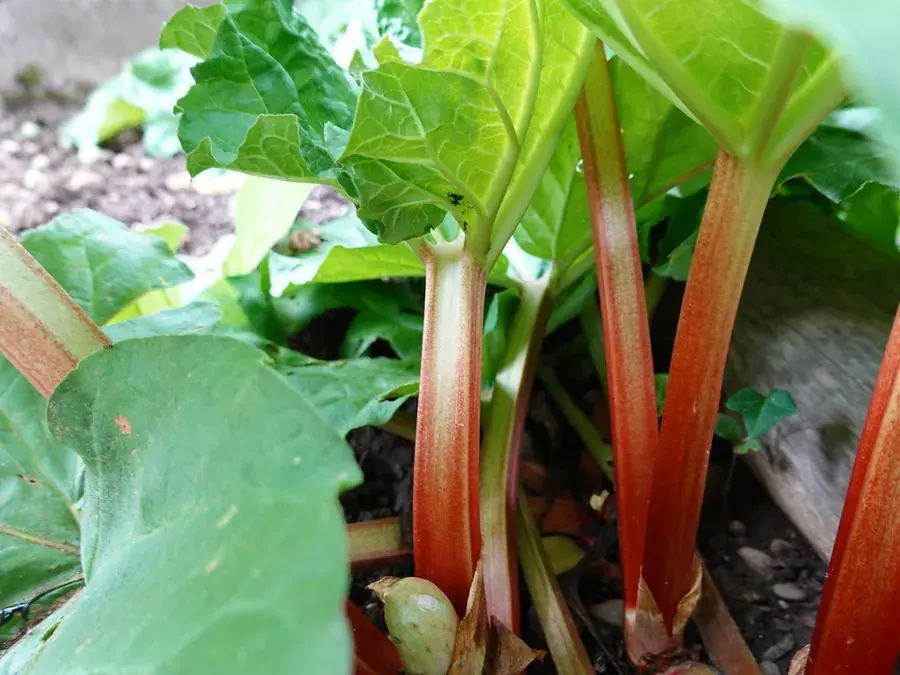 Very hardyPerennialsHarvest Apr–Jun
Rhubarb
The first harvest of the Canadian year and the toughest plant in the garden — eat the stalks, never the leaves.
Freezing · Water-bathHarvest and storage →
Checked against these sources ·
- RHS: How to grow globe artichokes
- University of Maine Cooperative Extension: Growing globe artichokes in Maine (Bulletin 2075)
- Oregon State University: Artichoke, globe (Oregon vegetables)
- OMAFRA Specialty Cropportunities: Globe artichoke
- NCHFP: Freezing artichokes
- FAO ECOCROP: Cynara scolymus data sheet
Harvest months are typical for zones 4–6 and shift by weeks north and south. Storage figures assume ideal conditions; without a cold store, expect the shorter end of each range.