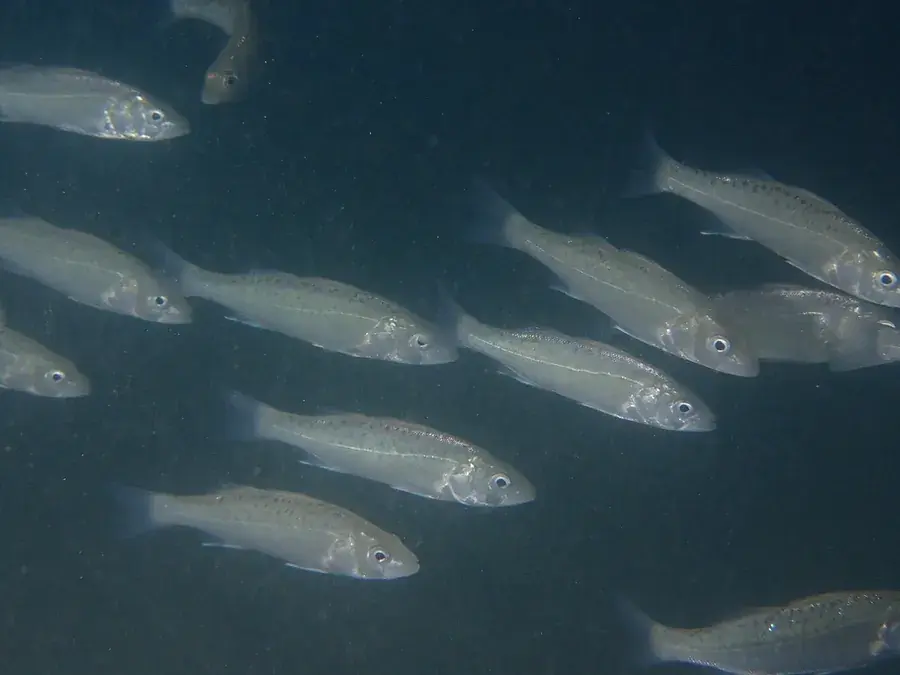
Photo by Julien Renoult on iNaturalist · CC BY 4.0
European sea bass
Dicentrarchus labrax
- When
- Apr–Nov — April, May, June, July, August, September, October, November. Earlier where the water warms first.
- Where it holds
- Surf beaches, rocky headlands, estuaries and harbour walls — wherever white water, weed and bait come together.
- How to know it
- Silver-grey and streamlined, with two separate dorsal fins (the first spiny), a large mouth, and a sharp spine on the gill cover.
- What to know
- The top shore gamefish of the Atlantic coast and a cousin of the North American striped bass. Slow-growing in the north, so the size limit matters.
- The tactic
- Surface lures or soft plastics over rocks at dawn and dusk; peeler crab or ragworm in the surf.
- Caution
- The rules are set every year. In 2026, UK and northern EU waters were catch-and-release only in February and March, then three bass a day of at least 42 cm (two a day in the Bay of Biscay). Mind the gill-cover spines.
Seasons, size limits and catch limits change every year and differ by water body. Check the current regulations for the country and the water before you fish.
European sea bass facts
- Also called
- Bass (in Britain and Ireland), European seabass; loup de mer or bar in French, lubina in Spanish, robalo in Portuguese, branzino or spigola in Italian, lavraki in Greek.
- Family
- Moronidae, the temperate basses — the same family as North America's striped bass.
- Native range
- The northeast Atlantic from Morocco to Norway, including Britain and Ireland, the whole Mediterranean, and the southern Black Sea. Strays reach the Baltic and as far south as Senegal, and it has recently spread into the northern Red Sea through the Suez Canal.
- Habitat
- Inshore: surf beaches, rocky shores, estuaries, lagoons and sometimes the lower reaches of rivers, down to about 100 m. In the north it moves inshore and into estuaries in summer and offshore into deeper water in winter. Young bass school; adults are more solitary.
- Water temperature
- Temperate to warm; FishBase gives about 8–24°C (46–75°F).
- Size
- Most adults 35–70 cm (14–28 in); the largest measured about 103 cm (41 in).
- Record
- IGFA all-tackle world record: 10.89 kg (24 lb), Morgan Walsh, off Ireland, 2025. The British shore record is 8.958 kg (19 lb 12 oz), Portsmouth Dockyard, 2012; the boat record is 8.876 kg (19 lb 9 oz), off Reculver, Kent, 1987.
- Lifespan
- Up to about 30 years; slow-growing in the north.
- What it eats
- Shrimps, crabs, molluscs and fish. Young bass eat mostly invertebrates and take more fish as they grow; big adults are mainly fish-eaters.
- Spawning
- Once a year, in groups, offshore, in winter or spring depending on the region; the eggs float. In the Mediterranean bass mature at 2–4 years; in the Atlantic later — males at 4–7 and females at 5–8.
- Young fish
- Young bass school in estuaries and harbours for their first years. In England and Wales many estuaries are designated bass nursery areas, with restrictions on fishing for bass.
- Teeth and mouth
- A large mouth; sharp spines on the gill cover and a sharp-edged gill cover, plus a spiny first dorsal fin.
- Look-alikes
- Spotted sea bass, in the south of the range, has black spots on its back and sides. Grey mullet has a tiny mouth and no gill-cover spines. In North America, the striped bass is its close cousin.
- Eating
- Excellent. Much of the branzino and loup de mer in shops is farmed — it is one of the main farmed fish of the Mediterranean.
- Status
- IUCN Near Threatened. After the northern stock fell sharply, the EU and UK brought in strict angling and commercial limits from 2015, reviewed every year.
Try it
How big does a european sea bass get?
Slide it from an ordinary adult to the biggest one ever measured, next to things you know the size of.
Most adults you'll catch: 35–70 cm (14–28 in).
This european sea bass: 53 cm. Longer than a loaf of bread, shorter than a four-year-old.
The record
IGFA all-tackle world record: 10.89 kg (24 lb), Morgan Walsh, off Ireland, 2025. The British shore record is 8.958 kg (19 lb 12 oz), Portsmouth Dockyard, 2012; the boat record is 8.876 kg (19 lb 9 oz), off Reculver, Kent, 1987.
Questions people ask about european sea bass
What are the sea bass rules for anglers?
They change every year. In 2026, in UK waters and the northern EU waters around them (the North Sea, Channel, Irish Sea and Celtic Sea), anglers could only catch and release bass in February and March; for the rest of the year they could keep three a day, each at least 42 cm. In the Bay of Biscay the EU daily limit is two.
Is European sea bass the same as striped bass?
No, but they are cousins in the same family, Moronidae. Both are hard-fighting predators of surf, rocks and estuaries, and both follow the bait close inshore.
How big do sea bass get?
Most anglers' bass are 35–70 cm (14–28 in); a bass over 4.5 kg (10 lb) is a specimen in Britain. The largest reach about a metre and 12 kg. The IGFA world record is 10.89 kg (24 lb), caught off Ireland in 2025.
Why is the minimum size for bass 42 cm?
Because bass grow slowly and mature late in the north — females often at 5–8 years — so a 42 cm limit gives more of them the chance to spawn before they can be kept.
Found in these regions
Checked against these sources ·
- FishBase — Dicentrarchus labrax
- IGFA world records — Bass, European
- GOV.UK — Bass fishing guidance 2026
- Netherlands Enterprise Agency (RVO) — Seabass rules in EU waters
Sizes, records and ranges are for the species as a whole; local fish, and local rules, vary. Records change — the record-keeper named above has the current one.
Is it active near you?
Get this week's guide for your area
Enter a town, postal code or ZIP and we'll tell you what's happening right there this week — from your local climate, this week's weather and your ecological region.
Also active in October
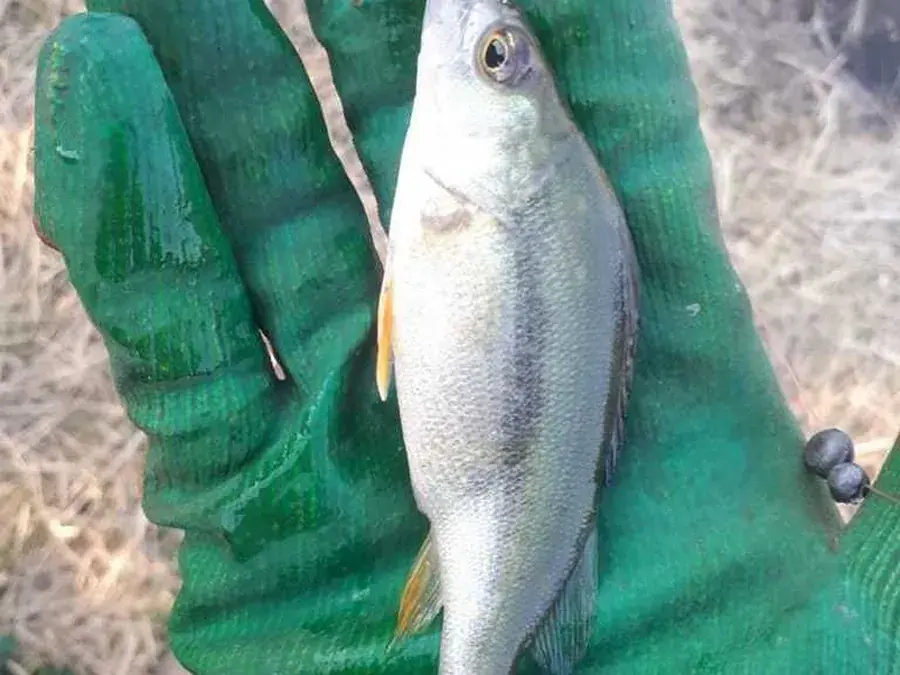 FishJun–Mar
European perch
Perca fluviatilis
Five to eight dark bars on a greenish flank, bright red-orange lower fins, and a spiny first dorsal fin with a black blotch at the back.
Where and how to catch it →Photo: Дауд Арсанукаев · CC BY 4.0
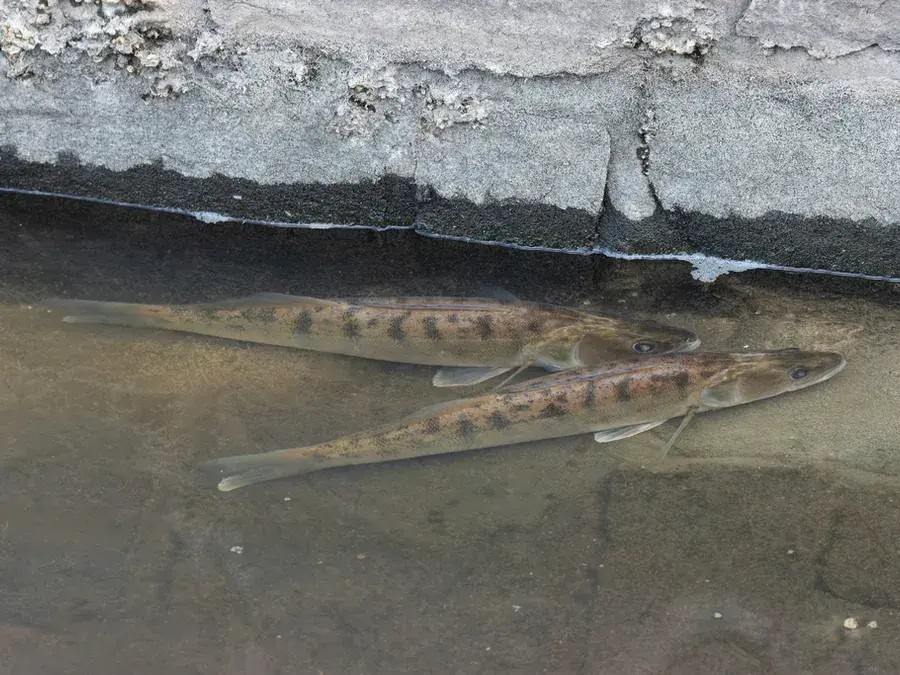 FishJun–Mar
Zander
Sander lucioperca
Slim and glassy-eyed, with grey-brown saddles, rows of black spots on the spiny dorsal fin, and long fang-like canine teeth.
Where and how to catch it →Photo: Tomas Broucek · CC BY 4.0
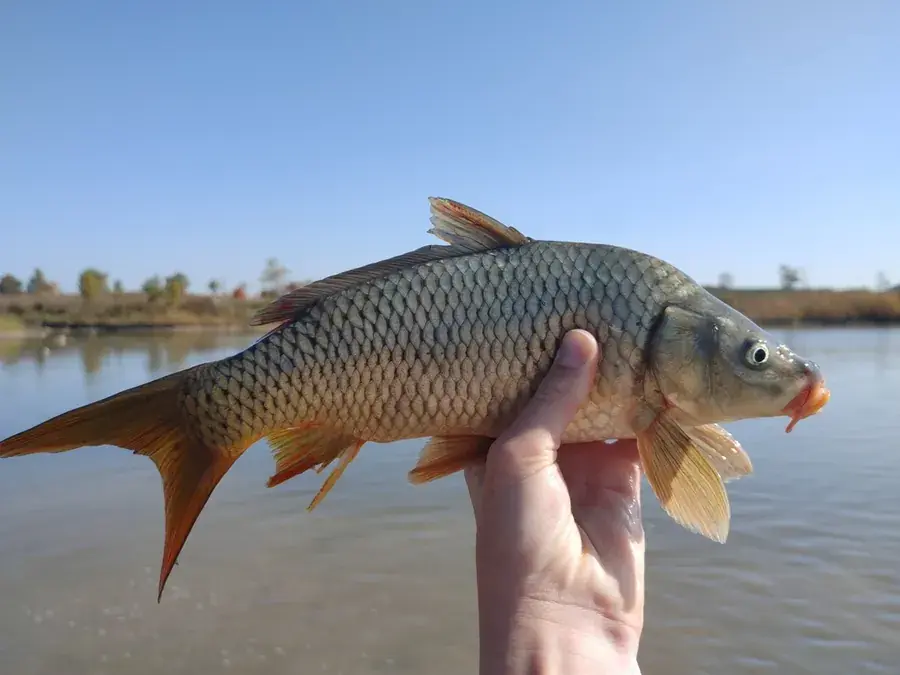 FishApr–Oct
Common carp
Cyprinus carpio
Big bronze scales (or the scattered big scales of a mirror carp), a long dorsal fin, and two pairs of barbels at a rubbery, tube-like mouth.
Where and how to catch it →