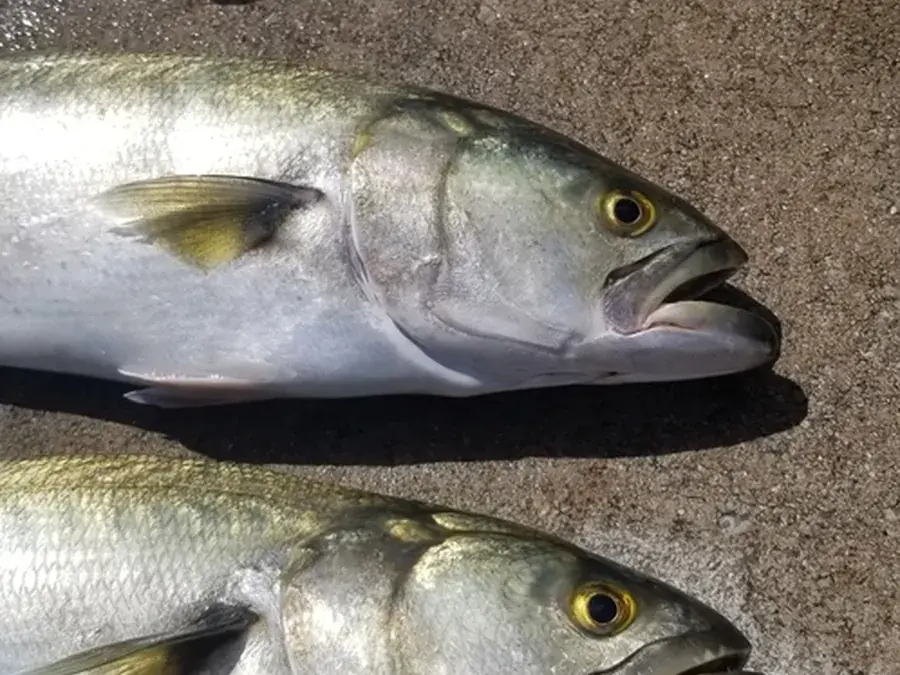
Photo by Jason E. Farabaugh on iNaturalist · CC BY 4.0
Bluefish (elf, shad)
Pomatomus saltatrix
- When
- Jun–Mar — January, February, March, June, July, August, September, October, November, December. Earlier in the south, later in the north.
- Habitat
- Surf beaches, rocky points, harbour walls and river mouths wherever baitfish shoal — the Atlantic beaches from Cape Cod to Florida, the Bosphorus and the Black Sea coast, and in South Africa the Cape’s beaches and estuary mouths in summer and the KwaZulu-Natal surf in winter.
- Identification
- Blue-green above and silver below, with a big head, a jutting lower jaw and a single row of knife-edged teeth. The short, spiny first dorsal fin folds into a groove and runs straight into the long second one, and there are no finlets before the forked tail.
- Notes
- A fast, schooling predator that drives baitfish into the shallows and keeps attacking after it has fed. South Africa’s elf follow the sardines: summer and autumn fish in the Cape, they move up to KwaZulu-Natal for the winter and spawn there in spring. American bluefish make the same journey, wintering off Florida and summering off New England.
- Method
- Metal spoons, poppers or a fresh sardine (pilchard) bait on a short wire trace, cast where birds and bait show — best early and late in the day.
- Caution
- The teeth cut: unhook with long pliers and never wade among feeding fish. In South Africa elf are closed from 1 October to 30 November; otherwise four a day at 30 cm or more on a DFFE recreational permit (online or at the Post Office), and they may not be sold in KwaZulu-Natal. US limits are set by each state and the ASMFC — check before you keep one.
Seasons, size limits and catch limits change every year and differ by water body. Check the current regulations for the local jurisdiction and the water before fishing.
Bluefish (elf, shad) facts
- Also called
- Elf or shad in South Africa; tailor in Australia; bluefish, blue, chopper and — for young fish — snapper blue in North America. IGFA also lists marine piranha, rock salmon and Hatteras blue.
- Family
- Pomatomidae — the only living member of its family.
- Native range
- Warm-temperate and subtropical seas almost worldwide, but absent from the eastern and north-western Pacific. In the eastern Atlantic from Portugal to South Africa, including the Mediterranean and Black Sea, Madeira and the Canaries; in the western Atlantic from Canada and Bermuda to Argentina; along East Africa, Madagascar, southern Oman, south-west India, Australia and New Zealand.
- Habitat
- Open coastal water over the shelf, most common along surf beaches and rocky headlands in clean, high-energy water; adults also enter estuaries and harbours. From the surface down to about 200 m (650 ft).
- Water temperature
- Warm-temperate to subtropical. AquaMaps puts its preferred surface water at about 14–27°C (57–81°F), and FishBase notes that it moves to warmer water in winter and cooler water in summer.
- Size
- Most adults 30–60 cm (12–24 in); the largest measured about 130 cm (51 in).
- Record
- IGFA all-tackle world record: 14.4 kg (31 lb 12 oz), James Hussey, Hatteras, North Carolina, USA, 30 January 1972. The South African angling record is 10.3 kg (22 lb 11 oz).
- Lifespan
- Up to about 14 years (FishBase). ASMFC gives 12 years for the US Atlantic stock, and South African elf have been aged to 10.
- What it eats
- Fish above all — sardines (pilchards), anchovies, menhaden and other shoaling fish — with squid and crustaceans. Elf under 10 cm eat more crustaceans than fish.
- Spawning
- A batch spawner. South African elf mature at about one year and 25 cm and spawn over 30–75 m of water off KwaZulu-Natal from September to March, peaking October to December. US fish mature at two and spawn in spring and summer between Massachusetts and Florida. A female sheds 400,000 to 2 million eggs.
- Young fish
- In South Africa, young-of-the-year gather in shallow bays less than 20 m deep along the southern Cape coast. Small American bluefish are called snappers.
- Teeth and mouth
- A large mouth with a single row of sharp, flattened, knife-edged teeth of even size in each jaw — enough to cut light line and fingers.
- Look-alikes
- Leerfish (garrick) has a wavy, S-shaped lateral line and black-tipped fin lobes. Greater amberjack has a gap between its dorsal fins and no spine in the second; mackerels have rows of small finlets before the tail, which the bluefish lacks.
- Eating
- Good when very fresh. The flesh is oily and spoils quickly, so eat it the day it is caught, or smoke it. Like other large predators it carries some mercury — follow local advice on how often to eat it.
- Status
- Vulnerable on the IUCN Red List (2014). South Africa’s stock was rated overexploited in its last per-recruit assessment; the US Atlantic stock remains under a rebuilding plan but was assessed in 2025 as not overfished.
Interactive
Bluefish: size range
Move the slider from a typical adult to the largest recorded specimen, shown against objects of known size.
Most adults you'll catch: 30–60 cm (12–24 in).
This bluefish (elf, shad): 45 cm. Longer than a loaf of bread, shorter than a four-year-old.
The record
IGFA all-tackle world record: 14.4 kg (31 lb 12 oz), James Hussey, Hatteras, North Carolina, USA, 30 January 1972. The South African angling record is 10.3 kg (22 lb 11 oz).
Questions people ask about bluefish
Is elf the same fish as bluefish?
Yes. Elf and shad are South African names for Pomatomus saltatrix — the bluefish of North America and the tailor of Australia — a single species found in warm seas almost worldwide.
When is elf season in South Africa?
Elf are closed from 1 October to 30 November. They are summer and autumn fish in the Cape and move up to KwaZulu-Natal for the winter, where they spawn in spring, so the KwaZulu-Natal surf fishes best from about June to September.
Do bluefish bite people?
They can. Bluefish are aggressive and have bitten anglers handling them and, rarely, people in the water among feeding schools. Unhook them with long pliers and keep hands away from the mouth.
How big do bluefish get?
Most are 30–60 cm (12–24 in). The IGFA world record is 14.4 kg (31 lb 12 oz), caught off Hatteras, North Carolina, in 1972; South Africa’s record elf weighed 10.3 kg.
Found in these regions
- Acadian Forest & Atlantic Coast
- Northeast Atlantic Coast & Piedmont
- Southeastern Piedmont & Coastal Plain
- Gulf Coast & Mississippi Lowlands
- Florida Peninsula
- Mediterranean Europe
- Pannonian Basin & Eastern Plains
- Mediterranean North Africa & Atlas
- Sahara, Nile & Horn
- Sahel & Sudanian Savanna
- Namib, Kalahari & Karoo
- Cape Fynbos & Winter-Rain Coast
- Southern Savanna & Subtropical Coast
Checked against these sources ·
- FishBase — Pomatomus saltatrix
- Mann (ed.), Southern African Marine Linefish Species Profiles — ORI Special Publication 9 (2013)
- WWF-SASSI — Elf
- Atlantic States Marine Fisheries Commission — Bluefish
- IGFA — World Records search
- Wikipedia — Bluefish
Sizes, records and ranges are for the species as a whole; local populations and rules vary. Records change; the record-keeper named above holds the current one.
Local activity
This week's guide for a place
Enter a town, postal code or ZIP for this week's conditions there, based on the local climate, this week's weather and the ecological region.
Also active in October
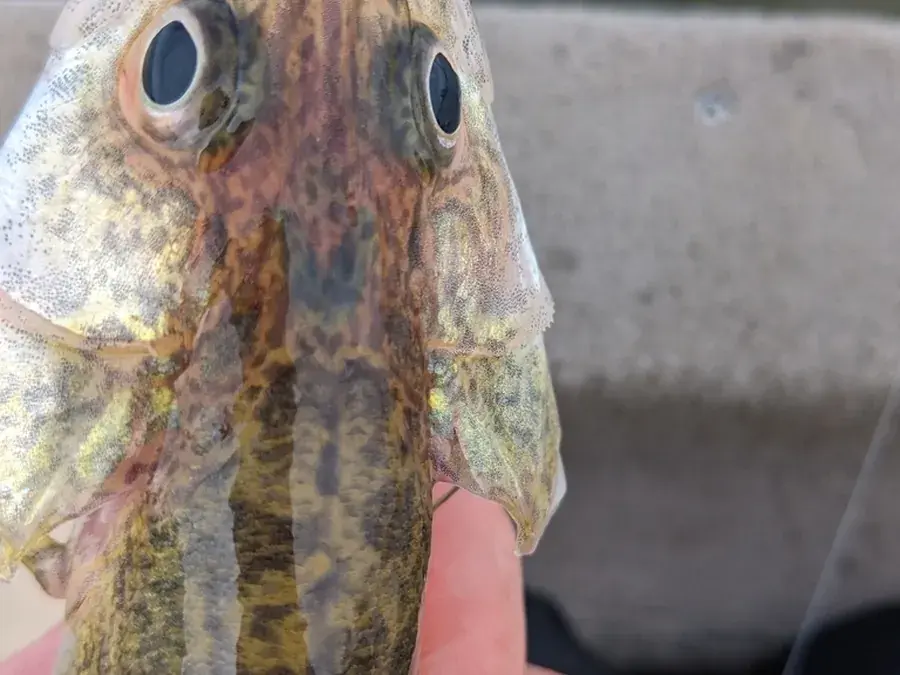 FishYear-round
Walleye
Sander vitreus
Olive-gold flanks, a spiny first dorsal, and the big glassy eye that gives it the name and lets it hunt in low light.
Habitat and methods →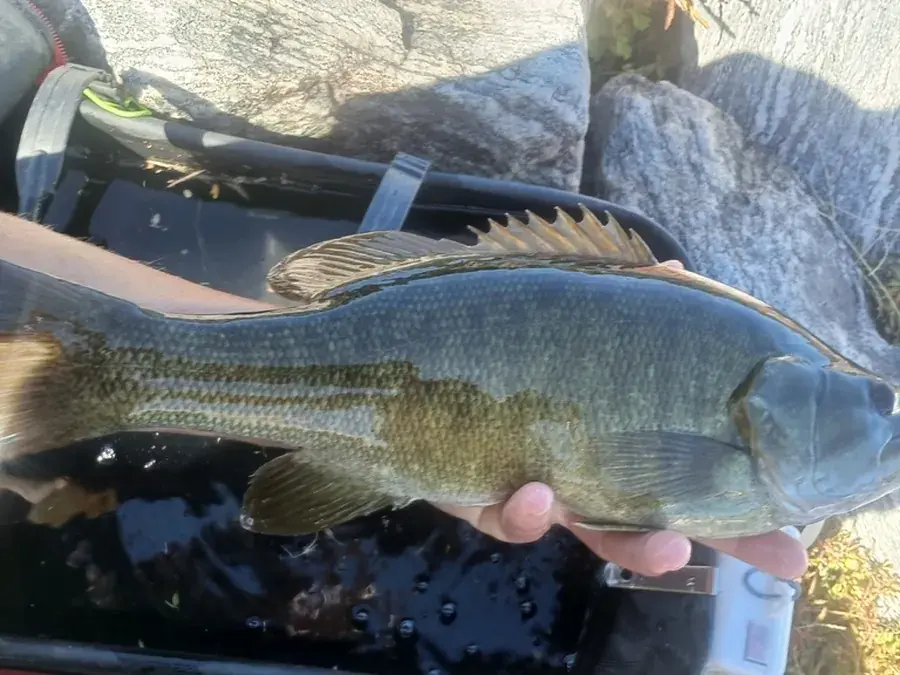 FishMay–Oct
Smallmouth bass
Micropterus dolomieu
Bronze-brown with vertical bars, red eye, and a jaw that ends level with the eye — not past it.
Habitat and methods →Photo: Joshua Johnson · CC BY 4.0
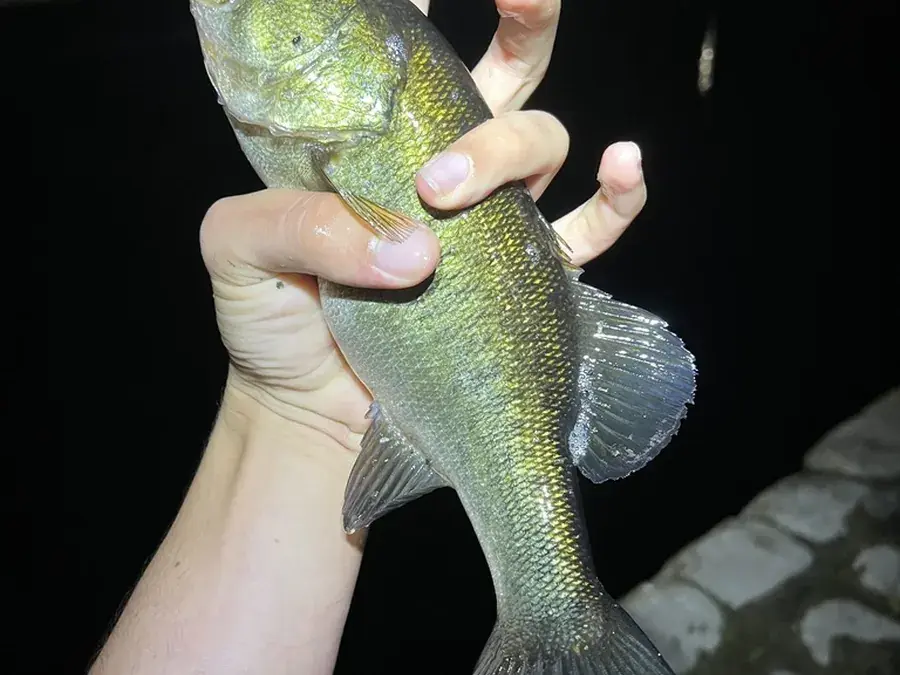 FishApr–Oct
Largemouth bass
Micropterus nigricans
Green with a dark lateral stripe, and an upper jaw that extends past the back of the eye.
Habitat and methods →Photo: Nick Tobler (Cowturtle) · CC BY 4.0