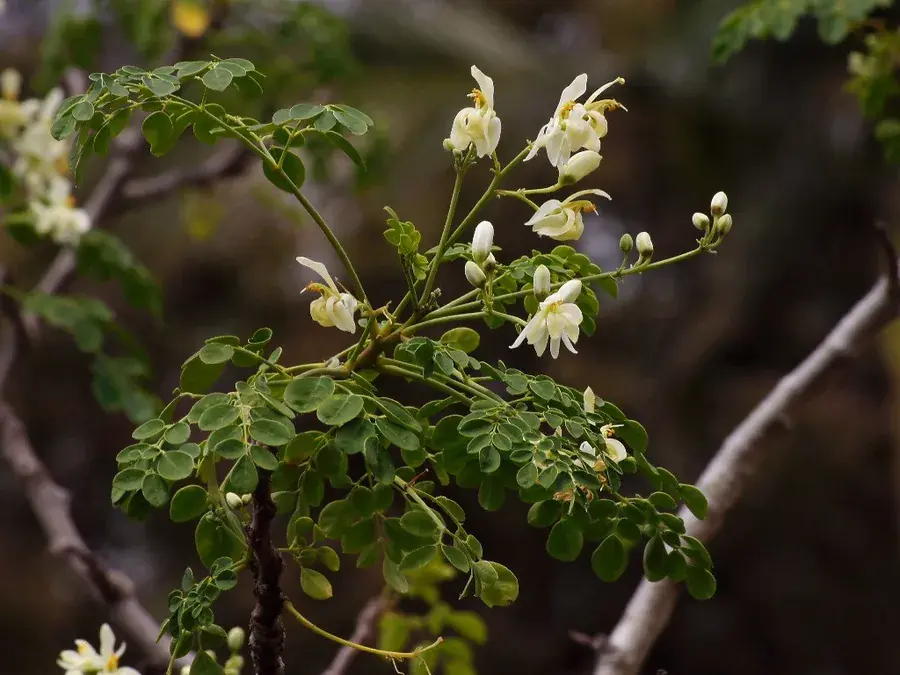
Moringa (drumstick tree)
Moringa oleifera
A fast, drought-hardy tree kept low for its leaves — the young pods are ‘drumsticks’, and the roots are not food.
- Signs of ripeness
- Leaves can be picked about two and a half months after sowing, and again about three weeks after each pruning. Young green pods, cooked like green beans, can be picked from about seven months after planting, and mature dry pods for seed about six weeks later. Trees grown from seed flower from their second year; trees grown from cuttings can fruit 6–12 months after planting.
- Harvesting
- Strip leaves from the branches, or cut whole leafy shoots, about twice a month in the growing season. Keep the tree within reach by cutting it back once or twice a year once it is 1.5 m tall — to about 50 cm from the ground, or to ground level for older trees — which makes it branch and produce far more leaf. Pick the pods young and tender.
- Frost tolerance
- Moringa tolerates a light frost but no more, and it is at its best at lower elevations — up to about 1,350 m in East Africa, though it survives higher. When a frost is forecast, pick the young leaves you want; a young tree in a pot should come under cover.
Storage
Storing moringa (drumstick tree)
| Where | Temperature | Humidity | Keeps | How |
|---|---|---|---|---|
| Fridge | 2–6 °C36–43 °F | high | A few days | Fresh leaves wilt quickly; keep them loosely bagged and cook them soon. |
| Airtight jar, dried leaf or powder | 10–25 °C50–77 °F | dry | Months | Leaves dried in the shade, crumbled or powdered, in a sealed jar away from light. |
Preserving
Preserving moringa (drumstick tree)
The leaves are dried and powdered for storage across West Africa, and the young pods and leaves are cooked fresh. Dry leaves in an airy, shaded place until they crumble, then keep them in an airtight jar; leaves blanched 2 minutes can also be frozen like other greens. Treat moringa as a vegetable rather than a supplement. The leaves have long been eaten cooked in Africa and Asia, but in December 2025 Food Standards Australia New Zealand reviewed moringa leaves, young pods and seed oil as a novel food and could not conclude they were safe, citing animal studies in which high doses of leaf powder harmed the liver and kidneys and caused loss of pregnancies. So eat the leaves in ordinary cooked portions, and avoid concentrated leaf powder in pregnancy. Eat the seeds only in moderation: they are fried and eaten like groundnuts in Nigeria, but they contain glucosinolates whose breakdown products have both helpful and toxic effects. Do not use the root as a horseradish substitute — the root bark contains toxic alkaloids, including moringinine, that act on the heart and the nervous system.
Seed saving
Cross-pollinates readily: needs isolation
Moringa is cross-pollinated, so seedlings vary in form and yield; good trees are therefore propagated from cuttings, which Indian growers prefer because seedlings bear inferior pods. For seed, leave pods on the tree until dry and brown, shell out the winged seeds and sow them 2 cm deep. Branches 1–1.5 m long and up to 4 cm thick root readily within a few months and are used to make living fences. Stored seed is attacked by insects, so keep it in a sealed jar.
Keeps: About 80% of fresh seed germinates, about 50% after 12 months’ storage, and none survives two years.
Seed saving →Next year
Planning moringa (drumstick tree) for next season
Moringa is drought-tolerant, grows where the annual rainfall is as little as 500 mm, and takes almost any soil that drains, though fertile soil and manure give the best leaf. Sow seed direct at the start of the rains, or in a shaded, watered nursery in the dry season and plant out at about 40 cm tall, three months later, as the rains arrive. For leaf, plant densely — 0.7–1 m apart — and cut back hard; for trees, 3–5 m apart. Early growth is fast, often 3–4 m in a year, so plan the pruning from the start. It is a lowland tree, at home in the Sahel — Niger grows it as a field crop — and the savanna, and slower in cool highlands. Its light shade suits alley-cropping with vegetables.
Moringa (drumstick tree) at a glance
- Botanical name
- Moringa oleifera
- Group
- Perennials
- Picked
- January, February, March, April, May, June, July, August, September, October, November, December
- Frost
- Tender: finished by the first frost.
- Best put up as
- drying, freezing
- Seed
- Cross-pollinates readily: needs isolation
Questions people ask about moringa (drumstick tree)
Which parts of moringa can you eat?
The leaves, flowers and young pods, cooked — the leaves in sauces and soups, the young pods (‘drumsticks’) like green beans — and the seeds in moderation, usually fried. Do not eat the roots or bark: the root bark contains toxic alkaloids.
Is moringa safe to eat?
Cooked leaves and young pods eaten as a vegetable have a long history of use in Africa and Asia. Concentrated leaf powder is another matter: Food Standards Australia New Zealand could not conclude in 2025 that moringa sold as a food was safe, after animal studies found liver, kidney and pregnancy effects at high doses. Eat it in ordinary portions, and avoid leaf powder in pregnancy.
How do you harvest moringa leaves?
Strip the leaves or cut leafy shoots about twice a month, starting about two and a half months after sowing. Prune the tree back to about 50 cm once or twice a year once it reaches 1.5 m; new leaves are ready to pick about three weeks after each pruning.
Can I grow moringa from cuttings?
Yes. Branches 1–1.5 m long and up to 4 cm thick root readily in a few months, and trees grown from cuttings can bear pods within 6–12 months, against two years from seed. Cuttings also keep the qualities of a good tree, which seed does not.
Can moringa grow in a cold climate?
Only as a summer pot plant that comes indoors before frost. It tolerates no more than a light frost and grows best in warm lowlands; it is slow even in cool tropical highlands.
How do you dry moringa leaves?
Strip the leaflets from the stalks, spread them thinly in an airy, shaded place, and turn them until they crumble. Rub them to a powder if you like and store them in an airtight jar away from light.
Local frost dates
Harvest timing for a place
Enter a town, postal code or ZIP to build the garden year, the frost forecast and this week’s guide from local weather.
Also in perennials
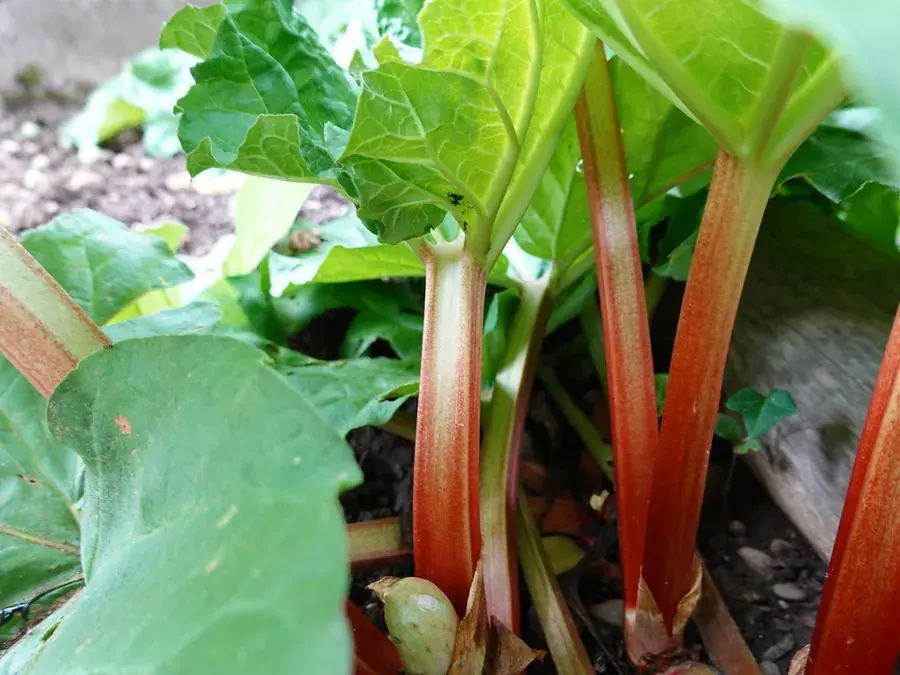 Very hardyPerennialsHarvest Apr–Jun
Rhubarb
The first harvest of the Canadian year and the toughest plant in the garden — eat the stalks, never the leaves.
Freezing · Water-bathHarvest and storage →
Checked against these sources ·
- PROTA (Pl@ntUse): Moringa oleifera
- Food Standards Australia New Zealand: Application A1294, Moringa oleifera as a novel food — risk and technical assessment
- ECHO: Caution about using moringa tree roots as a horseradish substitute
- NCHFP: Freezing greens, including spinach
- FAO ECOCROP: Moringa oleifera data sheet
Harvest months are typical for zones 4–6 and shift by weeks north and south. Storage figures assume ideal conditions; without a cold store, expect the shorter end of each range.