Dilly beans (pickled green beans)
Whole beans standing to attention in a garlicky dill brine — the first jar most families let the children pack.
Makes
About 8 × 500 ml (pint) jars
Active time
45 minutes
Total
1½ hours, plus 12–24 hours cooling
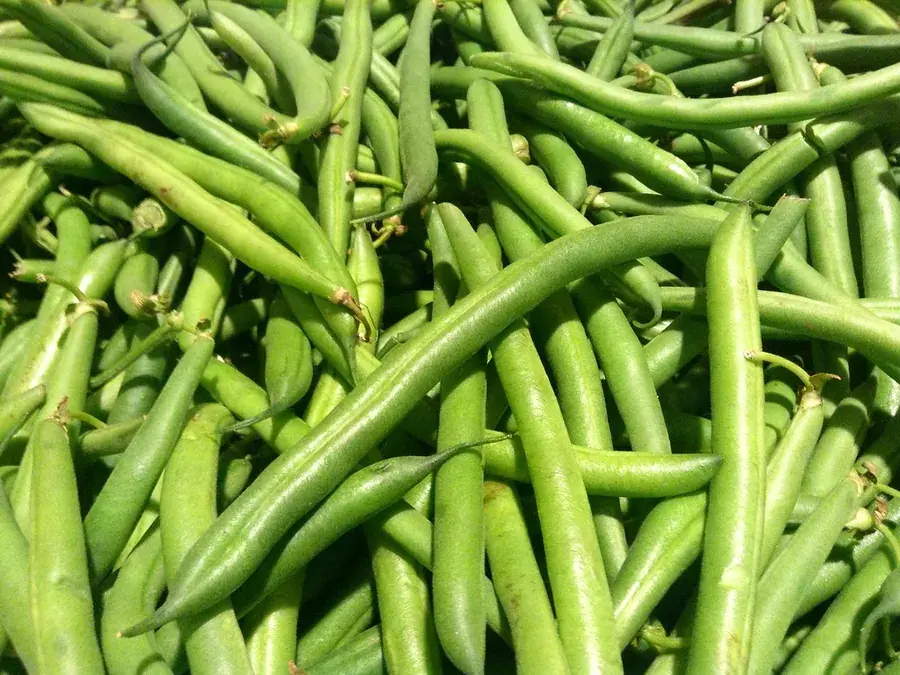
Photo JeepersMedia on Flickr · CC BY 2.0
Before you start
What keeps this jar safe
- Equal parts 5% vinegar and water, with the salt as written, is the tested brine; do not weaken it, and do not add more water to stretch it.
- Because the process is only 5 minutes, the jars must be sterilized in boiling water for 10 minutes first — a hot jar from the dishwasher is not enough.
- One clove of garlic per jar is the tested amount; garlic is a low-acid vegetable and more of it was not tested.
- Pints only. Quarts hold more cold bean in the middle and no time has been established for them.
- Beans must be young and tender; tough, stringy late beans stay tough in the jar.
This follows NCHFP: Dilled Beans. Quantities, acid and times are theirs; do not scale the vegetables without scaling everything, and do not change the vinegar, lemon juice or processing time.
Ingredients
- 1.8 kg (4 lb) fresh tender green or yellow beans, 12–15 cm (5–6 inches) long
- 8–16 heads of fresh dill (1–2 per jar)
- 8 cloves garlic, optional (1 per jar)
- 125 ml (½ cup) canning or pickling salt
- 1 L (4 cups) white vinegar (5%)
- 1 L (4 cups) water
- 5 ml (1 teaspoon) hot red pepper flakes, optional
Processing
- Jars
- 500 ml (pint) only
- Headspace
- 1.25 cm (½ inch)
- Time at 0–300 m (0–1,000 ft)
- 5 min
- Higher up
- 10 min at 300–1,800 m (1,001–6,000 ft), 15 min above 1,800 m (6,000 ft). No tested time for 1 L jars — use pints.
Method
- 1
Sterilize the jars, because the process is under 10 minutes: stand 8 × 500 ml jars upright on the rack in the canner, fill the canner and jars with hot water to 2.5 cm (1 inch) above the rims, and boil 10 minutes (one minute more for each 300 m above sea level). Leave them in the hot water until you fill them. Wash the lids and set aside.
- 2
Wash the beans and snap or trim the ends — snapping is a job a four-year-old takes seriously. Cut them to 10 cm (4 inch) lengths, so they stand below the jar’s shoulder.
- 3
Lift out a jar, drain it, and drop in 1–2 dill heads and a garlic clove if using. Stand the beans upright in the jar, packed close, leaving 1.25 cm (½ inch) headspace. Trim any that stand too tall.
- 4
Combine the salt, vinegar, water and pepper flakes in a pot and bring to a boil.
- 5
Pour the boiling brine over the beans, leaving 1.25 cm (½ inch) headspace and making sure the beans are covered. Free bubbles with a chopstick, wipe the rims, centre the lids and screw the bands on fingertip-tight.
- 6
Lower into the canner with at least 5 cm (2 inches) of water over the lids, bring to a full rolling boil and process 500 ml jars 5 minutes at 0–300 m.
- 7
Turn off the heat, uncover, wait 5 minutes and lift the jars onto a towel. Leave 12–24 hours and check the seals. Wait at least two weeks before opening so the brine gets into the beans.
Keeps: 12 months in a cool dark cupboard. Refrigerate after opening and eat within a month.
Variations: Yellow wax beans and green beans can be mixed in one jar for colour. Skip the pepper flakes for a jar the children will eat with their fingers.
Tested source: NCHFP: Dilled Beans. Checked October 2026. If a jar did not seal, refrigerate it and use it within a few days. Never taste anything from a jar that is bulging, leaking, spurting or smells wrong — when in doubt, throw it out without tasting.
The crop
Green beans: when to pick, how to store, what else to make →
Green beans are the home freezer’s second crop after peas: snap or cut into 5–10 cm lengths, blanch 3 minutes, chill in ice water, drain, and tray-freeze before bagging. They also make the best pickle in this group — dilly beans, raw-packed with dill and garlic into sterilized jars (boiled 10 minutes) in a tested brine of equal parts 5 % vinegar and water with canning salt, processed 5 minutes in a boiling-water bath at 0–300 m by the NCHFP recipe. Plain beans in water are another matter entirely: they are a low-acid vegetable and must be pressure-canned, 20 minutes for 500 ml jars and 25 for litres at 10 lb (weighted gauge, 0–300 m). There is no safe boiling-water time for plain green beans, and no family recipe changes that — home-canned green beans top the historical list of foods behind botulism cases in North America, because for a century people water-bathed them. Drying green beans (‘leather britches’) works but gives a chewy, musty product; the freezer is better.
More for green beans
- Pressure canning
Green beans, pressure canned
The first thing most people pressure-can, and the jar that teaches the whole method: plain beans, salt if you like, nothing else.
About 9 × 500 ml (pint) jars from 4 kg (9 lb) of beans, or 7 × 1 L (quart) jars from 6.4 kg (14 lb) · 1 hour active
The recipe → - Freezing
Frozen green beans and peas
The two crops that come all at once and go over in days. Three minutes in boiling water for beans, a minute and a half for peas, and they are saved.
About 1 kg of beans fills three 1 L freezer bags; 1 kg of pea pods gives about 400 g of shelled peas · 30–45 minutes active
The recipe →