Dried herbs, air-dried and dehydrated
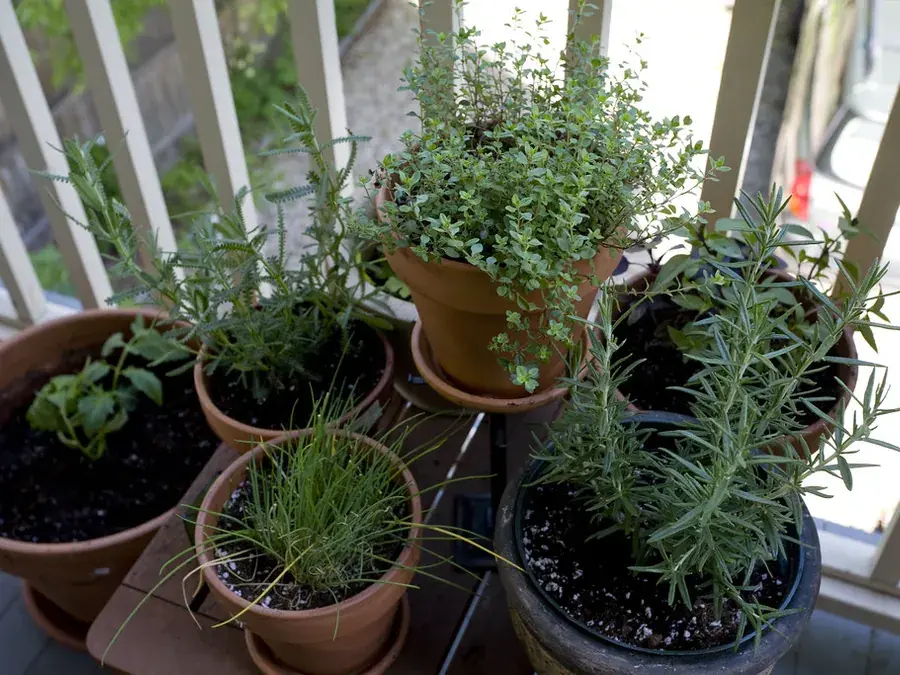
Bunches of thyme hanging from a nail, basil laid flat in the dehydrator: the whole herb bed in six jars before the frost takes it.
Makes
A loose grocery bag of fresh herbs dries down to one or two 250 ml jars
Active time
20 minutes
Total
1–4 hours in a dehydrator; 1–2 weeks hanging
Before you start
What matters for this one
- Tender, juicy herbs — basil, mint, lemon balm, tarragon — mould in a hanging bundle before they dry. They go in the dehydrator or a well-ventilated paper bag.
- Keep the dehydrator under 46 °C (115 °F) unless the air is very humid; hotter cooks off the volatile oils you are trying to keep.
- A hanging bundle must be small and loose. A thick bunch stays damp in the middle and grows grey mould that you will not see until you crumble it.
- Dried herbs are 3–4 times stronger than fresh, so use about a third of the amount a recipe gives for fresh.
This follows NCHFP: Drying herbs. Quantities, acid and times are theirs; do not scale the vegetables without scaling everything, and do not change the vinegar, lemon juice or processing time.
Ingredients
- Sturdy herbs for hanging: rosemary, sage, thyme, summer savory, parsley (dill and coriander seed heads go in a paper bag)
- Tender herbs for the dehydrator or the paper-bag method: basil, mint, lemon balm, tarragon, oregano and marjoram leaves, chives
- String and a paper bag, or a dehydrator with mesh liners
Method
- 1
Cut herbs in the morning once the dew has dried, ideally just before they flower when the oils are strongest. Rinse in cool water, shake off the drops, and throw out anything bruised, dirty or yellow. Children can strip leaves from stems and spot the bad ones.
- 2
Hanging method, for the sturdy herbs: tie 5–8 stems in a small bundle with string, hang them upside down somewhere warm, airy and out of the sun — a kitchen beam or a closet — and leave 1–2 weeks until the leaves crumble.
- 3
Paper-bag method, for tender or dusty herbs: punch holes in the sides of a paper bag, put a small bundle inside leaves-down, gather the bag around the stems with an elastic, and hang it where air moves. The bag catches falling leaves and keeps dust and light off.
- 4
Dehydrator method, best for basil, mint and anything with a lot of moisture: lay leaves or short sprigs in a single layer on the trays and dry at 35–46 °C (95–115 °F), or up to 52 °C (125 °F) in muggy weather, for 1–4 hours. Check after an hour; basil goes from limp to crisp quickly.
- 5
They are dry when leaves crumble between your fingers and stems snap rather than bend. Anything still bendy goes back.
- 6
Strip the leaves and store them whole — crumble at the stove, not before, to keep the oils in. Pack into small airtight jars, label, and keep in a cool, dark cupboard away from the stove.
- 7
Check the jars the first week. Any mist on the glass means they were not fully dry: tip them back onto a tray and dry further.
Keeps: Best flavour within a year; after that they are safe but dull. Store whole, airtight, cool and dark, and never shake a jar over a steaming pot.
Variations: Dill heads and coriander seed hang in a paper bag until the seed drops. Make your own herbes de Provence or an Italian mix once everything is dry. For herbs you use mostly in cooked dishes (parsley, chives, dill), freezing chopped in cubes keeps more of the fresh flavour than drying.
Tested source: NCHFP: Drying herbs. Checked October 2026. If a jar did not seal, refrigerate it and use it within a few days. Never taste anything from a jar that is bulging, leaking, spurting or smells wrong — when in doubt, throw it out without tasting.
The crop
Thyme, oregano, sage and rosemary: when to pick, how to store, what else to make →
These are the herbs that dry: tie small loose bunches and hang them upside down inside paper bags with holes punched in them, in a warm, dark, airy room for one to two weeks, or lay sprigs on screens, or run a dehydrator at 35–45 °C (95–115 °F) for a few hours. They are done when a leaf crumbles between your fingers and the stem snaps; strip the leaves and store them whole in jars, because flavour lives in the whole leaf and leaves the crumbled one. Rosemary and thyme also freeze well on the stem in a bag, and sage leaves frozen in butter are winter’s best roast-chicken butter. Herb-infused oil is the thing to be careful with: oil plus a low-acid herb is the botulism setting, so an oil you have put fresh or dried herbs or garlic into lives in the fridge for four days or in the freezer, never on the shelf. Herb vinegars are acid and are safe on the shelf. What does not work: drying in the sun, in a hot oven, or anywhere over 45 °C, which drives off the oils you were trying to keep.