Refrigerator pickled garlic (garlic in vinegar)
Whole peeled cloves kept under full-strength vinegar in the fridge — the safe way to have mellow pickled garlic through the winter without a canner.
Makes
A 250 ml (half-pint) jar holds about 2 heads of garlic (around 25 cloves); scale up jar by jar
Active time
20 minutes
Total
20 minutes, then 1–2 weeks in the fridge before eating
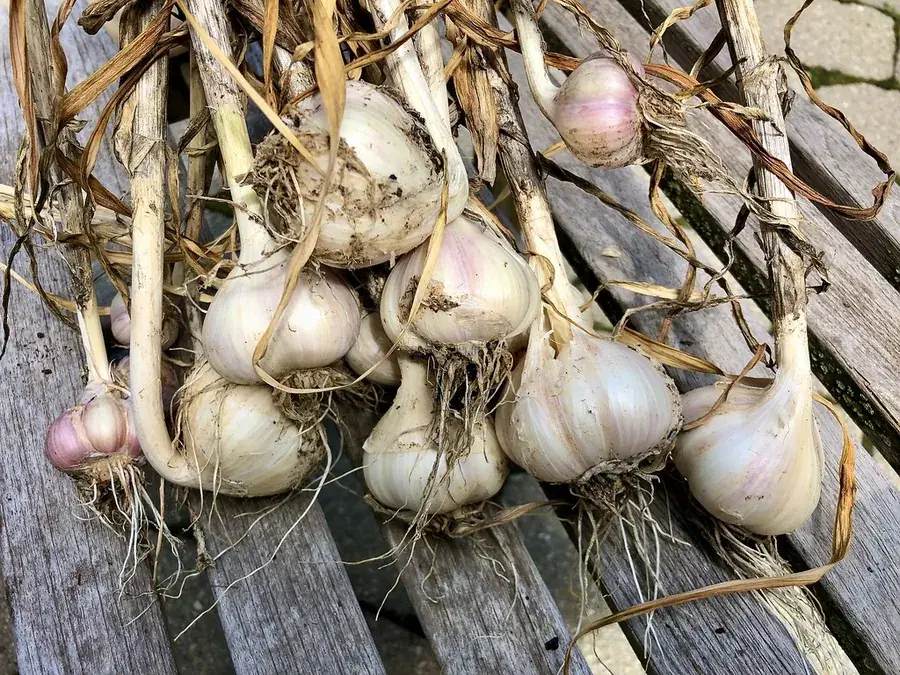
Photo Crawford Brian on Flickr · CC BY 2.0
Before you start
What matters for this one
- This is a refrigerator pickle, not a canned one: garlic is a low-acid vegetable and there is no tested boiling-water time for plain garlic on any of the public canning sites. It stays cold from the day it is made.
- Undiluted vinegar or wine only. Diluting it with water or oil raises the pH and makes the jar unsafe.
- Never put raw garlic in oil at room temperature — garlic in oil has caused botulism outbreaks. Garlic in oil belongs in the freezer, or in the fridge for no more than 4 days.
- Keep every clove under the liquid. Throw out the jar — cloves and liquid — at the first sign of mould or yeast on the surface.
- Cloves that turn blue or green in vinegar are safe; the pigment reaction is cosmetic and more common with immature garlic.
This follows UC ANR 8568: Garlic — Safe Methods to Store, Preserve, and Enjoy (storing garlic in wine or vinegar). Quantities, acid and times are theirs; do not scale the vegetables without scaling everything, and do not change the vinegar, lemon juice or processing time.
Ingredients
- Firm, cured garlic cloves, peeled and left whole — about 2 heads (100 g) per 250 ml jar
- Undiluted (full-strength) vinegar to cover — white or wine vinegar, 5% acidity; roughly 200 ml per 250 ml jar — or a dry white or red wine instead
- Optional: a few whole peppercorns, a pinch of chili flakes or cumin seed, or a bay leaf
Method
- 1
Break the heads into cloves and peel them — a job children do happily if you crack the skins first by pressing each clove under the flat of a knife. Discard any soft, sprouting or bruised cloves.
- 2
Pack the whole cloves into a clean 250 ml jar with the spices, if using, leaving room so the liquid can cover them completely.
- 3
Pour in full-strength vinegar (or wine) until every clove is submerged, with a little to spare. Do not dilute it with water.
- 4
Put the lid on, write the date and a ‘best before’ four months on, and put the jar straight in the refrigerator — never on the counter.
- 5
Wait a week or two for the raw bite to soften. Eat the cloves as a pickle, chop them into dressings, and use the garlicky vinegar in vinaigrettes.
Keeps: About 4 months in the refrigerator — label the jar. Longer is not unsafe in itself, but mould becomes likely and the flavour fades.
Variations: A mix of white vinegar and dry white wine is pleasant; so is a jar of cloves in red wine vinegar with a pinch of dried rosemary (dried spices only — fresh herbs are not in the tested method). Oregon State’s garlic page gives the same method and the same rules.
Tested source: UC ANR 8568: Garlic — Safe Methods to Store, Preserve, and Enjoy (storing garlic in wine or vinegar). Checked October 2026. If a jar did not seal, refrigerate it and use it within a few days. Never taste anything from a jar that is bulging, leaking, spurting or smells wrong — when in doubt, throw it out without tasting.
The crop
Garlic: when to pick, how to store, what else to make →
Cured garlic is the preserve; the jar is for the surplus and the softening bulbs of late winter. Peeled cloves freeze whole or chopped, loose in a bag, with no blanching — soft when thawed but full-flavoured. Sliced garlic dries well at 55–60 °C and grinds to powder. Pickled garlic is safe only from a tested recipe (Ball or Bernardin, 5% vinegar, water-bath processed) — the vinegar is what makes it safe, and some cloves turn blue or green in it, which is harmless. Plain garlic cannot be canned: no safe processing time exists, pressure canner or not. And garlic in oil is the classic home botulism case — a low-acid vegetable in an oxygen-free medium at room temperature — so any garlic-in-oil, garlic butter or garlic confit you make goes straight to the fridge and is used within four days, or into the freezer in small portions. Health Canada allows a week refrigerated at 4 °C; the NCHFP says four days; there is no way to tell by look, smell or taste when it has gone wrong.
More for garlic
- Fermenting
Fermented hot sauce (refrigerator only)
Brined peppers, soured for a few weeks and blended: the sauce every pepper-grower ends up making. Ours stays in the fridge, because nobody has published a tested canning time for it.
About 500 ml of sauce from 500 g of peppers · 30 minutes active
The recipe → - Freezing
Basil pesto cubes, frozen
Pick the basil before the first frost night takes it, blitz it, freeze it in cubes. One cube on hot pasta in February is the whole point of the herb bed.
About 375 ml of pesto, 24 ice-cube-tray cubes, from 2 cups of leaves · 20 minutes active
The recipe → - Pickling
Dilly beans (pickled green beans)
Whole beans standing to attention in a garlicky dill brine — the first jar most families let the children pack.
About 8 × 500 ml (pint) jars · 45 minutes active
The recipe →