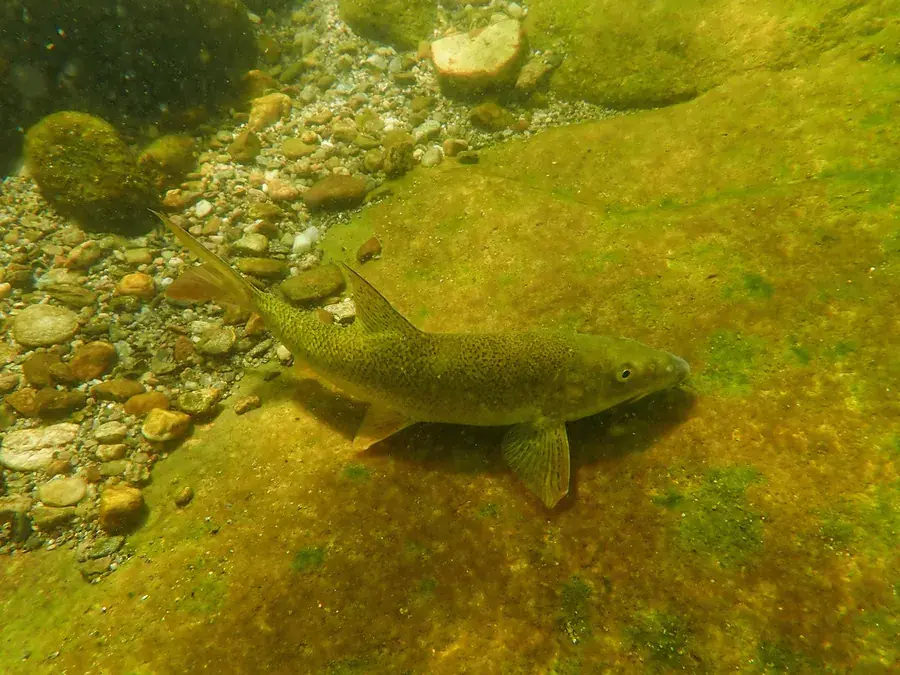
Photo by Donald Davesne on iNaturalist · CC BY 4.0
Barbel
Barbus barbus
- When
- Jun–Nov — June, July, August, September, October, November. Earlier where the water warms first.
- Where it holds
- Fast, clean, gravel-bottomed rivers: under overhanging trees, in channels between weed beds and in the deeper glides below weirs.
- How to know it
- Long and muscular with a flat belly, an underslung mouth with four barbels, and a bronze back over a pale belly.
- What to know
- The power fish of European rivers, built to hold station in strong current. Most active at dawn, dusk and after dark.
- The tactic
- Pellets, luncheon meat or a feeder of hemp and pellets on the bottom, on tackle strong enough to stop it reaching snags.
- Caution
- In England and Wales rivers are closed to coarse fishing from 15 March to 15 June. Barbel roe is poisonous — never eat it. Rest a beaten barbel upright in the current until it swims away.
Seasons, size limits and catch limits change every year and differ by water body. Check the current regulations for the country and the water before you fish.
Barbel facts
- Also called
- Common barbel; barbeau in French, Barbe in German, barbeel in Dutch, brzana in Polish.
- Family
- Cyprinidae, the carp family.
- Native range
- Europe north of the Pyrenees and Alps, from the Adour in France east to the Neman in Lithuania, and from the Danube to the Dnieper in the Black Sea basin; in England, the southeast north to Yorkshire. It is also found in almost all of France's Mediterranean rivers.
- Introduced to
- Elsewhere in England, including the Wear, Tees and Medway and most western rivers, and northern and central Italy. Spain, Portugal and much of Italy have native barbels of other species.
- Habitat
- Clear, medium to large rivers with fast current over gravel — the 'barbel zone' — occasionally lakes. By day barbel shoal under overhanging trees and bridges; they are most active at dawn and dusk, and often winter in big groups in slower water.
- Water temperature
- Temperate; FishBase gives about 10–24°C (50–75°F). It spawns from May to July, after migrating upstream.
- Size
- Most adults 30–70 cm (12–28 in); the largest measured about 120 cm (47 in).
- Record
- IGFA all-tackle world record: 7.80 kg (17 lb 3 oz), Luca Ronchi, Italy, 2023. The British record is heavier: 10.014 kg (22 lb 1 oz), Simon Baker, King's Weir on the River Lea, 2025.
- Lifespan
- FishBase gives 15 years as the oldest reported.
- What it eats
- Bottom invertebrates — insect larvae, small crustaceans, snails and mussels — rooted from the gravel with its barbels, plus small fish and sometimes algae.
- Spawning
- May to July, on clean gravel in very shallow, fast riffles, after a run upstream. The eggs are poisonous.
- Young fish
- Larvae and juveniles keep to the bottom in very shallow water along the bank, moving out into faster water as they grow.
- Teeth and mouth
- Underslung, with thick, fleshy lips and four barbels — two at the front of the upper lip and two at the corners of the mouth.
- Look-alikes
- Gudgeon is tiny and has just two barbels. Carp is deep-bodied with a long dorsal fin. In Spain, Portugal and Italy the barbels are different native species, such as the Iberian and Italian barbels.
- Eating
- Edible but bony, and the roe is poisonous; in Britain barbel are returned as a matter of course.
- Status
- IUCN Least Concern. It declined badly with pollution, dams and river engineering in central Europe and is recovering in cleaned-up rivers.
Try it
How big does a barbel get?
Slide it from an ordinary adult to the biggest one ever measured, next to things you know the size of.
Most adults you'll catch: 30–70 cm (12–28 in).
This barbel: 50 cm. Longer than a loaf of bread, shorter than a four-year-old.
The record
IGFA all-tackle world record: 7.80 kg (17 lb 3 oz), Luca Ronchi, Italy, 2023. The British record is heavier: 10.014 kg (22 lb 1 oz), Simon Baker, King's Weir on the River Lea, 2025.
Questions people ask about barbel
Are barbel eggs poisonous?
Yes. Barbel roe is poisonous and can cause a nasty stomach upset, so never eat it. The flesh is edible but bony, and most anglers release barbel anyway.
When can you fish for barbel in England?
From 16 June to 14 March on rivers. The coarse fish close season shuts rivers, streams and drains in England from 15 March to 15 June, which covers the barbel's spawning time. Most enclosed stillwaters and canals stay open all year.
How big do barbel get?
Most are 30–70 cm (12–28 in) and 1–5 kg. Britain's record is 10.014 kg (22 lb 1 oz), from the River Lea in 2025; the IGFA all-tackle record is 7.80 kg (17 lb 3 oz), from Italy in 2023.
Where do barbel live?
In fast, clean, gravelly rivers across Europe north of the Pyrenees and Alps — from France and England east to Lithuania and the Danube and Dnieper. In England they are native to the southeast and were stocked into the Severn and many other western rivers.
Found in these regions
Checked against these sources ·
- FishBase — Barbus barbus
- IGFA world records — Barbel
- British Record (Rod Caught) Fish Committee — coarse fish records, January 2026
- GOV.UK — Freshwater rod fishing rules: when and where you can fish
Sizes, records and ranges are for the species as a whole; local fish, and local rules, vary. Records change — the record-keeper named above has the current one.
Is it active near you?
Get this week's guide for your area
Enter a town, postal code or ZIP and we'll tell you what's happening right there this week — from your local climate, this week's weather and your ecological region.
Also active in October
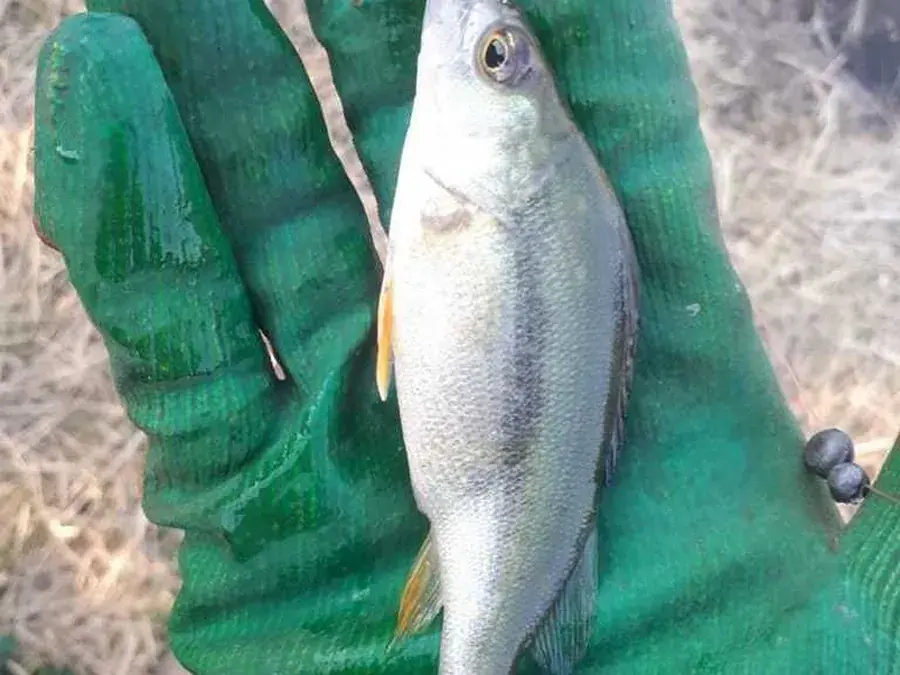 FishJun–Mar
European perch
Perca fluviatilis
Five to eight dark bars on a greenish flank, bright red-orange lower fins, and a spiny first dorsal fin with a black blotch at the back.
Where and how to catch it →Photo: Дауд Арсанукаев · CC BY 4.0
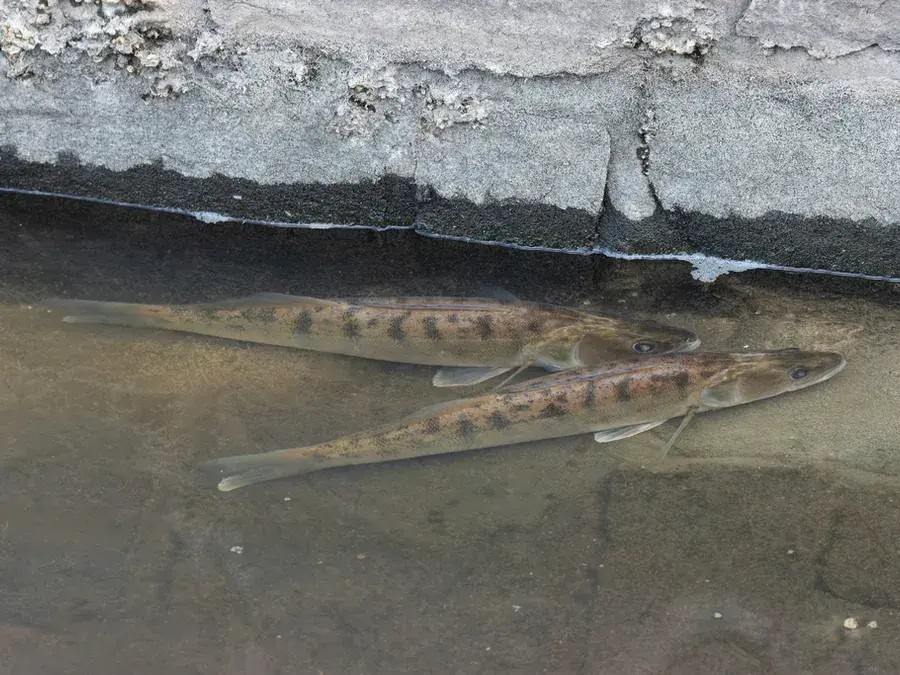 FishJun–Mar
Zander
Sander lucioperca
Slim and glassy-eyed, with grey-brown saddles, rows of black spots on the spiny dorsal fin, and long fang-like canine teeth.
Where and how to catch it →Photo: Tomas Broucek · CC BY 4.0
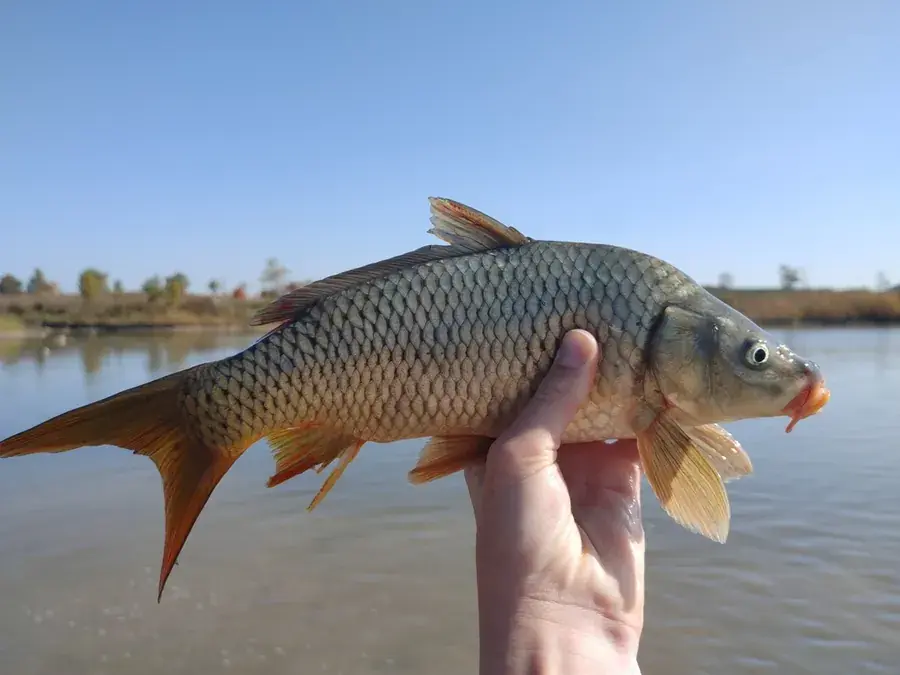 FishApr–Oct
Common carp
Cyprinus carpio
Big bronze scales (or the scattered big scales of a mirror carp), a long dorsal fin, and two pairs of barbels at a rubbery, tube-like mouth.
Where and how to catch it →