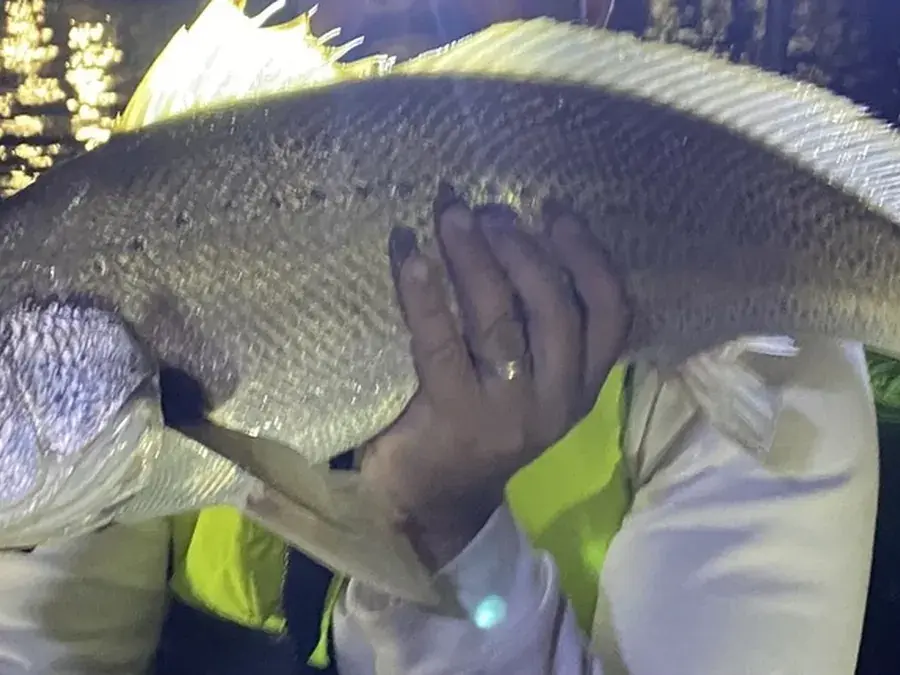
Photo by Greg Tasney on iNaturalist · CC BY-SA 4.0
Dusky kob (kabeljou)
Argyrosomus japonicus
- When
- Active all year, though the way you fish or find it changes with the season.
- Where it holds
- Estuaries, river mouths and surf from False Bay to southern Mozambique. Young fish live in their home estuary; big adults move to the surf and nearshore water.
- How to know it
- A long, silvery-bronze drum with a coppery head, a big mouth, and in life a row of pale spots along the lateral line.
- What to know
- South Africa’s great estuary fish, best after dark — and in trouble: the breeding stock is down to a few percent of its unfished size. Cape estuaries fish best in summer; big adults move up the KwaZulu-Natal coast to spawn in winter and spring.
- The tactic
- Live mullet or a whole squid (chokka) after dark near the mouth; a soft-plastic paddletail worked along the channel.
- Caution
- From the shore and in estuaries east of Cape Agulhas the limit is one kob a day, at least 60 cm; boat rules differ. Release big breeding fish whenever you can.
Seasons, size limits and catch limits change every year and differ by water body. Check the current regulations for the country and the water before you fish.
Dusky kob (kabeljou) facts
- Also called
- Kob, kabeljou or ‘salmon’ in South Africa; mulloway or jewfish in Australia; Japanese meagre (its FAO and IGFA name).
- Family
- Sciaenidae, the drums and croakers — a cousin of the red drum.
- Native range
- The Indo-West Pacific: the African south-east coast from the Cape of Good Hope (False Bay) to southern Mozambique; Pakistan and north-west India; Korea, Japan and China; and southern Australia.
- Habitat
- Juveniles depend on estuaries, usually staying in their home estuary for the first three to five years. Adults live from the surf zone out to about 120 m (390 ft), and still come into estuaries and the surf.
- Water temperature
- Temperate to subtropical coastal water — from South Africa’s cool south coast to warm KwaZulu-Natal, roughly 14–25°C (57–77°F).
- Size
- Most adults 50–110 cm (20–43 in); the largest measured about 181 cm (71 in).
- Record
- IGFA all-tackle world record (as Japanese meagre): 66.75 kg (147 lb 2 oz), Ronnie Botha, Sundays River, Port Elizabeth (Gqeberha), South Africa, 22 November 1998.
- Lifespan
- Long-lived: the oldest aged was 42 years. It takes 5–7 years to mature, at about 90 cm.
- What it eats
- Mysid shrimp when small, then fish, squid and other cephalopods as it grows; a bottom feeder that also hunts through the water column.
- Spawning
- Adults from the Western and Eastern Cape migrate up to KwaZulu-Natal to spawn in winter and spring. The young recruit into estuaries along the coast.
- Young fish
- Juvenile kob are found only inshore and in estuaries; their tail is angular, becoming more rounded in big fish.
- Teeth and mouth
- A large mouth; no barbels. Lift big fish with support under the belly.
- Look-alikes
- Silver kob (Argyrosomus inodorus) looks almost identical; it is mainly a boat-caught fish of deeper water and the cooler west and south coasts, while estuary and surf kob east of Cape Agulhas are mostly dusky kob. Scientists separate them by the swim bladder and ear stones. Geelbek has a bright yellow mouth.
- Eating
- Excellent eating, but wild kob is on the WWF-SASSI red list — don’t buy it. Farmed kob from tanks and ponds is a green-list choice.
- Status
- Endangered on the IUCN Red List (2018). South Africa’s stock is rated overfished, at roughly 1–4.5% of its unfished level.
Try it
How big does a dusky kob get?
Slide it from an ordinary adult to the biggest one ever measured, next to things you know the size of.
Most adults you'll catch: 50–110 cm (20–43 in).
This dusky kob (kabeljou): 80 cm. Longer than a loaf of bread, shorter than a four-year-old.
The record
IGFA all-tackle world record (as Japanese meagre): 66.75 kg (147 lb 2 oz), Ronnie Botha, Sundays River, Port Elizabeth (Gqeberha), South Africa, 22 November 1998.
Questions people ask about dusky kob
How big do dusky kob get?
Up to about 1.8–2 m (6 ft) and 75–80 kg (165–176 lb). The IGFA world record, listed as Japanese meagre, is 66.75 kg (147 lb 2 oz), from the Sundays River at Port Elizabeth (Gqeberha) in 1998.
What is the bag limit for kob in South Africa?
From the shore and in estuaries east of Cape Agulhas: one kob a day, at least 60 cm. From a boat at sea between Cape Agulhas and the Umtamvuna River: five a day at 50 cm or more, but only one over 110 cm. West of Cape Agulhas: five at 50 cm. Check the current rules before you fish.
Are kob endangered?
Dusky kob is listed as Endangered by the IUCN, and South Africa’s breeding stock is down to a few percent of its unfished size. It lives to 42 years and takes 5–7 years to breed, so every big female released matters.
Is a dusky kob the same as a mulloway?
Yes — the same species, Argyrosomus japonicus. Australians call it mulloway or jewfish; South Africans call it kob or kabeljou; its FAO name is Japanese meagre.
Found in these regions
Checked against these sources ·
- FishBase — Argyrosomus japonicus
- WWF-SASSI — Dusky kob
- Conservation Mag — Anglers and scientists fight to save the dusky kob
- Marine Living Resources Act regulations — recreational size and bag limits
Sizes, records and ranges are for the species as a whole; local fish, and local rules, vary. Records change — the record-keeper named above has the current one.
Is it active near you?
Get this week's guide for your area
Enter a town, postal code or ZIP and we'll tell you what's happening right there this week — from your local climate, this week's weather and your ecological region.
Also active in October
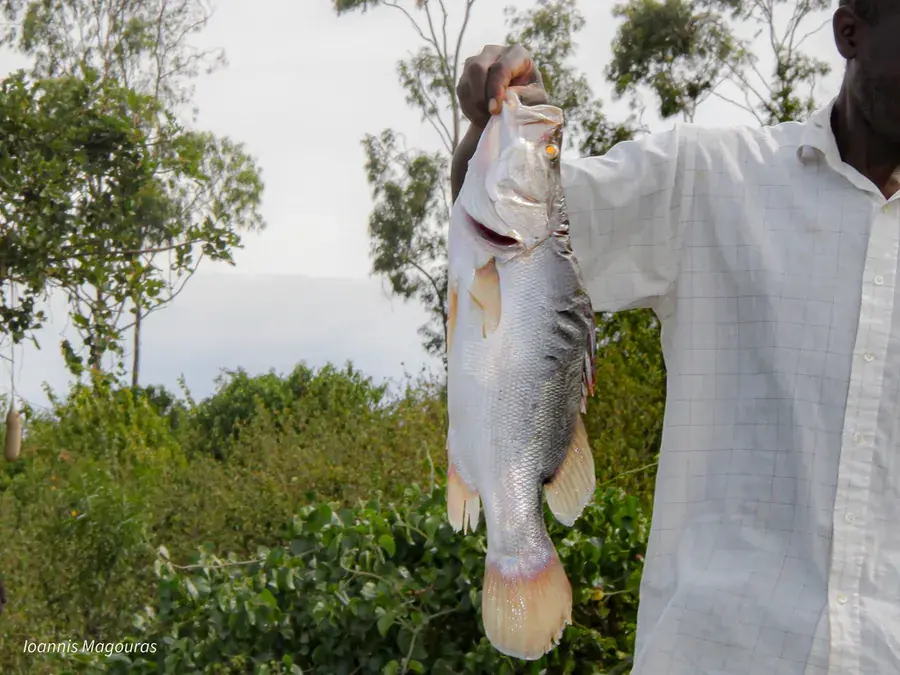 FishYear-round
Nile perch
Lates niloticus
A huge silver perch with a blue sheen, a dorsal fin cut deeply into spiny and soft halves, a rounded tail, and a dark eye ringed in bright yellow.
Where and how to catch it →Photo: Ioannis Magouras · CC BY 4.0
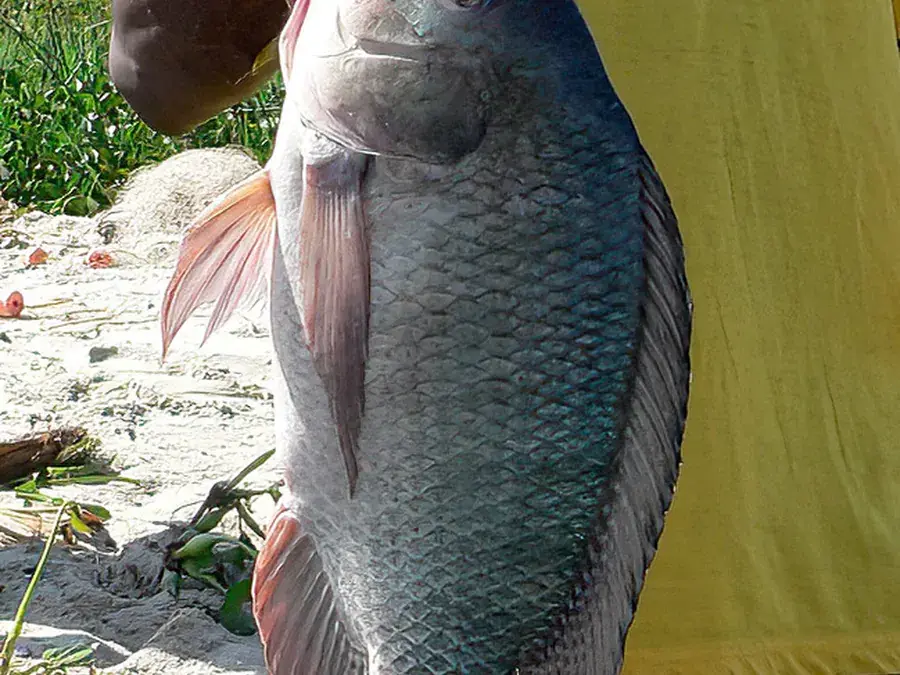 FishYear-round
Nile tilapia
Oreochromis niloticus
Deep-bodied and grey-brown with faint bars, and the tell: regular dark vertical stripes right across the tail fin. Breeding males turn reddish, especially on the fins.
Where and how to catch it →Photo: Pål A. Olsvik · CC BY 4.0
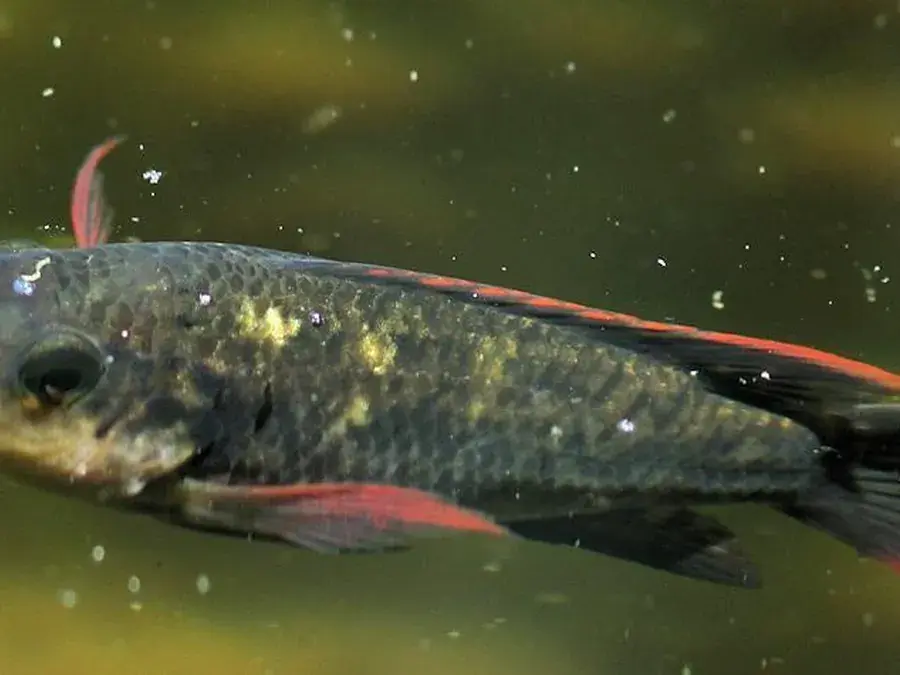 FishSep–Apr
Mozambique tilapia (blue kurper)
Oreochromis mossambicus
Deep-bodied and dull silvery-olive with a few dark blotches along the side and no regular stripes on the tail. Breeding males turn black with a white throat, red-edged fins and a pointed, duck-bill snout.
Where and how to catch it →Photo: Wynand Uys · CC BY 4.0