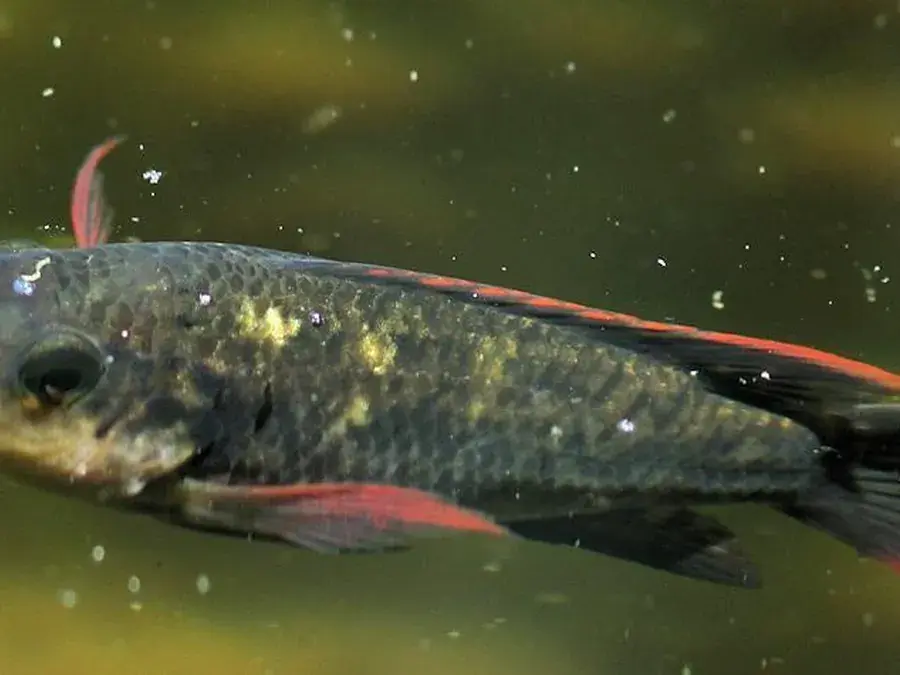
Photo by Wynand Uys on iNaturalist · CC BY 4.0
Mozambique tilapia (blue kurper)
Oreochromis mossambicus
- When
- Sep–Apr — January, February, March, April, September, October, November, December. Earlier where the water warms first.
- Where it holds
- Warm dams, farm ponds, coastal lakes and the quiet upper reaches of estuaries from the Zambezi to the Eastern Cape — anywhere still, weedy and warm.
- How to know it
- Deep-bodied and dull silvery-olive with a few dark blotches along the side and no regular stripes on the tail. Breeding males turn black with a white throat, red-edged fins and a pointed, duck-bill snout.
- What to know
- South Africa’s blue kurper: a willing, good-eating panfish of warm dams and the fish many children catch first. Native to the south-east, carried around the tropics, and now Vulnerable at home because farmed Nile tilapia interbreed with it.
- The tactic
- Earthworm or bread dough on a small hook under a float, close to the weed edge on a warm afternoon.
- Caution
- Bilharzia occurs in warm, still water in the lowveld, KwaZulu-Natal and further north — don’t wade or swim where it is present. Never move live tilapia from one water to another.
Seasons, size limits and catch limits change every year and differ by water body. Check the current regulations for the country and the water before you fish.
Mozambique tilapia (blue kurper) facts
- Also called
- Blue kurper in South Africa (blou kurper in Afrikaans); in southern Africa tilapias are often just called bream.
- Family
- Cichlidae, the cichlids.
- Native range
- South-eastern Africa: the lower Zambezi and lower Shire, the Limpopo system, and the coastal plains from the Zambezi delta south to about Algoa Bay in the Eastern Cape.
- Introduced to
- Carried around the tropics for fish farming and mosquito control, and listed among the world’s 100 worst invasive species. In Africa it has been moved into Namibia, Madagascar, the Seychelles and elsewhere.
- Habitat
- Standing water: dams, ponds, swamps, coastal lakes and blind estuaries, usually over mud and among weed. It is absent from fast water and usually from high altitudes, and it grows and breeds in fresh, brackish and even sea water.
- Water temperature
- Warm water: FishBase gives about 17–35°C (63–95°F). When oxygen runs low it gulps air at the surface.
- Size
- Most adults 15–35 cm (6–14 in); the largest measured about 39 cm (15 in).
- Record
- IGFA all-tackle world record: 3.11 kg (6 lb 13 oz), Eugene Kruger, Loskop Dam, South Africa, 4 April 2003.
- Lifespan
- Up to about 11 years.
- What it eats
- Mostly algae, phytoplankton and detritus, with some zooplankton, insect larvae, shrimps and worms. Young fish eat more animal food; big ones sometimes eat small fish.
- Spawning
- Through the warm months. Territorial males dig spawning pits, turn black and court females; the female broods eggs and fry in her mouth. Normally mature at about 15 cm, but stunted fish in crowded ponds can breed at 6–7 cm and just two months old.
- Young fish
- Fry stay close to the brooding female and dart back into her mouth when threatened.
- Teeth and mouth
- Small, with very fine teeth. Breeding males grow enlarged jaws that give a pointed, duck-bill snout and a concave forehead.
- Look-alikes
- Nile tilapia has regular vertical stripes across the tail. Three-spotted tilapia (Oreochromis andersonii) of the Zambezi and Okavango shows three dark spots along the side. Redbreast tilapia has a red-pink chest. Hybrids blur all of these.
- Eating
- Mild, white and good, especially fried whole.
- Status
- Vulnerable on the IUCN Red List (2017): Nile tilapia stocked into its range hybridise with it, and pure Mozambique tilapia are expected to disappear from the Zambezi and Limpopo.
Try it
How big does a mozambique tilapia get?
Slide it from an ordinary adult to the biggest one ever measured, next to things you know the size of.
Most adults you'll catch: 15–35 cm (6–14 in).
This mozambique tilapia (blue kurper): 25 cm. Longer than a hand, shorter than a loaf of bread.
The record
IGFA all-tackle world record: 3.11 kg (6 lb 13 oz), Eugene Kruger, Loskop Dam, South Africa, 4 April 2003.
Questions people ask about mozambique tilapia
What is a blue kurper?
The South African name for the Mozambique tilapia (blou kurper in Afrikaans), a deep-bodied cichlid of warm dams, ponds and coastal lakes from the Zambezi to the Eastern Cape. It is a popular, good-eating panfish.
Why do some tilapia turn black?
They are breeding males. A male Mozambique tilapia guarding a spawning pit turns black, with a white throat and red edges to the dorsal and tail fins, and grows a pointed, duck-bill snout. Females and non-breeding males stay silvery with a few dark blotches.
Can Mozambique tilapia live in salt water?
Yes. It grows and breeds in fresh, brackish and sea water, which is why it is common in blind estuaries and coastal lakes — and why it has done so well where people have released it.
Is the Mozambique tilapia endangered?
It is listed as Vulnerable. The threat is not fishing but farmed Nile tilapia, which interbreed with it; pure Mozambique tilapia are expected to vanish from the Zambezi and Limpopo. Ironically, it is itself one of the world’s worst invaders elsewhere.
Found in these regions
Checked against these sources ·
Sizes, records and ranges are for the species as a whole; local fish, and local rules, vary. Records change — the record-keeper named above has the current one.
Is it active near you?
Get this week's guide for your area
Enter a town, postal code or ZIP and we'll tell you what's happening right there this week — from your local climate, this week's weather and your ecological region.
Also active in October
 FishYear-round
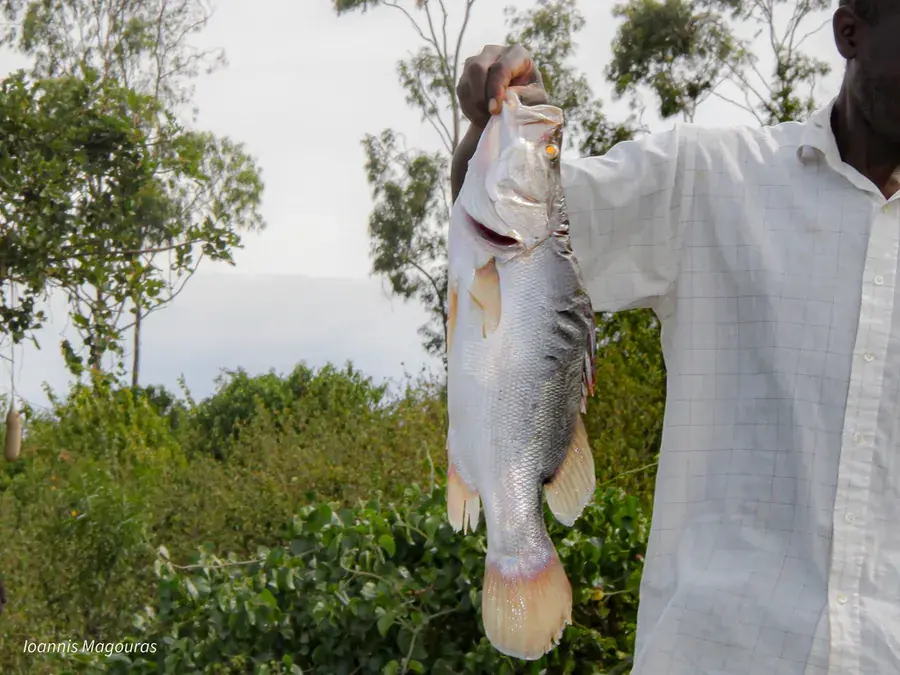
Nile perch
Lates niloticus
A huge silver perch with a blue sheen, a dorsal fin cut deeply into spiny and soft halves, a rounded tail, and a dark eye ringed in bright yellow.
Where and how to catch it →Photo: Ioannis Magouras · CC BY 4.0
 FishYear-round
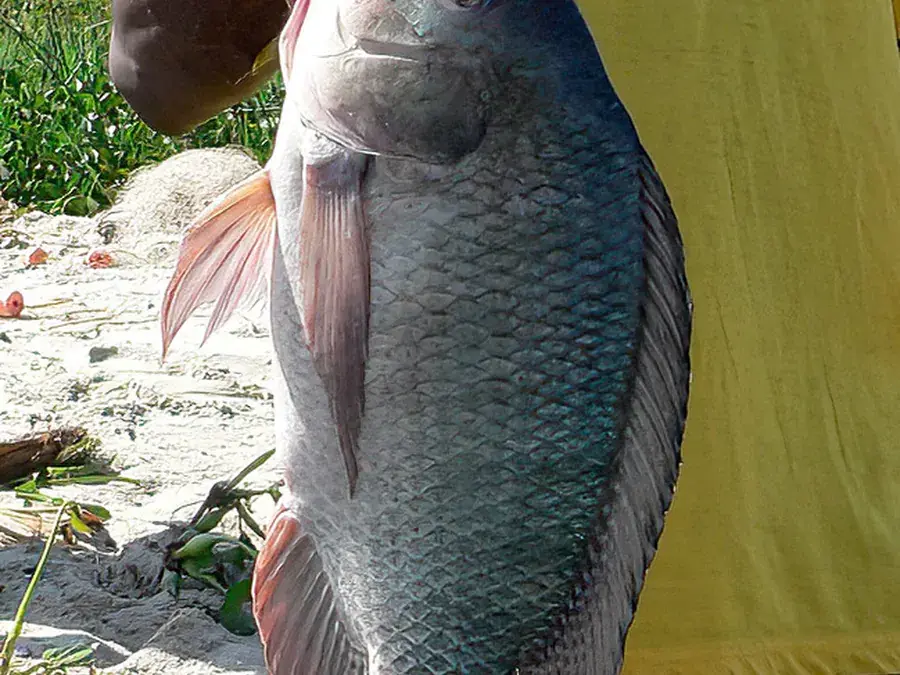
Nile tilapia
Oreochromis niloticus
Deep-bodied and grey-brown with faint bars, and the tell: regular dark vertical stripes right across the tail fin. Breeding males turn reddish, especially on the fins.
Where and how to catch it →Photo: Pål A. Olsvik · CC BY 4.0
 FishYear-round
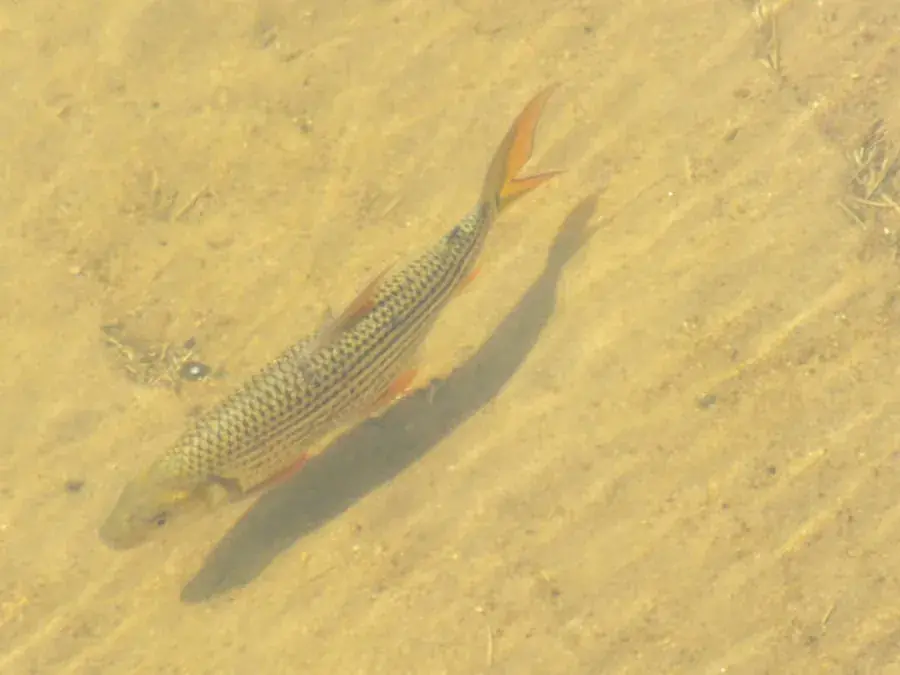
Tigerfish
Hydrocynus vittatus
Silver with dark horizontal stripes along the upper sides, a red-orange tail edged in black, and big fang-like teeth that overlap the jaws even with the mouth shut.
Where and how to catch it →