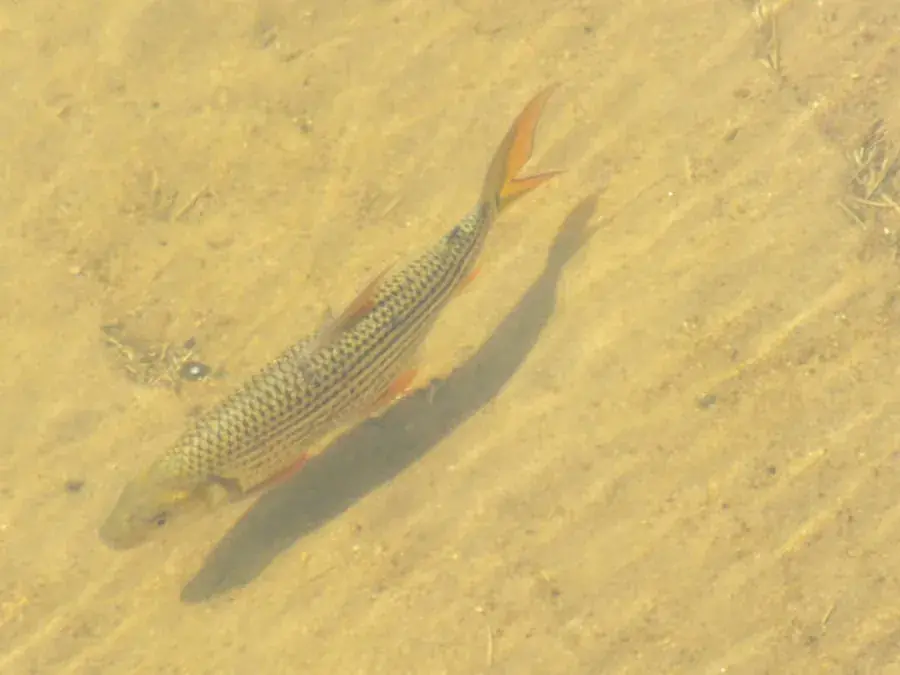
Photo by Public domain (iNaturalist) on iNaturalist · CC0 (public domain)
Tigerfish
Hydrocynus vittatus
- When
- Active all year, though the way you fish or find it changes with the season.
- Where it holds
- Big, warm, well-oxygenated rivers and lakes — the Zambezi, Lake Kariba, the Okavango, the Congo, Lake Tanganyika and the Niger. Current seams, drop-offs, rocky points and channel edges.
- How to know it
- Silver with dark horizontal stripes along the upper sides, a red-orange tail edged in black, and big fang-like teeth that overlap the jaws even with the mouth shut.
- What to know
- Africa’s great freshwater gamefish: fast, acrobatic and hard to keep on the hook. On the Zambezi and Kariba the best of it runs from about August to November, when the river is low, clear and warming.
- The tactic
- Fast spinners, spoons or plugs — or a drifted strip of fish — on a short wire trace; on the fly, a baitfish pattern on a sinking line.
- Caution
- Crocodiles and hippos share most tigerfish water: land fish from the boat, keep hands out of the water, and give hippos a wide berth, especially at dusk.
Seasons, size limits and catch limits change every year and differ by water body. Check the current regulations for the country and the water before you fish.
Tigerfish facts
- Also called
- African tigerfish or just ‘tiger’; tiervis in Afrikaans; ngwesh.
- Family
- Alestidae, the African tetras — a giant, toothy relative of the little tetras in aquarium tanks.
- Native range
- Much of Africa: the Niger, Benue, Senegal, Volta and Chad basins in the west, the Nile and Omo, the whole Congo basin and Lake Tanganyika, and south through the Zambezi (including Lake Kariba), the Okavango, the Rovuma and Rufiji, and the Limpopo to the Pongola River in South Africa.
- Habitat
- Large, warm, well-oxygenated rivers and lakes. All but the biggest fish rove in schools of like-sized fish; large tigers hunt alone. They sit near the surface by day and nearer the bottom at night.
- Water temperature
- Warm water: FishBase gives 22–28°C (72–82°F).
- Size
- Most adults 35–70 cm (14–28 in); the largest measured about 105 cm (41 in).
- Record
- IGFA all-tackle world record: 16.1 kg (35 lb 7 oz), Jennifer Daynes, Lake Kariba, Zimbabwe, 12 September 2001.
- Lifespan
- FishBase gives a maximum reported age of 8 years.
- What it eats
- Fish, almost entirely, once past about 10 cm — whatever is most plentiful, especially small tetras, barbs and, in Kariba, the introduced kapenta (Limnothrissa). At Schroda Dam in South Africa they leap from the water to catch barn swallows in flight.
- Spawning
- Thought to spawn over a few days in December or January, as rivers rise with the first rains. Eggs are laid among flooded vegetation near the shore, and the young shelter there until the water drops.
- Teeth and mouth
- Big, sharp, conical teeth that overlap the jaws even when the mouth is closed, replaced in sets. They cut light line and hands alike.
- Look-alikes
- Goliath tigerfish of the Congo basin is far heavier, with much bigger teeth. Other tigerfish species live in the Nile and West Africa; the African tigerfish is the one with bold dark stripes along the upper sides.
- Eating
- Bony, but an important food fish across its range. Most sport anglers release their tigers.
- Status
- Least Concern. In South Africa it lives only in lowveld rivers, has declined with dams, pollution and water abstraction, and is protected in some reserves.
Try it
How big does a tigerfish get?
Slide it from an ordinary adult to the biggest one ever measured, next to things you know the size of.
Most adults you'll catch: 35–70 cm (14–28 in).
This tigerfish: 53 cm. Longer than a loaf of bread, shorter than a four-year-old.
The record
IGFA all-tackle world record: 16.1 kg (35 lb 7 oz), Jennifer Daynes, Lake Kariba, Zimbabwe, 12 September 2001.
Questions people ask about tigerfish
Can tigerfish really catch birds?
Yes. At Schroda Dam in South Africa, researchers filmed tigerfish leaping out of the water to catch barn swallows in flight, with about one attempt in four succeeding. It is the only freshwater fish known to do this.
Where is the best tigerfish fishing?
The Zambezi and Lake Kariba are the classic waters, along with the Okavango and Tanzania’s rivers. On the Zambezi the best months are roughly August to November, when the water is low, clear and warming; the Kariba International Tiger Fish Tournament is normally held in October.
How big do tigerfish get?
Most fish caught weigh a few kilograms; FishBase gives a maximum of 105 cm (41 in) fork length and 28 kg. The IGFA all-tackle record is 16.1 kg (35 lb 7 oz), from Lake Kariba in 2001.
Do you need a wire leader for tigerfish?
Yes. Their interlocking, razor-sharp teeth slice through monofilament and braid. Use a short wire trace, sharp hooks and a firm strike — the bony mouth makes them notoriously hard to hook.
Found in these regions
Checked against these sources ·
- FishBase — Hydrocynus vittatus
- SANBI Red List of South African Species — Tigerfish
- Wikipedia — Hydrocynus vittatus
- Aardvark McLeod — In pursuit of African tigers: when to go
Sizes, records and ranges are for the species as a whole; local fish, and local rules, vary. Records change — the record-keeper named above has the current one.
Is it active near you?
Get this week's guide for your area
Enter a town, postal code or ZIP and we'll tell you what's happening right there this week — from your local climate, this week's weather and your ecological region.
Also active in October
 FishYear-round
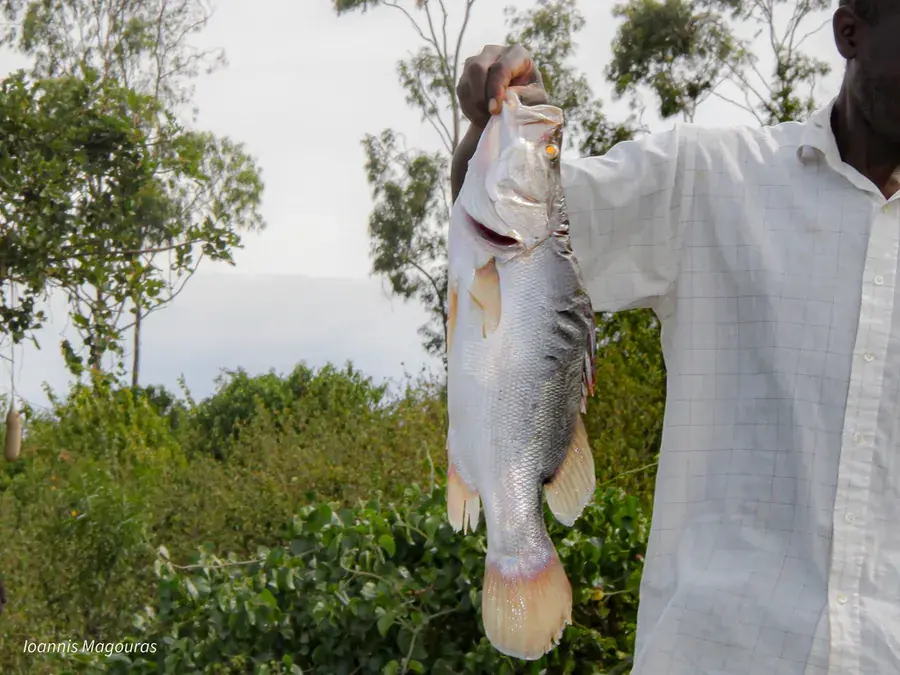
Nile perch
Lates niloticus
A huge silver perch with a blue sheen, a dorsal fin cut deeply into spiny and soft halves, a rounded tail, and a dark eye ringed in bright yellow.
Where and how to catch it →Photo: Ioannis Magouras · CC BY 4.0
 FishYear-round
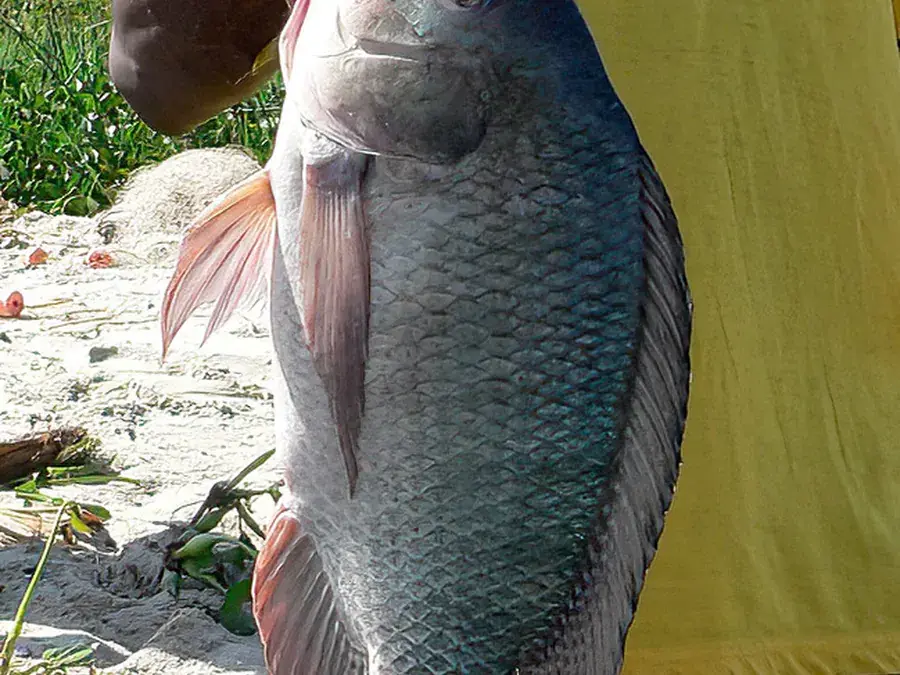
Nile tilapia
Oreochromis niloticus
Deep-bodied and grey-brown with faint bars, and the tell: regular dark vertical stripes right across the tail fin. Breeding males turn reddish, especially on the fins.
Where and how to catch it →Photo: Pål A. Olsvik · CC BY 4.0
 FishSep–Apr
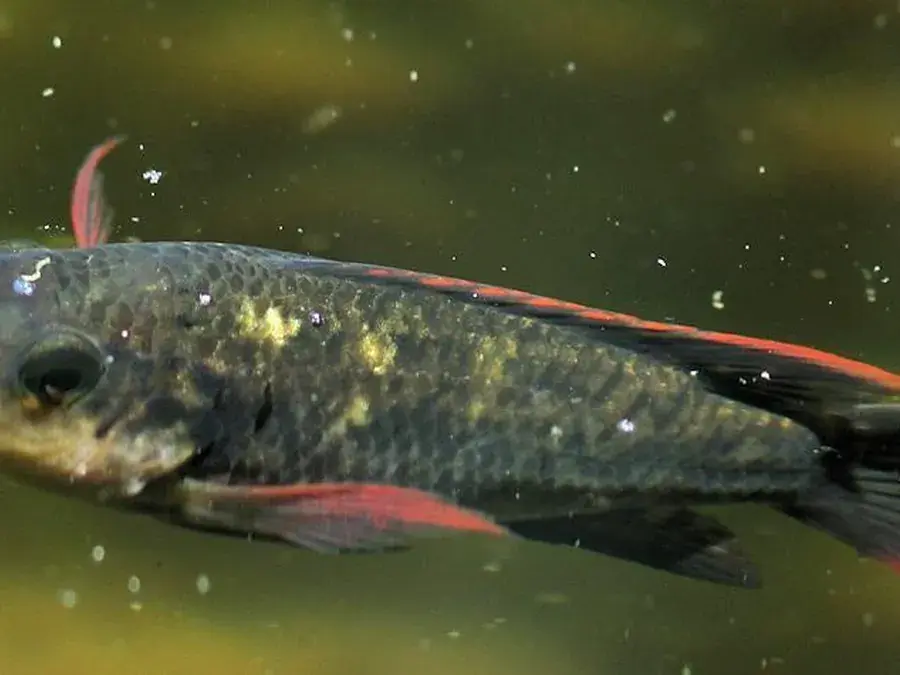
Mozambique tilapia (blue kurper)
Oreochromis mossambicus
Deep-bodied and dull silvery-olive with a few dark blotches along the side and no regular stripes on the tail. Breeding males turn black with a white throat, red-edged fins and a pointed, duck-bill snout.
Where and how to catch it →Photo: Wynand Uys · CC BY 4.0