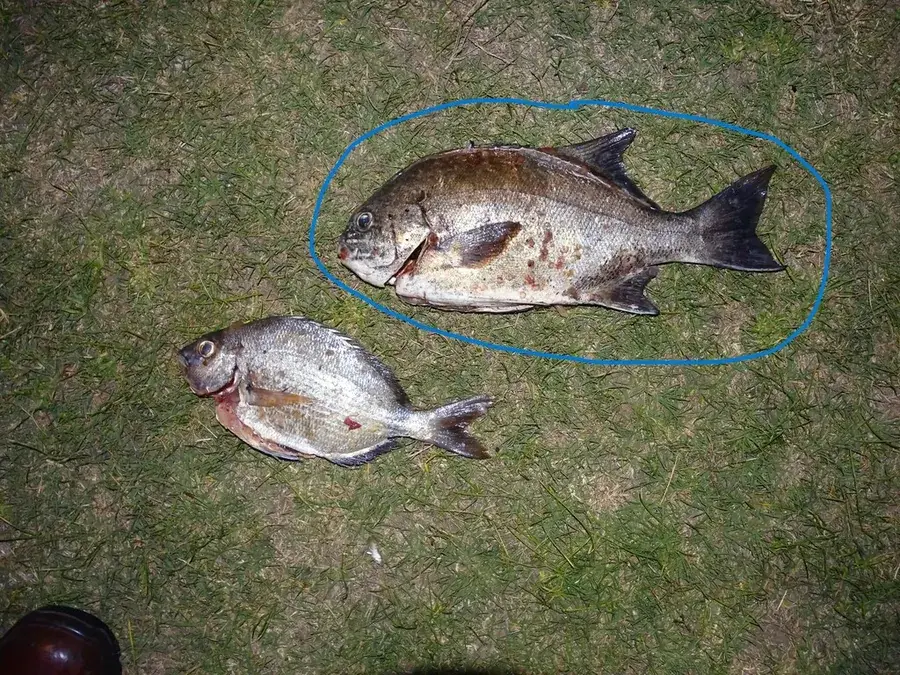
Photo by Shaun Swanepoel on iNaturalist · CC BY 4.0
Galjoen
Dichistius capensis
- When
- Mar–Oct — March, April, May, June, July, August, September, October. Earlier where the water warms first.
- Where it holds
- Rough, foamy white water close to rocks and reef along the Cape and Namibian coasts, often within an easy cast of the shore.
- How to know it
- A deep, short, heavily scaled fish with thick lips and spiny fins; black among the rocks and silver-bronze over sand, changing colour almost instantly.
- What to know
- South Africa’s national fish and the classic Cape shore-angling target. It grazes mussels, barnacles and red bait in the surf, and fights hard in the wash.
- The tactic
- Red bait or mussel on a small, strong hook, with just enough lead to hold in the white water right against the rocks.
- Caution
- Closed season from 15 October to the end of February; two a day at 35 cm or more, and galjoen may not be sold. Namibia sets its own rules.
Seasons, size limits and catch limits change every year and differ by water body. Check the current regulations for the country and the water before you fish.
Galjoen facts
- Also called
- Black bream or blackfish in KwaZulu-Natal. Long known as Coracinus capensis.
- Family
- Dichistiidae, the galjoens — a family of just two species.
- Native range
- Southern Africa only: from southern Angola and Namibia around the Cape to about Durban.
- Habitat
- Inshore reefs, rocky shores and the sandy gullies between them, usually in rough, turbulent water at shallow depths, often right at the shoreline. Most galjoen stay in one home area; in a study of some 25,000 tagged fish, about 95% stayed local.
- Water temperature
- Cool temperate water. In captivity they spawned at 16–21°C (61–70°F).
- Size
- Most adults 30–50 cm (12–20 in); the largest measured about 80 cm (31 in).
- Record
- No IGFA all-tackle category. FishBase lists a maximum of 80 cm and 6.5 kg; most fish are far smaller.
- Lifespan
- Poorly documented; FishBase gives no maximum age.
- What it eats
- Red bait (sea squirts), small black mussels, white mussels, barnacles, and red and coralline seaweeds.
- Spawning
- October to March, peaking in December, in deeper water; the closed season from mid-October covers most of it. Females mature at about 34 cm and males at about 31 cm, and a female spawns many times a season.
- Teeth and mouth
- Small, with thick lips and strong, curved incisors at the front for crushing mussels and barnacles.
- Look-alikes
- Banded galjoen (Dichistius multifasciatus), further east, has many bold dark bars. Blacktail has a black spot at the base of the tail; zebra has bold vertical stripes. A plain black or silver-bronze galjoen with a deep body and thick lips is the national fish.
- Eating
- A traditional Cape fish, grilled with lemon and butter and served with fresh bread and apricot jam — but it is a no-sale species on the SASSI red list, so the only way to eat one is to catch it yourself, with a permit.
- Status
- Near Threatened in South Africa’s 2018 National Biodiversity Assessment; stocks are depleted and held up largely by no-take marine protected areas.
Try it
How big does a galjoen get?
Slide it from an ordinary adult to the biggest one ever measured, next to things you know the size of.
Most adults you'll catch: 30–50 cm (12–20 in).
This galjoen: 40 cm. Longer than a loaf of bread, shorter than a four-year-old.
The record
No IGFA all-tackle category. FishBase lists a maximum of 80 cm and 6.5 kg; most fish are far smaller.
Questions people ask about galjoen
What is South Africa’s national fish?
The galjoen (Dichistius capensis). Margaret Smith, wife of the ichthyologist J. L. B. Smith, suggested it as a marine counterpart to the springbok. It lives only on the coasts of southern Africa, from Angola to about Durban.
When is galjoen closed season?
From 15 October to the last day of February. Outside it, recreational anglers with a permit may keep two a day at 35 cm or more. Galjoen may not be sold.
Why do galjoen change colour?
For camouflage. A galjoen living among dark rocks is almost black; one over sand is silver-bronze, and it can switch almost instantly. The scientific name Coracinus, used for many years, means raven-black.
What is the best bait for galjoen?
Red bait or mussel, the food it eats in the wild, on a small strong hook in the white water right against the rocks.
Found in these regions
Checked against these sources ·
- FishBase — Dichistius capensis
- WWF-SASSI — Galjoen
- Marine Living Resources Act regulations — closed seasons
- University of Cape Town thesis — Suitability of the galjoen for mariculture in South Africa
Sizes, records and ranges are for the species as a whole; local fish, and local rules, vary. Records change — the record-keeper named above has the current one.
Is it active near you?
Get this week's guide for your area
Enter a town, postal code or ZIP and we'll tell you what's happening right there this week — from your local climate, this week's weather and your ecological region.
Also active in October
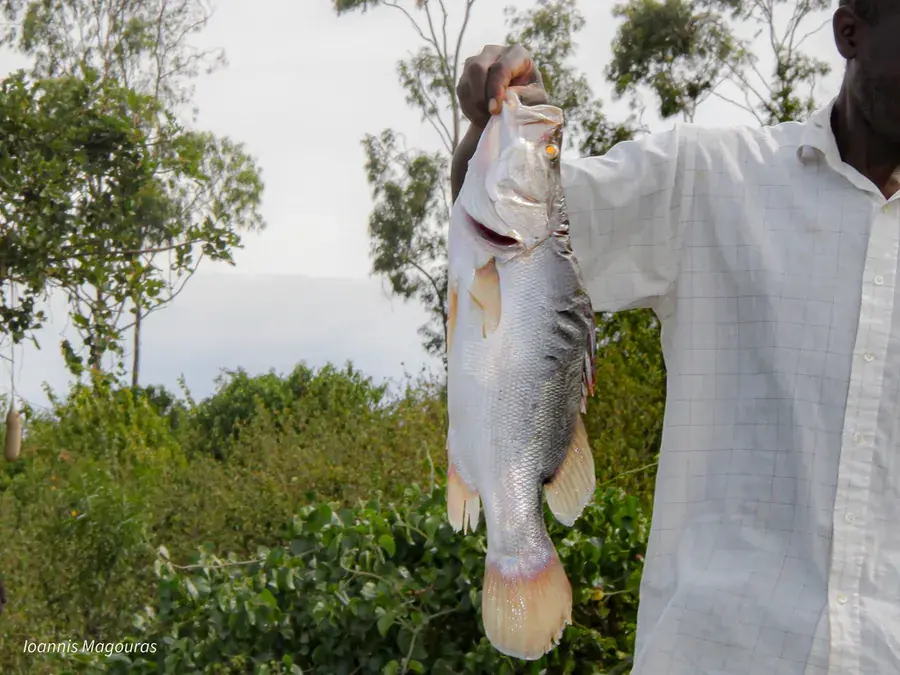 FishYear-round
Nile perch
Lates niloticus
A huge silver perch with a blue sheen, a dorsal fin cut deeply into spiny and soft halves, a rounded tail, and a dark eye ringed in bright yellow.
Where and how to catch it →Photo: Ioannis Magouras · CC BY 4.0
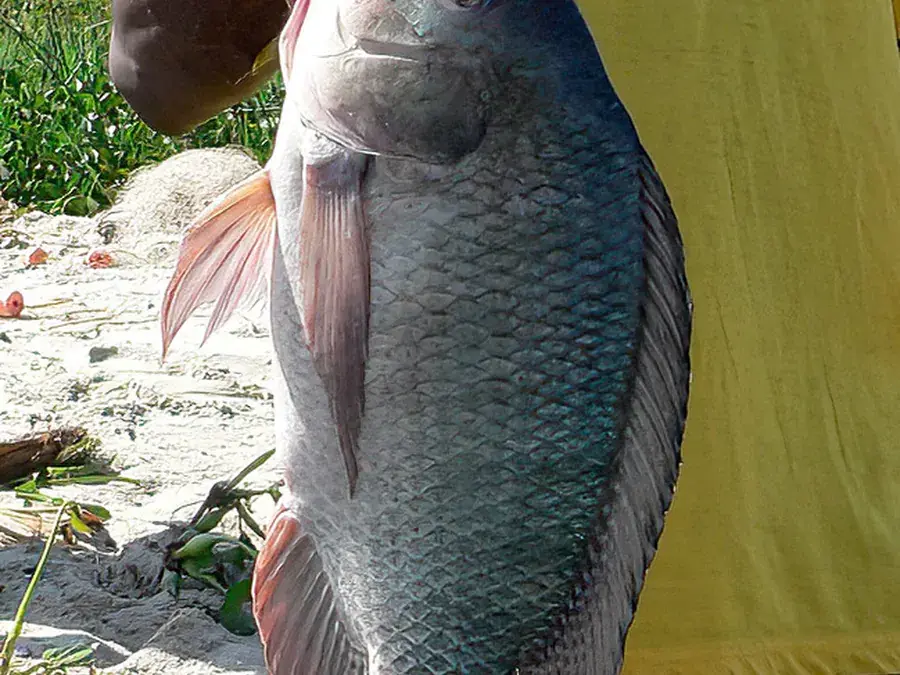 FishYear-round
Nile tilapia
Oreochromis niloticus
Deep-bodied and grey-brown with faint bars, and the tell: regular dark vertical stripes right across the tail fin. Breeding males turn reddish, especially on the fins.
Where and how to catch it →Photo: Pål A. Olsvik · CC BY 4.0
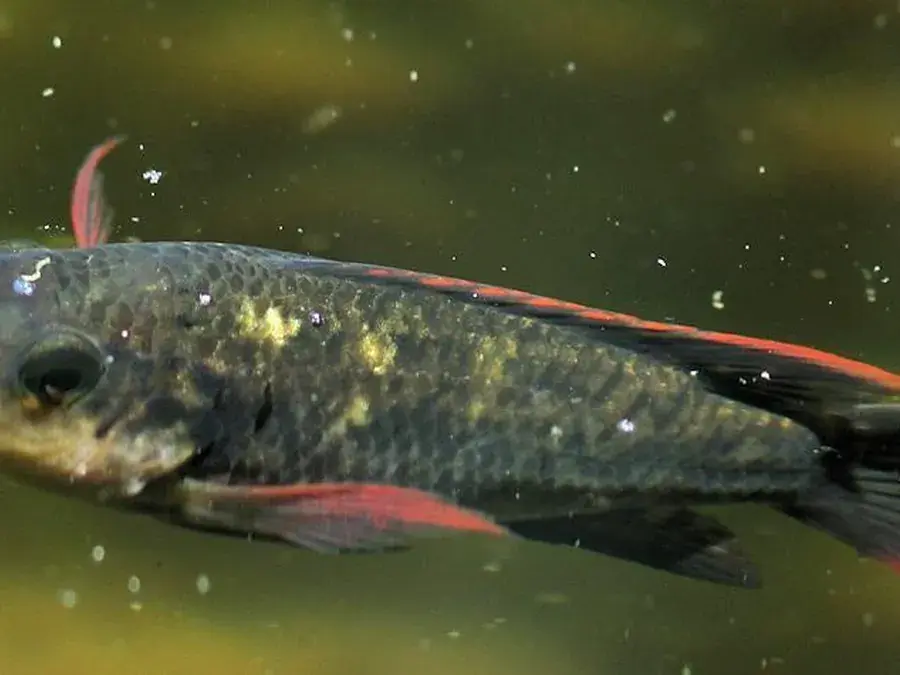 FishSep–Apr
Mozambique tilapia (blue kurper)
Oreochromis mossambicus
Deep-bodied and dull silvery-olive with a few dark blotches along the side and no regular stripes on the tail. Breeding males turn black with a white throat, red-edged fins and a pointed, duck-bill snout.
Where and how to catch it →Photo: Wynand Uys · CC BY 4.0