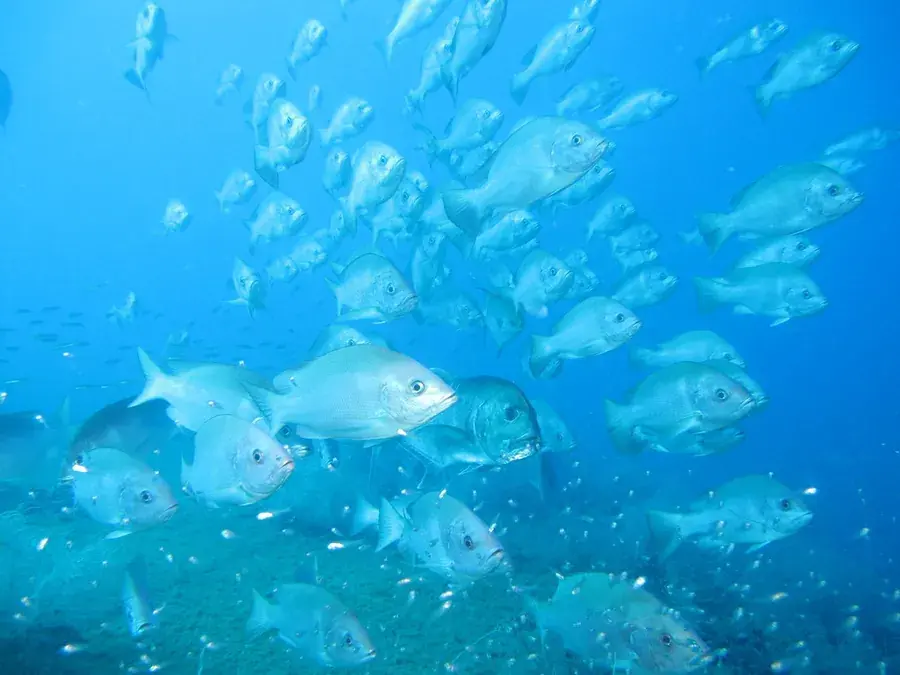
Photo by Christopher Mark on iNaturalist · CC BY 4.0
Giant trevally (GT)
Caranx ignobilis
- When
- Active all year, though the way you fish or find it changes with the season.
- Where it holds
- Coral reefs, reef channels, atoll flats and surf from the Red Sea down the East African coast to South Africa, and around the Seychelles and Madagascar. Young fish live in estuaries.
- How to know it
- A thick, powerful jack with a steep, blunt head, hard scutes along the base of the tail, and silver-grey to black colouring; mature males can be almost black.
- What to know
- The bully of the reef and a bucket-list fish on fly, above all on the outer atolls of the Seychelles. Most sport-caught GTs are now released.
- The tactic
- Big poppers and stickbaits worked hard over reef edges and channels; on the flats, a big baitfish fly on a 12-weight.
- Caution
- Large GTs can carry ciguatera toxin — one more reason to let them go.
Seasons, size limits and catch limits change every year and differ by water body. Check the current regulations for the country and the water before you fish.
Giant trevally (GT) facts
- Also called
- GT; giant kingfish in South Africa; ulua in Hawaii; also lowly or barrier trevally.
- Family
- Carangidae, the jacks and trevallies. The largest of the Caranx jacks.
- Native range
- The tropical Indo-Pacific: from the Red Sea and the whole East African coast to South Africa, across the Indian Ocean islands — the Seychelles, Madagascar, the Maldives — and east to Japan, Australia and Hawaii.
- Habitat
- Young fish in estuaries, shallow bays and lagoons, often in murky water; adults on reefs, reef channels, atolls and offshore banks, alone or in pairs. Off South Africa it hunts mostly by day, especially at dawn and dusk.
- Water temperature
- Tropical: FishBase gives 26–29°C (79–84°F).
- Size
- Most adults 60–120 cm (24–47 in); the largest measured about 170 cm (67 in).
- Record
- IGFA all-tackle world record: 72.8 kg (160 lb 7 oz), Keiki Hamasaki, Tokara, Kagoshima, Japan, 22 May 2006.
- Lifespan
- Growth studies suggest a 1 m fish is about 8 years old and a 1.7 m giant about 24.
- What it eats
- Mostly fish, including eels, plus squid, octopus, mantis shrimp, crabs and lobsters.
- Spawning
- In southern Africa from July to March, peaking November to March, in schools gathering over reefs and banks at set phases of the moon. It matures at about 60 cm and three years old.
- Young fish
- Larvae are silver with six dark bars. Juveniles live in estuaries, even in nearly fresh water, before moving out to reefs.
- Teeth and mouth
- A big, strong mouth with small teeth; the steep, blunt forehead is the giveaway.
- Look-alikes
- Bluefin trevally is smaller, with electric-blue fins and dark spots. Bigeye and brassy trevally are smaller, and the bigeye has the bigger eye. A GT’s steep head, sheer bulk and naked breast with a small patch of scales in front of the belly fins set it apart.
- Eating
- Rated anything from poor to excellent, but big fish can carry ciguatera toxin, so large GTs are best released.
- Status
- Least Concern on the IUCN Red List.
Try it
How big does a giant trevally get?
Slide it from an ordinary adult to the biggest one ever measured, next to things you know the size of.
Most adults you'll catch: 60–120 cm (24–47 in).
This giant trevally (gt): 90 cm. Longer than a loaf of bread, shorter than a four-year-old.
The record
IGFA all-tackle world record: 72.8 kg (160 lb 7 oz), Keiki Hamasaki, Tokara, Kagoshima, Japan, 22 May 2006.
Questions people ask about giant trevally
Where can you catch a giant trevally in Africa?
Along the whole east coast, from the Red Sea through Kenya, Tanzania and Mozambique to KwaZulu-Natal, and above all around the Indian Ocean islands. The remote outer atolls of the Seychelles are among the most famous places in the world to catch one on fly.
How big do giant trevally get?
Up to 1.7 m (5 ft 7 in) and about 80 kg (176 lb). The IGFA all-tackle world record is 72.8 kg (160 lb 7 oz), from Japan in 2006.
Can you eat giant trevally?
Small ones, carefully. Large GTs are a known source of ciguatera, a fish poisoning from reef toxins that builds up the food chain. Most anglers release them, and catch-and-release is increasingly the norm.
Found in these regions
Checked against these sources ·
Sizes, records and ranges are for the species as a whole; local fish, and local rules, vary. Records change — the record-keeper named above has the current one.
Is it active near you?
Get this week's guide for your area
Enter a town, postal code or ZIP and we'll tell you what's happening right there this week — from your local climate, this week's weather and your ecological region.
Also active in October
 FishYear-round
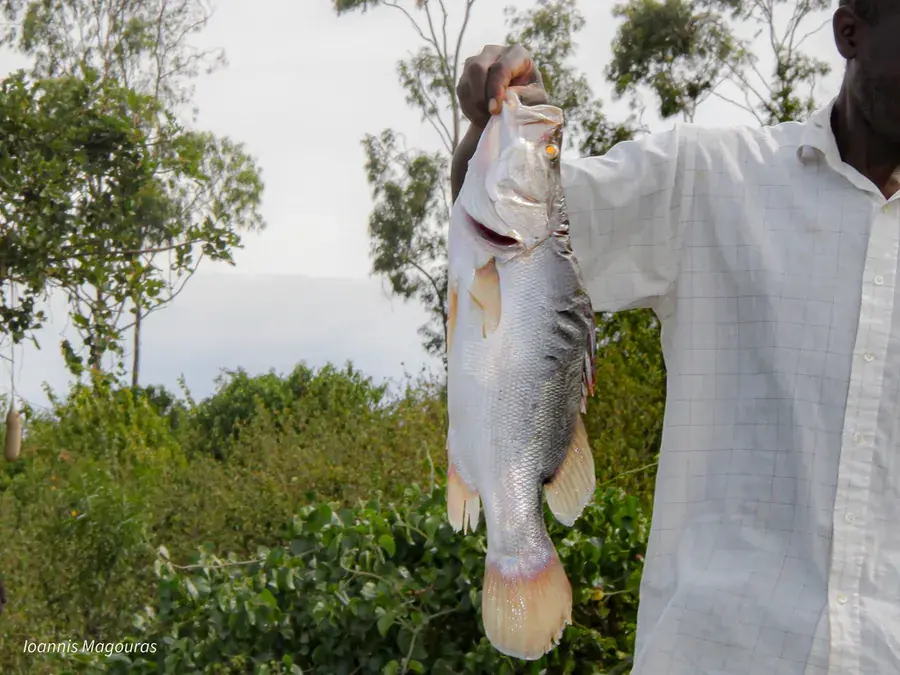
Nile perch
Lates niloticus
A huge silver perch with a blue sheen, a dorsal fin cut deeply into spiny and soft halves, a rounded tail, and a dark eye ringed in bright yellow.
Where and how to catch it →Photo: Ioannis Magouras · CC BY 4.0
 FishYear-round
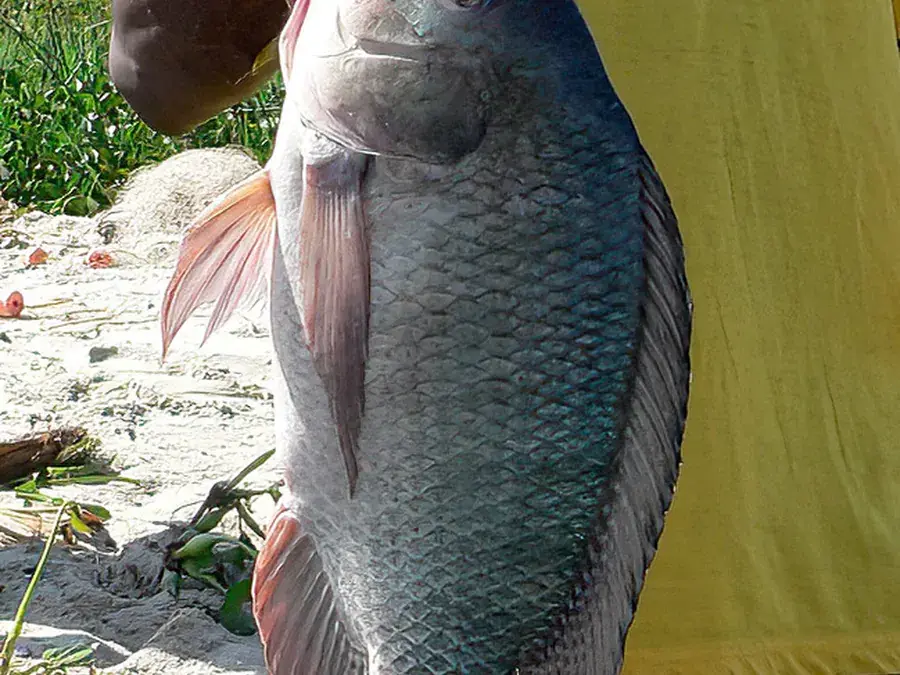
Nile tilapia
Oreochromis niloticus
Deep-bodied and grey-brown with faint bars, and the tell: regular dark vertical stripes right across the tail fin. Breeding males turn reddish, especially on the fins.
Where and how to catch it →Photo: Pål A. Olsvik · CC BY 4.0
 FishSep–Apr
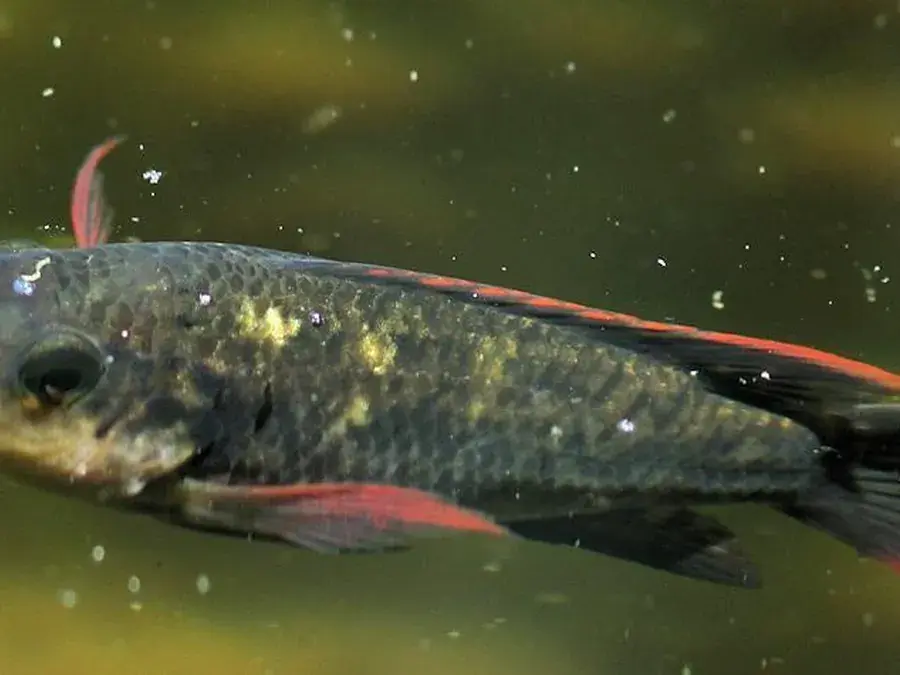
Mozambique tilapia (blue kurper)
Oreochromis mossambicus
Deep-bodied and dull silvery-olive with a few dark blotches along the side and no regular stripes on the tail. Breeding males turn black with a white throat, red-edged fins and a pointed, duck-bill snout.
Where and how to catch it →Photo: Wynand Uys · CC BY 4.0