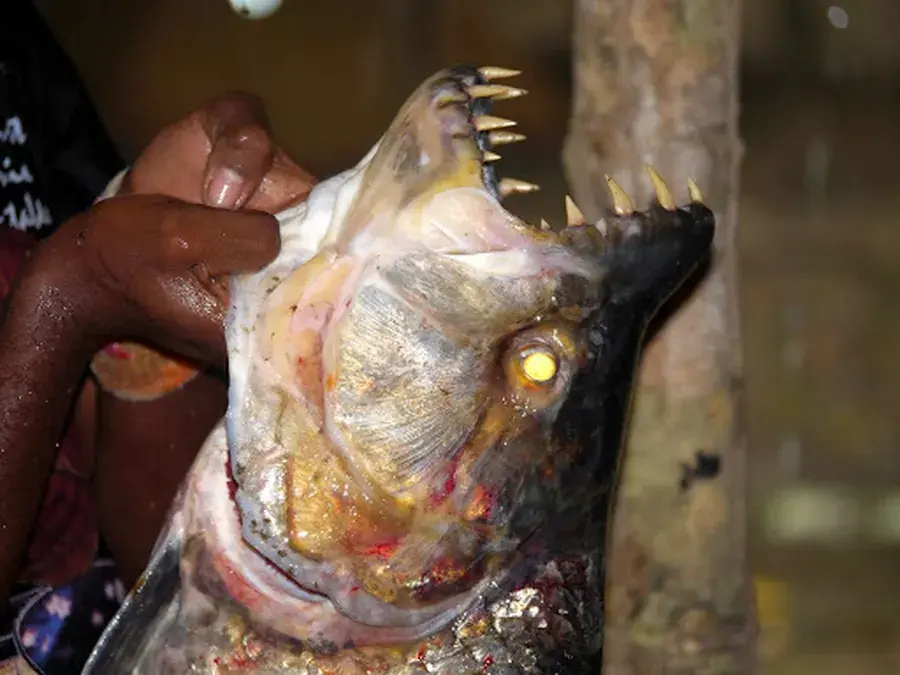
Photo by 116916927065934112165 on iNaturalist · CC BY 4.0
Goliath tigerfish
Hydrocynus goliath
- When
- Active all year, though the way you fish or find it changes with the season.
- Where it holds
- The Congo River and its big tributaries and lakes — fast, oxygen-rich water in deep channels and the eddies beside rapids.
- How to know it
- A heavy, silver-grey tigerfish with a thick, tuna-like body, a black adipose fin and enormous dagger-like teeth — the largest of all the tigerfish.
- What to know
- The mbenga of the Congo, and one of the most fearsome fish in fresh water. Few anglers ever get a shot at one; a trip for it is a full expedition.
- The tactic
- Whole or cut fish bait, or big lures, on heavy tackle and a strong wire trace, worked through the eddies below rapids.
- Caution
- Remote, fast and dangerous water: go only with an experienced local outfitter, and handle the jaws with long pliers — those teeth take chunks out of large fish.
Seasons, size limits and catch limits change every year and differ by water body. Check the current regulations for the country and the water before you fish.
Goliath tigerfish facts
- Also called
- Giant tigerfish; mbenga, the Congo name.
- Family
- Alestidae, the African tetras.
- Native range
- The Congo River basin, from the lower Congo up to the upper Lualaba and Lake Upemba, in the Democratic Republic of the Congo and the Republic of the Congo; also reported from Lake Tanganyika.
- Habitat
- Lakes and large rivers, especially fast, oxygen-rich water in deep channels. It ambushes prey from the calmer eddies beside rapids.
- Water temperature
- Warm, tropical water: FishBase gives 23–26°C (73–79°F).
- Size
- Most adults 60–110 cm (24–43 in); the largest measured about 133 cm (52 in).
- Record
- IGFA all-tackle world record: 44 kg (97 lb), Raymond Houtmans, Zaire (Congo) River, Kinshasa, 9 July 1988.
- Lifespan
- Not well studied.
- What it eats
- Fish — anything it can overpower, including smaller goliaths. It is known to bite chunks out of prey too big to swallow.
- Spawning
- Females gather to spawn along riverbanks and lakeshores, scattering thousands of eggs among thick vegetation, with no parental care. The larvae eat plankton before moving on to fish.
- Teeth and mouth
- The signature: large, dagger-shaped teeth about 2.5 cm long, spaced along the jaws and fitting into grooves when the mouth closes, replaced in sets.
- Look-alikes
- The African tigerfish (Hydrocynus vittatus), which shares the Congo, is slimmer and smaller, with bold dark stripes; the goliath is the heavy, thick-bodied one with the enormous teeth.
- Eating
- Eaten fresh and dried in Central Africa, where dried fish is a key source of protein.
- Status
- Least Concern on the IUCN Red List.
Try it
How big does a goliath tigerfish get?
Slide it from an ordinary adult to the biggest one ever measured, next to things you know the size of.
Most adults you'll catch: 60–110 cm (24–43 in).
This goliath tigerfish: 85 cm. Longer than a loaf of bread, shorter than a four-year-old.
The record
IGFA all-tackle world record: 44 kg (97 lb), Raymond Houtmans, Zaire (Congo) River, Kinshasa, 9 July 1988.
Questions people ask about goliath tigerfish
How big is a goliath tigerfish?
FishBase gives a maximum of 133 cm (52 in) fork length and 50 kg (110 lb). The IGFA all-tackle world record is 44 kg (97 lb), caught in the Congo River at Kinshasa in 1988.
Where do goliath tigerfish live?
Only in the Congo River basin — the main river, the Lualaba and Lake Upemba — with reports from Lake Tanganyika. It is the largest member of the tigerfish genus and is found nowhere else.
Is the goliath tigerfish dangerous?
To fish, very. To people, it deserves respect: its teeth are about 2.5 cm (1 in) long and it can take a chunk out of a large fish. Handle it only with long pliers and a firm grip, and fish its rivers with an experienced guide.
Found in these regions
Checked against these sources ·
Sizes, records and ranges are for the species as a whole; local fish, and local rules, vary. Records change — the record-keeper named above has the current one.
Is it active near you?
Get this week's guide for your area
Enter a town, postal code or ZIP and we'll tell you what's happening right there this week — from your local climate, this week's weather and your ecological region.
Also active in October
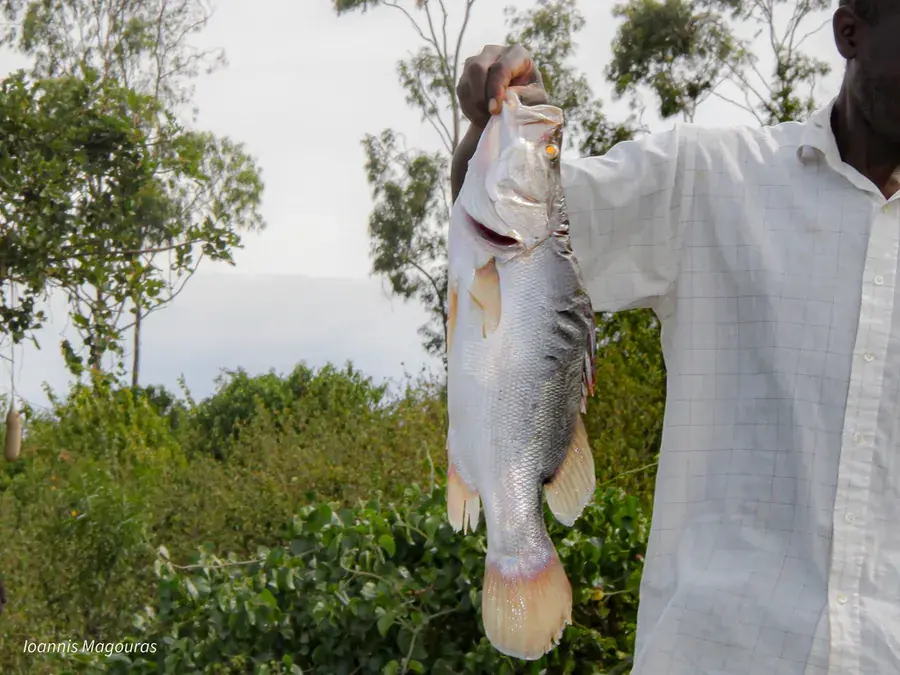 FishYear-round
Nile perch
Lates niloticus
A huge silver perch with a blue sheen, a dorsal fin cut deeply into spiny and soft halves, a rounded tail, and a dark eye ringed in bright yellow.
Where and how to catch it →Photo: Ioannis Magouras · CC BY 4.0
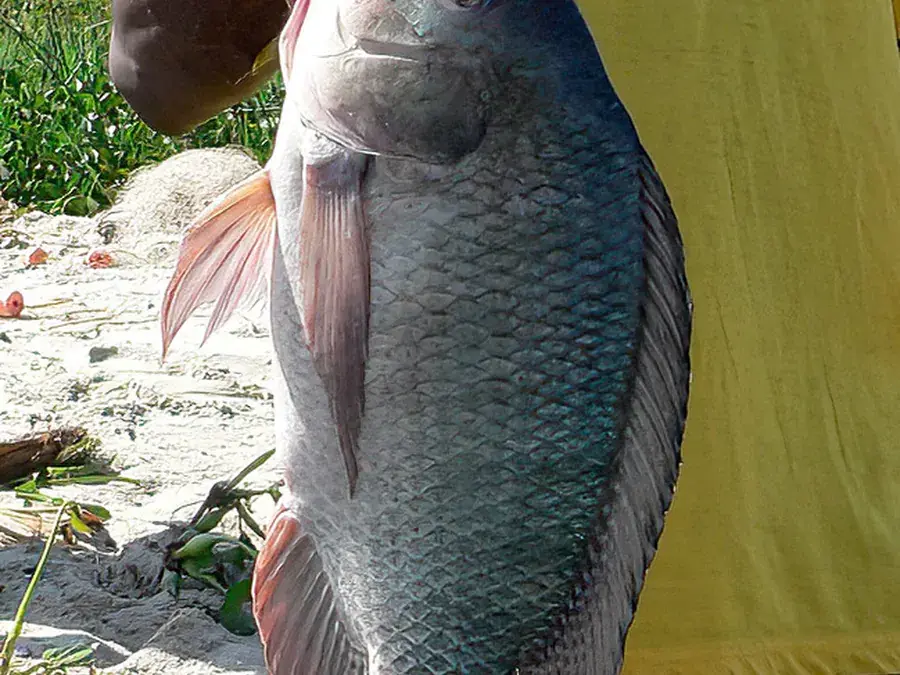 FishYear-round
Nile tilapia
Oreochromis niloticus
Deep-bodied and grey-brown with faint bars, and the tell: regular dark vertical stripes right across the tail fin. Breeding males turn reddish, especially on the fins.
Where and how to catch it →Photo: Pål A. Olsvik · CC BY 4.0
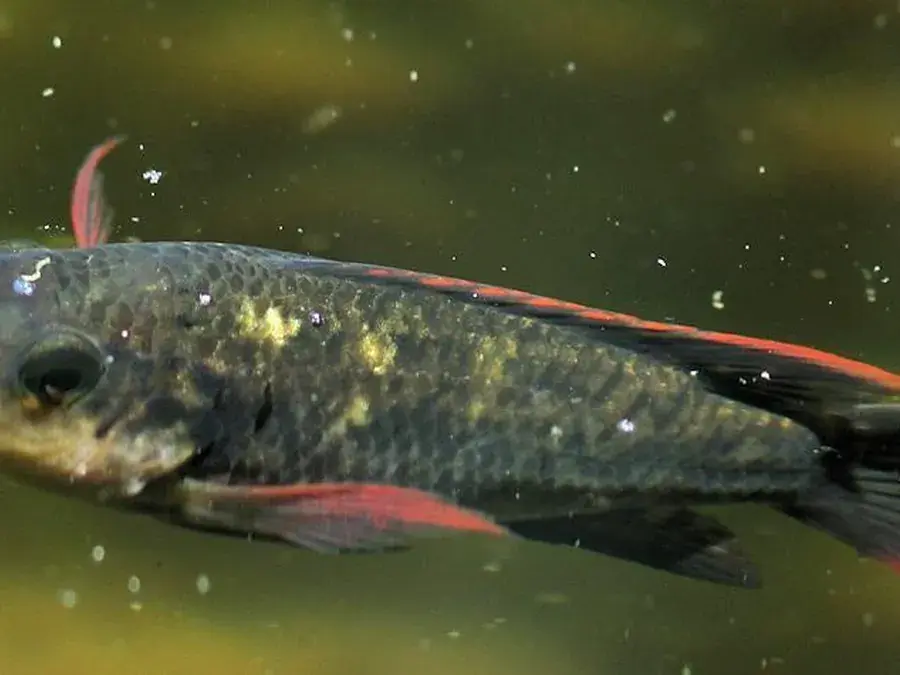 FishSep–Apr
Mozambique tilapia (blue kurper)
Oreochromis mossambicus
Deep-bodied and dull silvery-olive with a few dark blotches along the side and no regular stripes on the tail. Breeding males turn black with a white throat, red-edged fins and a pointed, duck-bill snout.
Where and how to catch it →Photo: Wynand Uys · CC BY 4.0