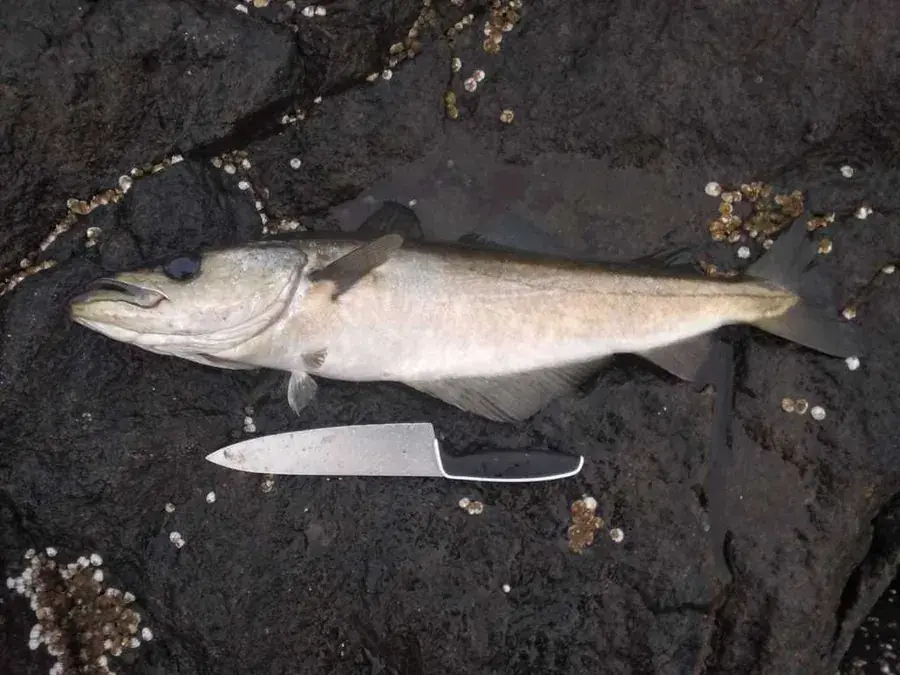
Photo by Vsevolod Rudyi on iNaturalist · CC BY 4.0
Pollack
Pollachius pollachius
- When
- Mar–Nov — March, April, May, June, July, August, September, October, November. Earlier where the water warms first.
- Where it holds
- Rocky shores, kelp beds, reefs and wrecks on Atlantic coasts from Norway to Portugal (not the Mediterranean itself); the big ones on deep offshore wrecks.
- How to know it
- Bronze-green to olive back, a dark lateral line that curves up over the pectoral fin, and a jutting lower jaw with no chin barbel.
- What to know
- A hard-diving fish that bolts for the kelp the moment it is hooked. Shore pollack are summer fish; the biggest come from deep wrecks.
- The tactic
- Soft-plastic eels on a long, slow retrieve over kelp and wrecks; float-fished ragworm or sandeel from the rocks.
- Caution
- Celtic Seas pollack are at low levels: Ireland brought in a three-fish daily bag limit on 1 June 2026, and the UK agreed one too. Fish hauled up from deep wrecks rarely survive release.
Seasons, size limits and catch limits change every year and differ by water body. Check the current regulations for the country and the water before you fish.
Pollack facts
- Also called
- European pollock (in American English), lythe in Scotland, callig on the Isle of Man; lieu jaune in French, abadejo in Spanish, lyr in Norwegian. Not to be confused with North America's 'pollock', usually the saithe.
- Family
- Gadidae, the cod family.
- Native range
- The northeast Atlantic from Iceland, the Faroes and Norway south through the North Sea, Britain and Ireland to the Bay of Biscay and the Atlantic coast of Iberia, with a few records from the southern Baltic.
- Habitat
- Rocky coasts, kelp forests, reefs and wrecks, from the shallows down to about 200 m. Young pollack spend two or three years close inshore among rocks, kelp, sandy shores and estuaries; bigger fish move offshore to rocky ground and wrecks at 40–100 m.
- Water temperature
- Cool temperate water. In a growth study, juvenile pollack grew best at about 12–15°C (54–59°F).
- Size
- Most adults 40–80 cm (16–31 in); the largest measured about 130 cm (51 in).
- Record
- IGFA all-tackle world record: 12.41 kg (27 lb 6 oz), Robert Milkins, Salcombe, Devon, 1986. The British boat record is heavier: 13.267 kg (29 lb 4 oz), off Dungeness, Kent, 1987; the shore record is 8.277 kg (18 lb 4 oz), Abbotsbury, Dorset, 1986.
- Lifespan
- Fast-growing and fairly short-lived: up to about 15 years.
- What it eats
- Mostly fish, especially shoaling baitfish such as sandeels, plus crustaceans and squid. Young pollack eat small crustaceans and fish fry.
- Spawning
- Offshore, in late winter and spring; the spawning grounds are poorly known, and some Norwegian fjord populations seem to spawn locally. Dense shoals gather on the spawning grounds.
- Young fish
- Juveniles live near the coast for two or three years, sometimes schooling with young saithe; some defend small feeding territories and grunt at rivals.
- Teeth and mouth
- A large mouth with a strongly jutting lower jaw, and no chin barbel.
- Look-alikes
- Saithe (coalfish — called pollock in North America): a straight, pale lateral line, greenish-black back and a less jutting jaw. Cod: a chin barbel and a pale lateral line. Pouting: deep, coppery and barred, with a chin barbel.
- Eating
- Good but drier than cod, with a fine flavour; best very fresh.
- Status
- IUCN Least Concern globally, but Celtic Seas pollack are at low levels. Ireland brought in a three-fish daily bag limit on 1 June 2026, and the UK agreed a three-fish limit too.
Try it
How big does a pollack get?
Slide it from an ordinary adult to the biggest one ever measured, next to things you know the size of.
Most adults you'll catch: 40–80 cm (16–31 in).
This pollack: 60 cm. Longer than a loaf of bread, shorter than a four-year-old.
The record
IGFA all-tackle world record: 12.41 kg (27 lb 6 oz), Robert Milkins, Salcombe, Devon, 1986. The British boat record is heavier: 13.267 kg (29 lb 4 oz), off Dungeness, Kent, 1987; the shore record is 8.277 kg (18 lb 4 oz), Abbotsbury, Dorset, 1986.
Questions people ask about pollack
What is the difference between pollack and pollock?
In Europe, pollack is Pollachius pollachius, the bronze-green fish of rocks and wrecks. In North America, 'pollock' usually means its cousin the saithe or coalfish (Pollachius virens). A pollack's lateral line curves up over the pectoral fin; a saithe's runs straight.
Is there a bag limit for pollack?
In Ireland, yes: since 1 June 2026 each angler may keep three pollack a day, then fish on catch-and-release. The UK agreed a three-fish limit as well. Check the current rules wherever you fish.
How big do pollack get?
Most are 40–80 cm (16–31 in); shore fish are usually smaller, wreck fish bigger. The largest reach about 1.3 m and 18 kg. The IGFA world record is 12.41 kg (27 lb 6 oz), from Salcombe, Devon, in 1986.
Where do you catch pollack?
Over rough ground: rocky headlands, kelp beds, reefs and wrecks along Atlantic coasts from Norway to Iberia. Small pollack come close inshore in summer; the biggest live on deep offshore wrecks.
Found in these regions
Checked against these sources ·
- FishBase — Pollachius pollachius
- Inland Fisheries Ireland — Conservation measures introduced for recreational fishing of pollack
- Ifremer — Effects of temperature on the growth of pollack juveniles
- British Record (Rod Caught) Fish Committee — sea fish records, June 2026
Sizes, records and ranges are for the species as a whole; local fish, and local rules, vary. Records change — the record-keeper named above has the current one.
Is it active near you?
Get this week's guide for your area
Enter a town, postal code or ZIP and we'll tell you what's happening right there this week — from your local climate, this week's weather and your ecological region.
Also active in October
 FishJun–Mar
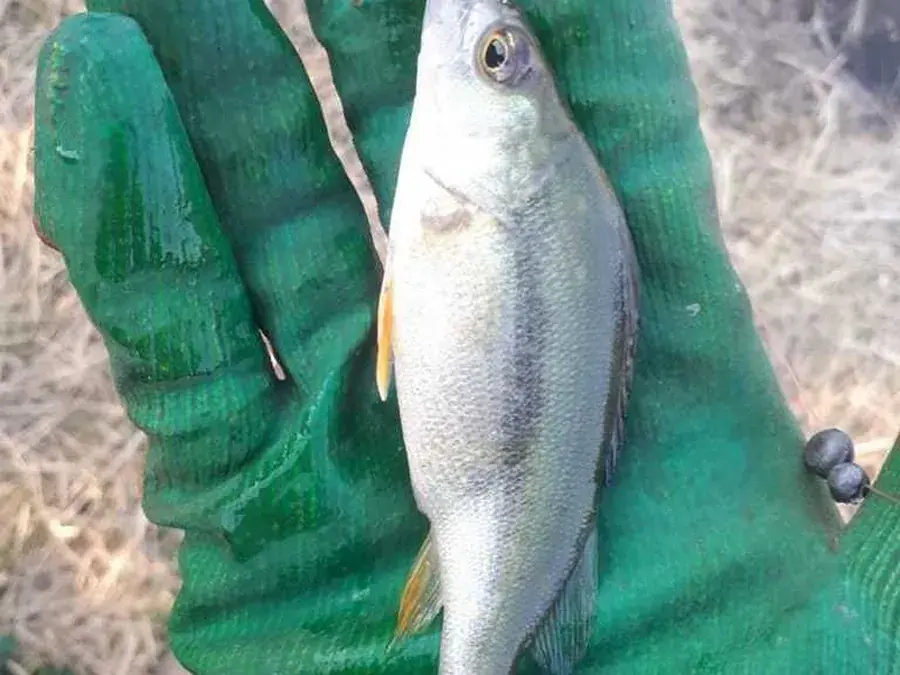
European perch
Perca fluviatilis
Five to eight dark bars on a greenish flank, bright red-orange lower fins, and a spiny first dorsal fin with a black blotch at the back.
Where and how to catch it →Photo: Дауд Арсанукаев · CC BY 4.0
 FishJun–Mar
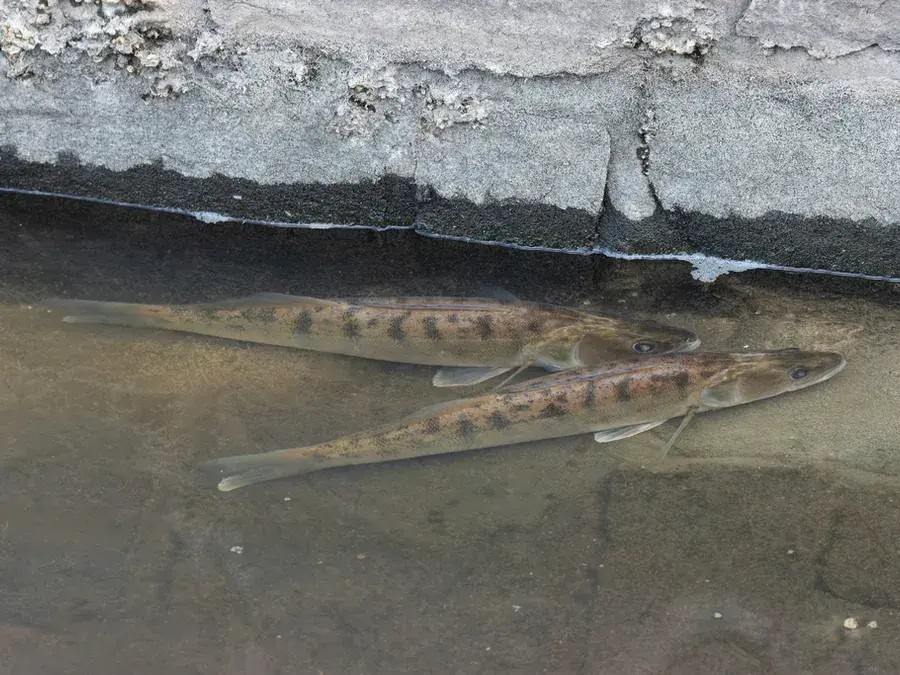
Zander
Sander lucioperca
Slim and glassy-eyed, with grey-brown saddles, rows of black spots on the spiny dorsal fin, and long fang-like canine teeth.
Where and how to catch it →Photo: Tomas Broucek · CC BY 4.0
 FishApr–Oct
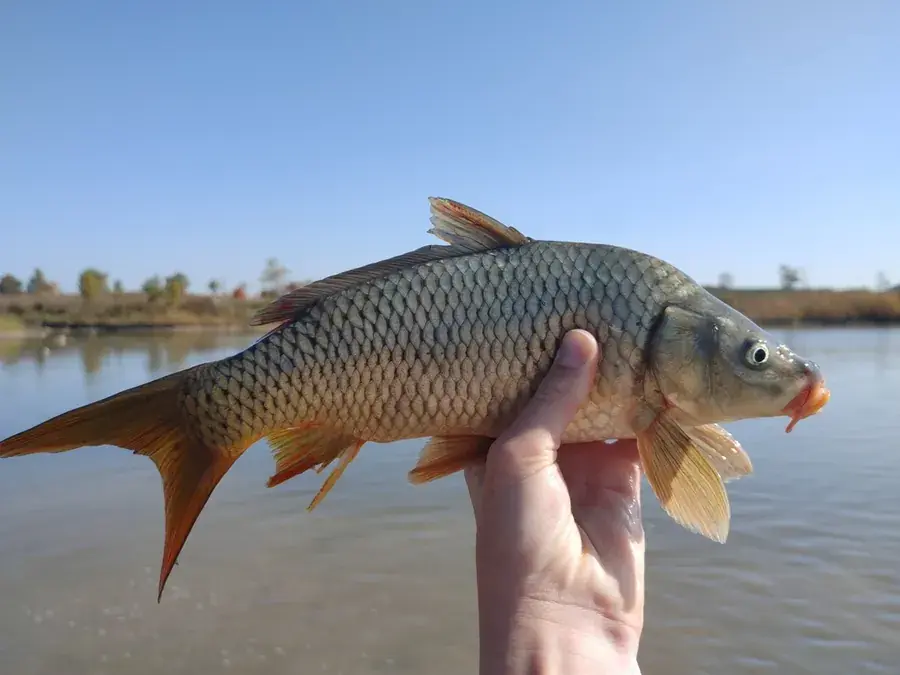
Common carp
Cyprinus carpio
Big bronze scales (or the scattered big scales of a mirror carp), a long dorsal fin, and two pairs of barbels at a rubbery, tube-like mouth.
Where and how to catch it →