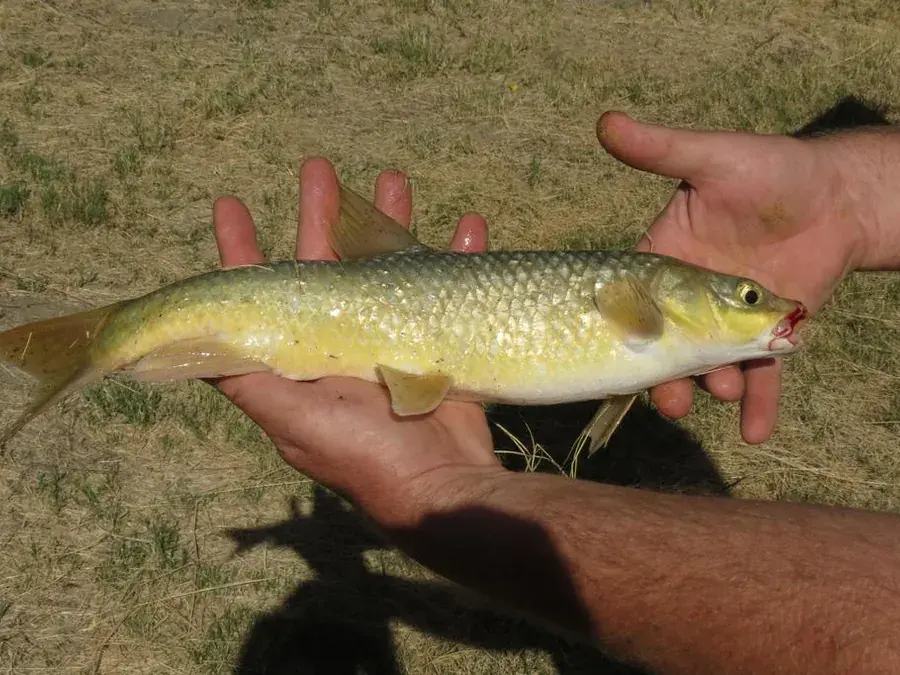
Photo by Brian du Preez on iNaturalist · CC BY-SA 4.0
Smallmouth yellowfish
Labeobarbus aeneus
- When
- Mar–May, Sep–Nov — March, April, May, September, October, November. Earlier where the water warms first.
- Where it holds
- Clear runs, riffles and rocky glides of the Vaal and Orange rivers, and the big dams on them; introduced into a few other river systems.
- How to know it
- A big, streamlined, bronze-gold barb with large scales, golden fins and a small mouth.
- What to know
- The Vaal’s signature fish and the heart of South African fly-fishing for indigenous species. Catchable all year; October is the best month, with April and May close behind.
- The tactic
- Dead-drift a heavy nymph and a small caddis pupa through the riffles, or fish a worm or a small crab on the bottom.
- Caution
- The Vaal can rise fast when dams upstream release water — check flows before wading. Handle fish with wet hands and get them back quickly.
Seasons, size limits and catch limits change every year and differ by water body. Check the current regulations for the country and the water before you fish.
Smallmouth yellowfish facts
- Also called
- Orange–Vaal smallmouth yellowfish. Formerly Barbus aeneus.
- Family
- Cyprinidae, the carp and minnow family — a large African barb.
- Native range
- The Orange–Vaal river system: from its sources in Lesotho and the Mpumalanga highveld to the Atlantic at Oranjemund, through South Africa, Lesotho, Botswana and Namibia.
- Introduced to
- Moved into the Gouritz, Great Fish, Kei and Limpopo (Olifants) systems, and Kyle Dam in Zimbabwe; it has become invasive in some Eastern Cape rivers.
- Habitat
- Clear, flowing water of large rivers over sand and rock, and large impoundments. Adults are fairly territorial, often keeping to a stretch of 20 m or so.
- Water temperature
- A warm-temperate river fish of hot summers and cold winters. Spawning starts once the water passes about 19°C (66°F) in spring.
- Size
- Most adults 30–45 cm (12–18 in); the largest measured about 50 cm (20 in).
- Record
- No IGFA all-tackle category. FishBase lists a maximum published weight of 7.8 kg; FOSAF puts the species at up to 50 cm and 7 kg.
- Lifespan
- Up to about 12 years. It grows slowly, taking almost seven years to reach maturity at about 30 cm fork length.
- What it eats
- Omnivorous bottom feeder: insect larvae, water fleas, snails, small mussels, crabs, shrimps, small fish, algae and detritus.
- Spawning
- Spring to midsummer — October to February — once the water passes 19°C, usually after the first good rains. Small shoals run up to shallow gravel beds in flowing water; eggs go into a saucer-shaped nest and are covered with gravel. A 45 cm female carries about 30,000 eggs.
- Teeth and mouth
- A small mouth, built for picking food off the bottom; no teeth in the jaws.
- Look-alikes
- Largemouth yellowfish, in the same rivers, has a longer, heavier head and a much bigger mouth, and is a fish-eater. Other yellowfish species live in other river systems.
- Eating
- Edible, and readily caught by subsistence anglers on worms, crabs and minnows; most sport anglers release them.
- Status
- Least Concern, but vulnerable to pollution, water abstraction, over-harvesting and alien fish. Angling for it on the Vaal is a major industry.
Try it
How big does a smallmouth yellowfish get?
Slide it from an ordinary adult to the biggest one ever measured, next to things you know the size of.
Most adults you'll catch: 30–45 cm (12–18 in).
This smallmouth yellowfish: 38 cm. Longer than a loaf of bread, shorter than a four-year-old.
The record
No IGFA all-tackle category. FishBase lists a maximum published weight of 7.8 kg; FOSAF puts the species at up to 50 cm and 7 kg.
Questions people ask about smallmouth yellowfish
When is the best time to fish for smallmouth yellowfish?
October, for size and numbers, according to the Federation of Southern African Flyfishers; April and May are also good. They can be caught all year, but summer floods colour the rivers.
How do you catch smallmouth yellowfish on fly?
Dead-drift nymphs through riffles and glides — a heavy dropper with a smaller caddis pupa or mayfly nymph is the standard rig, often fished Czech-style on a short line. In pools, black or olive Woolly Buggers and strip leeches work.
How big do smallmouth yellowfish get?
Up to about 50 cm (20 in) and 7–8 kg (15–17 lb). They grow slowly: a fish takes almost seven years to reach 30 cm and maturity, which is why anglers release the big ones.
Found in these regions
Checked against these sources ·
Sizes, records and ranges are for the species as a whole; local fish, and local rules, vary. Records change — the record-keeper named above has the current one.
Is it active near you?
Get this week's guide for your area
Enter a town, postal code or ZIP and we'll tell you what's happening right there this week — from your local climate, this week's weather and your ecological region.
Also active in October
 FishYear-round
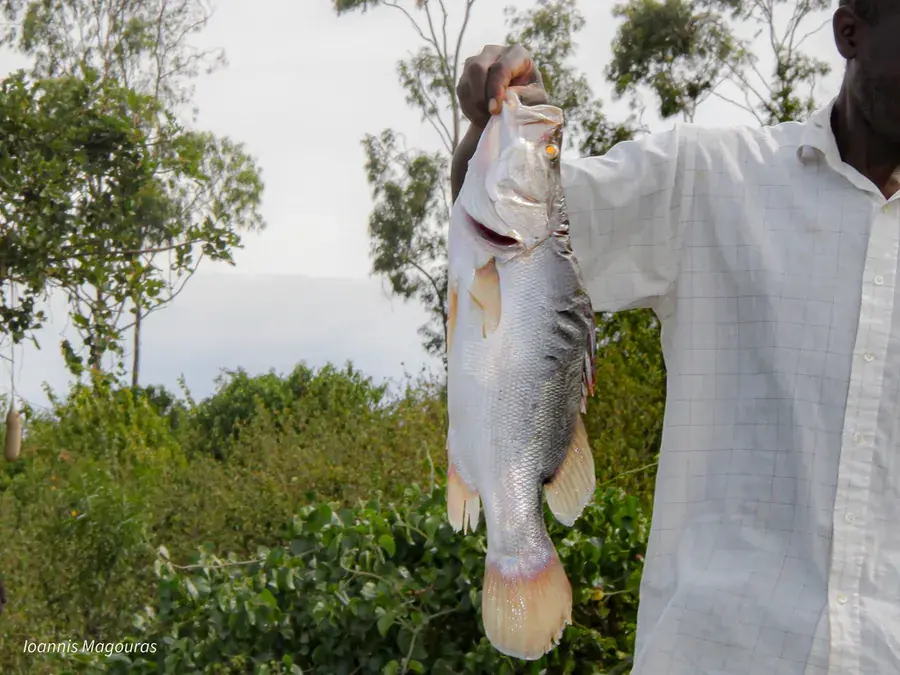
Nile perch
Lates niloticus
A huge silver perch with a blue sheen, a dorsal fin cut deeply into spiny and soft halves, a rounded tail, and a dark eye ringed in bright yellow.
Where and how to catch it →Photo: Ioannis Magouras · CC BY 4.0
 FishYear-round
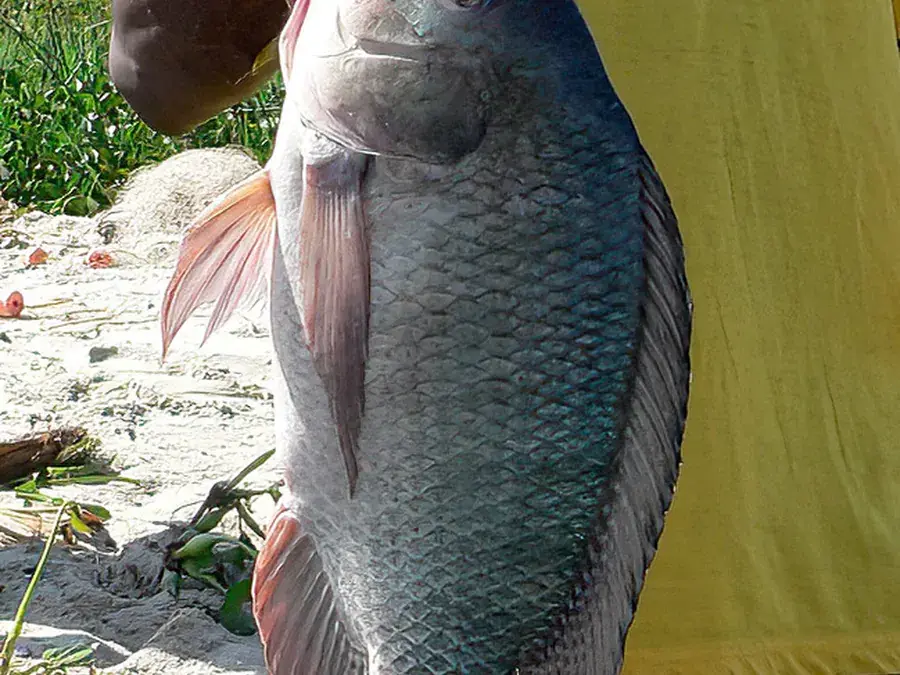
Nile tilapia
Oreochromis niloticus
Deep-bodied and grey-brown with faint bars, and the tell: regular dark vertical stripes right across the tail fin. Breeding males turn reddish, especially on the fins.
Where and how to catch it →Photo: Pål A. Olsvik · CC BY 4.0
 FishSep–Apr
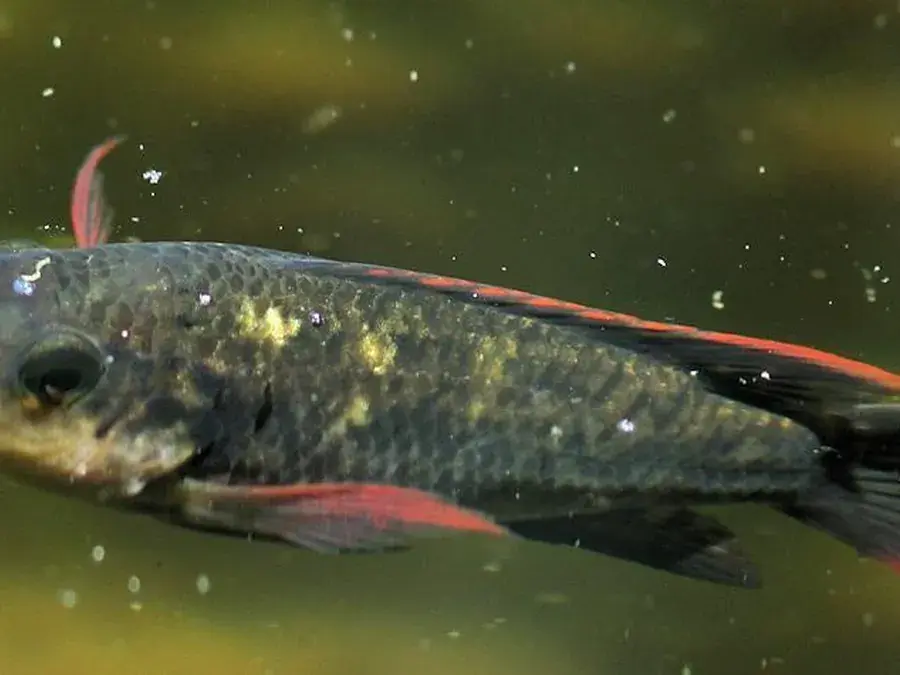
Mozambique tilapia (blue kurper)
Oreochromis mossambicus
Deep-bodied and dull silvery-olive with a few dark blotches along the side and no regular stripes on the tail. Breeding males turn black with a white throat, red-edged fins and a pointed, duck-bill snout.
Where and how to catch it →Photo: Wynand Uys · CC BY 4.0