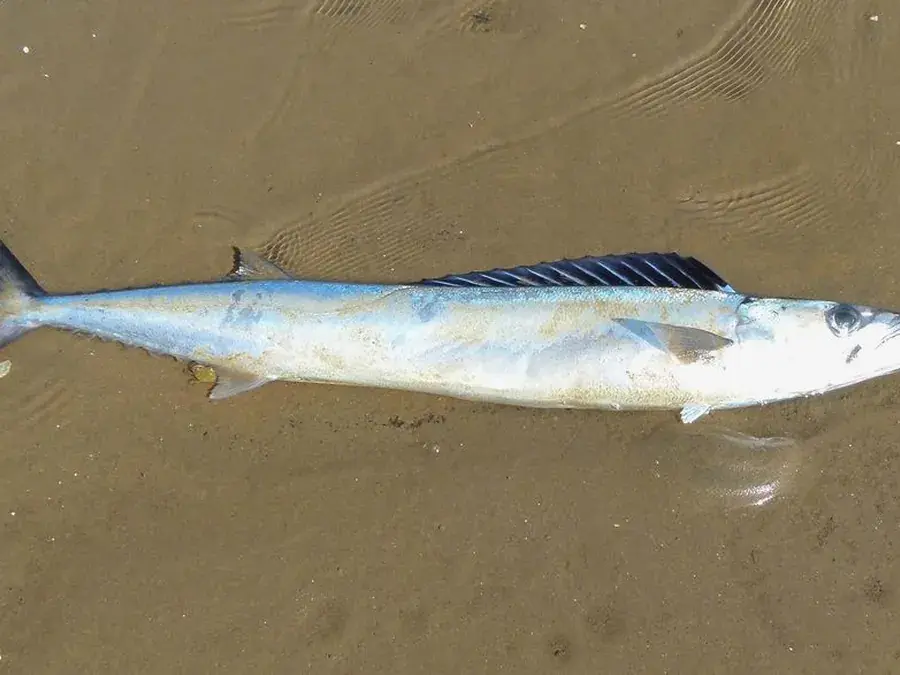
Photo by Steve Kerr on iNaturalist · CC BY 4.0
Snoek
Thyrsites atun
- When
- Apr–Sep — April, May, June, July, August, September. Earlier where the water warms first.
- Where it holds
- Shoals over the shelf off the Cape west coast, the western Agulhas Bank and Namibia, coming inshore after pilchards and anchovies.
- How to know it
- Long, thin and steel-blue, with a black membrane on the long first dorsal fin, small finlets behind the fins, and fang-like teeth.
- What to know
- The Cape’s winter fish: the traditional snoek run brings shoals inshore from about May to July, though it is less dependable than it once was. Not the American snook — an oily, bony, delicious snake mackerel, best braaied or smoked.
- The tactic
- Metal jigs or spoons, or a pilchard bait, wherever the shoal is feeding — watch for working birds.
- Caution
- The teeth cut deep: keep fingers clear of the mouth and hold them with a cloth. Minimum 60 cm, 10 a day.
Seasons, size limits and catch limits change every year and differ by water body. Check the current regulations for the country and the water before you fish.
Snoek facts
- Also called
- Barracouta in Australia and New Zealand; zeesnoek to early Dutch settlers (snoek is Dutch for pike). Sometimes listed as Leionura atun. Not the snook of Florida.
- Family
- Gempylidae, the snake mackerels.
- Native range
- Cool waters of the Southern Hemisphere: southern Africa from Angola to Algoa Bay (mostly between the Kunene River and Cape Agulhas), Tristan da Cunha, southern Australia, New Zealand, Chile, Peru and Argentina.
- Habitat
- Continental shelves and around islands, usually 100–500 m deep, in schools near the bottom or in midwater; sometimes at the surface at night. In the Cape it comes inshore after pilchards and anchovies.
- Water temperature
- Cool: it prefers 13–18°C (55–64°F).
- Size
- Most adults 60–90 cm (24–35 in); the largest measured about 150 cm (59 in).
- Record
- IGFA all-tackle world record: 7.67 kg (16 lb 15 oz), Bruce Jackson, Río Palvitad, Chile, 28 March 2017.
- Lifespan
- Up to about 10 years (FishBase); Australian fish live about 11.
- What it eats
- Pilchards (sardines) and anchovies above all, plus hake, squid and krill; young snoek eat lanternfish, krill and amphipods.
- Spawning
- Off South Africa, in winter and spring (May to November, peaking June to October), along the shelf break of the western Agulhas Bank and the west coast at 150–400 m. The larvae drift to nursery grounds north of Cape Columbine. Half are mature at 3 years and about 73 cm.
- Teeth and mouth
- Several pairs of fang-like teeth in the upper jaw, with more on the roof of the mouth. They cut deep.
- Look-alikes
- Barracuda are rounder, with two widely separated dorsal fins and no finlets. The snoek’s long, spiny first dorsal fin with a black membrane, and the finlets behind its fins, are the tells.
- Eating
- Oily, rich and bony (the bones are big and easy to lift out after cooking). A Cape classic braaied with an apricot-jam glaze, or smoked.
- Status
- Not evaluated by the IUCN. Inshore handline catches in the Cape have fallen since the late 1970s, while trawl catches have held steadier.
Try it
How big does a snoek get?
Slide it from an ordinary adult to the biggest one ever measured, next to things you know the size of.
Most adults you'll catch: 60–90 cm (24–35 in).
This snoek: 75 cm. Longer than a loaf of bread, shorter than a four-year-old.
The record
IGFA all-tackle world record: 7.67 kg (16 lb 15 oz), Bruce Jackson, Río Palvitad, Chile, 28 March 2017.
Questions people ask about snoek
Is snoek the same fish as snook?
No. Snoek (Thyrsites atun) is a cold-water snake mackerel of the Southern Hemisphere, prized in the Cape. Snook (Centropomus) is a warm-water inshore fish of Florida and the Caribbean. The names come from the Dutch word snoek, for pike.
When is snoek season in the Cape?
Snoek move through the southern Benguela from about April to September, and the traditional inshore ‘snoek run’ on the west coast peaked from May to July. That inshore run has become less reliable, and boats find snoek at other times of year.
How big do snoek get?
Most are 60–90 cm (24–35 in); the species reaches about 1.5 m (59 in) and 6–7 kg. The IGFA world record is 7.67 kg (16 lb 15 oz), from Chile in 2017.
What are the rules for snoek in South Africa?
Recreational anglers may keep ten snoek a day, each at least 60 cm long. Check the current regulations before you fish.
Found in these regions
Checked against these sources ·
- FishBase — Thyrsites atun
- University of Cape Town — Snoek Thyrsites atun in South African waters: biology, distribution and fishery
- Fishes of Australia — Barracouta, Thyrsites atun
- Marine Living Resources Act regulations — recreational size and bag limits
Sizes, records and ranges are for the species as a whole; local fish, and local rules, vary. Records change — the record-keeper named above has the current one.
Is it active near you?
Get this week's guide for your area
Enter a town, postal code or ZIP and we'll tell you what's happening right there this week — from your local climate, this week's weather and your ecological region.
Also active in October
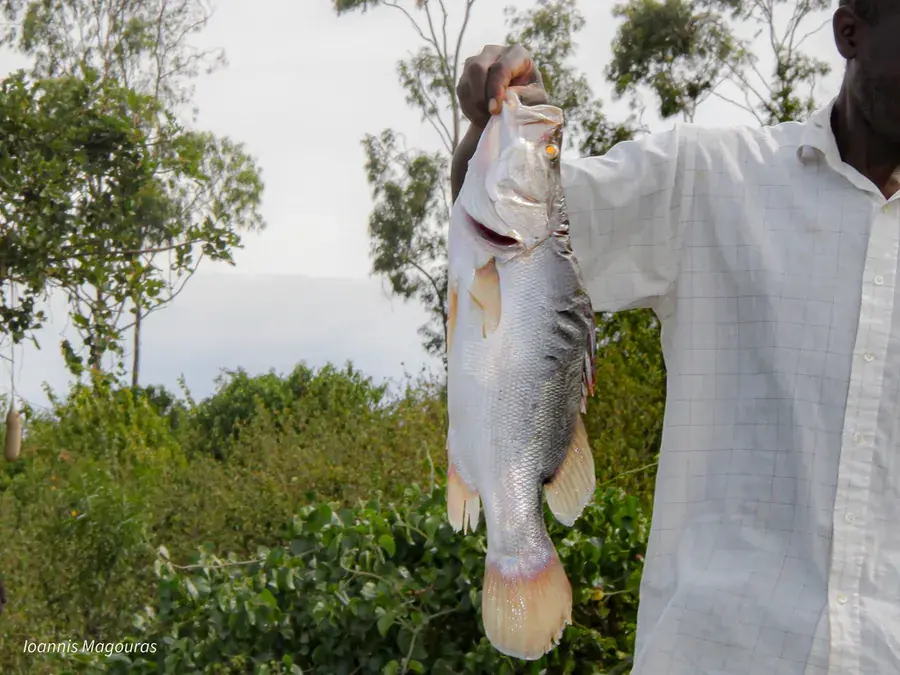 FishYear-round
Nile perch
Lates niloticus
A huge silver perch with a blue sheen, a dorsal fin cut deeply into spiny and soft halves, a rounded tail, and a dark eye ringed in bright yellow.
Where and how to catch it →Photo: Ioannis Magouras · CC BY 4.0
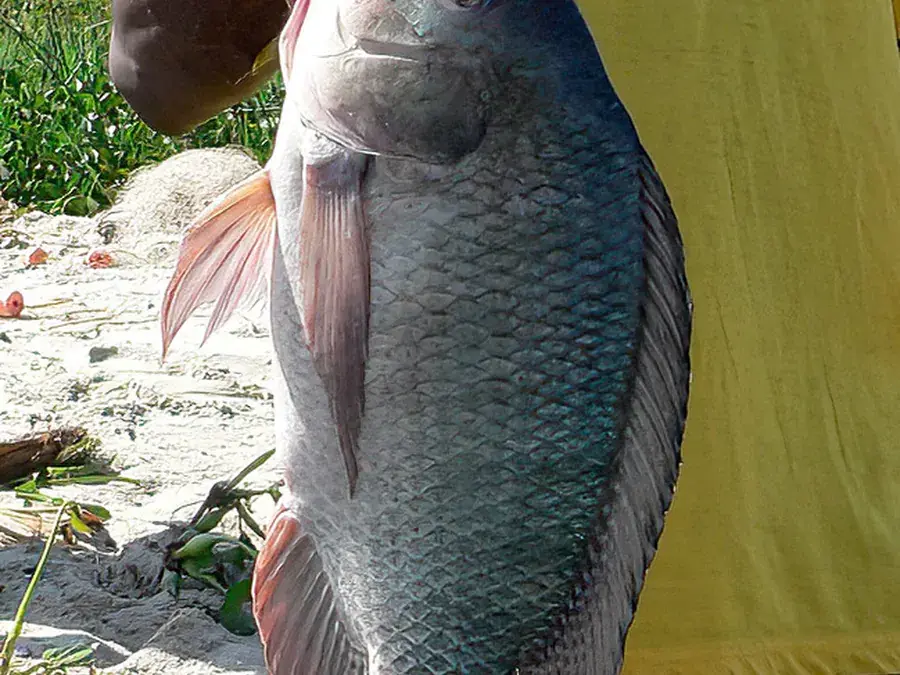 FishYear-round
Nile tilapia
Oreochromis niloticus
Deep-bodied and grey-brown with faint bars, and the tell: regular dark vertical stripes right across the tail fin. Breeding males turn reddish, especially on the fins.
Where and how to catch it →Photo: Pål A. Olsvik · CC BY 4.0
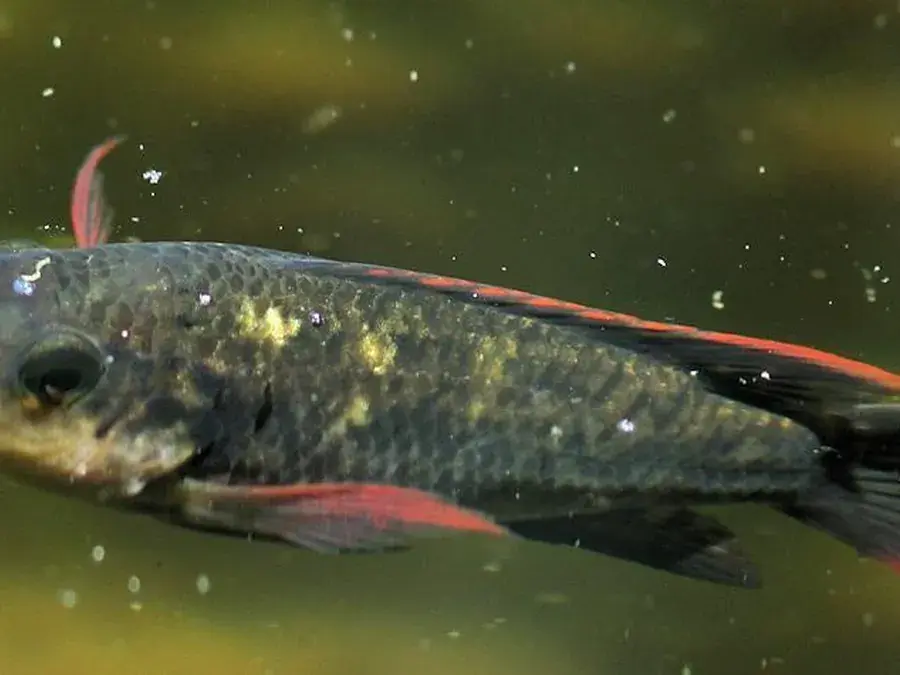 FishSep–Apr
Mozambique tilapia (blue kurper)
Oreochromis mossambicus
Deep-bodied and dull silvery-olive with a few dark blotches along the side and no regular stripes on the tail. Breeding males turn black with a white throat, red-edged fins and a pointed, duck-bill snout.
Where and how to catch it →Photo: Wynand Uys · CC BY 4.0