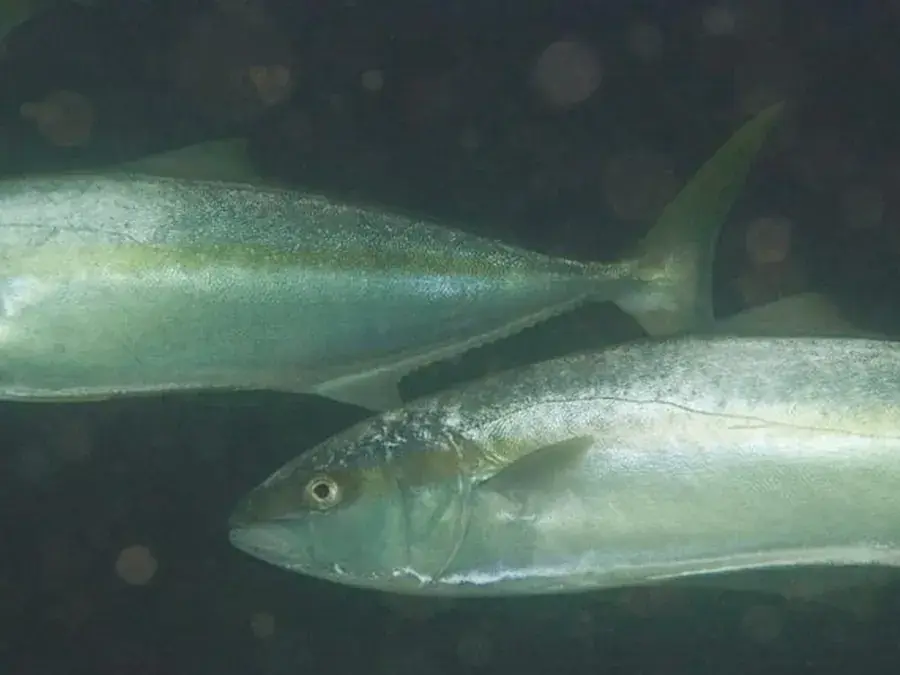
Photo by Georgina Jones on iNaturalist · CC BY-SA 4.0
Yellowtail (Cape yellowtail)
Seriola lalandi
- When
- Oct–Jul — January, February, March, April, May, June, July, October, November, December. Earlier where the water warms first.
- Where it holds
- Reefs, pinnacles and points off the Cape — Cape Point, False Bay and the Agulhas Bank — and up the KwaZulu-Natal coast with the winter sardine run.
- How to know it
- A big, torpedo-shaped jack: dark blue above and white below with a sharp line between, a yellow-bronze stripe along the side, and a bright yellow tail.
- What to know
- The hard-pulling shoal fish of the Cape ski-boats. Summer into autumn is the Cape season; in winter they follow the sardines up the east coast. Line-caught yellowtail is a SASSI green-list choice.
- The tactic
- Live bait, metal jigs or poppers into a feeding shoal, on heavy spinning tackle.
- Caution
- Ten a day and no minimum size, but let the small ones go — they mature at about 55–60 cm.
Seasons, size limits and catch limits change every year and differ by water body. Check the current regulations for the country and the water before you fish.
Yellowtail (Cape yellowtail) facts
- Also called
- Yellowtail or Cape yellowtail in South Africa; yellowtail kingfish or kingfish in Australia and New Zealand; hiramasa in sushi bars; southern yellowtail to the IGFA.
- Family
- Carangidae, the jacks and trevallies.
- Native range
- Southern Hemisphere waters — South Africa, Australia, New Zealand, Chile and the islands between. Similar fish off California and Japan are now usually treated as separate species.
- Habitat
- Rocky reefs, pinnacles, kelp edges and offshore islands, from the surface to about 50 m and sometimes far deeper; large shoals of young fish range offshore. South African fish move up the east coast with the winter sardine run.
- Water temperature
- Prefers warmer water, about 18–24°C (64–75°F), though it is often caught cooler.
- Size
- Most adults 60–100 cm (24–39 in); the largest measured about 250 cm (98 in).
- Record
- IGFA all-tackle world record (southern yellowtail): 52 kg (114 lb 10 oz) — a tie between Mike Godfrey, Tauranga, New Zealand (1984), and David Lugton, White Island, New Zealand (1987).
- Lifespan
- A South African study aged males to 7 years and females to 8; FishBase gives 12 years worldwide.
- What it eats
- Small shoaling fish such as pilchards above all, plus squid and crustaceans.
- Spawning
- In South Africa, a long season from November to February, peaking in December and January. Females mature at about 55 cm fork length and males about 58 cm, at roughly 2–4 years old.
- Young fish
- Juveniles are yellow with black bands, often found far offshore under floating weed; by about 30 cm they take on adult colours.
- Look-alikes
- Greater amberjack is deeper-bodied with a darker band through the eye and a duskier tail. Giant trevally and other kingfish have hard scutes on the tail base; the yellowtail does not.
- Eating
- Excellent fresh, grilled or raw. Line-caught South African yellowtail is a WWF-SASSI green-list choice.
- Status
- Least Concern on the IUCN Red List; the second most commonly caught species in South Africa’s linefishery.
Try it
How big does a yellowtail get?
Slide it from an ordinary adult to the biggest one ever measured, next to things you know the size of.
Most adults you'll catch: 60–100 cm (24–39 in).
This yellowtail (cape yellowtail): 80 cm. Longer than a loaf of bread, shorter than a four-year-old.
The record
IGFA all-tackle world record (southern yellowtail): 52 kg (114 lb 10 oz) — a tie between Mike Godfrey, Tauranga, New Zealand (1984), and David Lugton, White Island, New Zealand (1987).
Questions people ask about yellowtail
When is yellowtail season in Cape Town?
Summer into autumn is the main Cape season, around Cape Point, False Bay and the Agulhas Bank. In winter, many move up the east coast with the sardine run, and KwaZulu-Natal gets its turn.
How big do yellowtail get?
Most South African fish are 60–100 cm (24–39 in). The species can reach well over 1.5 m, and the IGFA world record is 52 kg (114 lb 10 oz), shared by two fish from New Zealand.
Is yellowtail sustainable to eat?
Line-caught South African yellowtail is on WWF-SASSI’s green list — fast-growing, quick to mature and fertile. Fish from gillnets and beach seines are ‘think twice’ because of bycatch.
What is the bag limit for yellowtail in South Africa?
Ten a day with no minimum size. Letting fish under about 55–60 cm go gives them a chance to spawn first.
Found in these regions
Checked against these sources ·
- FishBase — Seriola lalandi
- WWF-SASSI — Yellowtail
- University of Cape Town — The diet, reproductive biology, age and growth of yellowtail in South Africa
- Two Oceans Aquarium — Giant yellowtail (Cape yellowtail)
Sizes, records and ranges are for the species as a whole; local fish, and local rules, vary. Records change — the record-keeper named above has the current one.
Is it active near you?
Get this week's guide for your area
Enter a town, postal code or ZIP and we'll tell you what's happening right there this week — from your local climate, this week's weather and your ecological region.
Also active in October
 FishYear-round
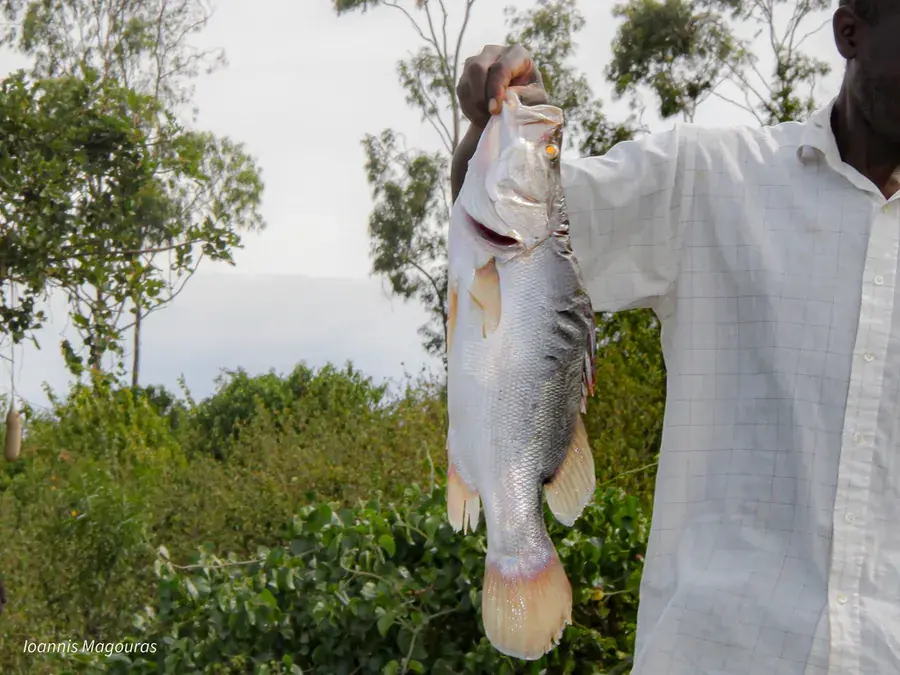
Nile perch
Lates niloticus
A huge silver perch with a blue sheen, a dorsal fin cut deeply into spiny and soft halves, a rounded tail, and a dark eye ringed in bright yellow.
Where and how to catch it →Photo: Ioannis Magouras · CC BY 4.0
 FishYear-round
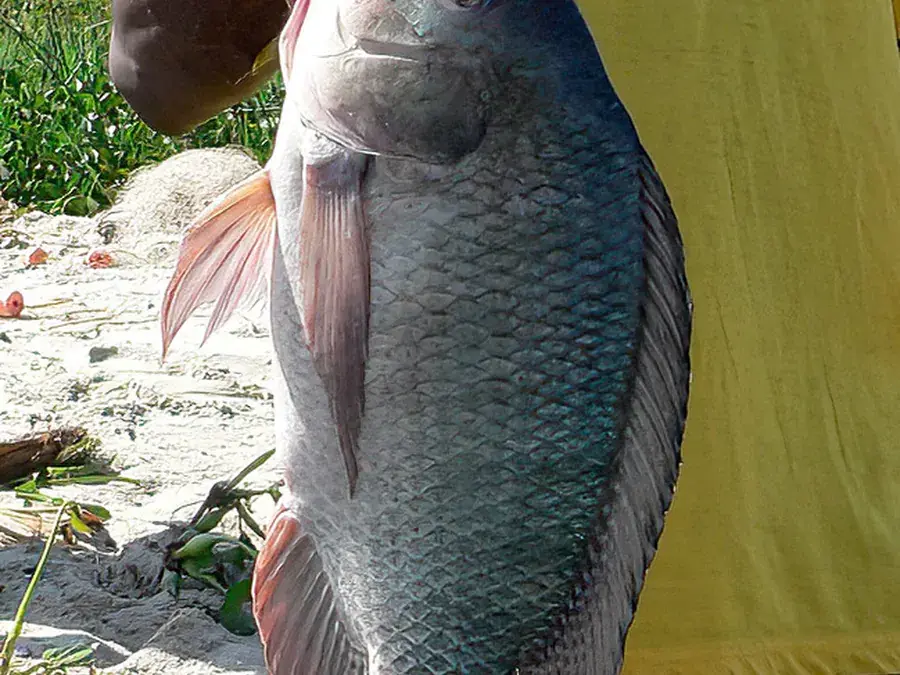
Nile tilapia
Oreochromis niloticus
Deep-bodied and grey-brown with faint bars, and the tell: regular dark vertical stripes right across the tail fin. Breeding males turn reddish, especially on the fins.
Where and how to catch it →Photo: Pål A. Olsvik · CC BY 4.0
 FishSep–Apr
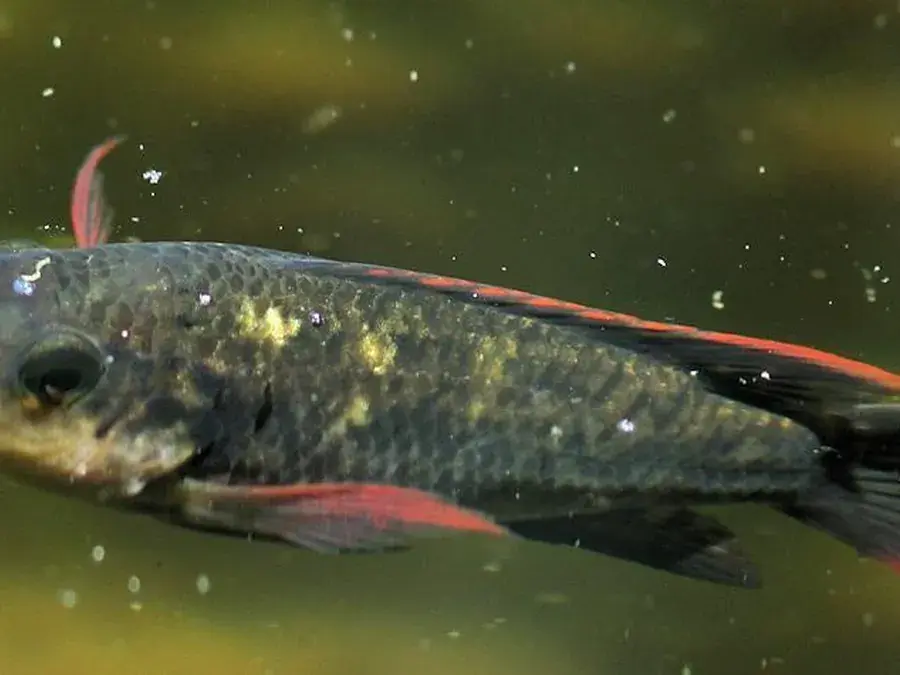
Mozambique tilapia (blue kurper)
Oreochromis mossambicus
Deep-bodied and dull silvery-olive with a few dark blotches along the side and no regular stripes on the tail. Breeding males turn black with a white throat, red-edged fins and a pointed, duck-bill snout.
Where and how to catch it →Photo: Wynand Uys · CC BY 4.0