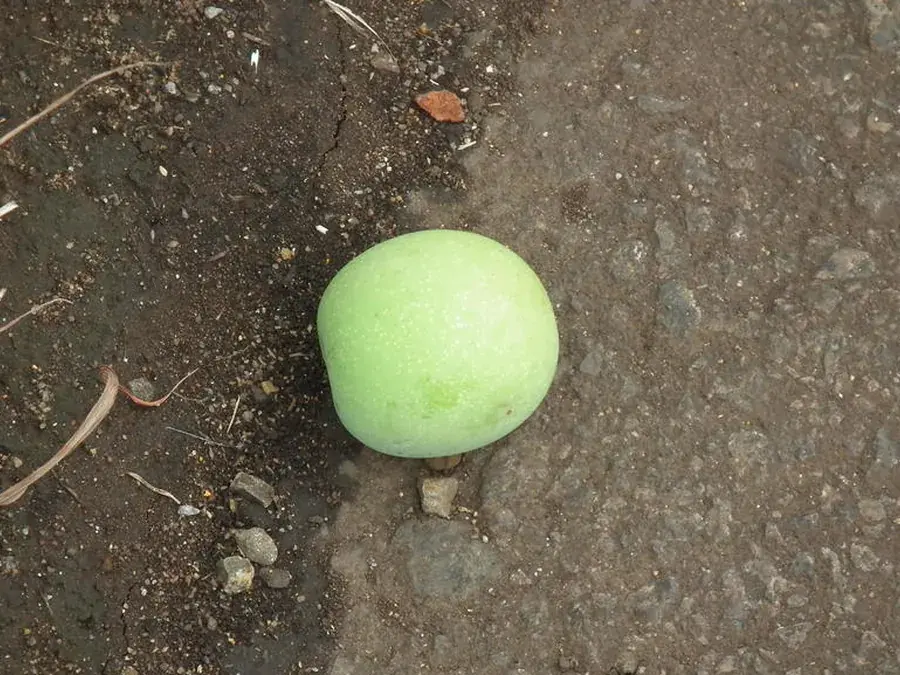
Photo by Shaun Swanepoel on iNaturalist · CC BY 4.0
FruitSeason: February – April
Marula
Sclerocarya birrea
- When
- Typically February – April — February, March, April. Earlier in warm, low country; later in the hills.
- Where it grows
- Low-lying bushveld and open woodland — the Lowveld, Limpopo, northern KwaZulu-Natal, Zimbabwe, Mozambique and north-central Namibia — and left standing in fields and around homesteads for its fruit.
- How to know it
- A single-stemmed tree with a broad, spreading crown and grey, mottled bark. Leaves are divided into pairs of leaflets with one at the tip, bunched at the ends of the branches. The plum-sized fruits, 3–4 cm (1½ in) long, fall while still green and turn pale yellow on the ground; inside is white, juicy flesh around a hard, thick-walled stone holding two or three kernels. Only female trees bear fruit.
- Look-alikes
- No dangerous double is known. Look up before you pick up: the tree above should have the bunched, divided leaves, and the fruit a hard stone with plugged holes, not a soft pit or many small seeds.
- Harvest and use
- Gather the yellow fallen fruit, bite through the tough skin and suck out the tart, aromatic flesh, or make jelly and juice. Fermented for a few days the juice becomes marula beer — mukumbi to the Vhavenda, omaongo to the Ovambo of northern Namibia. The kernels are rich and nutty, but prising them out of the stone takes practice.
- Caution
- Marula is a protected tree in South Africa. Collect fruit for the household; don't cut or damage the tree, and selling the fruit needs a licence. Fallen fruit starts to ferment within days in the heat.
Marula at a glance
- Also called
- Morula (Setswana, the source of the English name), jelly plum, elephant plum, cat thorn. The southern subspecies is now subsp. afra (long subsp. caffra); subsp. birrea grows in the Sahel and northeast Africa.
- Family
- Anacardiaceae (the cashew and mango family)
- Where it grows
- From Ethiopia and the Sudano-Sahelian belt of West Africa south through East Africa to KwaZulu-Natal, and in Madagascar. The southern form is the one gathered in quantity: the Lowveld and bushveld of Limpopo, Mpumalanga and northern KwaZulu-Natal, Zimbabwe, Mozambique, Botswana and north-central Namibia. Seasons in the Sahel and East Africa differ from the southern months given here.
- When to pick
- Late summer in southern Africa: the fruit ripens from February into March, sometimes into April, dropping green and turning yellow on the ground. Eat or use it within days, before it ferments. The harvest and the trade in the fruit last only two to three months.
- Parts used
- Fruit flesh and juice, raw or fermented into beer; the kernels inside the stone, eaten raw, mixed with vegetables or pressed for oil. The bark is a traditional medicine and a source of rope fibre. Only female trees fruit.
Questions people ask about marula
When is marula season?
February and March in southern Africa, sometimes running into April. The fruit falls while still green and ripens to pale yellow on the ground — pick up the yellow ones.
Is it legal to pick marula fruit in South Africa?
For your own use, yes. Marula is on South Africa's list of protected trees, so no one may cut or damage a tree, or trade in its products, without a licence; a standing exemption allows small, non-commercial amounts — up to half a tree's fruit in natural, rural areas. In the former Venda it was a criminal offence to cut down a living marula.
Do elephants get drunk on marula?
Almost certainly not. Elephants eat marula fruit, bark and branches in quantity, but despite the famous scenes in the 1974 film Animals Are Beautiful People, an elephant would need to eat an enormous amount of fermented fruit to feel any effect.
Can you eat marula nuts?
Yes. The white kernels inside the stone are highly nutritious and eaten raw or with vegetables; the oil is part of the San diet. Getting them out of the hard, plugged stone is the difficult part.
Found in these regions
Is it ready near you?
Get this week's foraging guide for your area
Enter a town, postal code or ZIP and we'll tell you what's in season right there this week — from your local climate, this week's weather and your ecological region.
Also ready in October
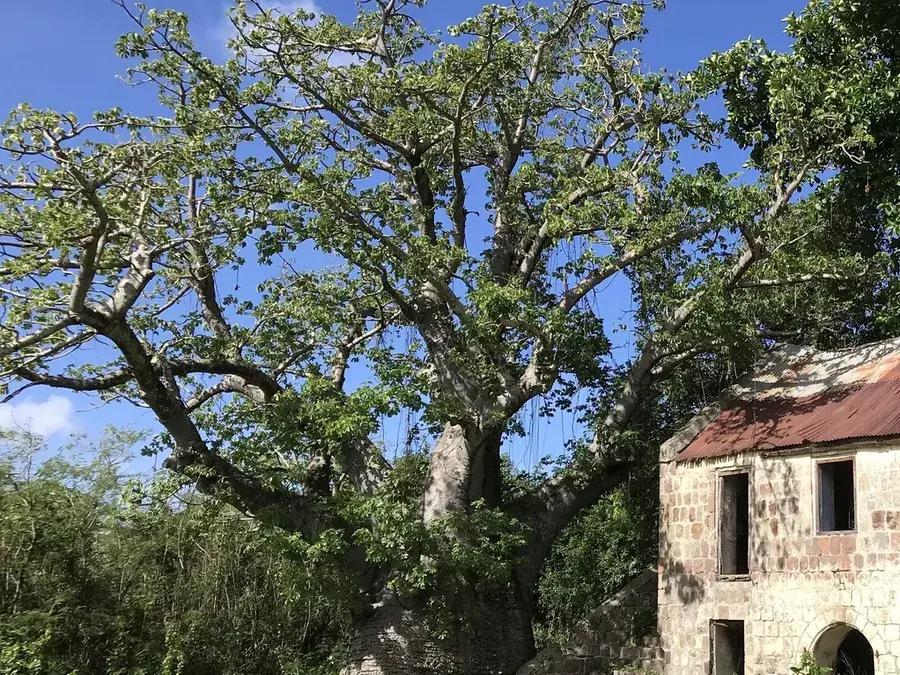 FruitOctober – February
Baobab (fruit and leaves)
Adansonia digitata
A vast, swollen grey trunk with smooth, folded bark and stubby branches that look like roots, bare of leaves for most of the dry season. The leaves are hand-shaped, with five to seven finger-like leaflets. The fruit is a velvety, egg- to sausage-shaped pod up to 25 cm (10 in) long on a long hanging stalk: a hard woody shell around chalky, off-white pulp and black kidney-shaped seeds.
How to know it & its look-alikes →Photo: Cliff Tyllick · CC BY 4.0
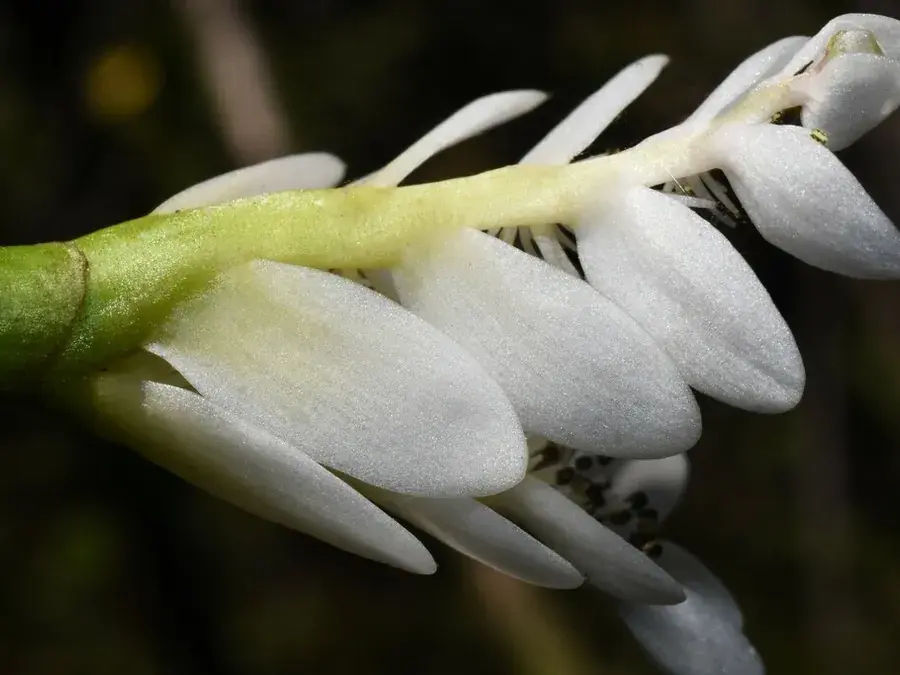 GreenJune – October
Waterblommetjie (Cape pondweed)
Aponogeton distachyos
Long-stalked, narrow-oval leaves floating flat on the water, and above them forked white flower spikes shaped like a 'Y', each branch lined with white petal-like bracts and dark purple-brown stamens, sweetly scented. The plant dies back as the pools dry in summer and regrows with the autumn rain.
How to know it & its look-alikes →Photo: Gabriel Campbell-Martinez · CC BY 4.0
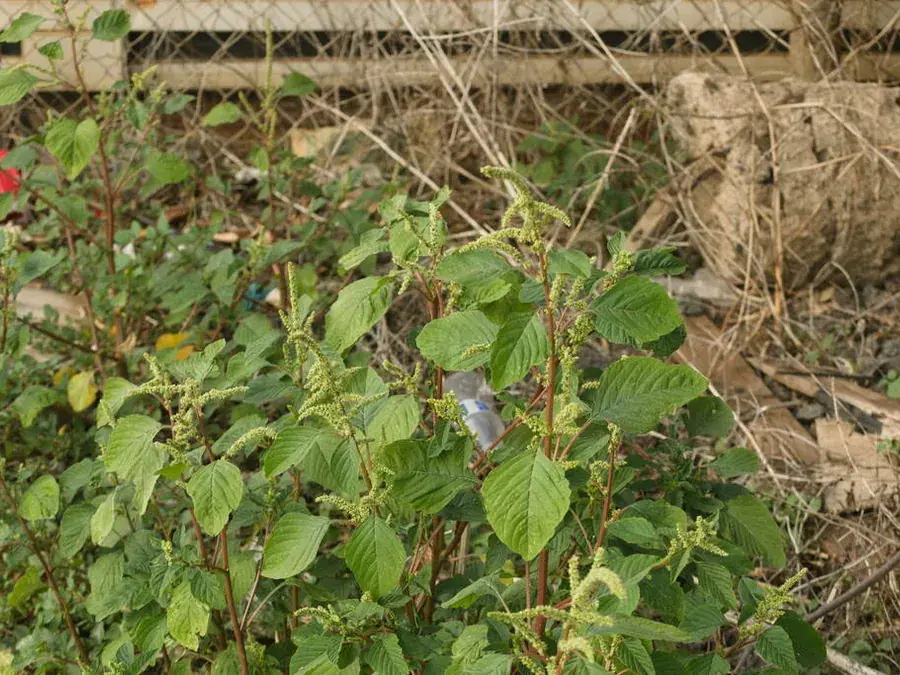 Has a dangerous look-alikeGreenMay – October
Amaranth greens (morogo, mchicha)
Amaranthus spp.
Upright or sprawling herbs, often with reddish stems, carrying alternate, oval to diamond-shaped, smooth-edged leaves on long stalks, and dense, bristly spikes of tiny green or reddish flowers at the top and in the leaf joints. No milky sap, no berries, no trumpet flowers. Spiny amaranth has a pair of sharp spines at each leaf base.
How to know it & its look-alikes →Photo: Kevin Faccenda · CC BY 4.0
Checked against these sources ·
- SANBI PlantZAfrica — Sclerocarya birrea subsp. caffra
- Wikipedia — Sclerocarya birrea
- Government Gazette 40521 (2016) — List of protected tree species under the National Forests Act
- Government Gazette 30183 (2007) — National Forests Act exemptions for protected trees
Seasons are typical for the middle of the range and move by weeks north and south, and up and down hills.
Educational information only. Never eat a wild plant or mushroom identified from a single photograph or description — confirm with a regional field guide or an experienced forager, and know the poisonous species in your area first.