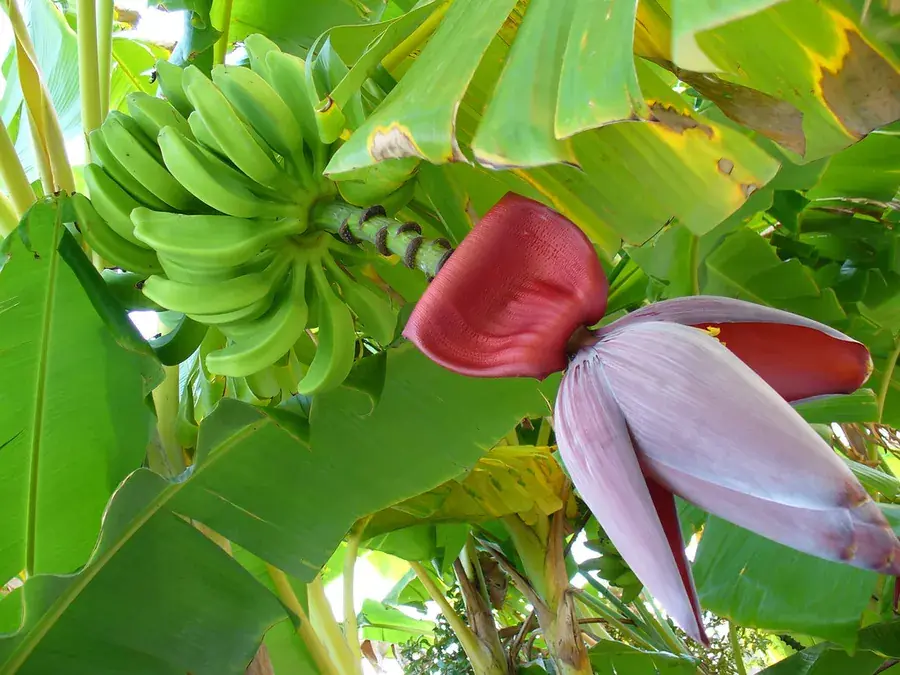
Photo Barefoot In Florida on Flickr · CC BY 2.0
Bananas and plantains
Musa acuminata × M. balbisiana
A giant herb that fruits once per stem — cut the bunch green, hang it in the shade, and let the next sucker take over.
- Signs of ripeness
- A bunch is ready when the fingers have filled out to full size for the variety — the ridges along each finger have rounded off and the sides have swollen — but before any turn yellow. The flowering stalk emerges 10–15 months after planting, and the first harvest comes 10–24 months after planting, depending on variety and care.
- Harvesting
- Cut the whole bunch while the fingers are plump and still green, 7–14 days before they would ripen on the plant, and hang it in a cool, shady place to ripen; the flavour develops better that way. Each stem fruits only once: after harvest, cut it off at the base and chop it as mulch, keeping one half-grown follower and one small sucker in each clump to carry the next crops.
- Frost tolerance
- Bananas slow below 16 °C and stop growing at 10 °C, and chilling between 0 and 16 °C can stop the bunch emerging (‘choking’), turn ripening fruit dull grey-green and increase rot. Frost at 0 °C kills leaves, stems and fruit, and below −2 °C the plant is usually killed to the ground, though it regrows from the underground rhizome when warmth returns. If frost threatens, cut any bunch that is full and plump and ripen it indoors.
Storage
Storing bananas and plantains
| Where | Temperature | Humidity | Keeps | How |
|---|---|---|---|---|
| Shaded, airy porch or kitchen, hanging | 16–25 °C61–77 °F | moderate | 1–3 weeks as the hands ripen in turn | Hang the whole bunch out of the sun. Not all the hands ripen at once, which spreads the eating over a week or two. |
| Fridge, ripe fruit only | 4–8 °C39–46 °F | moderate | A few days | Never refrigerate green bananas or plantains: chilled before ripening, they fail to ripen properly, discolour and lose flavour. |
Preserving
Preserving bananas and plantains
Bananas are a fruit to eat as they ripen, but a glut freezes well: peel firm-ripe fruit, mash it thoroughly with ½ teaspoon (1,500 mg) of ascorbic acid per 250 ml (cup) of mash, and freeze in airtight containers for baking and smoothies. Dried slices are easy: cut 3 mm (⅛ in) slices, dip them for 10 minutes in a citric acid or lemon juice solution, and dry at 60 °C (140 °F) for 6–10 hours until tough and leathery. Plantains and cooking bananas are always cooked — boiled, fried, roasted or pounded. There is no tested home-canning process for plain bananas.
Seed saving
Grown from tubers, cloves, crowns or runners, not seed
Edible bananas set fruit without pollination and have no viable seed; they are grown from suckers or pieces of rhizome. Choose sword suckers — 30–120 cm tall, with narrow, sword-shaped leaves, firmly attached to the parent — or a large non-fruiting ‘maidenhead’, and avoid broad-leaved water suckers, which are weakly attached and give poor bunches. Dig them out with a sharp spade and a piece of rhizome. Clean tissue-culture plantlets from a nursery are the safest start, because nematodes, weevils and Panama disease travel on suckers.
Keeps: Not applicable — each clump is a clone, propagated from suckers or tissue culture.
Seed saving →Next year
Planning bananas and plantains for next season
Pick the warmest, most sheltered spot that never floods: bananas survive only a day or two of moving floodwater, stagnant water kills them quickly, and wind shreds the leaves and topples tall varieties. They want full sun, deep soil rich in organic matter, and a great deal of water — about 100–150 mm a month, or 25–40 mm a week in dry weather — with feeding every two months while young. Plant suckers at the start of the rains, or earlier with irrigation, in a hole about 90 cm wide and 60 cm deep with compost mixed in, and mulch heavily. Keep each clump to one fruiting stem, one half-grown follower and one small sucker, killing the rest at ground level. Plantain is the starch of the humid zone in West and Central Africa and highland cooking bananas are a staple in East Africa; in the subtropics bananas crop commercially only in the warmest pockets — the Canary Islands, Morocco, Egypt, Israel and South Africa among them. Never take suckers from a clump showing Panama disease, which yellows and kills the leaves from the oldest upward.
Bananas and plantains at a glance
- Botanical name
- Musa acuminata × M. balbisiana
- Group
- Tree fruit
- Picked
- January, February, March, April, May, June, July, August, September, October, November, December
- Frost
- Tender: finished by the first frost.
- Best put up as
- freezing, drying
- Seed
- Grown from tubers, cloves, crowns or runners, not seed
Questions people ask about bananas and plantains
What is the difference between a banana and a plantain?
Plantains are starchy bananas that are always cooked before eating — boiled, fried, roasted or pounded — whereas dessert bananas are eaten raw when ripe. Plantains, in their French and Horn groups, carry fewer fruit per bunch than sweet bananas, and are a staple across West and Central Africa, southern India and tropical America.
How long does a banana plant take to fruit?
Usually 10–15 months from planting to the emergence of the flowering stalk, and 10–24 months to the first ripe bunch, depending on variety, warmth and care. The first bunch from a newly planted sucker is often smaller than later ones.
Why shouldn’t green bananas go in the fridge?
Because unripe bananas are chill-injured below about 16 °C: they fail to ripen properly, the peel and flesh discolour and the flavour suffers. Ripen them at room temperature and refrigerate only fully ripe fruit, for a few days.
Does a banana plant die after fruiting?
The stem does — each pseudostem fruits once — but the clump lives on through its suckers. Cut the spent stem off at the base after harvest, chop it as mulch, and let the next sucker take over.
Can I grow bananas in a cold-winter country?
Only as a foliage plant, or in a heated greenhouse. Growth stops at 10 °C, frost kills the leaves at 0 °C and the plant is cut to the ground below −2 °C, and a bunch takes 10–24 months of warmth to form and fill.
How do you freeze bananas?
Peel firm-ripe bananas, mash them thoroughly, stir in ½ teaspoon of ascorbic acid per cup of mash so they do not brown, and freeze in airtight containers. Use the mash for banana bread, pancakes and smoothies.
Local frost dates
Harvest timing for a place
Enter a town, postal code or ZIP to build the garden year, the frost forecast and this week’s guide from local weather.
Also in tree fruit
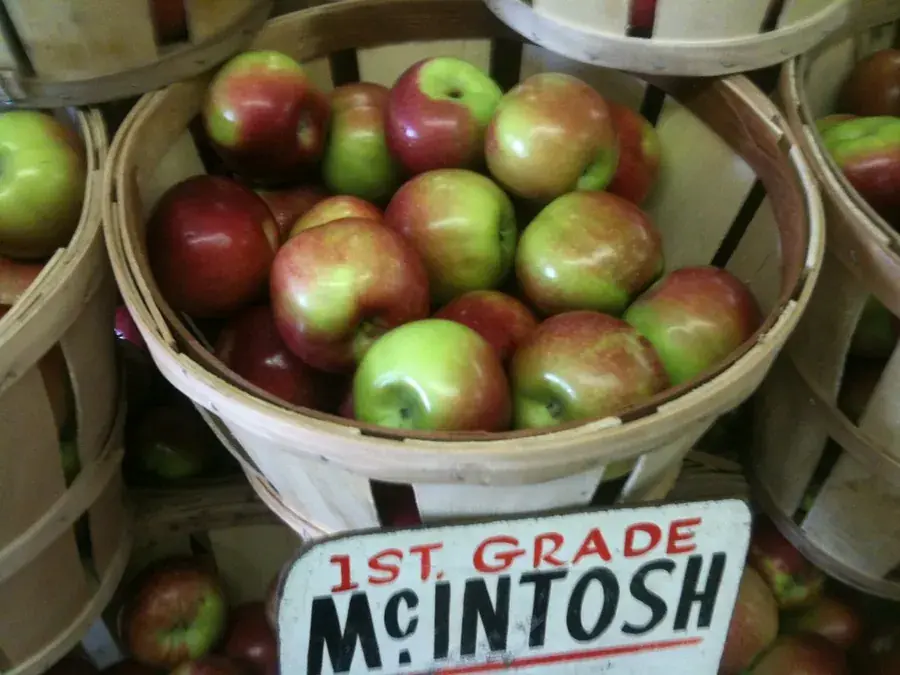 Half-hardyTree fruitHarvest Aug–Oct
Apples
The one harvest that can feed a family until March — if you know which apples keep and which don’t.
Cold storage · Water-bath · FreezingHarvest and storage →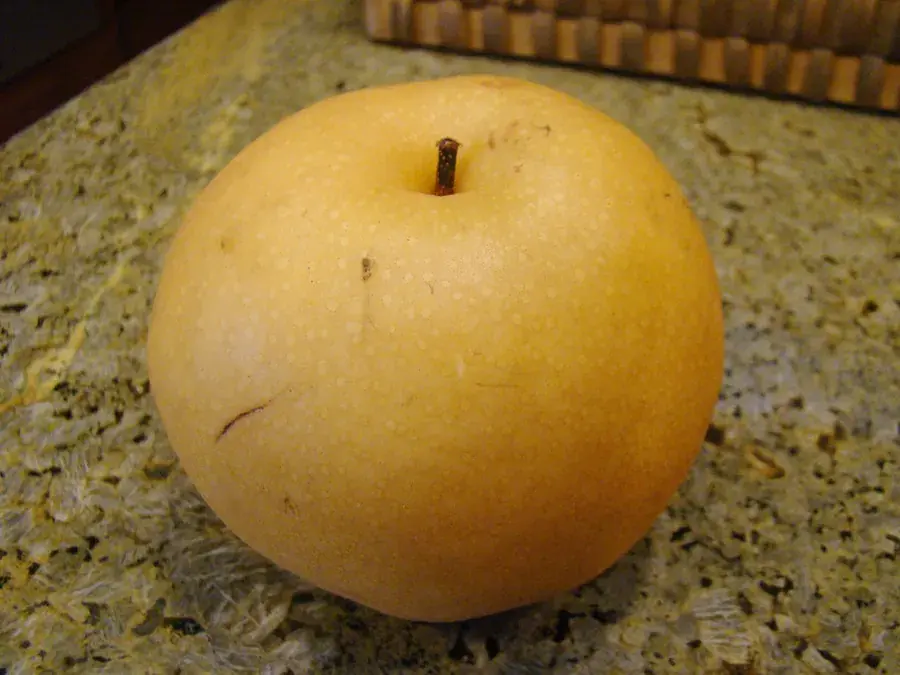 Half-hardyTree fruitHarvest Aug–Sep
Pears
The fruit you must pick before it is ripe — a pear left to soften on the tree is mush outside and grit at the core.
Water-bath · Cold storage · DryingHarvest and storage →
Checked against these sources ·
- UF/IFAS: Banana growing in the Florida home landscape (HS10/MG040)
- NCHFP: Freezing bananas
- Colorado State University Extension: Drying fruits
- FAO ECOCROP: Musa acuminata data sheet
Harvest months are typical for zones 4–6 and shift by weeks north and south. Storage figures assume ideal conditions; without a cold store, expect the shorter end of each range.