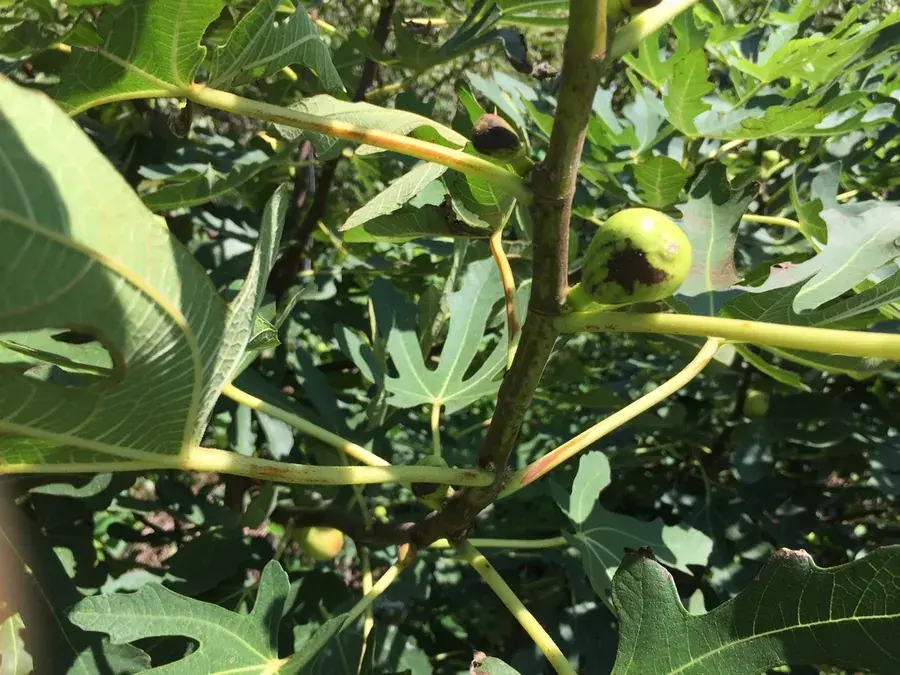
Figs
Ficus carica
Ripe when it droops — a fig must ripen on the tree, so the tree decides when you eat, and the surplus goes to jam, the dryer or the freezer.
- Signs of ripeness
- A ripe fig is soft, hangs limply on its stalk, and may split slightly when gently squeezed or show a drop of sugary nectar at the ‘eye’ at its base; the skin has reached its full colour — purple, brown or greenish-yellow, by variety. Figs must ripen on the tree, so wait for these signs rather than picking early.
- Harvesting
- Hold the stalk and tear or snip it from the branch so the skin of the fruit does not tear. Pick every day or two through the season. Wear gloves and long sleeves when picking or pruning: the milky sap of the leaves and stems is an irritant. Net the tree as the fruit begins to ripen, held clear of the fruit on canes, to keep off birds and squirrels.
- Frost tolerance
- Fig trees are deciduous and hardy to about −8 °C (18 °F); a tree cut down by a harder freeze usually regrows as a bush. The embryo figs that form at the shoot tips in late summer, which carry over winter to make next year’s first crop, are easily killed by frost, so in cold areas fleece the tree in winter or bring potted figs into a frost-free place. Pick any soft, ripe figs before a frost.
Storage
Storing figs
| Where | Temperature | Humidity | Keeps | How |
|---|---|---|---|---|
| Fridge | 0–4 °C32–39 °F | high | A day or two | Ripe figs are best eaten the day they are picked; chill them in a single layer and eat them soon. |
Preserving
Preserving figs
Figs freeze well: tray-freeze washed, fully ripe fruit and bag it, or pack it in a 40% syrup with ¾ teaspoon (2,250 mg) of ascorbic acid or 125 ml (½ cup) of lemon juice per litre (quart) of syrup; for pale figs in a dry pack, sprinkle the ascorbic acid, dissolved in a little water, over the fruit. To dry, crack the skins of small whole figs by dipping them in boiling water for 30 seconds, or halve large ones and dip them for 10 minutes in an ascorbic acid solution, then dry at 60 °C (140 °F) for 12–24 hours until leathery and pliable. Every tested canning recipe adds acid to figs: whole, unpeeled figs, boiled 2 minutes and then simmered 5 minutes in light syrup, need 1 tablespoon of bottled lemon juice per 500 ml (pint) jar or 2 per litre (quart) — or ¼ and ½ teaspoon of citric acid — and are processed 45 minutes for 500 ml jars or 50 minutes for litre jars in a boiling-water canner at 0–300 m. Fig jam, made with lemon juice and processed 5 minutes, and spiced fig pickles are tested NCHFP recipes too. Do not leave out the lemon juice or citric acid.
The fastest route and the one that keeps flavour best.
A dehydrator or a low oven; light, keeps for a year.
Jars boiled in a big pot — for high-acid food only.
Vinegar does the preserving; the canner just seals the jar.
Seed saving
Grown from tubers, cloves, crowns or runners, not seed
The common figs grown in gardens — Brown Turkey, Celeste, White Marseilles and the rest — set fruit without pollination, so their seeds are not fertile. Smyrna and San Pedro figs need a tiny fig wasp that lives only in warm fig-growing regions. Figs are propagated from cuttings of dormant wood, which root readily, or by layering a low branch into the soil.
Keeps: Not applicable — named varieties are propagated from cuttings.
Seed saving →Next year
Planning figs for next season
Figs want the warmest, sunniest, most sheltered spot you have and free-draining soil; they will not tolerate wet soil, but need plenty of water while fruiting, so mulch them. Plant bare-root trees in the dormant season, ideally in late winter or early spring, and container trees at any time. Prune only to keep the size you want, and only after fruiting: the crop forms on last year’s wood, so a hard winter pruning removes it. In cool climates such as Britain, restrict the roots — a 60 cm pit lined with paving slabs, or a large pot — and fan-train the tree against a south-facing wall; there only the first crop, the embryo figs carried through winter, usually ripens, so remove hard green figs larger than a pea at the end of summer. In Mediterranean climates figs need little care beyond watering in dry summers. They need about 100 hours of winter chilling to grow and fruit well.
Figs at a glance
- Botanical name
- Ficus carica
- Group
- Tree fruit
- Picked
- July, August, September, October
- Frost
- Half-hardy: scorched by a light frost, killed at −3 °c.
- Best put up as
- freezing, drying, water-bath canning, pickling
- Seed
- Grown from tubers, cloves, crowns or runners, not seed
Questions people ask about figs
How do I know when a fig is ripe?
It is soft, hangs limply from the branch, has reached its full colour for the variety, and may split slightly when squeezed or show a drop of nectar at the eye. A firm fig that stands up from the branch is not ready.
Do figs ripen after picking?
Not usefully — figs ripen on the tree, which is why they are hard to buy at their best. Pick them fully ripe and eat or preserve them within a day or two.
Why don’t my figs ripen?
In a cool climate, only the first crop — the tiny figs that overwinter at the shoot tips — usually has time to ripen; the second crop, formed in spring and summer, stays hard and green. Grow the tree in the warmest, most sheltered spot against a sunny wall, protect the overwintering fruitlets from frost, and remove the hard green figs at the end of summer.
Can I grow a fig tree in Canada?
In the mildest coastal parts, outdoors against a warm wall; elsewhere, in a large pot. The tree is hardy to about −8 °C, and a frost-killed tree often regrows as a bush, but the overwintering fruitlets are tender, so in most of Canada move a potted fig into an unheated garage or cool basement for the winter and back out after frost.
Do you need lemon juice to can figs?
Yes. Every tested recipe adds acid: 1 tablespoon of bottled lemon juice per pint jar or 2 per quart (or ¼ and ½ teaspoon of citric acid), with whole figs in light syrup processed 45 minutes for pints and 50 for quarts in a boiling-water canner near sea level.
Is fig sap harmful?
It is an irritant to skin, so wear gloves and long sleeves when picking or pruning, and prune from the bottom of the tree upwards so the sap does not drip on you.
Local frost dates
Harvest timing for a place
Enter a town, postal code or ZIP to build the garden year, the frost forecast and this week’s guide from local weather.
Also in tree fruit
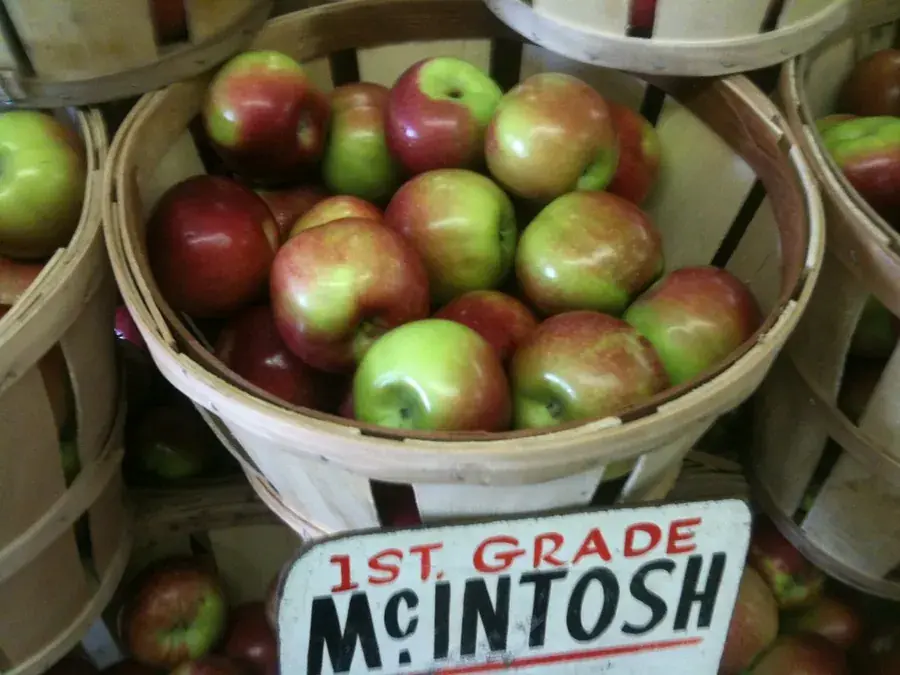 Half-hardyTree fruitHarvest Aug–Oct
Apples
The one harvest that can feed a family until March — if you know which apples keep and which don’t.
Cold storage · Water-bath · FreezingHarvest and storage →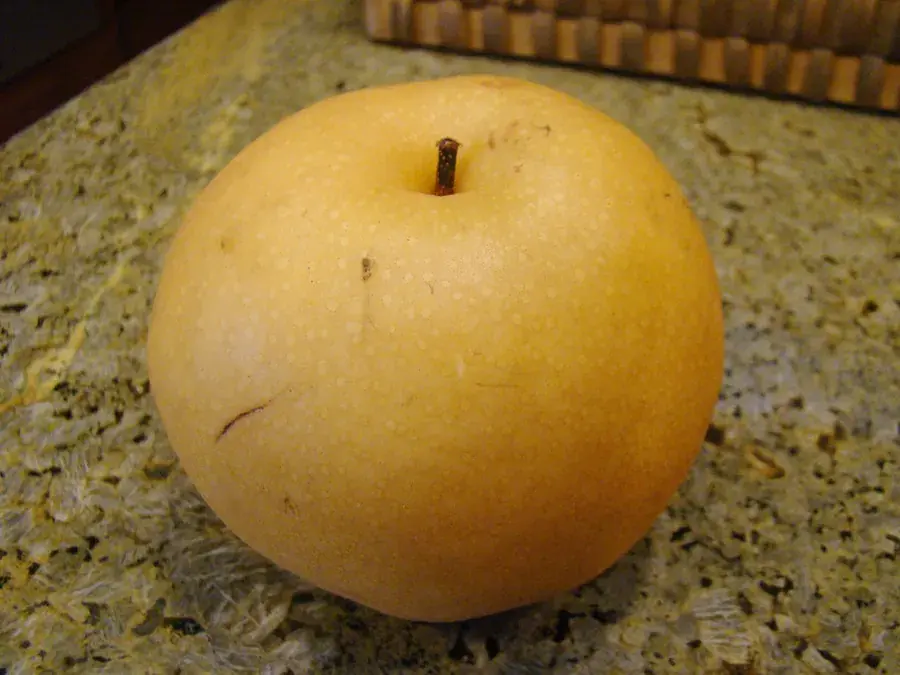 Half-hardyTree fruitHarvest Aug–Sep
Pears
The fruit you must pick before it is ripe — a pear left to soften on the tree is mush outside and grit at the core.
Water-bath · Cold storage · DryingHarvest and storage →
Checked against these sources ·
- RHS: How to grow figs
- UF/IFAS Gardening Solutions: Figs
- NCHFP: Canning figs
- NCHFP: Freezing figs
- NCHFP: Fig jam without pectin
- NCHFP: Fig pickles
- Colorado State University Extension: Drying fruits
- FAO ECOCROP: Ficus carica data sheet
Harvest months are typical for zones 4–6 and shift by weeks north and south. Storage figures assume ideal conditions; without a cold store, expect the shorter end of each range.