Photo Daniel Cahen via Openverse · CC BY 4.0
Pomegranates
Punica granatum
A tough, long-lived shrub for hot summers — and a fruit that keeps for months in a cold store, growing juicier as it waits.
- Signs of ripeness
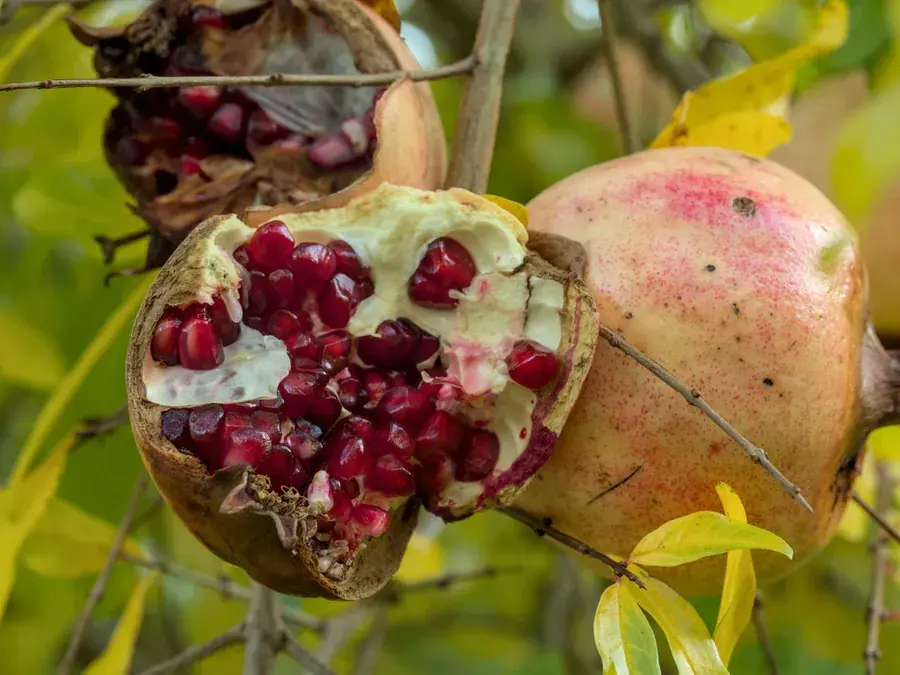
- Fruit ripens six to seven months after flowering and cannot be ripened off the tree, so pick it fully coloured for the variety — red, pink or yellow blushed with pink — and when it gives a metallic sound if tapped. Do not leave it to become over-mature: ripe fruit splits open after rain, drying winds or irregular watering.
- Harvesting
- Clip the fruit close to its base with secateurs, leaving no stalk to bruise other fruit in the basket; pulling tears the shrub. The branches are spiny, so wear gloves.
- Frost tolerance
- Pomegranates are adapted to cool winters and hot summers, and the shrub is severely injured only below about −11 °C (12 °F). Pick the fruit before a hard frost. In a cold district, plant against a sunny wall: the shrub grows as far north as Washington, D.C., though it does not fruit there.
Storage
Storing pomegranates
| Where | Temperature | Humidity | Keeps | How |
|---|---|---|---|---|
| Cold room or fridge | 0–5 °C32–41 °F | moderate | Up to 7 months | Whole, sound fruit at 0–5 °C and 80–85% humidity keeps up to seven months without shrinking or spoiling, and grows juicier and more flavourful; at 95% humidity it keeps only about two months at 5 °C. |
Preserving
Preserving pomegranates
A sound, whole pomegranate is its own preserve, keeping for months cold. For the freezer, halve the fruit, set it cut side down and rap the shell with a wooden spoon handle to break the inner walls and release the seeds and juice; pack the seeds and juice in a cold 30% syrup or unsweetened, with headspace, and freeze. Juice is best pressed from the seeds alone — pressing whole fruit pulls bitter tannin from the rind — and it freezes well or can be boiled down to a syrup, the original grenadine. There is no tested home-canning recipe for plain pomegranate juice in the NCHFP guides; freeze it.
The oldest method: the right cold, the right damp, and darkness.
The fastest route and the one that keeps flavour best.
Seed saving
Grown from tubers, cloves, crowns or runners, not seed
Pomegranate seed germinates readily, even scattered on loose soil, but seedlings vary, so selected varieties are grown from hardwood cuttings 25–50 cm long, set with one or two buds above the soil; they root in a year. Rooted suckers and air-layers also work. Pomegranates are self-pollinating, so a single shrub will fruit.
Keeps: Not applicable for named varieties, which are propagated from cuttings.
Seed saving →Next year
Planning pomegranates for next season
Pomegranates need hot summers and favour a semi-arid climate; in humid summers, leaf blotch and fruit spot are common. Give them full sun and deep soil, and water every seven to ten days in dry weather while the fruit develops — keeping the soil evenly moist in late summer and early autumn is the main defence against split fruit. Grow them as a bushy, multi-stemmed shrub or train a single trunk by removing suckers; fruit forms at the tips of new growth, so shorten the branches for the first three years to encourage plenty of shoots. Plants may bear a year after planting, but two and a half to three years is usual. Plant in the dormant season or early spring in Mediterranean climates. Pomegranates thrive from Lisbon to Cairo and in South Africa’s Western Cape, and are grown in tropical gardens too, though they fruit best after a cool winter.
Pomegranates at a glance
- Botanical name
- Punica granatum
- Group
- Tree fruit
- Picked
- September, October, November
- Frost
- Hardy: takes −4 to −6 °c and often sweetens.
- Best put up as
- cold storage, freezing
- Seed
- Grown from tubers, cloves, crowns or runners, not seed
Questions people ask about pomegranates
When is a pomegranate ripe?
When it has full colour for its variety and gives a metallic sound when tapped, six to seven months after flowering. It will not ripen once picked, so do not pick early — but do not leave it so long that rain splits it.
Why do my pomegranates split?
Over-mature fruit cracks when it gets a sudden drink after dry weather, or in rain or drying winds. Water evenly — about every seven to ten days without rain — through late summer and early autumn, and pick fruit as soon as it is ripe.
How do you get the seeds out of a pomegranate?
Cut it in half, hold it cut side down over a bowl and rap the skin firmly with a wooden spoon handle; the seeds drop out with the juice. Picking out the bitter white membrane afterwards is easier in a bowl of water, where the seeds sink and the membrane floats.
How long do pomegranates keep?
Remarkably long: whole, sound fruit keeps up to seven months at 0–5 °C and 80–85% humidity, becoming juicier as it stores. In a very humid fridge drawer expect about two months.
Can you freeze pomegranate seeds?
Yes. Freeze the seeds and juice unsweetened or in a cold 30% syrup, with headspace in a rigid container. They thaw softer than fresh, so use them for juice, sauces and baking rather than garnish.
Can I grow pomegranates in a cold climate?
Only where summers are long and hot. The shrub survives to about −11 °C and grows as far north as Washington, D.C., but it does not fruit there; in Canada or northern Europe, grow a compact variety in a pot and bring it into a cool, bright place for winter.
Local frost dates
Harvest timing for a place
Enter a town, postal code or ZIP to build the garden year, the frost forecast and this week’s guide from local weather.
Also in tree fruit
 Half-hardyTree fruitHarvest Aug–Oct
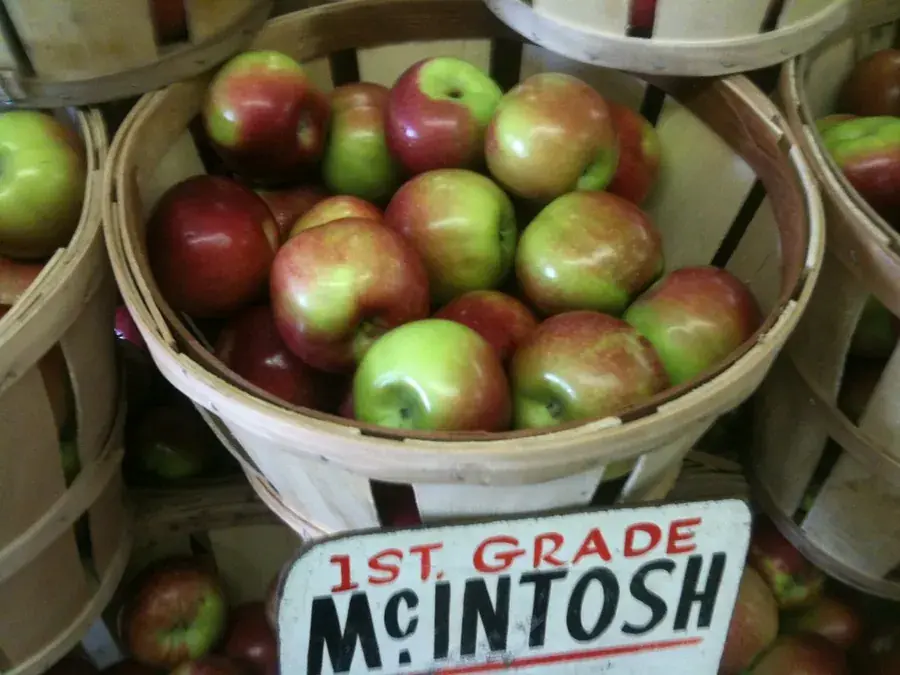
Apples
The one harvest that can feed a family until March — if you know which apples keep and which don’t.
Cold storage · Water-bath · FreezingHarvest and storage →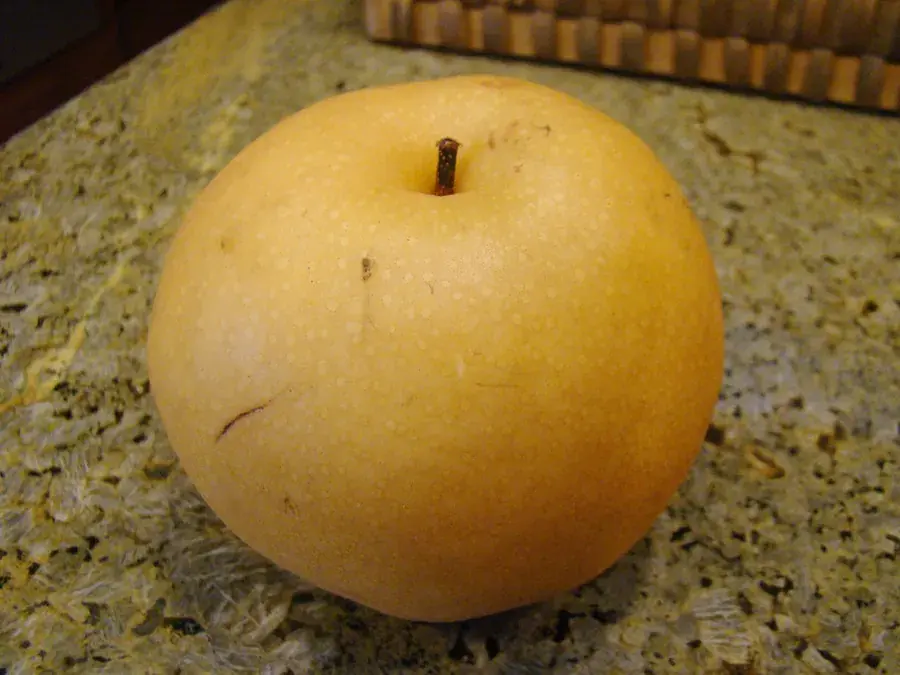 Half-hardyTree fruitHarvest Aug–Sep
Pears
The fruit you must pick before it is ripe — a pear left to soften on the tree is mush outside and grit at the core.
Water-bath · Cold storage · DryingHarvest and storage →
Checked against these sources ·
- Julia F. Morton, Fruits of Warm Climates: Pomegranate (Purdue NewCROP)
- UF/IFAS Gardening Solutions: Pomegranates
- NCHFP: Freezing pomegranates
- FAO ECOCROP: Punica granatum data sheet
Harvest months are typical for zones 4–6 and shift by weeks north and south. Storage figures assume ideal conditions; without a cold store, expect the shorter end of each range.